← Apologetics Profile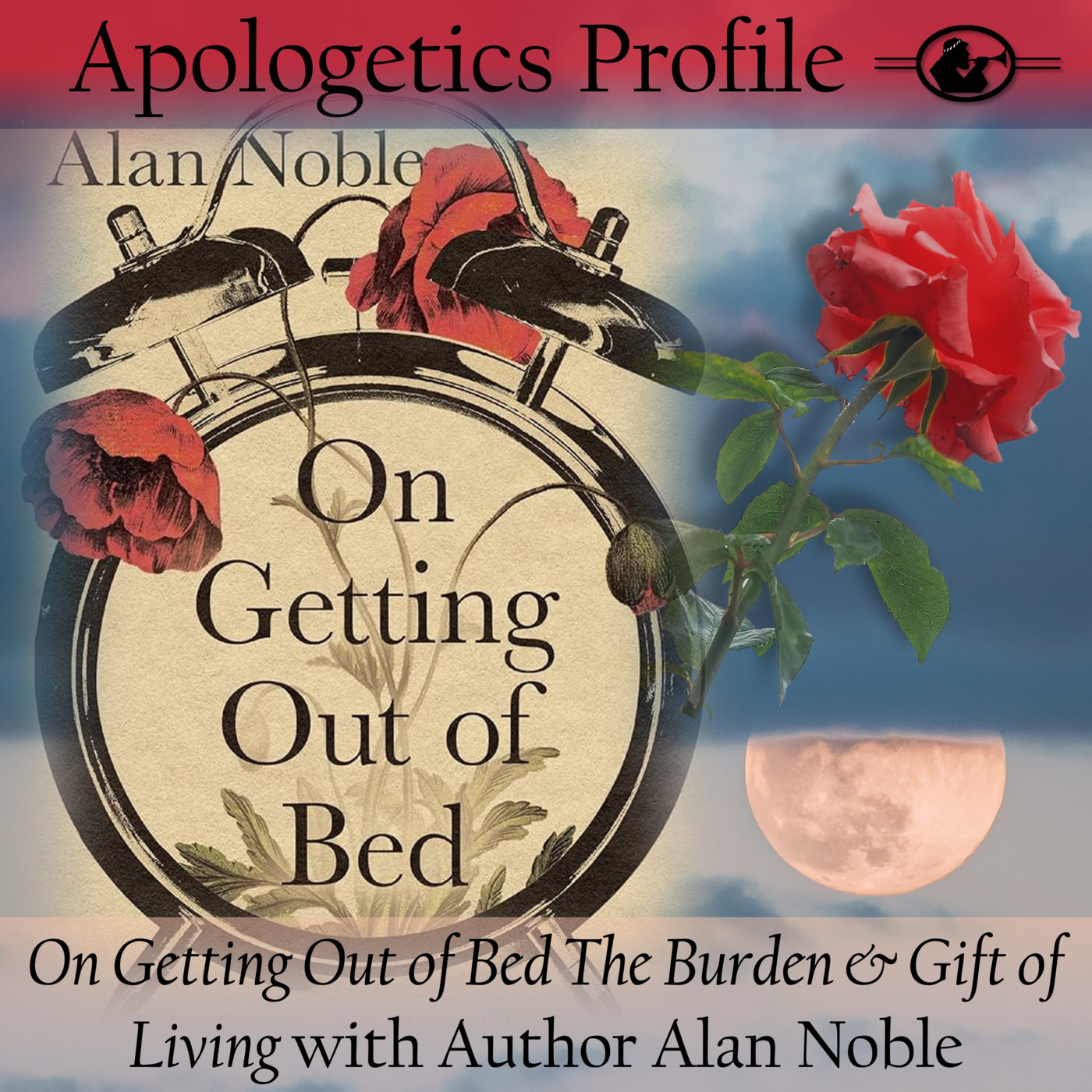
Apologetics Profile
Episode 337: On Getting out of Bed - The Burden and Gift of Living with Author Alan Noble
00:57:30
Behind proclamations of the Gospel, behind the rigorous apologetic defenses for the Christian fai...
Loading summary
Transcript35 lines
- [00:07]
Dr. Alan Noble
Helping the body of Christ proclaim the truth of Christ in a post Christian world. This is Apologetics profile.
- [00:17]
George Bailey
Yeah. So you still think killing yourself would make everyone feel happier, eh? Well, I don't know. I guess you're right. Suppose it'd been better if I'd never
- [00:28]
Podcast Host
been born at all.
- [00:30]
George Bailey
What'd you say? I said I wish I'd never been born. You mustn't say things like that.
- [00:42]
Podcast Host
George Bailey's is an ancient lament, one spoken in darkness and despair, but one that is void of wisdom or life. The desire to never have been born, the belief that it would have been better if we had never existed is sadly all too common. But it is finally not the true story of our lives. It is not the end of our lives. We did not determine to be born. We do not belong to ourselves. Job's lament in the midst of his tragedies and suffering is something through which we've all passed at some point as the third chapter of the Book of Job. Afterward, Job opened his mouth and cursed the day of his birth, and Job said, let the day perish on which I was to be born, and let the night which said a boy is conceived. May that day be darkness. Let not God above care for it, nor light shine on it. Job's lamentation, though, is precisely the opposite contemplative reflection that King David experienced in Psalm 8. It is no accident that Scripture records both experiences as they are universal to our terrestrial pilgrimage. We are often somewhere in between. In Psalm 8, instead of asking for the day of his birth to be cursed, David, gazing up at the night sky, marveled about God's care for O Lord, our Lord, how majestic is thy name in all the earth who has displayed thy splendor above the heavens. From the mouth of infants and nursing babes thou hast established strength because of thine adversaries, to make the enemy and the revengeful cease. When I consider thy heavens, the works of thy fingers, the moon and the stars which thou hast ordained, what is man that thou dost take thought of him, and the Son of Man, that thou dost care for him, yet thou hast made him a little lower than God, and dost crown him with glory and majesty. End quote. Remarkably, part of these verses from Psalm 8 found their way to the moon on July 20, 1969, during the historic Apollo 11 mission. Edwin Buzz Aldrin, the second man to walk on the moon, wrote a few lines from Psalm 8 on a small notepad piece of paper and tucked it away in his suit Pocket the moon, a reminder of God's glory and of his covenant love and faithfulness to us. In the classic holiday film It's a Wonderful Life, George Bailey, out of his love and affection for Mary, was offers her the moon.
- [04:05]
George Bailey
What is it you want, Barry? What do you want? You want the moon? Just say the word and I'll throw a lasso around it and pull it down. Hey, that's a pretty good idea. I'll give you the moon, Barry. I'll take it. Then what? Well, then you could swallow it and it all dissolves, see? And the moonbeams would shoot out of your fingers and your toes and the ends of your hair.
- [04:36]
Podcast Host
How often the moon reminds us of love. It should. It was created to remind us of God's glory, of his righteousness and his covenant faithfulness to us in Christ. Since our seasons of despair and depression and doubt cannot change the courses of the sun, moon and stars, how much more so are they unable to change God's loving kindness and faithfulness toward us? As the Lord proclaims through the weeping prophet. Thus says the Lord, who gives the sun for light by day and the fixed order of the moon and the stars for light by night, who stirs up the sea so that its waves roar. The Lord of hosts is his name. If this fixed order departs from before me, declares the Lord, then the offspring of Israel also shall cease from being a nation before me forever. Thus says the Lord. If the heavens above can be measured and and the foundations of the earth searched out below, then I will also cast off all the offspring of Israel for all that they have done, declares the Lord. Because of Jesus, God was faithful to David in his afflictions and sin, and will be faithful to us in ours, as Psalm 89 sings. But I will not break off my loving kindness from him, nor deal falsely in my faithfulness. My covenant I will not violate, nor will I alter the utterance of my lips. Once I have sworn by my holiness, I will not lie to David. His descendants shall endure forever and his throne as the sun before me. It shall be established forever, like the moon. And the witness in the sky is faithful. Selah. End quote. I like what George says about the moonlight shining out of Mary. For me personally, it's kind of a reminder of many things. One, that Jesus says that not only is he the light of the world, but we are too. Just as moonlight is a reflection of sunlight, our light is a reflection of the light of the eternal Son of God, the Son of righteousness. In the sermon on the mount. In Matthew chapter 5, we read that those who are poor in spirit actually radiate the light of Christ. Jesus says, let your light shine before men in such a way that they may see your good works and glorify your Father who is in heaven. The very good news is that this light is not one we have to figure out how to turn on or manufacture on our own. It is given to us as a gift from Jesus. As the sun repeatedly shines day after day and the moon night after night, so too will God's love and covenant faithfulness. His light continue to shine through us and sustain us. He's given us more than just the moon. He has given us Himself through His Son, our Lord Jesus Christ. He will see to it to complete the work he has begun in us, no matter how dark we may feel. The darkness and light are alike to God. If Jesus can call a dead man from his grave, see John, chapter 11. He can give you the strength to get out of bed as well as friends and loved ones who can help you take off the bedclothes. This week on Apologetics Profile, we are going to hear from author and professor of literature at Oklahoma Baptist University, Dr. Alan Noble. In 2023, Noble published an eminently helpful and encouraging little book called On Getting out of the Burden and and Gift of Living. In the book, Alan relates his own struggles and experiences as a Christian, as a father, and as a college professor to offer help and encouragement to those struggling with anxiety, depression or despair. How do we get out of bed when we don't feel like it? How do we rise from the tombs of our own mental anguish out of what seems like a living death of doubt and despair? On this episode of the Profile, Alan will offer his insights on these and other difficult questions pertaining to mental health struggles. Centuries ago, the Apostle Paul encouraged the believers in Philippi be anxious for nothing, but in everything by prayer and supplication, with thanksgiving, let your requests be made known to God, and the peace of God, which surpasses all comprehension, shall guard your hearts and minds in Christ Jesus. End quote that comes from Philippians 4, verses 6 and 7, and it is the same for us today. We do hope this episode of the Profile will be a blessing for you or someone you love who is struggling with anxiety and depression. As we began our conversation, I asked Alan what it means to be created in the image of God and how truly comprehending this truth of our existence can and does strengthen us to persevere through depression, anxiety and despair. Here's Alan Noble.
- [10:34]
Dr. Alan Noble
I think the way to think about this is that who we are in our image of God is people who have been created and sustained by a God who looks at us lovingly and knowingly and knows us fully and chooses us fully, fully, because of the blood of His Son. And that kind of love, that kind of intentionality, that kind of knowledge of our personhood gives us a reality of certainty that our being in the world is good, that we can rest in, that can give us peace about who we are. Another way I like to think about it is in terms of the loving gaze of God. And I think about this in terms of identity. A lot of people are confused about their identity, and identity always requires a witness. There's got to be somebody out there who's looking at me and saying, I bear witness to you. I can affirm you, I can see you, and so I know who you are. Well, the problem with that is you can never have enough humans bearing witness to your existence to make you feel fulfilled, because somebody else always goes away. Somebody fails to bear witness to you, somebody doesn't affirm you. But we as Christians, we know that we always have a true witness because God is always looking on us with his loving gaze and affirming who we are, not because of who we are in our sins, but because of Christ and His righteousness. And that grounds us in our being in the world and makes us secure. And so our reality is that we are loved and our existence is affirmed. And that's a creational reality that we can be confident in.
- [12:48]
Podcast Host
Depression and despair can convince us that our negative self loathing is a kind of humility. Negatively debasing ourselves as worthless, however, is not actually biblical humility. Alan here suggests that true humility is confessing our complete and total dependence on Jesus for everything. We have to turn from negative self loathing and hatred and recognize that God has created us for purposes beyond our comprehension, that he loves us and that he continually sustains us, no matter how we may be feeling. Alan's thoughts reminded me of a short poem written by Gerard Manley Hopkins, who also struggled with depression, titled My own heart let me more have pity. On the poem is Hopkins talking himself out of self loathing and contempt and resting in and waiting on God to be gracious to Him. My own heart let me have more pity on Let me live to my sad self hereafter Kind charitable not live this tormented mind with this tormented mind tormenting yet I cast for comfort I can no more get by groping around my comfortless than blind eyes in their dark can day or thirst find thirsts all in all in a world of wet soul Self come poor Jack self I do advise you jaded let be Call off thoughts a while elsewhere Leave comfort root room Let joy sighs at God knows when to God knows what who smiles not rung see you unforeseen times rather as skies between pie mountains lights a lovely smile. End quote. Here I asked Alan about the little steps he takes in combating his own anxieties.
- [14:38]
Dr. Alan Noble
One way I approach this is I think in these terms. I think about this, I think about my children and I think about how much I love them. And I think about how much God loves them. When I can't think about when I can't believe that God loves me, when I can't love, when I can't believe that I love myself, it's still easy for me to love my children. It seems logical, it seems self evident that my children are precious in God's sight and precious in my own sight. Even when they act up as kids will do, they're still precious and they're still wonderfully made. And it's still self evident to me that God made them and created them and loves them because of His Son and because, because he. Because he created them and that's who he is. He's a good God. And so when I think about that, I think, okay, if, if God created them and he loves them, what's the difference between them and me? There. There is no fundamental difference. You know, I can make up excuses, well, I've done this sin or I've done that thing, but there is no fundamental difference. We're all fallen and need a savior. The only fundamental. The the only difference is that I have listened to certain whispers in my ear that I don't deserve God's love. And it's not true. The reality is that God first loved us. And if he first loved us, then I have an obligation to first follow his love and love myself not in a self centered way, not in a self indulgent way, but in a way that echoes his love, that responds to his love and love him too and love others as well. But. But love myself in a way that takes care of myself, that preserves myself, that takes care of my body, that takes care of my mind, that that's the proper response and to accept that he loves me. And sometimes here's. Here's. Here's what I would say. Sometimes when you don't feel or believe that God loves you, the proper response is to act like God. Loves you because you know that God loves you. And this is one of the central messages of my book, is that many times that feeling and that, that belief doesn't come because. Because you have so much doubt going on in your mind. You have so many conflicting messages that are coming from, you know, maybe there's something spiritual, maybe there's something chemical, something biological. I don't know the sources, but I'm just telling you that there's things going on that are clouding your judgment and you can't see clearly in that moment. But you know, biblically speaking, that God does love you. He died for you. He cares for you. So what are you going to do today? Are you going to act like God loves you? And if so, that means you get up and you start acting like a son or daughter of God. And so you, you go about your day, you show gratitude for your day, you thank God for today, you pray, you read your Bible, you go to work, you care for your children, you care for other people, you show love to other people. And what I'll say is that I think over time you're probably going to start to feel it, you're probably going to start to believe it.
- [18:47]
Podcast Host
Anyone who has ever attended college, even for a semester, knows what a syllabus is. It's the student's lifeline to successfully navigating the course. Knowing due dates, how to write papers, what books to have, the professor's office hours, etc. Alan teaches literature at Oklahoma Baptist University, where I met him at his campus office for our conversation. As we were talking, I noticed a little sign on his desk that said it was in the syllabus. It is still in the syllabus. It will always be in the syllabus. I told Alan I thought the same might be said for the Bible. As a college student should constantly refer to their syllabus. So too should we as Christians be constantly reading and rereading our Bibles. Of course, we all fall short of doing that, as we should. We're constantly going to the professor with our questions, forgetting and or not knowing what's actually in the syllabus. But God is gracious and long suffering to our petitions. Not only has God given us his word, though, he has also given us his creation to contemplate and enjoy the sun, the moon, the stars, birdsong, trees, flowers, hiking trails through deserts and woodlands and mountains, beaches, lakes and oceans. Alan and I briefly talked about the importance of contemplating the beauty of creation in tandem with the Word of God, as David did in Psalm 8 I asked Alan how he thought the practice of biblical contemplation and meditation can help us through periods of the despair and depression.
- [20:23]
Dr. Alan Noble
So it is biblical. And I think in, in my mind, you know, Pascal says all man's. I, I'm paraphrasing because I'm not going to get it right. But you know, he pass. Pascal says Blaze. Pascal says that all humanity's problems come from man's inability to sit alone in a room by himself. And in my, in my non scientific opinion, that's a good definition of mental health, like the ability to sit alone by yourself in a room without having to distract yourself. You know, I'm sure there are lots of examples of people who are not mentally healthy who can do that. But, so it's, that's why it's not a scientific definition. But for me, that's probably a pretty darn good healthy definition. Like if you're able to be able to, you know, if you're able to sit alone by yourself for 15 minutes and pray and contemplate and wrestle with scripture and without reading Scripture.
- [21:32]
Podcast Host
Right.
- [21:33]
Dr. Alan Noble
So we're not talking about reading new scriptures, but we're just talking about wrestling with scripture. You know, you've already read the scripture and now you're just thinking about it. Right. And contemplating it.
- [21:45]
Podcast Host
Yeah. So read the syllabus and then actually think about what you do.
- [21:48]
Dr. Alan Noble
Just read, think about what you've read or going over your day and contemplating, you know, where has there been sin? Or, you know, just reflecting on your life or contemplating God or contemplating creation. I think there are lots of things that we can do. Just being quiet and being present without distraction, I think is a great, is a great goal. And it's a way of being able to look inside yourself and have some introspection and consider, who am I? What are my relationships like? What is my relationship to God like? First and foremost, Calvin talks about this in the beginning of the institutes. I mean, he says part of the way we know God is that we look inside and we see the, this sin nature and we also see these great gifts that God has given us. And we realize, gosh, we need a redeemer. And gosh, there's got to be a source for these gifts. And that's really compelling. And one of the arguments I make in my first book is when are we going to make those, have those revelations if we're never slowing down and contemplating anything? So I think it's important to slow down. But now, to answer your question about this being a balm, I think it's an interesting question because I think it can be, I think it can be multi layered. I think it could go different, different ways. I think for, for some people, I think meditating on scripture and contemplating scripture and being in prayer and slowing down could be very comforting and peaceful to their soul. And I think distracting yourself with busyness can be very harmful. I think for other people and, or, and, or at other times, engaging in things in your life that are not distractions but are meaningful activities could be a better use of time because sometimes that quiet time can be time for rumination. Time where the mind grows wild with weeds and fertile with just. Yeah, weeds. Where, where doubts spring up, where you're not in a hell, especially if you're not in a really healthy place, where that's where the, the doubts come up, where rumination starts to take over and it's not productive, it's not meaningful, it's not really healthy. And so for that person, I would say if you're trying to go and sit on your bed and contemplate and you find yourself spinning your wheels and going deeper and deeper into depression or anxiety for an hour, maybe the good thing for you to do is go take a walk or get some exercise.
- [25:08]
Podcast Host
We mistakenly often think that maybe worship is something we only do for a few brief moments on a Sunday morning in church. But worship is much more than that. It is a matter of walking in the work that God has prepared for us to do. Good works that were created before we even existed. See Ephesians 2, verses 8 through 10. Worship is living in accordance with the purposes for which God has created us, even in the smallest of things. Alan shared with me that the whole idea of just getting out of bed even when you don't feel like it, especially when you don't feel like it, can be considered an act of worship. Taking one small step can mean one giant leap for your mental and spiritual well being. About five years after my baptism, as an adult convert to Christianity, I almost committed suicide. What became overwhelming to me was the inner negative self talk and false beliefs to which I clung. I thought Christianity was all about earning favor with God by how obedient I could be. But I could never seem to obey God as I should. I thought other Christians had it all together, but I did not. On top of that, I hated myself and was constantly berating myself and tearing myself down, completely ignorant of God's loving grace of being made in his image. My false beliefs about Christianity, my false beliefs about myself, and my false beliefs about God Nearly killed me. So what happened? It was a still, small voice that stayed my hand against myself and prompted me to call the only person I knew at the time who might listen to me. It was a phone call that saved my life. I was powerless to take the next step. But Jesus knew that and met me at my lowest point with one simple command, one for which he gave me the strength to obey. Here Alan shares how important it is to recognize how taking that little step is often the very thing that gives us the strength and courage to persevere. Don't despise the still, small voice prompting you to take that initial simple step out of the pit. Jesus is there and strengthens you to do it, even though you might be trembling as you rise.
- [27:19]
Dr. Alan Noble
I'll just say, because this is public knowledge. I have obsessive compulsive disorder, and I have a pretty, pretty severe form of it. And I've seen some recovery through proper treatment, but I've been in very low, low, low places. And for me, what that's looked like is sometimes literally getting out of bed and putting on my shoes and other clothes. Right, but. And going downstairs and eating breakfast and choosing to go to work and choosing to meet with my students. And I talk about this in the book. You know that sometimes it means calling a friend between classes and asking for prayer or encouragement or help because the anxiety is so bad, but needing that, that, that encouragement just to make that next step. But the key is I make that next step. I know that I need it. And one of the things I've learned through my recovery, which is still ongoing, it's not perfect, is that desire to heal and to get better is the number one key to getting better. Once you lose that desire, things start to crumble. Yeah. And I believe that God desires us to get better. Now I'm. Now what? Here, let me, Let me explain what I mean by that, because that could sound like some health, wealth and prosperity gospel. And that's not what I mean. Here's what I mean by that. I believe that God desires us to care for our bodies as a temple. And that includes our minds and. And out of love for him, and out of honor and glory for Him. He desires us to care for ourselves just like he desires us to care for our hearts, in our lungs, in our body, the rest of our body. It's an act of worship.
- [29:45]
Podcast Host
Our inner mental voices, or our internal conversations with ourselves, if we're honest, can sometimes be horribly negative, dismal, and quite dark. Sometimes the voices are our own. Sometimes the world seems to be yelling at us, but sometimes the voices are so sinister and disturbing they are likely demonic in nature, the world, the flesh and the devil. And it is precisely because our thought life can and is often the source of much of our spiritual struggle in this world that the apostle Paul exhorts us in the opening verses of the 12th chapter of Romans to renew our minds. I urge you therefore brethren, by the mercies of God, to present your bodies as a living and holy sacrifice acceptable to God, which is your spiritual service of worship. And do not be conformed to this world, but be transformed by the renewing of your mind that you may prove what the will of God is, that which is good and acceptable and perfect. The idea that we were to present our bodies as living sacrifices is something that helped me out of my own pit of despair. Okay, Jesus, I have completely failed. And when I came to that point, it was then that he comforted me and slowly over time encouraged me and strengthened me to be still and wait and watch to see what he would do. I then began to see the difference between my nearly fatal self talk and the glorious and undeserved mercy and grace of Jesus, transforming me slowly to be able to walk in the works he was doing through me and for me. I'd recently been reading a second century letter called the Letter to Diognetus. It's an early apologetic work explaining Christianity to a non Christian. When I came to chapter nine, not only did I see the beautiful simplicity of the basic Gospel message, but I also saw myself as the child mentioned in this passage. This, I thought, was exactly what I had been through. And maybe it will sound familiar to you too. So then, having already planned everything in his mind together with his child, he permitted us during the former time to be carried away by undisciplined impulses as we desired, led astray by pleasures and lusts. Not at all because he took delight in our sins, but because he was patient. Not because he approved of that former season of unrighteousness, but because he was creating the present season of righteousness in order that we who in the former time were convicted by our own deeds as unworthy of life, might now by the goodness of God be made worthy. Having clearly demonstrated our inability to enter the kingdom of God on our own, might be enabled to do so by God's power. As Alan shared, God will often move through others to help you. Something that I called intercessory grace. Here's Alan.
- [32:50]
Dr. Alan Noble
So I would say a couple of things. I would say one I think intercessory grace is a great way of phrasing that. I think God does move and he moves often through other people. But sometimes that means that we need to be vulnerable and tell people. I've texted people and had then them come sit with me for a time. I've had people, as I've mentioned earlier, that I've called between classes. I've had. I could. There were periods of time where I was texting people daily for long stretches of time just to talk about this in the book. It got to a point when things were really bad where I felt really guilty about this because I felt like I was being a burden. Right. And this is something you're going to feel. It's a very common feeling. You're going to feel like, oh, I'm being a burden. I don't want to do this to people. And here's what my, my very close friend said to me. He said, allan, when I became your friend, I signed up to do this. Don't apologize. And I just, I think I cried. You know, it was just like the most meaningful thing he could have said to me. I still tear up thinking about it because it was like he was acknowledging this is what friendship means. And, and so to your, to your, you know, call to listeners to, to reach out to friends, I would just say that's what they're. The same is true for your friends, that's what they signed up for when they became your friend, is to, to be there to sit with you, to answer your call when, when you need help. And not, not every friend is perfect at that. So you, you know, it's, it's wise to choose, you know, you know, some friends are more sensitive and able to help than others, but you're gonna know the right person to reach out, to reach out to that person and, or persons and, and get that help. Because that is God's hands and feet and voice in this world to help you get through those times. Because there are going to be times when you can't carry yourself and you need other people to carry you. And that's okay because when you improve, you're going to be that person for somebody else. And Paul talks about this, comforting others with the comfort of Christ. It's a gift to be able to do that. This is one of the amazing things about mental health struggles, is that you're in this pit and then God leads you through this wilderness and soon you find yourself out. And once you're out, you can't even remember how dark that pit was like you. You might remember in bits and pieces, you might have flashes of memories, but it's. That pit was so dark that despair was so deep, you can't really, really remember getting back there. But what you can remember is God's grace in pulling you through. And that's really important because when you look back, just like God help, you know, bringing the Israelites through the wilderness, you can look back and you can say, God has brought me through this valley before. God can bring me through another valley if. If that's what I'm going to go through. And that's important to remember because if you struggle through something chronic and many of us have thorns in the flesh that aren't coming out this side of paradise, and we have to accept that going to flare up sometimes, and that has to be okay. We need to know that we can, that God will pull us through, that there's hope and that we can persevere, but also that there's an end to this that is not going to be forever. Because when you're in that pit, it feels like things are never going to get better. And that's part of the lie of despair. Despair says there is no hope. That's the definition of despair, is that there is no hope. Things will never get better. I'm stuck here forever. And that's a lie. That's a lie. And so we need to realize that lie and realize that there is healing in Christ, and in this life or in the resurrection, there is healing. And so we need to hold on to that hope and persevere.
- [37:40]
Podcast Host
It was the friendship of pastor, evangelist, hymn writer, and preacher John Newton, himself a former slave ship captain who befriended the trembling and anxious poet and hymn writer William Cooper. In David Cecil's remarkable 1929 the stricken the Life of Cooper, he notes how Cooper spent eight hours of every day in Newton's company, prayed with him, with him, attended the bedside of the sick and dying, rode and walked by his side through the lanes. When he went to preach at a neighboring village, Cooper struggled with anxiety and depression until his death in 1800 at the age of 68. But John Newton's presence in Cowper's life brought out the goodness and good works that God planted deep within Cowper's soul. As a villager once said of Cooper's own preaching, I have heard many men preach, but I have never heard anyone preach like Mr. Cooper. Together, you may know that Newton and Cooper penned what is arguably the most widely known hymn of all time, Amazing Grace. William Cooper and Gerard Manley Hopkins are just two of the individuals featured in Dr. Gaius Davies book Genius, Grief, and Grace all of those that Davies profiles were in some way gifted to the point of genius. Each person described had crucial experiences of grace. Their faith became the most important factor in their lives. None of them was exempt from a share of distress, but it seems to have driven them to serve rather than been a hindrance. Those surveyed by Davies were all public figures, authors, poets and hymn writers who struggled silently and sometimes publicly with some form of depression or despondency, yet also left an unfathomable legacy of wonderful strength and encouragement for Christians. But sadness and sorrow today, however, are sadly treated like a disease to be cured rather than a catalyst for humility and depending upon Christ for everything. Jesus had been prophesied by Isaiah to be a man of sorrows. At the tomb of Lazarus, Jesus wept. But in today's society it is no small challenge, especially if you are a public figure to any degree, to admit weaknesses and brokenness. I asked Alan why he chose to go public with his struggles and what he has since experienced.
- [40:05]
Dr. Alan Noble
It was not an easy choice to do. I began with this book and if you, you know, since you've read the book, you know that in the book I say that I'm not going to talk about my mental health diagnosis. And in this podcast I did talk about my mental health diagnosis. In the book I very carefully frame things where I don't talk about anything too personal, although it's very clear that I have intimate knowledge of things and I framed things that way very intentionally with my editor. It's a very carefully crafted book that tries to keep things personal, not personal, but intimate at the same time.
- [40:53]
Podcast Host
Reader, I know I can't. While we don't know the specifics, you, you obviously tell the story in a way that you are well acquainted with the things about which.
- [41:03]
Dr. Alan Noble
Yeah, yeah. So that was intentionally done. And as the book was coming out, I was dealing with my own OCD struggles and a publish an editor at Plow Journal who has OCD and who had written about it publicly and I had talked to her, asked me to write about my struggle and I wrestled with with doing this and talked to friends and counselors and decided that being not only writing a book about mental health, which was already exposing and exposing myself to some potential shame and exposure and vulnerability, but even going further and talking about my personal experience to some extent was actually going to be more helpful than not. And it has been. And so what's happened is that I have been Able to help a lot of people, students, people who have contacted me over the Internet, emailed me. A lot of students who have struggles, who wouldn't have known that I have these struggles. And so I've been able to do what Paul says, comfort others with the comfort of Christ because I've chosen to be vulnerable. And, um, will some people look at me differently and pigeonhole me as the guy with ocd and will they look at my books differently? That's a reality that I have to have to face. But I CHOSE, you know, 2% of people in the population, 1 to 2, it's about 2% have OCD. And it's 1 of the most severe mental health conditions you can have. And that's a lot of people in our churches. If you've got a hundred people in your church, two of them probably have ocd and they're probably sitting in silence because nobody's spoken up about it. And I thought if, if nobody speaks up and these people are suffering, and I know that pit intimately, who's going to speak up, especially as a Christian and talk about this and say, there are ways to get better. It's good to get better. God desires you to care for your temple as you were talking about earlier. It's an act of worship to care for your temple, to get health as best you can. And so I counted the cost, and I don't know exactly, I tried to count the cost, I should say. I don't know exactly what it's cost me. You know, I really don't. I don't know how people view me differently and I don't know what the negative consequences are going to be. But it's. It's a decision I've made to, to do what I thought was going to help love other people.
- [44:09]
Podcast Host
During a difficult year of teaching middle and high school, I experienced bouts of depression. And I think looking back, I probably had a great deal of negative influence on my students at the time. Time. So no matter if you're suffering through depression or on top of a mountain shouting for joy, as Alan shared with me, we are all witnesses. For good or for ill, what we do impacts other people. My father committed suicide in 1986, and that has had a lifelong impact on the way I relate to God as a father and how I relate to other people. Suicide is no solution to the problems you are facing. It will devastate everyone around you in the long run. Please seek help and take that small step to reach out to someone for help. Friends over the years have nicknamed me Puddleglum, the gloomy Marshwiggle character in C.S. lewis's the Silver Chair. Puddleglum has the personality of Eeyore, always pessimistic, always glum. Yet somehow it is the heroism of Puddleglum that brings an end to the evil enchantments of the underground witch. We need friends and loved ones in our lives who will encourage us through our glumness, but also help us to see the goodness and gifts that God has given us. You or someone you know or love may have a gloomy temperament, but that may be the very indication that such a person is also extraordinarily gifted in some capacity. Art, writing, music, teaching, speaking, etc. The dark melancholy is often the thorn in the flesh that keeps us humble, but it can also be a catalyst for us to rely solely on Jesus for everything. Remarkably, during that difficult year of teaching, one particular seventh grade student had apparently been encouraged by our classroom discussions about Jesus when we would discuss the Chronicles of Narnia, which I was teaching to seventh graders that year. She wrote me a few years ago, not long after she graduated high school, quite out of the blue, to tell me how much our discussions in seventh grade kept her alive as she shared that she had been struggling with thoughts of suicide that year, she told me she recommitted her life to Christ during high school. Mostly, she said, because of how I talked about Jesus with the class. I was stunned and shocked. I had no idea.
- [46:29]
Dr. Alan Noble
We are all witnesses. It's just part of being alive in the world. World is people are watching you. You don't get to opt out of this. You don't get to opt out of this. You don't get to say, oh, I. I don't want to be a public figure, or I don't want people to think of me as an idol or, you know, somebody to look up to. Doesn't work that way. I'm sorry. People are watching you and they're watching how you deal with suffering. They're watching how you deal with difficulty. They're watching how you deal with challenges. They're watching how you deal with. With sin. They're watching how you deal with joy. They're watching how you deal with blessings. They're watching how you deal with life. And you can look at this a number of ways. You can take this on as a burden, or you can take this on as a gift. The gift part is, and this is the the subtitle of my book, the Burden and Gift of Living. The gift part is that we get to model as Christ ambassadors how to live for God. And we get to show people life is a gift from God. And it's worth getting out of bed and enjoying and delighting in this existence. It's being itself, it's existence itself that we are given in life. It is being in creation itself.
- [47:52]
Podcast Host
It was better that you were here. Creation was better off God having made you than not having made you.
- [47:59]
Dr. Alan Noble
And that's incredible. It's a miracle. It is literally a miracle. You are a miracle. Whoever you are listening to this, you are a miracle. And that's unfathomable. So we have this understanding that we are gifts, but most people don't understand that they are so numb to their own being in the world, their own giftedness, that they, they don't see it. And so they, they loathe themselves or they, you know, they have all these other things going on. And so what you can do is that you can show them the beauty of being in the world as a gift by acting it out, by living day to day, by choosing to embrace life and delight in life. And that's a. That is a way of reminding people, and that's a witness to God's great creation and his love for people. That's a powerful. That's an act of worship. And all you're doing is. And here's what I love about this. When you're in a state, when you're in that pit that we keep talking about, you feel like, I can't do anything. I have nothing to offer the world. And yeah, you might be able to. You might not be able to write the best report at work, you might not be able to write the best song. You might not be able to do the, you know, you might not be functioning at 110% like you'd like. But I want to tell you, if you get out of bed and you show up at work and you love people and do these just basic things, that is an act of worship. That's showing people that life is good and it's glorifying to God, and that's powerful. So you are contributing something magnificent to the world, to God. And that's amazing. And so like your idea that you're not. You have nothing to contribute is nonsense. Like you're doing something amazing.
- [50:20]
Podcast Host
I asked Alan to share with us what advice he might have for people who are caring for others in depression or are suffering from despair or anxiety.
- [50:30]
Dr. Alan Noble
A key there is make sure that you are, you know, you're checking in that you're caring for them, that you're praying for them, that you're loving them, but you're also getting support yourself because it can be overwhelming to care for someone who's going through a crisis depending on how severe that crisis can be. And you need to make sure that you are, you are, you are getting support and prayer and encouragement yourself. There's this concept that a German philosopher named Joseph Pieper talks about and he calls it selfless self preservation. And I, and it's under the virtue of temperance and I think it's a very useful concept, selfless self preservation. And what he means by that is that we selflessly preserve ourselves so that we can serve other people. And I like it. Instead of the idea of self care, we're selflessly self preserving ourselves so that we can care for other people. And I think that loved ones and friends who are supporting those going through a crisis or a difficult time need to practice selfless self preservation. So sometimes that means you can't always answer a text in the middle of the. You need to, you need to say, you need to set reasonable boundaries. You know, you need to, you know, you need to get sleep yourself. You need to care for yourself. You need to contact other people and make sure other people are involved. Or sometimes elders need to get involved so that you can have support there too. Or you know, just think about what support base do you have so that you are encouraged by. Because things can get overwhelming.
- [52:28]
Podcast Host
As we wrapped up our conversation, I asked Alan what he thought were some influences in the modern world that can trigger or contribute to depression and anxiety.
- [52:38]
Dr. Alan Noble
So one of them is this idea that you are your own and belong to yourself. And so it's up to you to make an interesting, exciting, enviable life. And so if you don't make something dramatic and exciting and interesting out of your life, then you are a failure. We talked about, you talked about merit earlier. So this goes right along with that merit. So it's, it's, you know, you mentioned it in terms of cults. Well, we could talk about this as a secular cult, right? It's a secular cult. It's the cult of, of. Of self. Right? It's the cult of self. And so you have to make something out of yourself. And it's Sisyphusian. You're pushing a boulder of self up the hill and it's always rolling back down. You're always having to try again. So that's one of them related is the idea of efficiency. So this idea of efficiency as this maximum goal in life. So you always have to do something more efficient. And you're and you're always falling behind. You're always not doing something efficient enough. And so you always feel inadequate and insufficient, an impossible standard that you are failing at. Society keeps updating those standards and announcing them in, you know, headlines and that you keep reading and realizing that you're falling behind on. I should be brushing my teeth this certain way. I should be using this kind of laundry detergent. No, that kind, you know, now I'm killing the rainforest. Now I'm, you know. So I think those two things are the big are the two big things that really get to people. And under that is identity and feeling like you have to have a certain identity in order to feel like your existence matters. But instead we know that our identity is in God and that loving gaze of God, God that He has upon us because of his son.
- [54:36]
Podcast Host
On a personal note, I highly recommend Allen's On Getting out of Bed. It was a tremendous encouragement to me and I think it can be an encouragement for you or anyone you might know who is passing through a season of debilitating depression, anxiety or despair. There is hope. Jesus knows the way you take I speak from experience. The darkness is not the end of your story. To find out more about Alan Noble and his work, you can visit his website@oallannoble.com that's the letter O then Alan spelled a L A N followed by Noble N O B. The link will be in the notes of this episode. Next week on Apologetics Profile, we will be talking with someone who spent two years walking through a very difficult season of doubt, but by the mercies of Jesus was able to work through those doubts and return to Christ. It is a very special episode for us here at Watchman Fellowship. For as you here on the broadcast next week, Jesus used our ministry's Atheist and Christian Book Club plus my own co authored book, the Story of the how the Heavens Declare the Glory of God to help Devin return to the kingdom. Thank you Jesus.
- [56:10]
Dr. Alan Noble
You've been listening to Apologetics Profile, a podcast ministry of Watchmen Fellowship Incorporated. For more information about our ministry and resources, visit our website@watchman.org.
- [56:34]
Podcast Host
Sam. Sa.