← Apologia Radio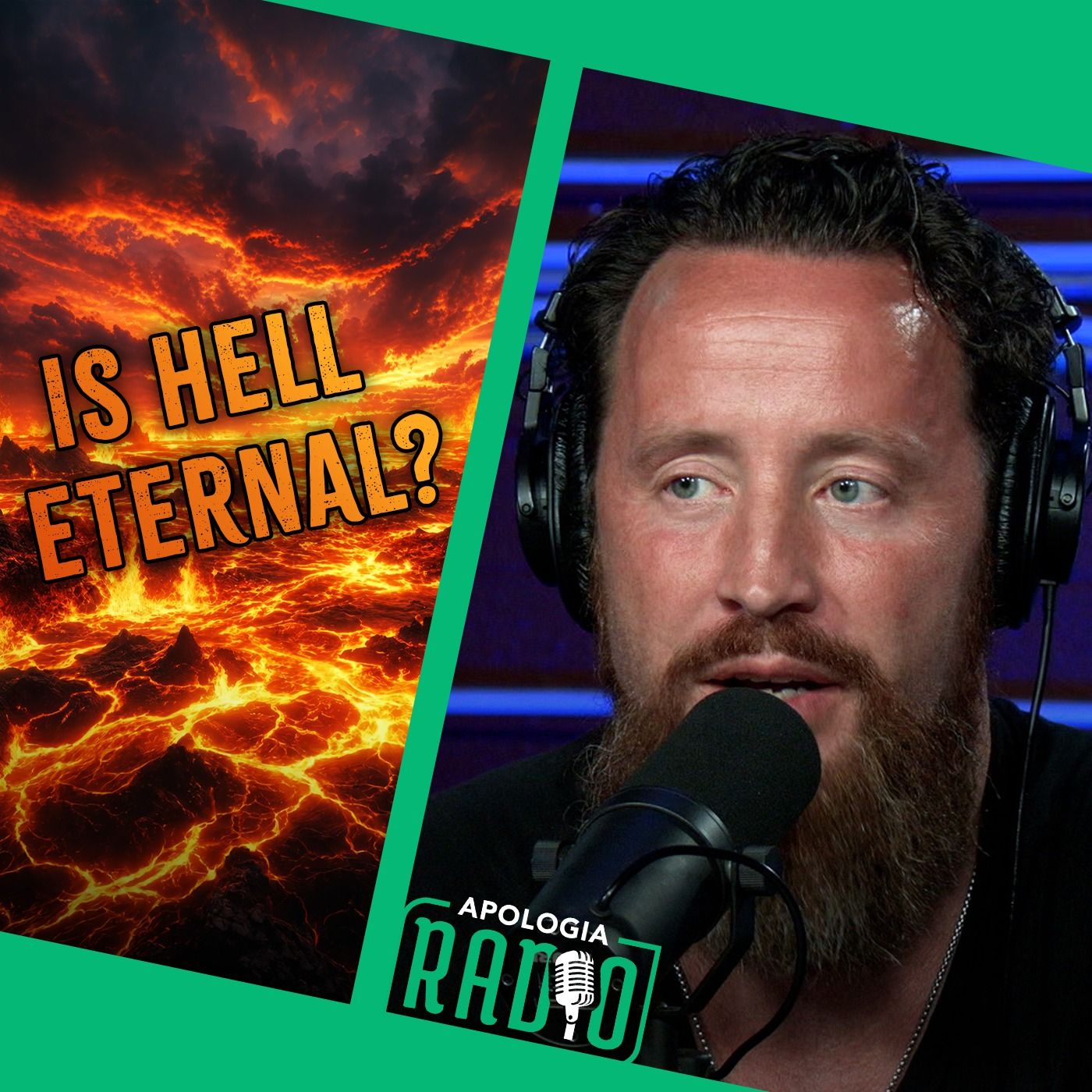
Apologia Radio
574. What the Hell? Is Hell Real & Forever?
01:11:38
Join us for the newest episode of Apologia Radio in which we talk about Annihilationism vs. Eternal Conscious Torment. Kirk Cameron recently sparked some controversy over the issue and our guest, Pastor Brian Gunter, recently debated Chris Date. So, is there true biblical support for the traditional view of eternal conscious torment? Watch and find out! Tell someone about it!
Loading summary
Transcript202 lines
- [00:00]
A
For most people, their finances aren't one big problem. It's a hundred small ones. A retirement account from a job five years ago. A budget that lives in your head but never on paper. Life insurance that you meant to look into. A will half finished or not even started. And the longer you leave those loose ends untied, the harder it becomes to move forward with peace of mind. At Dominion wealth, we walk with you step by step to help you tie it all together. We meet you where you are. We listen. We get your financial picture out of your head and into practice. Then we build a strategy to meet your needs. Now, prepare for your future and bless the next generation. We don't pressure you. We give biblical, honest guidance. Let the strategy follow your values and help find the right solutions. If your financial path feels uncertain, let's get together one on one and get you on the right track. Book a free consultation today. We are here to help you get your finances in order so you can feel confident about the future. From baptism to burial, Dominion's got you covered. You can find us at Reform Money
- [01:15]
B
Non Rockabotus must stop. I don't want to rock the boat. I want to sink it. Are you gonna bark all day, little doggy, or are you gonna bite? Delusional. Yeah, delusional is okay in your worldview, I'm an animal. You don't chastise chickens for being delusional. You don't chastise pigs for being so. You calling me delusional using your worldview is perfectly okay. It doesn't really hurt. She hung up on me. What? What?
- [01:47]
C
Desperate times call for faithful men and
- [01:51]
B
not for careful men.
- [01:53]
C
The careful men come later and write
- [01:55]
B
the biographies of the faithful men, lauding them for their courage.
- [02:00]
D
Go into all the world and make disciples. Not go into the world and make buddies, not to make brosephs.
- [02:05]
B
Right.
- [02:05]
D
Don't go into the world and make homies disciples.
- [02:09]
B
I got a bit of a jiggle neck. That's a joke, Pastor. When we have the real message of
- [02:16]
C
truth, we cannot let somebody say they're speaking truth when they're not. Take an amazing journey to a place
- [02:26]
B
that will blow your mind and move
- [02:31]
C
your mind so you will never be the same again. And another angel, a third, followed them, saying with a loud voice, if anyone worships the beast and its image and receives a mark on his forehead or on his hand, he also will drink the wine of God's wrath, poured full strength into the cup of his anger, and he will be tormented with fire and sulfur in the presence of the holy angels and in the presence of the Lamb. And the smoke of their torment goes up forever and ever. And they have no rest, day or night, these worshippers of the beast and its image. And whoever receives the mark of its name.
- [03:13]
B
And what, what reference was that, Pastor Brian?
- [03:15]
C
Revelation n, Revelation 14, 9, 11.
- [03:19]
B
That's right. Welcome back, everybody, to another episode of Apologia Radio. This is the gospel heard around the world, everybody. I'm Jeff the Com ninja. That's Luke the Bear right there.
- [03:27]
C
What up?
- [03:27]
B
And this is Pastor Brian Gunter.
- [03:29]
C
Good to be here, guys.
- [03:30]
B
Pastor Wes Fuller, what's up? Director of communications with End Abortion now, by the way. And we are doing a very special show today. Obviously we have some guests in the studio today and we are talking about hell as eternal conscious torment. Or is conditionalism or annihilationism more biblical? Is that the way you guys have probably heard about the controversy fairly recently started because of Kirk Cameron's conversion, I would say, to conditionalism or annihilationism. And so we are going to have this very important show to present to you guys today. Talk what's important, important things. Pastor Brian just recently debated Chris Date on the issue that's available. We're going to point everyone towards that. But for now, everybody, as you get here, do all the things that YouTube likes you to do. Do the likes and do the shares and the subscribes and everything else that will make sure that all this content actually gets in front of people so they can engage with this and they could learn about this vitally important subject. And also go to apologiastudios.com that's a P O L O G I a apologiastudios.com you can go there. There is tons of. There are tons of resources there. Firstly, you can get Apologia Radio episodes provoked Shilojians Cultish. It's all there. And if you sign up for All Access, you partner with us in this entire ministry. So the millions upon millions of people who have heard the gospel, been equipped to defend their faith, all the engagement on the street, the debates, the teaching ministry, everything, you're a part of that with us. You're literally doing this ministry with us. And when you sign up for All Access, you also get all the additional content, the after shows, Apologia Academy, full episodes of collision, everything that is there is there to bless you for being a part of this ministry with us. And so thank you to everybody who's a part of Apologia Studios All Access. And I say this all the time. And I know that most of you aren't doing it and you are missing out. You are losing at life. No, you are. You are losing a lot of theological training and equipping. We have Dr. Greg Bonson, his entire life's work, seminary lectures, college courses, his public debates, his teaching as a pastor at church, one of the greatest in the history of the Christian church, philosophers and apologists, all of that content, his life's work is available at bonsonuapologiastudios.com it is completely for free. Top tier theological education from one of the greatest in church history is available as a gift from the Bahnson family through us to you and as always, a big thank you to everyone who's all access because though it's free for everybody, it's not actually free. It costs money to make sure everyone can get that content and so you are a part of that with us. I want to point everyone also to one last thing and this is so, so skip past this. Make sure you hear this. We started Apologia Studios in 2015 from nothing. These studios is just a bare vanilla shell warehouse. We started with nothing. And since that time, God has used this ministry to transform countless people's lives. Tens of thousands of babies have been saved as a result of it. Whole families and communities coming out of the cults to Christ as a result of hearing the gospel and the evangelism here on this channel. And so we are at a new stage, right? It's been over 10 years and we are ready to basically reboot Apologia Studios, give you guys more tools so that you know what you believe, why you believe it, and you're able to articulate the gospel and the defense of the Christian faith. We want to be able to produce more content that impacts more people. We want to save more babies. And so we are redoing everything here at Apologia Studios. The apps on the iOS and on do we just say Samsung, Android, Android are underway. We've been doing our very, very first fundraiser for Apolog Studios and it's going really well. We are so thankful to all of you who have already given towards this effort. You go to apologiastudios.com give apologiastudios.com Give. Many of you have already started giving towards that. We are so thankful for you with all of our hearts. We're thankful because we're ready to get moving and all this stuff. And I have good news for you. Since we've already started the funding process, we've Already started to work and get that app ready to launch. It's going to launch first. Apologia Studios app All Access is going to launch first on iOS and it is coming very, very, very soon. We mean it this time because as you guys may have heard me say weeks ago, unfortunately we had a technical team working on app for us and we had a lot of promises broken and things not delivered to us. And so it is now. And so thank you to all of you who gave already towards the new Apologia Studios. The app is very close to being done. It's going to be on the iOS again. First that's Apple, which I hate. And then it'll be available on Android. So big thank you to everyone who's already given. Everything's already underway with that. And so for the record, it's the
- [08:25]
D
your kind of phone that's the issue why we're that's been so delayed.
- [08:30]
B
Oh, the Android. Yeah, the Android. Android. Yeah.
- [08:32]
D
It's not the Apple phone.
- [08:33]
B
Well, yeah, okay. I just want to make that to each his own. Okay.
- [08:38]
D
But I will agree that Apple computers are trash.
- [08:39]
B
Yeah, yeah, they are for sure trash.
- [08:41]
C
Trash.
- [08:44]
B
As trash as annihilationism.
- [08:46]
C
They belong in hell.
- [08:48]
B
Just like hell. So apologiastudios.com give go there guys. Please participate with us. I mean truly we couldn't possibly share with you all the amazing stories over the years of lives transformed. People have come to Christ literally around the world. People who literally in other countries are using Apologia Studios content to disciple their churches. They're doing like doing fellowship and gathering and Bible studies on Apologia Studios content. We just got contacted from believers in Armenia, churches in Armenia that are using our content. God's using it to transform people's lives even in that country. It's happening around the world and so you're a part of this with us. And so if you're not signed for all access do that and then also Please give@apologiastudios.com give we have some exciting things planned with a lot of engagement and conflict driven media which is what seems to bless people the most from Apologia Studios. So that's coming. We couldn't be more excited. So apologiastudios.com give we're ready to work and get this stuff underway. Help us to meet our goal. Let's get there and let's get started with everything. Okay, so you guys may have heard, you may have heard Kirk Cameron fairly recently came out discussing the issue of conditionalism or annihilationism and if you're new to this discussion, Pastor Brian, help us to understand what conditionalism or annihilationism is over against the. The traditional belief of eternal conscious torment. And we're talking about the issue of hell here and punishment.
- [10:22]
C
Yeah. So eternal conscious torment is by and large the majority view of the Christian church throughout church history. It's certainly the view that we hold to here. And this has been challenged in our day by view that is called conditionalism or annihilationism. So the traditional view is that the sinner, being under the wrath of God, if found guilty on the Day of Judgment because he is not covered by the blood of Christ, and therefore his sins have not been atoned for, that he will be cast into Hell, also called the Lake of Fire, and he will be literally physically tormented in hell for all eternity in a conscious state. And that torment will never end. It is indeed a terrifying doctrine. It's horrible when you think about what hell is. But I believe that. That this doctrine is biblically necessary because our sin is just that serious and God is just that holy, that sinning against an infinitely holy God, treason against the King of Heaven and Earth, indeed deserves a punishment of eternal conscious torment. A lot of times the term conditionalism is preferred for the view that we're considering, because they're stating that immortality is conditional. So. So conditional immortality asserts that God grants life, but that he can put a person to death and never bring them back from that state of death. So conditionalists or annihilationists are saying that everyone has physical life, will die one day, everyone will be physically resurrected, both believers and unbelievers. But the view of conditionalism is that that immortality is taken away through the punishment of death. So that the punishment of the unbeliever is primarily being put to death. Not so much God actively pouring out his wrath upon them, but that they're being put to death, and that the death penalty is how God exhausts his wrath against the sinner. And so they're condemned to hell, where they're put to death, and then God annihilates their body and soul, such that the person ceases to exist. And this is important to annihilationism. It asserts that God. God will put unbelievers out of existence so that for all of eternity, only believers in Christ will exist, that even Satan and the demons will be annihilated along with unbelievers. So that is the position that I was debating.
- [12:51]
B
Well, here is Kirk Cameron talking about his recent conversion to this perspective. Do it yeah.
- [12:57]
C
What's your opinion on this?
- [12:58]
E
So my position as it stands today, and again, the beauty of this is that we're always learning and growing, right? So I'm open to new light. If you guys have a position that you can share with me, I will gladly change my mind. I used to hold the position of conscious eternal torment, because that's just what I was taught by people that I love and trust. I've learned that there are other positions, and a very robust argument can be made for conditionalism or annihilationism, as Edward Fudge posits here. And it fits the character of God in my understanding, more than the conscious eternal torment position, because it brings in the mercy of God together with the justice of God. It doesn't leave judgment out. It is just. But it also fits with the Old Testament picture of the fate of the wicked, which is to be destroyed. It is to die, and it is to perish, not live forever in an eternal barbecue. And the classic verses that used to get me into eternal torment, you know, the punishment, everlasting punishment, everlasting destruction, fits beautifully with a destruction, punishment, judgment that is irreversible and lasts forever. That is the eternalness of that punishment and that destruction. So that's where I am today.
- [14:20]
B
All right, so as you, Pastor Brian, as you listen to Kirk saying that, and we've had Kirk on love, Kirk Cameron. I grew up on Kirk Cameron, and, you know, I'm thankful for him in many, many ways. And so this isn't in any way. I don't want anyone to interpret this as us trying to attack Kirk Cameron and, you know, bash him and denigrate him. Not at all. But when you. When you hear that and you hear Brother Kirk saying those things, what's. What's some of your first initial thoughts? And. And if you had the chance to speak to him about this. Yeah.
- [14:49]
C
The part that stuck out to me the most is when he called hell an eternal barbecue.
- [14:53]
B
Right.
- [14:53]
C
There's.
- [14:54]
B
Yeah.
- [14:54]
C
I mean, just really dismissive of what the majority of the Christian churches believe throughout church history to start and what I'm absolutely convinced the word of God teaches. And the reason that hell is such a horrible place of fire and torment is because that's what our sins deserve. If we minimize hell or if we kind of dismiss it with a term like an eternal barbecue, I think we're actually minimizing both the holiness of God and the severity of our sin against this infinitely holy God. And I think we need to speak about it much more seriously. And so look I love Kirk and I grew up on Growing Pains as well. And I just have to say that that kind of language against hell is not actually dealing with the text of scripture and what it actually says. I feel like it's a dismissive way of dealing with the topic. But if the word of God is our final authority, if we believe in sola scriptura, I believe eternal conscious torment is indeed what the scriptures require us to believe and teach.
- [15:53]
B
It's interesting because we have to always make sure as Christians when we come to the Bible and deal with any doctrine, that we are very aware of our emotions and we're not being led away by our emotions and we're not, you know, adopting a position or rejecting a position because of an emotional commitment. And so I think the same thing. It's like you throw out that terminology and stuff, you're, you're sort of poking at something that you need to have be more sober minded about.
- [16:18]
C
You know, it's interesting you bring that up. So Chris Date, whom I debated a few weeks ago on this topic at my church in Louisiana, you know, he is very adamant that he's not doing this for emotional considerations, that this would be less suffering or more fair of God or something like that. He's saying that, no, he believes that, that the Bible positively teaches this and that he can make an exegetical case for that. What's interesting, as I listened to Kirk Cameron and Hellgate in the previous videos he had done with his son when he first began discussing this publicly on YouTube, what I noticed was that Kirk was indeed making arguments such as, I don't believe God would do that. They were emotional arguments and about what about my lost family members who have been sentenced to hell. Are they going to suffer forever? And so while many annihilationists, I believe, have just been honest and said the reason I embraced this position was because of the horrible reality of hell. If it's indeed a place of eternal conscious torment, that's such a terrible thing. I don't want that to be the case. And they believe that a loving God would not send it someone to eternal hell. I respect more. Chris Dates position, which is to say whatever the scriptures teach, that's what we have to follow. I just disagree with him on the exegesis.
- [17:33]
B
Very good. And you took something on, interestingly, Brian, you took something that even Dr. James White, you know, has said publicly like, I don't want to. I haven't, you know, dove into this area extensively to do debates and to argue for this, because I don't want to be. I don't be known as the apologist for hell, and apparently you do.
- [17:53]
C
I guess I am now.
- [17:55]
B
Yeah.
- [17:55]
C
Dr. White said I want to be the hell guy. So you do it, Brian?
- [17:58]
B
Yeah. The apologist for hell. That's. It's a tough thing because, yeah, we're talking about something that is horrific. I mean. I mean, judgment. As horrific as it is painful, it's awful. When you talk about what Scripture teaches about eternal conscious torment, there's smoke rising up forever and ever and never having rest. That's a horrible thing to think about. None of us want to think about that. And so to be. To be doing a show like this today, to actually be defending that position is, you know, you're automatically on the wrong side of everyone's emotions.
- [18:27]
C
But I would like to think that I'm more of an apologist for the holiness and justice of God.
- [18:31]
B
That's the right way to. Right way to frame it. But as this discussion lifts off, you take a discussion like we're having where we're defending what scripture, I think, clearly teaches on this issue and consistently throughout teaches on this issue. And you take another, say, episode of show someone's doing where they're like, I mean, who wants family members barbecued for all eternity? I mean, guys, you know, what about babies? Maybe they didn't know Jesus and they're just burning in hell forever. They just, you know, they woke up out of the womb and hell, and now they're. They're frying for eternity. People just use that kind of language. And it's like, I think, well. Well, dang. Yeah, I don't think I like those apologia guys. I mean, they're, you know, they're defending something that seems indefensible in terms of emotionally.
- [19:10]
C
Yeah.
- [19:10]
B
So it's important that we commit ahead of time, all of us, to say, look, whatever the truth is has to be found in the word of God. That's the standard. And it doesn't matter if you like the truth. If that's what God says, you have to eat it, because that's. That's what God says. And so, you know, you have to put it into you and treasure it up. That's what the. What's. That's what the word of God says. All right, so let me. You started the episode off today, and you read a text from Revelation. Now, I personally am convinced that that particular text from Revelation is unassailable. And that's part of the reason why I'm not a conditionalist is Text like this, but this is a text I do not believe that conditionalists or annihilationists can get around, not with a lot of eisegesis and a lot of waving of the hand, those sorts of things. Can you go through that? Because I thought that was one of the most important parts of your debate when you were doing the opening and you were diving into that particular text. Can you go into that for the audience? Because everyone, I need you to hear this, and I need you to hear Pastor Brian's exegesis of this text from Revelation, because I personally think that there are many texts that clearly speak to this, but this particular text in Revelation, especially how you exegete it, I think is one of the most valuable, and I think it's unassailable.
- [20:25]
C
I think this is the strongest text from which to make make a positive case for eternal conscious torment in the entire biblical canon. So Revelation 14, verses 9 through 11. Beginning in verse 9, John writes, and another angel, a third, followed them, saying with a loud voice, if anyone worships the beast and its image and receives a mark on his forehead or on his hand, Let me just pause there and say that Jeff and I, even though we disagree a bit on eschatology, only a skosh, a little bit, but anyways, we would both agree that worshiping the beast in its image, image and receiving a mark on his forehead or on his hand, that this is symbolic language of those who essentially are following after Satan and this evil world system. These are people who are in rebellion against Christ. And rather than having Christ's name stamped on their foreheads as believers are pictured in Revelation, we have here those who worship the beast and its image and take the mark of its name on their forehead or on their hand. And so these are people who are in their unbelief, in their. Their unrepentant. It says in verse 10 that this one, he also will drink the wine of God's wrath. Now, this is classic prophetic language from the Old Testament. To drink the wine of God's wrath. Jeremiah 25, the second half of that chapter, really goes into God's wrath, and how it will be poured out upon all the nations of the earth, and they will be forced to drink the wine of God's wrath. And we're told there in Jeremiah 25, that God' wrath will be poured full strength into the cup of its anger, and that the nations will be forced to drink his wrath. And when they don't want any more of it, he'll force them to drink more and they will become sick and vomit, and they'll still be forced to drink more and more wrath. That language from the Old Testament is used here in Revelation 14:10. And he says, this one who worships the beast, he also will drink the wine of God's wrath, poured full strength into the cup of his anger. And he, the unbeliever, he will be tormented with fire and sulfur in the presence of the holy angels and in the presence of the Lamb. Now, here in the Greek text we have this word to be tormented, basanizo in Greek. And it means the infliction of suffering or pain actively causing someone to suffer. So this is a word where you are doing something that's causing someone to be tormented or suffer in a terrible way. Day. And we're told that the unbeliever will be tormented. Who's he being tormented by? By God himself. He will be tormented with fire and sulfur in the presence of the holy angels and in the presence of the Lamb. Now listen to this. This is the key part, verse 11. And the smoke of their torment. Now why are they being tormented? Because of their sin. And the wrath of God poured full strength into the cup of his anger. And as they're having this. This torment, this suffering poured out from God's cup of anger, this wine of his wrath, it. It produces smoke. They're tormented. And the smoke of their torment, the syntax here in the Greek text, this is a genitive of production. As they're being tormented, their torment produces smoke. And this smoke goes up forever and ever, and they have no rest. Now, the Greek word here for rest is the word anaposis. It means the cessation of some activity to rest or to stop something. They have no rest. They have no an apostas, day or night. They don't even get sleep, day or night. These worshipers of the beast and its image and whoever receives the mark of its name. I just don't know how we can read that text and say that that doesn't teach eternal conscious torment. Now, Chris Date in the debate asserted that this is symbolic language, and so the symbolic nature of it doesn't require eternal conscious torment. And my response is symbolic for what?
- [24:30]
B
For what?
- [24:31]
C
I mean, even if you don't take the imagery of fire literally, it would obviously be a symbol of some kind of terrible suffering. Right? And so I think the imagery here of fire is likely literal. But whether you think it is or not, none of that would do away with the fact that the text positively teaches eternal conscious torment for unbelievers.
- [24:52]
B
Well, and this is important too, because is it true that the Bible's filled with symbolism? Yes. Is it true? You have to be very, very cautious and biblical about how you handle those things? Yes. Is the Book of Revelation littered with symbolism? Absolutely. This is the most highly symbolic book in the entire Bible.
- [25:10]
C
Yeah.
- [25:11]
B
However, we can't. We have to be very cautious when. When someone says, well, that's just symbolism. It's like, okay, could be. But what do you mean by that? You can't just throw the word symbol out or symbolism because the symbol is supposed to actually point to something else. Right?
- [25:24]
C
Symbol for what?
- [25:25]
B
Symbol for what? So what is it symbolic? Because, like you just pointed out, you have the torment and smoke connected. So. So the torment produces smoke and the
- [25:37]
C
smoke goes up forever and ever because they're tormented.
- [25:40]
B
So you. If there's no more torment, then the smoke ceases.
- [25:43]
C
That's right.
- [25:44]
B
So if the smoke is. Is forever and ever, the smoke is from the torment. So if the torment ends, there's no more smoke.
- [25:51]
C
And the torment is the active infliction of punishment. So annihilationists will say, well, the punishment is eternal. You're put to death and you're never resurrected. You' brought back again.
- [26:00]
B
Right.
- [26:01]
C
But basimanos is a word that speaks of someone who is being actively inflicted with pain and suffering.
- [26:09]
B
Right.
- [26:09]
C
So God is actively pouring out his wrath, and he never ceases pouring out his wrath. And the text that this is based upon, as I said, is Jeremiah 25. And the whole point in that text is God keeps forcing the unbelievers to drink the wine poured out of the cup of his wrath. Wrath. And as he is pouring it out, they even get sick and vomit and fall down, and he makes them keep drinking it. And so that imagery from Jeremiah 25 is being used by the apostle John here in Revelation.
- [26:38]
B
That's right. But further, you just also made a commentary on. You've got the torment attached to the smoke, and that smoke again, is forever and ever. And so it only exists because of the torment. So you take away the torment, there's no more smoke. So now the symbol means nothing. Right. Okay. If it's symbolic, it's symbolic of what?
- [26:58]
C
What is going on forever and ever?
- [26:59]
B
If. What's. What is the forever and ever part?
- [27:01]
C
Oh, and who is being tormented? If. If the person has been annihilated, if they cease to exist, how can a person who doesn't exist be tormented?
- [27:08]
B
No more torment, no more smoke. So in other words, you just. You've just. You just disconnected the Whole thing and unraveled it. So symbolic of what? Right, so. And that's what I'm saying. We have to be careful when someone just sort of like slithers over, like, oh, that's symbolic. Well, it's symbolic of what? All right, like tell us what it actually means. But the next part of it, it's just directly after it. So I think God's emphasizing the point. We've got the smoke forever and ever. And then it is. They have no. What?
- [27:33]
C
Rest.
- [27:33]
B
They have no rest. But if conditionalism is true and annihilationism is true, then they do have rest because they're now, you know, exited from existence and they don't exist anymore. No more torment. They are resting from the torments. They are resting. They have. It's. Nothing's happening anymore. So they are relieved of that torment and that justice. And so they do have you. You. How else do you describe it? If they're no longer existing, there's no more torment, no more punishment, then there has to be relief there. There is rest from. From that. But the text clearly says, with emphasis, forever and ever and no rest. What. It even says things like day and night.
- [28:13]
C
Yeah.
- [28:14]
B
And so I think that that puts it into context of the regular human experience where you have. Have a cycle of daytime and nighttime. We recognize that that's all day, all night. And so I. But this one, I mean, is. There's a number of texts that clearly communicate these things. Of course, we hate to think about these things. It's God's justice, it's God's wrath. It's a horrible thing to think about. But you have to look at that and say, look, I think God's communicating to us about as clearly as he possibly could. We'd imagine he would. On. On what is the. This. The nature of hell. And here's the thing. I. I'm not in a place where I'm going to say I can give you all the details of exactly what hell is like. I don't think I have to do that to believe in eternal conscious torment. To say, like, what exactly is the experience? Like, I don't know. And thankfully, because of Christ, I'll never know. But I think the text is clear enough to emphasize for humanity the threat, the threat that God intends to give to human beings. And that's exactly what I consider this is. It's a holy God. It's a just God. God who is making sure that sinners understand the plight. This is where you will end up. And this is what we talked about, the other night together. I think that this particular conversation is so vitally important because if the scriptures give this threat to humanity and God is clear about it, and it sounds unbelievably horrible and he's as clear as he is here in Revelation, I think that it's a danger for us to remove that threat and the power of that threat, the clarity of that threat from Scripture and to essentially soften the edges of hell for the sinner. Because if God wants to communicate to humanity just how awful this future will be, I don't want to shave off the rough edges of it because he's the Holy One, he is the perfect God, he's the all knowing God. And if he wants to communicate to humanity just how hellish this will be, then I think that we have to make sure that we're communicating what he says, not what we as image bearers of God think might be the right thing to do. You I don't want to take away the power of the threat of hell. I don't want to take away the power of that threat from sinners. I want to make sure I communicate exactly what Scripture says because God intends for them to be threatened by that and to turn and to turn from it. So that's how I feel. So Wes, your commentary, sir. Oh, actually, you know what, let's do this. A quick commercial break. Do all the things. Welcome to the show everybody. If you're just popping in, we're talking about hell today, conditionalism, annihilationism here today with Pastor West, Pastor Brian and the bear and the ninja. And we're going to come right back. So for now, welcome. Hit the likes, hit the shares, hit the subscribes, let everybody know, important conversation. Pastor Brian's going to continue to guide us through this discussion. We're going to do some text, we're going to engage a little bit with conditionalism and also play some of the clips from the debate itself. And so quick commercial break. Everyone stay with us. And while we're going away, make sure you share the content. Be right back. This episode's brought to you by ion layer@ionlayer.com Go and check out the health benefits, the wellness benefits and longevity benefits of NAD treatments. NAD is nicknamed the Fountain of Youth for a reason. You have an abundance of this in your system when you're young. As you get older, it drops off. And now we found a way to get NAD into our systems. They do it through IV treatments, but they're very expensive and it's also extremely painful and difficult. However, ION Layer found a way to get a high dose of NAD into your system through a medical patch you wear on your arm. You wear it for about 14 hours, you get a high dose of NAD treatment into your system and no pain at all. And it is a fraction of the cost of what you would pay through for an IV treatment. In the coupon code, type in Apologia in all caps. They're going to hook you up with a great discount for an already amazingly cost effective product. And they bless Apologia studios and help us to stay on the air and do all these programs with you. Don't forget also Ion Layer has added a glutathione patch as well. Glutathione, the master antioxidant. Go check out the health benefits of glutathione. I'm doing this stuff anyways. It's blessed my life in tremendous ways. And so if you want to focus on your health, wellness and longevity, nothing better in my mind than ionlayer.com for your NAD and Glutathione treatments. Ionlayer.com don't forget to put Apologia in all caps in the coupon code.
- [32:35]
D
This video is brought to you by Amtec Blades. We are very excited to be partnering with Amtec tech Bill Rapier, long time Navy Seal, DevGur operator, amazing brother and friend looking for a battle ax to carry on your person to chop some wood. They've got you covered. Looking for a blade to carry on you every day. Also got you covered. Look at this. I gotta check my mail. What do we got going on here? Oh, look how sharp that is. What is this? Oh, 5% off. You can go to amtechblades.com put apology in the coupon code code get 5% off your order and he will match that and give 5% to end abortion. Now again, amtechblades.com we're grateful for them. Check them out.
- [33:19]
B
Welcome back everybody. Thank you for being with us on the show today. Talking about hell, eternal conscious torment or conditionalism and annihilationism. And so we just finished up talking about that important passage from the book of Revelation. Highly encourage you guys to go back and listen to passage. Pastor Brian's commentary on that. I thought that was one of the most powerful parts of the debate. And just quickly, before we get to Pastor Wes and Pastor Luke, what was explain to everybody because we want to make sure we like, you know, give the proper position to steel man our opponent's position. What was Chris's response to your exegesis of that particular text?
- [33:54]
C
So he Said it was symbolic. And so I'm reading these symbols literally. And so it's not actual torment, it's not actual fire and those sorts of things. Things. And so the question is, okay, well, if these are symbols of what are these symbols? Symbols of what? You know, if they're not being tormented, the torment symbolizes what?
- [34:13]
B
Right.
- [34:13]
C
What could possibly be the threat, the torment of ceasing to exist?
- [34:18]
B
Right.
- [34:19]
C
So I just don't think that he really had a good response.
- [34:22]
B
No, it's not a good response. And what I mean by that too, in terms of symbolism, God will, in scripture give us contact with symbols all throughout, and then those symbols carry meaning and they unfold. And so, for example, like Jesus is a lamb of God who takes away the sins of the world. What meaning does that symbol have apart from what actually took place in the old covenant where God would give them the sacrificial system and he. We have Passover, you have all those things. The symbol has meaning because God has defined its meaning. Okay, good. So when you look at the book of Revelation. Yeah, it's a highly symbolic book. You've got, got whores drinking blood with, with Babylon written, their forehead wearing purple and scarlet. And you have to say, okay, monsters, yeah, you've got seven headed, 10 horn beasts. And you know all that stuff. Well, you can't just go, and this is what a lot of people do with eschatology is they just go to the book of Revelation, they start inventing things. They go, well, it's a symbol, but what does it mean? I don't know, let's, let's figure it out. Is it, is it, is it this thing? Is it that guy? Is it this institution where. I think the biblical way to do this is to say, okay, it's a symbol for Sure. I mean, there's no literal prostitutes running around riding seven headed, 10 horned beasts. So we have to say, what does the Bible say about beasts? Who's wearing purple and scarlet in the Old Testament? What does Babylon mean in the Old Testament? And why is she in the wilderness? Is there anything else in the Bible about wilderness anywhere? Is there like a wilderness something in the Bible? We should go look at that. So my point is, is that the symbol has actual meaning to it. And so when you take a passage like that and you're like, okay, God is describing this state and someone says that's just symbolism. Okay, that doesn't answer it because this is torment attached to smoke. And the smoke is forever and ever. So if you take away the smoke, there's no more torment. Right. And so there's also no rest. And so you have to have a better answer than just simply saying, I just. Symbolism. Yeah.
- [36:12]
F
And if it's symbolism, it's probably being symbolized because we can't comprehend with our finite minds how bad it really is.
- [36:21]
B
Truly? Yeah, truly.
- [36:23]
C
How do you describe a place like hell?
- [36:25]
F
Yeah.
- [36:25]
C
How do you put that into words like that?
- [36:27]
F
I don't think we can comprehend it. That's just. That's pretty bad. That's bad enough for me.
- [36:31]
B
Yeah, for sure. Pastor Luke commentary.
- [36:35]
D
Yeah. Kind of my overall thoughts, and I think one, a telltale sign of a bad position is when you have to create new categories and new titles for your position. You know, like, that usually is like, okay, you're new to this. That's not. That's not a trad. You know, the traditional as we. You. The position you're taking. But, you know, and I don't know Chris, I want to be gracious to him. You know, I. Another sign of. Of bad argumentation is when you get overly emotional and start name calling and getting kind of nasty at points. You know, like, it's like, okay, let's just take it down a. Not sure.
- [37:14]
B
You talk about this, your assessment of the debate.
- [37:16]
D
Yeah, just overall. Just my overall thoughts here. Yeah. And, you know, I thought that, you know, I know we're gonna get into different stuff. I. I thought that where the wheels fell off for Chris was when he went to Cross X. We talked about this earlier, which I think we're gonna play. And so for me, the whole thing came down to him equivocating. Physical death and spiritual death is one thing, you know, and I just don't think Scripture, it all teaches that. And I think we'll get into that.
- [37:39]
B
But those are kind of my overarching. I love Chris. Chris is a good dude. I prayed a lot for him, too. He's had some. Some difficult things last couple of years he's had to deal with. So I've prayed for the man a lot. I love him. Let's do this. Brian, what is the strongest part of Chris's position? His view. So if. If, if, like, how is he? How is he? How is what he's saying compelling? Even if you were to say biblically, what is the strongest way that you can communicate? This is the strength of Chris's position. How do people get into conditionalism and get convinced by it? What's so strong about it?
- [38:17]
C
Well, you know, I think that he would point to the word apollumi. Being used throughout the New Testament for the soul and body being destroyed in hell. Hell. And he would like to say that, see, the Bible teaches that the soul and body of unbelievers will be destroyed in hell. But the question is, is that a statement of the ontological destruction of the human body and spirit such that the person is put out of existence? I pointed in the debate to how the word apollumi is used to speak of when new wine is poured into old wineskins and the wineskins burst apart, they're destroyed. And the verb used there is Apollo me. And so it doesn't mean the wine skins go poof and cease to exist. Not to make light of it, but seriously, they're, they're burst apart, they're destroyed. They'd be in pieces. Right. And so in the same way the soul and body being destroyed in hell is, is talking about the destruction that hell is that you're cast there and there's no hope. But I don't think it's saying that ontologically you go out of existence. And so I think that is reading far too much into the term, term Apollo in the New Testament. But I think that might be the strongest argument. And I would say it's an oversimplification, but as Luke said earlier, saying that bodily and spiritual death, essentially that when a person is put to eternal death, that means just the death penalty, they, they die. And that's what the sentence of hell is. And so to me, it, it's, it's, it's not, not dealing with the fact that this is an eternal punishment. What Chris is doing, he is saying the effect of the punishment endures forever. You'll never be brought back to life, but the infliction of suffering is only for a period of time, and then it ends. So, you know, those are the best arguments, I think, that can be made for annihilationism from the New Testament. And on the surface they might sound good, but under deeper examination, I really don't think it makes up for the whole of what the New Testament says.
- [40:18]
F
Says ultimately, isn't that just putting somebody out of their misery? Right, because we talked about that with, I don't want to get ahead of you, but like with suicide, people are paying in other countries to go have
- [40:28]
B
assisted suicide to erase themselves.
- [40:31]
F
Exactly.
- [40:32]
B
Yeah. And these people, these are people that think, and you're talking about, you're talking about what's the threat of annihilationism and conditionalism upon a person. And obviously this is, you know, we're, we're Talking about implications here and like, okay, where does this lead to do. But a lot of people, and this is what I was commenting the other night when we were sitting together and talking about this, a lot of people want to kill themselves, to erase themselves. And they don't believe they have a future. They don't believe there's an afterlife. They're, they're, they're literally seeing death as relief. They're depressed, they hate this world, there's too much pain. Whatever the case may be, they view they're turning themselves off and dying as eternal. They see it as, there's no afterlife. I'm dying and I feel like that's an escape. It's, it's a blessing to me to consider that I will know longer exist. They think that's a blessing. There are so many people that think that. And I was mentioning to you guys that Christopher Hitchens would comment many times on the fact that if, if, you know, he were to, to go into the presence of God, that he wouldn't want to be with God for all eternity. He, he likes the idea of ceasing to exist and never having a God concept or being under a tyrant like an eternal Kim Jong Il Nil. He liked the idea of just disappearing for all eternity and that being the end. And so a lot of people actually are pleased with the idea of disappearing for all of eternity. So it's not so much of a threat.
- [41:52]
F
Yeah, it's not punishment.
- [41:53]
B
It's not punishment to them. So the idea of them just going into God's presence and being erased for all eternity is like, well, thank you. That's exactly what I was looking for. You know, I wanted to be what I wanted. I got one apart from you and apart from this universe and this existence is what I wanted. I wanted to just disappear forever. So that would be a relief to many people. And so I think that's an important thing to consider in terms of. Is it even a threat to many people that you're just going to disappear forever? So, so there's, there's, there's more though. So what, what would you say? I want to hear. What are some other texts that you would point to that are texts that you think clearly communicate this concept of you exist forever and then there is going to be eternal wrath and eternal existence undergoing that wrath. What are some other texts you think that are powerful texts that prove that? And then let's also talk about, well, what would guys like Chris say to those texts?
- [42:44]
C
Well, let me show that the Bible clearly speaks of Life and death as more than just physical life and death, but there is a type of spiritual life and spiritual death which goes beyond physical life and death. So in John 5:24, Jesus says, Truly, truly, I say to you, whoever hears my Word and believes him who sent me has eternal life. Zoan Ionian and so this is life that goes on for ages. Forever.
- [43:10]
D
Forever.
- [43:10]
C
He has eternal life. He does not come into judgment, but has passed. And this is a perfect indicative verb. So this is a action in the past which has an ongoing result in the present. When the Word is spoken by Jesus. So he has passed from death. He has passed from death to life. Death here is thanatos. Death, the typical word for death is in the Greek New Testament. And life again is zoe. And so he says, zoe is just life. It doesn't mean eternal life. It can speak of physical life, which certainly it can. But the semantic range of zoe is much broader than that. When he says here, this person has passed from death to life. Jesus is speaking here of he who hears My word and believes him who sent me. Now, earlier in the verse, these are substantival participles. These are a class of people doing a certain action. They're hearing Christ's Word and they're believing in the One who sent Him. They're believing in the Father, so they're actively doing this. So they're not dead. If they're actively hearing His Word and believing in him who sent me, that one has passed from death into life. Well, if they've never died, how can Jesus say they've passed from death into life? He's clearly speaking of spiritual death and spiritual life. And so life and death in the Greek New Testament are not not merely speaking of our physical life and death, but it's far more than that. Just like in John 10, Jesus said, I came so that they may have life and have it more abundantly. Well, there's some life that's greater than just physical life, and it's the spiritual life that lasts forever. This eternal life which were promised in the New Testament. And then if you take a text like Matthew 25:46, we're told there that there is eternal life and eternal punishment. And the word there for punishment, Colossus, is the infliction of a punishment upon someone who is worthy of that punishment. And so this is someone who will have the. The sentence for their sin, the wrath of God being poured out upon them. They will have that punishment poured out upon them forever. And just as it's eternal life, it's eternal punishment in Matthew 25:46. So however long eternal life lasts for, the punishment of hell lasts for that same duration, which is forever and ever.
- [45:31]
B
So there's so many texts related to judgment, eternal judgment, and the lake of fire. I'd like for people to walk away from this with an understanding when. When we would point to texts that talk about lake of fire, you know, burning with sulfur and fire, all of that. How do conditionalists and annihilationists explain something like a lake of fire? What do they. What do they mean by it?
- [45:55]
C
Well, what I've heard is, is that the fire burns forever, but those in the fire will be consumed. Okay. And then my question is, what does it matter if the fire burns forever if nothing's in it?
- [46:03]
B
Yeah. Right.
- [46:05]
C
You know, if there's a tree falls in the forest and no one hears it, doesn't make a sound. If there's a fire forever in hell, but no one, does it matter? I mean, the point would also.
- [46:13]
B
Is the smoke. Is the smoke gone? Because the smoke's attached to the torment.
- [46:16]
C
Yeah. Who's being tormented.
- [46:18]
B
Right.
- [46:18]
C
And the smoke is coming from what being burned.
- [46:21]
B
Right.
- [46:22]
C
So I just. I really think that the symbolic imagery is making it very obvious that there's a person who's being tormented here. That's the purpose of it all.
- [46:32]
B
Okay.
- [46:33]
D
It's amazing how you have conversations like this and people come out of the woodwork to join in the live chat.
- [46:38]
C
Yeah.
- [46:39]
D
There's a lot of straw man arguments going on in there right now, I'll tell you that much.
- [46:42]
B
Well, it's okay. So what about texts, Pastor Brian? What about texts where, you know, Jesus is warning all of us against sin, and he says, if your eye causes you to sin, pluck it out and cast it from you. If your hand causes you to sin, cut it off. Off and cast it from you. For it's better for you enter. Enter into life, maim, than to be thrown, body and soul, into hell. Does that have any impact on. On the conditionalists when we're having this discussion?
- [47:06]
C
I don't think about it. It would be better for you to have your eyeball torn out. I mean, just first off, imagine what that would be like.
- [47:14]
B
Yep.
- [47:15]
C
To have your eyeball torn out than to be sentenced to hell and put to death and cease to exist. Sounds to me like hell is such a terrible place that you would literally rather saw your hand off or rip your eyeball out of its socket than
- [47:29]
B
to have your whole self thrown into there.
- [47:31]
C
So whatever hell is, it's that Terrible that you would gladly rip your eyeballs out first. I mean, again, I think it just obviously is speaking of this unspeakably horrific, horrific punishment of hell.
- [47:49]
B
How about this? Can I ask you this? So the famous story that Jesus gives of the rich man and Lazarus, Luke 16. Luke 16, when Jesus is explaining this, this is clearly a real person and a real story. He's not telling a parable here. And the rich man is in Hades. And the rich man is in Hades and he is in torment, Right? That's right. So it's similar language, similar understanding of what we have that's also being described as the eternal state of the Lake of fire. He's in torment and he just wants a little bit of water, Right?
- [48:28]
C
Yeah.
- [48:29]
B
To be relieved from the torment that he's in. Now, all of us recognize, I think, I think most people recognize that you had Hades as this temporary, very basically place of punishment before the ultimate place.
- [48:42]
C
So the amazing thing is, is that hades in Luke 16 is not as horrible as the Lake of fire.
- [48:49]
B
Thank you. That's my point.
- [48:50]
C
In Revelation 20.
- [48:51]
B
That's right.
- [48:51]
C
It's even worse.
- [48:53]
B
That's my point. So Hades is the place where he's there and he is, he's begging for someone. Go back and warn my family. I mean, seriously, you know, we're not going to believe somebody. Yeah. Like that. So here's my point. Just everyone go look at it themselves. Luke 16, famous passage. And I think it'. It's, it's super valuable in this discussion. But it. We do recognize, and this is what, I mean, this is what I'm. I'm trying to get the point across here. Sorry. That there's an instance that Jesus gives about the temporary place of punishment and holding for these unbelievers. They are in literal torment where they're begging for water. Right. Now, if we say now, God, you know, he doesn't put people in barbecue chambers, you know, for eternity. Well, Jesus gave a story of a, a significant story of a place where people are there. This rich man is there and he's in torment, suffering under some kind of fire, just begging for water just to, just to cool his mouth. And so when someone says, I just can't imagine that God would have, like a fiery pit. People are in torment there. And, you know, for this extended period of time, it's like, well, Jesus gave a specific story of somebody who was.
- [50:02]
C
Was.
- [50:03]
B
And it's not a parable. He's talking about a rich man in Lazarus. Specific, you know, specific people here. And when the Description is made. The description is made. That sound sounds horrific and it sounds like torment, and it sounds fiery hot, and it's not even as bad as hell. And so I just. I can't understand how people would be dismissive and say, well, God wouldn't have a barbecue pit with someone in it. Well, Jesus said there's a place. Sounds kind of like a barbecue pit to me somewhat. And so how do you think that there's. Is it. Have you experienced any kind of response to something like that, that passage? I mean, how would conditionalists respond? Have you had an interaction with them on this point on Luke 16? Yeah.
- [50:41]
C
Well, I mean, I can ask Chris.
- [50:43]
B
I'll maybe text him and ask him, like, what's his response?
- [50:45]
C
You know, I mean, Chris brought up Luke 16. He brought up a number of texts in his opening statement. And as I listened to him, I said, I need to hone in on Revelation 14. I really think it's the strongest text. So he brought up Luke 16. He and I didn't interact on it. So I. I'm not entirely familiar with his argument and how he would interact there, but I do feel like part of his strategy in the debate was to throw out numerous texts, lots of different ones, but not to really provide any exegesis. And I know this is a bit of a shot, but I'll say it. I really think that was proof texting.
- [51:18]
B
Yeah.
- [51:18]
C
Where you cite a text without any exegesis or giving a thorough context as proof of your position and just kind of assuming that it agrees with you and kind of reading a meaning into the text that you've not established is actually being brought out of the text itself. And so I'm not exactly sure, but I know he mentioned Luke 16, but I chose to focus on just a few specific texts and to really narrow down on the exegesis.
- [51:42]
B
All right, I'm going to play some of the debate now. This is the cross examination section where you are cross examining Chris. And you know, unfortunately, guys, this is like, this is a long debate. We don't have the opportunity or time to be able to go through two and a half hours, every detail debate. So forgive me, and I don't want to in any way appear abuse brother Chris by not allowing him to have his, you know, full say that he probably would like to say. But we know we guys are only here for a limited time. And so we want to, you know, do this one episode and engage a little bit with this. And I'd like to go through this, and I also would like to you to really explain to us in a bit here your major concerns that came really, I think, during the debate, after the debate, in terms of the chrysological issues that arise out of conditionalism.
- [52:22]
C
And if I could just say, see that beautiful emblem there on the bottom right of the screen? Salem Studios. If you want to watch the debate, go to Salem studios.
- [52:29]
B
Yep.
- [52:30]
C
On YouTube. That's my church's YouTube channel. And you can watch it right there.
- [52:35]
B
Perfect. Okay, here we go. It's about an hour 24 minutes in, guys.
- [52:39]
C
Chris, could you explain how you understand the doctrine of propitiation?
- [52:44]
G
Yeah. It's the turning away of God's wrath. So when Jesus propitiates for us, when he propitiated for us, he diverted God's wrath away from us and he took it upon himself. I'm aware of no use of the word propitiate in scripture or contemporary contemporaneous literature. And you could tell me if I'm wrong about this. In which one's bearing one's own punishment is called propitiating the wrath of the one that bears the one who's punishing them. So if you can show me where propitiate is used as just a reference for bearing your own punishment, well, then you might have a point. But until then, I don't think you do.
- [53:17]
C
I'm not claiming that we can propitiate our own sins. What I'm asking is. Let me ask more specifically. Does propitiation not only include God turning away his wrath? I agree with you.
- [53:27]
B
You.
- [53:28]
C
But does propitiation also and primarily include the satisfaction of God's wrath against the sinner?
- [53:34]
G
No, I think. I mean, it does, but I think that part and parcel of propitiation is the diverting of God's wrath. That's what makes it propitiation.
- [53:40]
C
Well, I agree with that. My question, though is, does propitiation mean that God had wrath against the sinner, this wrath burning against the sinner, and now that wrath has been satisfied in such a way. Way that there is no more wrath against that sinner, only if the wrath
- [53:58]
G
was diverted from the one who deserved it by a substitute.
- [54:03]
C
So the wrath was diverted. Okay. And so how is that wrath diverted for those in eternal hell?
- [54:11]
G
It's not. That's my whole point. My whole point in my rebuttal was that the wrath.
- [54:16]
B
I think. I think what you. Hold on. I think what you meant there, Pastor Brian, was how was the wrath satisfied?
- [54:24]
C
Well, the diversion of wrath is expiation, that the wrath of God is removed from the sinner. That's the doctrine of expiation. Propitiation is the satisfaction of that wrath. God's justice must be satisfied.
- [54:37]
B
Right.
- [54:37]
C
What I was, what I was getting at with Chris here is you're saying the wrath is being removed. How is the wrath of God against the sinner in hell being removed? Removed if the punishment for sin is not propitiating God's wrath.
- [54:52]
B
Because think about this God, and you're saying satisfied it's not satisfying God's wrath.
- [54:58]
C
Yeah, propitiation is the satisfaction of God's wrath. And so my point is God sentences people to hell. Why? Because his wrath burns against them because of their sin. And his justice demands that they suffer punishment for that sin. So they begin to suffer punishment. If the infliction of the punishment ceases, it must be because God's wrath no longer burns against the sin sinner in hell. And if that's the case, what propitiated what satisfied the wrath of God against the sinner in hell if not the blood of Christ? You see, Chris also believes in the doctrines of grace. So he believes in particular redemption or limited atonement that Christ propitiated the wrath of God for believers only. That unbelievers do not have the. The blood of Christ atoning for their sin and satisfying the wrath of God. And that's why they're sentenced to eternal heaven, hell. So my question is, if the wrath of God burns against unbelievers and then that wrath of God ceases to burn against unbelievers, what caused the wrath of God to stop being poured out upon the sinner? If God's wrath hasn't been satisfied, he's saying that, that the blood of Christ hasn't satisfied the wrath of God against unbelievers. So then what did what other than the blood of Christ can satisfy the wrath of God? And I don't think there's an answer to that question.
- [56:12]
B
And why, why do you think there's not an answer? Explain, expatiate on that. Like, what do you mean by that?
- [56:16]
C
Because is sufficient to pay for sin than the blood of Christ. Part of the reason that hell is eternal is because the sinner is incapable of making a full and sufficient payment for sin.
- [56:27]
B
So it can't be satisfied. That's. Okay, so that's, that's helping. I think the audience understand exactly what you're getting, because I think it's a powerful point.
- [56:34]
C
Yeah.
- [56:34]
B
And so what you're saying is, is if, if God erases them. Annihilationism, Right. They're, they're gone. Now they, they don't exist. Now. Now how was the wrath of God satisfied? Right?
- [56:46]
C
If yes, if not by the blood of Christ, then what satisfied the wrath of God? You'd have to say the suffering of the sinner in hell. So we're saying we would then be asserting that something other than the blood of Christ can propitiate sin. Yeah, and I mean 1st John 2. 2. Nothing makes propitiation for sin except Christ. He is the propitiation, not for our sins only, but for the sins of the whole world. So Christ making propitiation for sinners is, is something that he does to satisfy the wrath of God. And if nothing else can do that, and you don't believe that Christ made atonement and propitiation for unbelievers on the cross, then how does God's wrath be removed from them and stop being poured out upon them? There is no good answer for the annihilation as to that question.
- [57:32]
B
Now this is also part of the debate, the question about degrees of punishment. Because it does seem clear in Scripture that Jesus does, does communicate that there are degrees of punishment, which Chris admitted. Christians really struggle with this. Christians really struggle with this because they're not thinking in categories. People will say, well, all sin is the same. It's like, no, not biblically, all sin is not the same. All sin will send you to hell, right? So all sin, you can communicate it this way. All sin, any sin will send you to hell. Murder will send you to hell. A lie will send you to hell. Stealing an ice cream cone will send you to hell. It's theft. But not all sins. Sin is the same. And proof of that is the law of God has different degrees of punishment and justice for different kinds of sin. Right? The rapist in scripture gets the death penalty, but the person who steals in scripture doesn't get the death penalty. They have to pay it back. And so there are degrees of justice on this side. And Jesus communicates that there are degrees of punishment. And so this is what was interesting because this comes up in the debate, if everybody gets the same thing, right, you die, you enter into God's presence and then you're annihilated, you disappear for all eternity. Where are their degrees of punishment in that case? So Hitler gets the same end and punishment as the 16 year old atheist blogger that dies in a car accident, you know, sort of a thing. It seems like, okay, where's the justice of God here? All right, because we're talking because God clearly is concerned with justice. He has degrees of punishment in his law. And that shows his levels of justice. Justice. So if we're talking about now the eternal sentence that happens, where's the justice of God seen if everybody's getting the identical end? Right. And so what was Chris's response to that when you talk about degrees of punishment?
- [59:23]
C
Well, he's saying that there can be degrees of punishment in how a person is put to death, that there's different forms of the death penalty, some more painful than others.
- [59:32]
D
But this is where I thought the wheel started to fall off.
- [59:35]
C
Yeah, because I mean, I just don't think it answers this. So Luke 12:47, 40, 48, Jesus says this, and the servant who knew his master's will but did not get ready or act according to his will will receive a severe beating. But the one who did not know and did what, deserved a beating, he will receive a light beating. So there's a distinction here between those who will receive a severe and a light beating. So different degrees of punishment. And this is a, a parable about hell itself in the punishment for sin. And so clearly Jesus teaches, teaches degrees of suffering and punishment in hell. And yeah, if everybody receives the same death penalty, then the only thing you're left with is, well, some people get, I guess, the divine equivalent of lethal injection when others get the equivalent of the electric chair. And maybe some, I don't know, being burned at the stake or something. And so I can see how one's more painful than the other. But I still, it's still the same.
- [60:30]
B
It seems to me that that position can only engage at that point in conjecture picture. Right. Like, yeah, there's no biblical basis, I know, biblical basis. Like, I guess it's like the electric chair versus lethal injection sort of a thing. It's like, where is that in the text? There's nothing that would drive you to that sort of conjecture. So where is this coming from? And that's what I'm, I think that that's, for me, one of the biggest concerns is just how much you have to engage in creative thinking at this point, you know, and saying, I'm going to answer a really tough question question with something that's really creative, a lot of conjecture, but I don't have any, any basis for that because I, I, I think those texts are clear. I think the law of God is clear in terms of levels of justice that God deals out. And I think that Jesus is very clear there. And, and you would expect that from Jesus. He's the perfect law keeper. He's the, the law of Moses. I mean, he upholds all of it. And so of course he's going to say that there's going to be more severe punishments, you know, depending upon sin, because that's what you see in the law of God. And so how does that flesh out in eternity with this perspective? I just can't see it. I want to be super gracious to my brothers who believe this and Brian, help everyone with this too, because I thought you communicated this so well. And in terms of when we're talking about brothers who believe this, I mean, because there's been some great giants who are amazing men of God that are far better teachers than I'll ever be, men like John Stott, you know, who believe this. And so I don't think it's right for us to diminish and to take down their dignity or anything like that at all, or treat them like as though they're stupid in some sense. But I just, I really struggle with this. But you communicated something about whether it's heresy or not, you know, because some Christians will take your head off with this doctrine and so communicate to the audience what you told me in terms of is this heresy? What, what exactly category do you put this in?
- [62:20]
C
So I believe Chris Date and Kirk Cameron are our brothers in Christ. And so I don't think that annihilation is, on its face, is heresy. I think it's error, even serious error. It's heterodox. It is outside of the, you know, usual doctrine of the Christian church throughout the ages. Not that tradition determines truth, the Bible ultimately does, but we just have to be honest that annihilationism is a rare point of view throughout church history. I mean, it's there at times, it's not absent, but it is certainly in the vast minority throughout church history. History. So trying to think back at your. Oh, about it being heresy or not. So the, the question is not, is it heresy? I think it doesn't deny any essential Christian doctrine. It doesn't deny the deity of Christ or the doctrine of the Trinity or the bodily resurrection or anything like that. However, I think it undercuts some essential Christian doctrines and doesn't give. Give the Christian a sufficient basis upon which to defend those doctrines. And my biggest concern coming out of the debate were Christological concerns. Because if I can go into this, the cessationist is asserting that the human spirit can be annihilated, Right? If we look at Hebrews 2:17, we're told that Christ was made like us in every respect, yet without sin, sin. So we have a body of human flesh. Jesus also has a body of human flesh. We have a human spirit. Jesus also has a human spirit. Well, if our human spirit can be annihilated and Jesus has the same kind of human spirit that we do, then the annihilationist must say that it is possible for the human spirit of Jesus to be annihilated. But here's the problem with that, Jeff, that would deny Chalcedonian Christology. If I could read from the Chalcedonian creed, I think this is very important. So the Council of Chalcedon in 451 A.D. gathered and said this. That Jesus is truly God and truly man of a reasonable soul and body. That his divine nature is consubstantial with the Father. So he is just as much divine in God as the Father is. And also that his nature is consubstantial with us in its humanity. Jesus is just as much human as we are one in the same Christ, Son, Lord, only begotten to be acknowledged in two natures, inconfusedly, unchangeably, indivisibly, inseparably so. The Chalcedonian creed says that Christ's two nations natures have been unchangeably joined together. It's called the hypostatic union, such that Jesus cannot cease to be truly God and truly man. But if Jesus human spirit could be annihilated, then that would mean that Jesus could cease to be fully human because he would lack a human spirit. And in the debate Chris admitted that it is possible, though it will not happen happen. It is possible for Christ's human spirit to be annihilated since he has a human spirit just like we have and ours could be annihilated if we didn't, if we died in unbelief. But Chalcedonian Christology says that the hypostatic union cannot be broken, that his, his human spirit is unchangeable. He'll forever have a human body and a human human body and spirit. And so to affirm annihilation, I think one has to affirm, deny. Excuse me, to affirm annihilationism one must also deny the Chalcedonian creed. And that is dangerous ground.
- [66:07]
B
Why? I mean, it's not. We believe in sola scriptura and we're talking about the creeds like at some basis, right? So we believe in sola scriptura because
- [66:14]
C
I believe that the Bible teaches that Jesus is forevermore the God man.
- [66:17]
B
There you go.
- [66:18]
C
That will never change.
- [66:18]
B
Right? So believing in sola scriptura does not mean that the creeds are, are not useful and important, vital to the church. Right. So, but here's, here's what we say. Believing Sola scriptura, the scriptures are the final reference point or the ultimate reference point here. Chalcedonian. The Chalcedonian creed is from the Bible. I mean that's, that's where it's derived from the Bible. Derived from the Bible. So why. So when we say look, if you deny that creed you're, you're on dangerous, dangerous ground. The reason being is because that creed was formed on the basis of what the scriptures teach on this point. So denying the creed, you're coming against the scriptures, the mountain of scriptures that form that creed. We're not saying that every council or everything got it right all the time. Like how do you know they got it wrong? Because they're not using the scriptures at that point. But the Chalcedonian Creed, we're talking about something that was formed on the basis of the word of God, the consistent testimony of scripture. So denying the Chalcedonian creed Creed is dangerous game to play.
- [67:16]
C
That's right.
- [67:17]
B
Because you're coming against what the scriptures complete teach in com. In in completeness on this issue. So here's what we're going to do. We are going to go to the after show@ apologiastudios.com so get your all access. Meet us at the after show. We're going to play through some more of the cross examination with, with Chris Date and Brian Gunter and we're going to spend some time over there. So get your all access. If you're all access, meet us over@ apologiastudios.com we're going to continue to have the guys on go through a little bit more of this and also Brian, I'd love for you to be able to help everybody with some resources on if they want to study this issue and get into it and have a better understanding. Where could they go?
- [67:56]
C
Well, if you want to learn about
- [67:58]
B
conditionality in the after show.
- [68:00]
C
Oh yeah, I was gonna, I was gonna say Edward Fudge would be the person for that. Can I, can I mention one thing about.
- [68:06]
B
Well, but yeah, we're gonna do another minute before that, but. So we are gonna do it. Yes. Yeah, so I'm forget.
- [68:10]
D
Did you bring my hard copy?
- [68:12]
C
This one's yours. Yeah, it's all bent up.
- [68:14]
B
So we're going to go to the after show. All Access Apologiestudios.com but before we get over there we have some last minute things to tell you guys, first, Brian wants to talk about his wife's important book. And so go ahead and bring everyone to that because you can't get me
- [68:27]
C
in trouble with my wife.
- [68:28]
B
No, that's right. No, I was prepared fully to do that because I think it's a very important conversation.
- [68:32]
C
So my wife and I, We've had over 20 years together in ministry. I've been a pastor. Pastor coming up on 21 years now. And we just been through a lot of things throughout those years and recently endured a very terrible church split. And we just kind of reflected back on over 20 years of ministry together. And my wife decided to write a memoir of her life as a pastor's wife. And so the book is called the Secret Life of the Pastor's Wife. And so a Memoir of Faith Lies in Redemption. She tells the good, the bad bad, and the very ugly of what over two decades has been like in pastoral ministry for myself and her as my wife. And so it is something I would recommend to those who are thinking about getting into the ministry. One of the things I want young men and their wives, the wives of pastors or potential pastors, to consider is just how difficult ministry is and what you're signing up for. You are signing up for spiritual warfare, and you need to understand that. I think I. A lot of pastors go into ministry and don't understand just how difficult it is. And I think a lot of them are not prepared for the sacrifices that are required if you're going to be faithful as a pastor.
- [69:44]
B
Yes, faithful.
- [69:46]
F
Yeah, faithful ministry.
- [69:47]
B
That's right. Faithful ministry comes with a lot of consequences. A lot of consequences. All right, so everyone go to apologiastudios.com go to the store, and there's all kinds of stuff there you guys can use in your evangelism. We've got tracks for Mormons. We got basic gospel tracks. We got tracks. You can use that at the abortion to save the lives of babies. And there's all kinds of T shirts and cups and swag and all kinds of things like that there for you guys. ApologiaStudios.com Go to the store and grab some stuff for yourself, Pastor Luke.
- [70:17]
D
Yeah, we are. We already played the amtech ad, so we're grateful for them. I always want to mention our guys at Dominion wealth and go to Reform Money to get a free consultation. They're always in the chat being awesome, saying cool things. Great dudes, love them. Check them out.
- [70:31]
B
Out.
- [70:32]
D
And of course, go to heritage defense.org if you homeschool your children, please sign up. It's very reasonable. Heritage defense.org put apology in the coupon code and get 5% off or no, sorry, that's the wrong thing. Get your first month free.
- [70:43]
F
That's right.
- [70:44]
B
That's right. Sign up.
- [70:45]
D
Guys, things mixed up.
- [70:47]
B
It's unbelievable the services they provide and it is such, such a benefit blessing and I'd say in this day and age a necessity. So make sure you do get connected with them. Love all those guys over there. So join us everybody at the after show. Polygiostudios.com we're going to have the after show. Have the guys on continue to talk through this discussion. Thank you so much for joining us. Make sure you do all the things the likes, the shares and subscribes and if you would go to apologiastudios.com give and give towards our project. We are rebooting everything. We are going to provide you with so many more tools to equip you to bless you. Apps are coming, new sets are coming, new programs are coming. So apologiastudios.com give thank you everybody for all that you do to pray for us, to encourage us to be a part of this whole thing with us. We're grateful for all of you, of you guys and we'll catch you next week but also meet us at the after show in just a few minutes.