Loading summary
Transcript35 lines
- [00:05]
Shemitah Basu
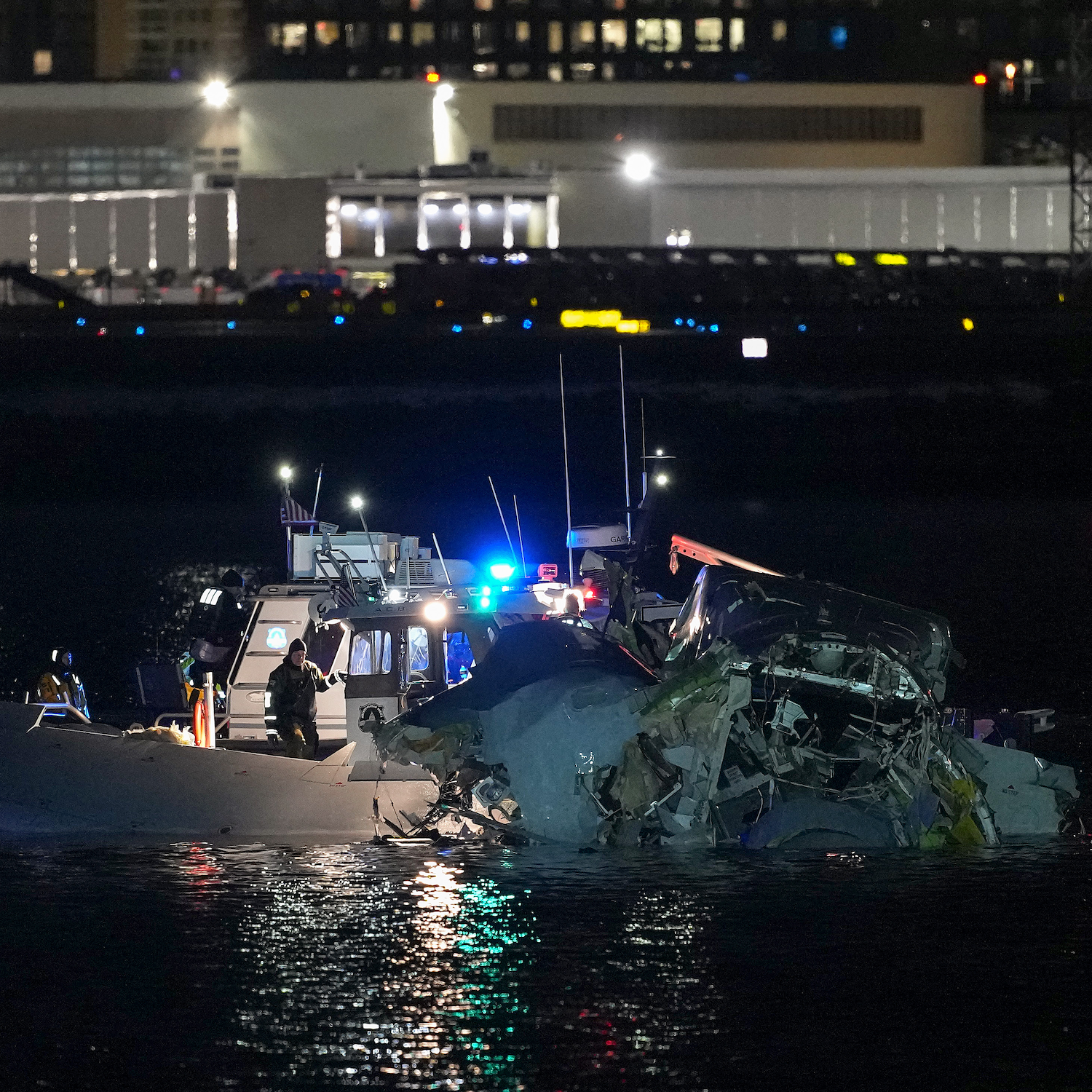
Good morning. It's Thursday, January 30th. I'm Shemitah Basu. This is Apple News today. On today's show, RFK Jr faces tough questioning in the Senate. Where foreign aid stands after widespread confusion from Trump's federal funding freeze and how a benefit concert for LA fire survivors came together in 48 hours. But first, an American Airlines plane collided with an Army Blackhawk helicopter over the Potomac river near Ronald Reagan Washington national airport in D.C. last night. Authorities say the plane was a small commercial airliner coming from wichita, Kansas, carrying 60 passengers and four crew members. And the military helicopter is believed to have had three people on board as of 6am on Thursday. Authorities did not confirm the number of fatalities, but at a press conference late last night, Kansas Senator Roger Marshall indicated there could be many.
- [01:07]
Roger Marshall
When one person dies, it's a tragedy. But when many, many, many people die, it's an unbearable sorrow. It's a heartbreak beyond measure.
- [01:17]
Shemitah Basu
Video of the incident shows two aircraft from a distance colliding and a bright fireball lighting up the sky. Crowds gathered to watch search and rescue workers looking for victims in the Potomac river, which was just above freezing cold temperatures. All flights from Reagan National Airport were grounded and the airport remained closed. In the morning, the D.C. cBS affiliate.
- [01:38]
Alex Ward
Spoke with a man whose wife was.
- [01:40]
Shemitah Basu
On the plane from Wichita. He saw on social media that something was going on at the airport. He appeared to be in shock as he spoke about what was happening.
- [01:48]
Michael Bennett
I'm just praying that somebody's pulling her out of the river right now as we speak. That's all I can pray for. I'm just praying to God. When was the last time you spoke with her? She texted me that they were landing in 20 minutes.
- [02:00]
Shemitah Basu
Also reported to be on the plane were a group of competitive figure skaters from the United States and Russia returning from a skate camp in Kansas, along with their families and coaches. President Trump was briefed on the situation in a statement. He thanked the first responders and said of the victims because May God bless their souls. Yesterday's crash happened on the first day of work for newly confirmed Transportation Secretary Sean Duffy. He spoke in his confirmation hearings about keeping America's skies safe. In particular, he said he would address the shortage of air traffic controllers.
- [02:36]
Sean Duffy
Safety will remain its hot priority. America needs more air traffic controllers. Many of you have talked about that with me.
- [02:42]
Michael Bennett
We want the best and the brightest air traffic controllers.
- [02:46]
Shemitah Basu
For some time now, air traffic controllers have been saying that they are stretched too thin and overall understaffed. The New York Times reports this is an issue that dates back to the early 1980s and the Reagan administration. Over the last 10 years, the number of fully trained controllers has dropped 10%, while airport traffic has increased 5%. This area near Reagan national is one of the country's most complex airspaces, with domestic flights, military planes and other aircraft competing for space in close proximity. The the Wall Street Journal reports the FAA began a review of its air traffic control operation weeks ago that wasn't made public, but the department confirmed to the Journal it was hiring an independent expert panel to review potential improvements. Still, experts say flying remains incredibly safe. It's been 15 years since the last major fatal plane crash involving a US airliner. In 2009, a plane traveling from New Jersey to Buffalo, New York Cross crashed into a house. 49 people on board were killed, as well as one person in the home. This is still a developing story. You can find ongoing coverage in the Apple News app.
- [04:04]
Alex Ward
The confirmation hearing process continues today for Robert F. Kennedy Jr. He's President Trump's nominee to lead the Department of Health and Human Services. Kennedy built a sizable following over the years by questioning evidence about the safety of vaccines and spreading a number of falsehoods. More recently, he's talked about his goals of eliminating ultra processed foods from schools and finding the root cause of chronic diseases, ideas that have attracted a lot of bipartisan support. Whether senators confirm his nomination will likely hinge on whether he's able to convince them that he's more interested in making changes around those ideas than he is on vaccine policy. Yesterday, Kennedy testified that he will not dissuade Americans from using vaccines, and he confirmed on the record that his own kids are vaccinated, though he has also said he wishes he hadn't gotten them vaccinated. During yesterday's hearing, a lot of lawmakers honed in on his record of spreading misinformation. Colorado Democrat Michael Bennett read some of Kennedy's past false statements aloud.
- [05:07]
Bill Cassidy
So I'm asking you yes or no, Mr. Kennedy, did you say that COVID 19 was a genetically engineered bioweapon that targets black and white people but spared Ashkenazi Jews and Chinese people?
- [05:21]
Sean Duffy
I didn't say it was deliberately targeted. I just. I just quoted an NIH funded and NIH published study.
- [05:32]
Bill Cassidy
Did you say that it targets black and white people but spared Ashkenazi?
- [05:36]
Sean Duffy
I quoted a study, your honor. I quoted NIH study that showed that.
- [05:40]
Bill Cassidy
I take that as I have to move on. I have to move on, move on.
- [05:45]
Alex Ward
Another tense moment was when Democratic Senator Sheldon Whitehouse of Rhode island told Kennedy he would need to promise the American people that he would never say vaccines are unsafe.
- [05:55]
Roger Marshall
We've just had a measles case in Rhode island, the first since 2013, and frankly, you frighten people.
- [06:04]
Alex Ward
Whitehouse and Kennedy have a history together. They're both outdoorsmen and at one point hunted, hiked, and rafted together while in law school at the University of Virginia. Kennedy, in the hearing, pledged to work with the senator if confirmed. But his old classmate didn't seem to think much of that promise.
- [06:22]
Roger Marshall
Unfortunately, Mr. Chairman, one of the things I've learned in my tenure in the Senate is that a nominee saying that they're willing to work with me amounts to exactly zero.
- [06:31]
Alex Ward
Another critical exchange happened with Republican Senator Bill Cassidy from Louisiana, who is himself a physician. He asked Kennedy about Medicare and Medicaid, including how HHS should care for beneficiaries who are eligible for both.
- [06:45]
Shemitah Basu
Kennedy.
- [06:46]
Alex Ward
Kennedy proposed integrating the programs in those cases. And when Cassidy asked him to expand on how he would do that, Kennedy incorrectly explained how the programs work.
- [06:56]
Sean Duffy
I'm not exactly sure because I'm not in there. I mean, it is difficult to integrate them because Medicaid is. Medicare is under a fee for service is paid for by employer taxes. Medicaid is a. Has. Is fully paid for by the federal government, and it's not fee for service.
- [07:19]
Alex Ward
Again, that is not true. Medicaid is jointly funded by states and the federal government. And throughout this exchange with Cassidy, Kennedy struggled to be specific about his plans. As Kennedy's confirmation hearing continues today, Cassidy will be a key person to keep watching. In fact, he's leading today's hearing in the Senate Health Committee. Cassidy had previously said that Kennedy was wrong in his stances on vaccinations. But the Senator has not indicated how he will vote on Kennedy's nomination. As we've mentioned before, RFK Jr. Is one of Trump's more controversial Cabinet picks. Two other nominees who are under a lot of scrutiny will face questions from senators today, too. That's former Democratic Representative Tulsi Gabbard, who is Trump's nominee for Director of National Intelligence, and. And Kash Patel, who's been selected to lead the FBI. You can find more coverage on all of those hearings today in the Apple News app. Let's turn now to the fallout from President Trump's sweeping order to suspend federal aid, both domestic and foreign. On Wednesday, the White House rescinded its order that appeared to freeze trillions of dollars in federal grants and loans. Yesterday, we talked a bit about how domestic services like Medicaid were initially impacted.
- [08:39]
Shemitah Basu
Today we'll focus on foreign aid.
- [08:42]
Alex Ward
Nearly all U.S. foreign assistance, typically only about 1% of the federal budget, but still hundreds of billions of dollars, was put on pause Friday by Secretary of State Marco Rubio, essentially sending out an immediate stop work order and a suspension of funds.
- [08:58]
Michael Bennett
And it led to chaos, not only just sort of in the internal bureaucracy, but in the world as well. As there were people on the ground in global hotspots doing important work, figuring out whether or not could continue doing their work. And more often than not, the answer was they could not.
- [09:10]
Alex Ward
That's Alex Ward at the Wall Street Journal. He told us it's not unusual to see a new administration come in, examine government spending and put it through a review process.
- [09:20]
Michael Bennett
What's odd about this is that they put the stop work order and that cancels a bunch of things. And their main case is that any scent sent abroad must help the United States must advance the global interests or the national interests of the United States.
- [09:37]
Alex Ward
The US Is one of the biggest contributors to global aid organizations. In 2023, it was responsible for nearly a quarter of all aid provided by wealthy nations. Secretary Rubio revised the order this week, issuing a temporary waiver for some programs the government has deemed essential to saving lives. That includes groups involved with medical services, food and shelter. A group that distributes life saving HIV drugs, for example, was allowed to continue. The exemption does not include healthcare programs that provide abortions or gender affirming care, even though medical experts say that can be life saving in some cases. Some humanitarian groups interviewed by CNN say even after what was supposed to be a clarifying memo from Rubio, it's been confusing to figure out if they're impacted. Many say the Trump administration has not officially told them if their work is covered by the exemption, so many are stuck in limbo. The longer this uncertainty continues, the more aid organizations are at risk of being forced to close permanently.
- [10:39]
Michael Bennett
People are just kind of begging for their programs to restart. That's basically what this is. You know, waivers makes it sound more technocratic. It's not like there's a waiver review office necessarily. People just saying my program should exist, please let my program exist.
- [10:53]
Alex Ward
Humanitarian officials have warned of catastrophic consequences if Trump's administration does not move quickly in this decision. One told cnn. If the suspension in aid services continues for even just a couple more weeks, thousands of lives are at risk. Here are a few other stories we're following Today, President Trump signed a lot of executive orders in his first days in office, but just yesterday he signed the first piece of legislation of his second term, the Lake and Riley act, passed with bipartisan support in the House and Senate, and directs Homeland Security to detain and deport people who do not have legal status that have been arrested for burglary, theft, larceny or shoplifting. The law is named after a young woman in Georgia who was killed by a Venezuelan man in the country without legal status. Her killer had previously been charged with shoplifting. Republican lawmakers said had such a law been in place, where Riley's murderer would have been deported sooner and her death could have been prevented. In other news, former New Jersey Senator Bob Menendez was sentenced to 11 years in prison for bribery, conspiracy, extortion and obstruction of justice. Menendez was found guilty of accepting bribes in the form of gold bars, Mercedes and cash in exchange for his influence on the powerful Senate Foreign Relations Committee. Menendez has maintained his innocence all along. When he left the courthouse, he blasted prosecutors in the Southern District of New York, the same office that prosecuted and convicted President Trump on 34 felony counts. He echoed Trump in calling his own trial a political witch hunt.
- [12:36]
Michael Bennett
President Trump is right. This process is political and it's corrupted to the core. I hope President Trump cleans up the cesspool and restores the integrity of to the system.
- [12:49]
Alex Ward
Menendez says he will appeal and finally, the Grammy Awards are this weekend and festivities kick off tonight with a massive benefit concert for Fire Relief. The show will be five hours long and feature some of the music industry's biggest names from multiple generations. Billie Eilish, Peso, Pluma, Joni Mitchell and Stevie Wonder are just a few names performing at two shows split between venues in Englewood. The Wall Street Journal has a story on how the mega concert came together in just 48 hours. When music mogul Irving Azoff watched fires ravage Los Angeles, he thought a concert would be the best way to raise money for relief efforts. One phone call led to another and before he knew it, a list talent and powerful executives like LA Clippers owner Steve Ballmer were on board signing up to be part of the show and help pay for it. Ticketmaster even waived its normal ticket fees. The concert will be streamed live and every dollar spent by fans go directly to Fire Relief. You can find all these stories and more in the Apple news app. And if you're already listening in the news app right now, we've got a narrated article coming up next. Staying with the Fires in la, New York Magazine examines the challenges of rebuilding and why it's so much more than just reconstructing homes. If you're listening in the podcast app. Follow Apple News Narrated to find that story. And I'll be back with the news tomorrow.