Loading summary
Transcript23 lines
- [00:00]
Shemitha Basu
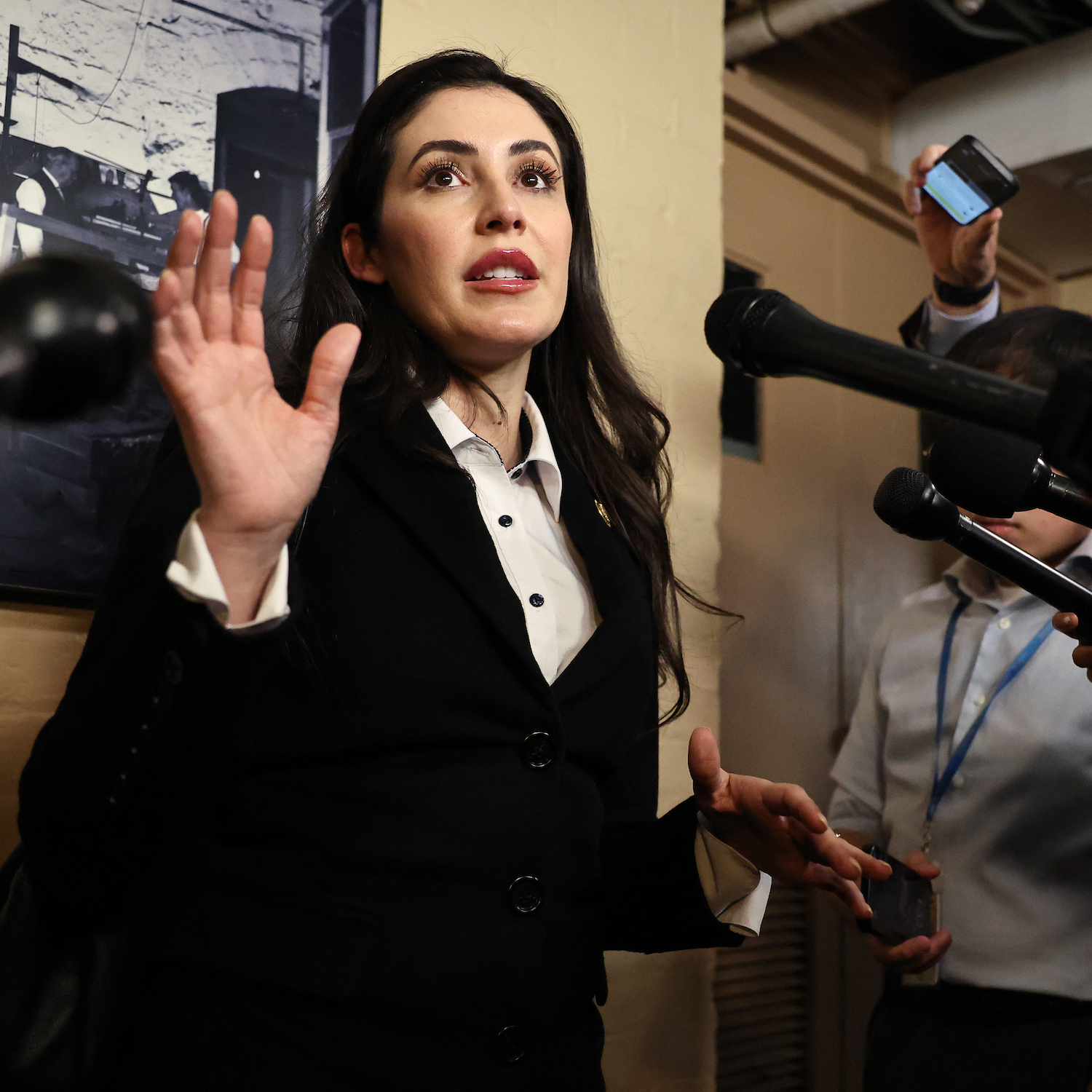
Hey there, it's Shemitha. I've got a quick request for you. If Apple News Today is an essential part of your morning routine, follow the show in Apple Podcasts. And if you have another 30 seconds, leave us a rating and a review, too. It helps other people find our show and it helps us know what you like about it. Thanks. Good morning. It's Friday, April 4th. I'm Shemitah Basu. This is Apple News Today. On today's show, the tiny country slapped with the highest tariffs, why it's not too late to prepare for the possibility of a recession. And a preview of this weekend's Final Fours. But first, we're going to spend most of today's show talking about news out of Washington this week. We've touched on most of the big headlines all week long, including special elections, tariffs, deportations. Also, been a pretty remarkable week for lawmakers on Capitol Hill, from two women representatives who effectively shut down the House to a marathon speech on the Senate floor. To help take a step back and take stock, I called up Alana Shore, senior Washington editor at Semaphore, and I started by asking her about a push led by Representative Brittany Petterson, a Democrat from Colorado, and Representative Anna Paulina Luna, a Republican from Florida. Both are moms, and both came together to demand a change in the rules to allow new parents to vote by proxy in Congress, something President Trump came out in support of yesterday.
- [01:42]
Alana Shore
It's a very, very personal issue right now for several members of Congress because their new and recent parents, particularly Congresswoman Anna Paulina Luna and Congresswoman Brittany Patterson, the leaders of this revolt on the floor, they said, hey, we think there should be an exception for new parents and not just mothers, fathers as well. You know, Brittany Petterson, for instance, has just had a baby.
- [02:04]
Shemitha Basu
For all of the parents here, we know that when our, when we have newborns, it's when they're the most vulnerable in their life. It's when they need 24, 7 care.
- [02:16]
Alana Shore
And leadership said, no, we want to draw a hard line against proxy voting. So Luna, the Republican big MAGA voice from Florida, decides, I'm going to start a discharge petition. Any member, if they feel like the party in charge isn't calling up a bill they care about, if they get the signatures of, in this case, 218, a majority of the House, it gets a vote on the floor. Simple as that. In this case, Luna, a Republican, got this discharge petition where it needed to be, and leadership decided, okay, instead of giving you this vote, we're going to Write into a procedural motion on other things, language shutting you down. And that was when Luna got allies on the Republican side to stand with every Democrat and defeat that procedural motion. Instead of negotiating with her, House Speaker Mike Johnson sent everyone home. And the reason for that is conservatives who oppose Luna, let's call them the House Freedom Caucus, even though it's more than that group have basically said, we, if you give in to her, are going to also oppose you bringing legislation to the floor. So it's one of those classic situations Mike Johnson has had since becoming speaker where he's caught between two factions. Given the size of his majority, he has no choice but to try to play hardball with one of them. If he gave in to Luna, he'd lose on the other end. And one subplot to this, Luna herself left the House Freedom Caucus this week in protest of its treatment of her. She was a member up until a few days ago. You know, Johnson has to decide if he wants to change course or keep basically choosing war. War with Luna. And until he does, it's going to be very hard to see him moving any legislation that's not, quote, unquote, subject to a rule.
- [03:50]
Shemitha Basu
Okay, let's turn to another moment that's being talked about a lot from this week on the Hill. Democratic Senator Cory Booker broke the record for the longest speech ever given on the Senate floor. It clocked in at 25 hours and five minutes. Here's just a little bit of it where he spoke about being inspired by the late Representative John Lewis.
- [04:08]
Cory Booker
He would not normalize a moment like this. He would not just go along with business unusual. He wouldn't know how to solve it. But there's one thing that he would do that I hope we all can do that. I think I did a little bit of tonight. He said for us to go out and cause some good trouble, necessary trouble, to redeem the soul of our nation.
- [04:33]
Shemitha Basu
So, Alana, what's been the reaction among Democrats to Booker's marathon speech?
- [04:38]
Alana Shore
Democrats are thrilled. I mean, look, did this do anything in terms of getting more votes to stop the Trump administration, which is their goal? No, but Cory Booker's job is head of communications for Senate Democratic leadership. Simply put, he is asked by his fellow Democrats to grab as much attention as possible. And, boy, did he do it with this tactic. It's not lost on a lot of Democrats that Booker successfully broke a record held by Strom Thurmond, the man who famously filibustered the Civil Rights act and is widely viewed as a racist by his modern Peers. So it was sort of a symbolic invention. Very important moment for a lot of Democrats to see a powerful black Democrat break that record.
- [05:17]
Shemitha Basu
Not to mention, I mean, the way that he did it, he literally did not step away. Right. He didn't sit the entire time. He could not use the bathroom during that entire time. And just to say he wasn't, you know, up there reading Green Eggs and Ham as we have seen some representatives do. Right.
- [05:33]
Alana Shore
Yeah.
- [05:33]
Shemitha Basu
He spoke on the issues pretty consistently for that whole 25 hour period. Does it represent a change for how Democrats might be thinking about confronting this administration?
- [05:47]
Alana Shore
It's more of what people call a vibe shift than a substance shift. What Democrats were looking for was the sound and image of a fighter. Right. I mean, in practice, they're gonna do things the same way they've always done it, which is namely pick their spots, protect their more battleground state members who can't exactly be taking particularly tough votes because they want to eventually get back to the majority. You know, all the somewhat disappointing compromises that come with modern politics. But I think what Booker gave them is kind of like this very camera ready image of like we're ready to scream and shout and holler about things we don't like, which they have really been missing.
- [06:24]
Shemitha Basu
Okay, let's move on to tariffs. The President announced sweeping tariffs on Wednesday with the country seeing import taxes it hasn't seen in many decades. Hours later, though, we did see four Republicans break with their party and join Democrats in the Senate on a vote, which we should say was largely symbolic, to repeal tariffs on Canada. What qualifies as the sort of economic breaking point where we might see more Republicans say we have to step in here.
- [06:55]
Alana Shore
Boy, that's a good question. One might say the most important question in not just Washington, but the country at this point, and it's really not clear to me. And if any reporter tells you they know they're lying. Just how much economic pain Republicans are willing to absorb on the President's behalf before they pull back and stop backing him on this. Because that pain is coming, by all accounts.
- [07:16]
Shemitha Basu
Okay, Alana, we can't end without quickly touching on this week's special elections where Republicans appear to underperform as the week closes out. How are you reflecting on what these races might tell us about what's to come?
- [07:30]
Alana Shore
You know, I. I think it's important that we look at those special elections and what they mean and don't mean. On Tuesday, the Wisconsin Supreme Court race went for Democrats after Elon Musk and frankly, Trump's entire firmament, you know, poured a lot of attention into backing the Republican candidate. At the same time, two seats in Florida that tilted pretty red historically over the years went to Republicans, but by far smaller margins than they have historically in the past. Now, here's the difference. These are what we call special election electorates. Like the group of voters coming out to these very peculiar races are different than the group of voters that come out in presidential elections. I saw one stat that really stunned me that said, you know, if the same electorate came out in November 2024 as did in these races, Harris would have won easily.
- [08:19]
Shemitha Basu
So by that, do you mean different voters, like a different makeup of voters, or just, I mean, certainly fewer.
- [08:25]
Alana Shore
Fewer, yes.
- [08:26]
Shemitha Basu
But by proportion it means the makeup is just different.
- [08:29]
Alana Shore
And, you know, it's a difference in what Trump advisors called during the campaign, low propensity voters. That's who they were targeting. People who didn't really care about Congress seats necessarily cared about Trump. A lot of Joe Rogan listeners, right? That's the overlap or are what we call collectively low propensity voters. Right. They're the kind of folks who stay home when it comes to these special elections and Supreme Court races. But Democrats tend to grab more of the high propensity voters. So I think it's very easy to look at these special elections and say, whoa, Republicans are in trouble. They're headed for a fall the same way that happened in 2018 after the first two years of Trump, I think not so fast. It's more complicated. And while it's really tough to tell whether Republicans will be able to bring these low propensity type voters out in 2026, they certainly have a shot. And I think your listeners should keep paying attention to those trends in terms of who's coming out and casting votes in which races. 2026, unless he really means that about trying to run for a third term against the Constitution, will be the last time Trump is de facto on the ballot.
- [09:30]
Shemitha Basu
Alana Shore with Semaphore. Thank you so much for joining me.
- [09:33]
Alana Shore
Thanks for.
- [09:42]
Shemitha Basu
Before we let you go, a few other stories we're following. Economists, experts and journalists are still sorting through the fallout of the massive tariffs that President Trump imposed on Wednesday. Markets slid with stocks on track for the steepest decline since March of 2020. And there are broad consequences for individual nations targeted by the tariffs. Reuters reports on the impact to Lesotho, a small African nation that Trump ridiculed as a country nobody has ever heard of. Last month, in his joint address to con Congress, the administration placed a whopping 50% reciprocal tariff on the country, the highest on the list. Exports to the U.S. primarily diamonds and textiles, make up more than 10% of Lesotho's GDP. An economist told Reuters that the tariffs will effectively kill the textile industry in the country due to the formula that the administration used to calculate percentages. Some of the poorest nations are facing the highest tariffs. Reuters also explains how some largely uninhabited territories and islands are facing tariffs, with some joking about penguins having to pay the cost. Let's stick with the economy After Wall Street's worst day in more than five years, a lot of people are feeling understandably nervous about the possibility of a recession, including some economists. But it's not too soon or too late to start preparing your finances, so you're in the best possible position. USA today's personal finance reporter recommends you focus on paying off any credit card debt or high interest debt as soon as possible as needed. Try transferring that debt to another loan that has a lower interest rate. And if you're debt free, try to make sure you have enough money in savings to cover at least three months of living expenses. One way to grow that reserve of money more quickly, USA Today says try putting it in a high yield savings account. And finally, another way to keep more cash in your pocket during these uncertain times is to resist the sports betting market. The final four starts tonight for the women, tomorrow for the men. On the women's side, South Carolina takes on Texas, then UCLA and UConn face off tomorrow. In the men's bracket, Auburn takes on Florida, and then Houston tips off against Duke. The women's title game is Sunday night and the men's on Monday. You can find all these stories and more in the Apple News app. And if you're already listening in the news app right now, we've got a narrated article coming up next. Less rain and more drought have made it harder for coffee producers to contend with the never ending demand for beans. Smithsonian magazine spoke to a botanist who is scouring remote corners of the earth in search of new alternatives. If you're listening in the podcast app, follow Apple News plus Narrated to find that story. Enjoy the weekend and I'll be back with the news on Monday.