← Apple News Today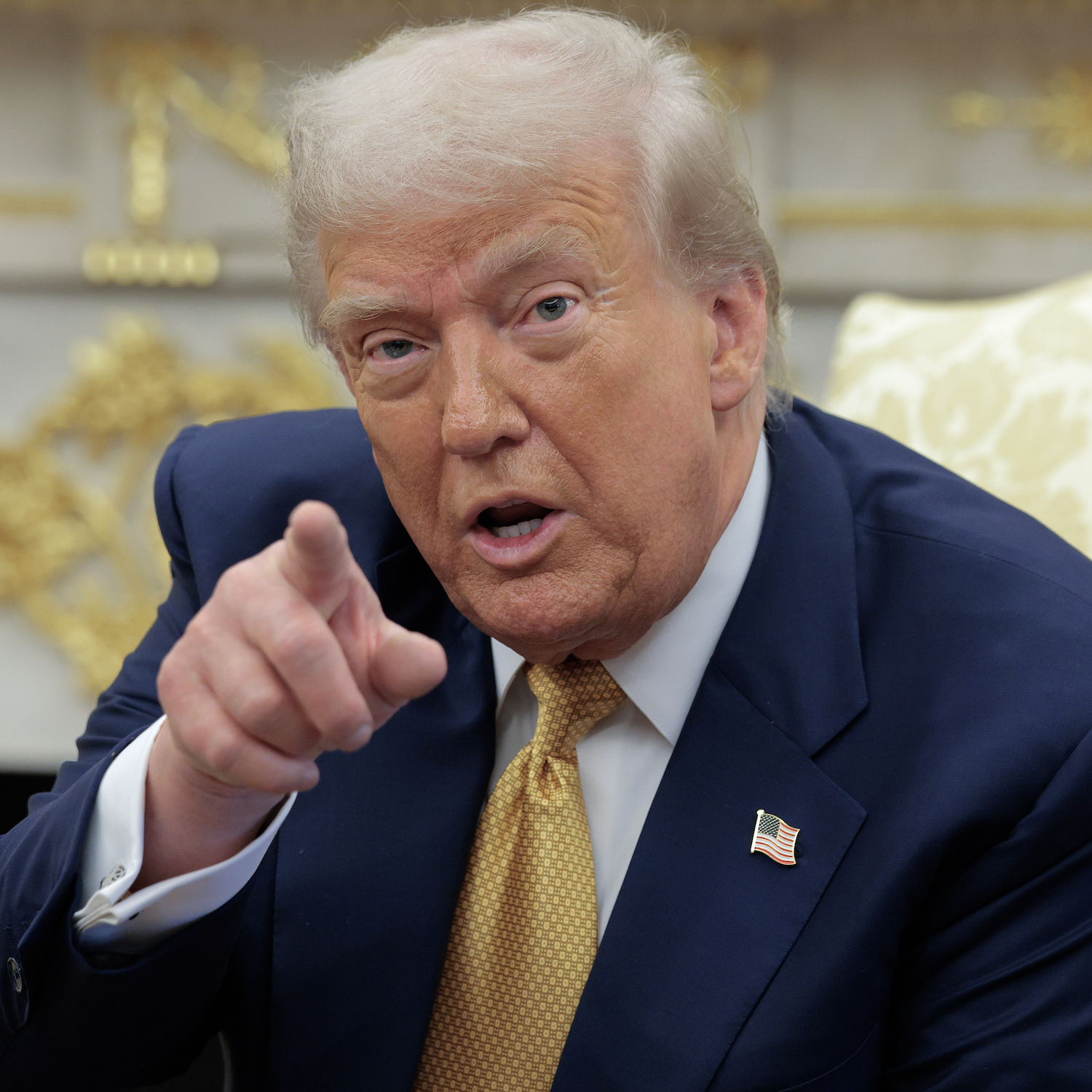
Loading summary
Transcript27 lines
- [00:05]
Shemitah Basu
Good morning. It's Wednesday, July 23rd. I'm Shemitah Basu. This is Apple News today. On today's show, Israeli troops push into parts of central Gaza so far untouched by war. A new report details the revealing cockpit exchange from the Air India crash and the mystery at the earth's core. That's short. Changing our summers.
- [00:29]
Brian Stelter
Foreign.
- [00:34]
Shemitah Basu
But first to President Trump's lawsuit against the publisher of the Wall Street Journal, which he filed last week after the outlet reported that Trump wrote a birthday note for convicted sex offender Jeffrey Epstein back in 2003. The note apparently included a hand drawn image of a naked woman. Trump has denied ever writing it and he wants a minimum of $20 billion in damages. He also banned the Journal from the White House press pool for his upcoming trip to sc. This is far from the first time Trump has retaliated against the media over coverage he doesn't like or support. Last year, he sued ABC and cbs, both of whom agreed to pay tens of millions of dollars to settle. Not long after he took office this year, he banned the Associated Press from the White House press pool over its decision to use the term Gulf of Mexico, then seized full control of the press pool from the White House press corps entirely. He pushed to cut federal funding for Voice of America, PBS and npr, and very recently succeeded with PBS and npr. But this suit against the Journal is unusual. It appears to be the first time a sitting president has ever sued a media organization over a story.
- [01:45]
Andrew Tangle
There is nothing quite like this case.
- [01:48]
Shemitah Basu
That's Brian Stelter, chief media analyst at cnn.
- [01:51]
Andrew Tangle
Historically, presidents have used their free speech platforms to push back on articles, to push back on publishers, but they've never gone to court alleging defamation. Of course, the bar is set very high for a libel suit brought by a public figure. So we don't know if this is really a genuine lawsuit on legal grounds or if it's more of a publicity stunt by the president.
- [02:14]
Shemitah Basu
To prove libel in court, Trump has to provide evidence the Journal acted with actual malice, meaning he has to prove they knowingly published a false article or acted with reckless disregard for the truth. Assessing the merits of the case is difficult because the Journal did not publish a copy of the letter. It only described the contents. But Stelter says, we do know the Journal gave Trump advance warning their report was coming so he could comment, a standard journalistic practice. Trump told them he would sue and they published anyway, which Stelter says indicates they stood behind their journalism. In response to the lawsuit, a spokesperson for Dow Jones said that they have full confidence in the accuracy of their reporting. There's also the question of whether Trump followed Florida law when filing the lawsuit. Anyone suing a newspaper for defamation has to provide a five day notice, which legal experts told Reuters did not appear to happen in this case. So we'll have to see where things go next in court. But bigger picture, Stelter says this suit is worth paying attention to because it seems to be a clear warning to all news outlets.
- [03:20]
Andrew Tangle
When you sue someone for $20 billion, you're not just saying, I will ruin you. You're also saying to others, you better watch out or I'll try to ruin you next. And that essentially is the chilling effect that this lawsuit could be having.
- [03:36]
Shemitah Basu
And that presents some difficult questions for the media at large.
- [03:40]
Andrew Tangle
What we're seeing from the media industry is the same dynamic we've seen from universities and big law firms and other Trump targets. It's a question of fight or fold. Some of these media companies are willing to fold. They are willing to pay lots of millions of dollars to make Trump's threats go away and to achieve some form of peace. For the time being, I think is deeply disheartening to a lot of journalists, to a lot of entertainers, like Stephen Colbert, for that matter. You know, Colbert went on the air and called this a big fat bribe just a few days before his show was canceled. There's no indication those two facts are related, but it speaks to the environment that both entertainers and journalists are operating in right now.
- [04:28]
Shemitah Basu
Now to Gaza, where for the first time since the war started, Israeli ground troops pushed into part of central Gaza, where tens of thousands of Palestinians live. Homes and mosques were among those hit by Israeli attacks, according to the Guardian, so were warehouses and staff accommodations for the World Health Organization. A representative for the WHO says women and children were forced to evacuate on foot during active combat, while male staff members and family members were, quote, handcuffed, stripped, interrogated on the spot and screened at gunpoint. And the WHO says critical medical supplies that were held in its main warehouse were damaged by the attacks, including antibiotics, cancer, medication and dialysis supplies. Before now, the city of Deir El Bala had been relatively untouched by the war, possibly over. Calculated by the Israeli military that hostages may be there. But now Israel has ordered Palestinians in the area to evacuate, which means Israel now occupies nearly 88% of the Gaza Strip, pushing over 2 million Palestinians to pack into the rest of the enclave. Meanwhile, Gaza's hunger crisis is getting worse and the aid centers more deadly. Israeli forces have killed over 1,000 people seeking aid over the last two months, with most deaths occurring near aid sites run by the US Israeli Bag Gaza Humanitarian Foundation Sunday was particularly violent. Dozens of Palestinians were killed and wounded when Israeli troops opened fire near a border crossing as UN Aid trucks entered Gaza. Here's how one Palestinian man described the chaos for pbs.
- [06:07]
Brian Stelter
We were just going to get food to bring for our children. We were not going to beg or fight. We just wanted to eat.
- [06:15]
Shemitah Basu
Dr. Nick Maynard, a surgeon volunteering at Nasser Hospital, told NPR about the types of injuries he's treated in recent weeks, some in patients as young as 11 or 12 years old.
- [06:27]
Dr. Nick Maynard
One day we will see mainly abdominal gunshot wounds. Another day we'll see head gunshot wounds. Another day we'll see neck gunshot wounds. So there's a very clear pattern that not just me, but all of us have seen in this hospital whereby particular body parts are targeted on particular days.
- [06:47]
Shemitah Basu
He called it beyond coincidence. NPR asked the IDF for comment, and it responded by saying it rejects claims of intentional harm to individuals and that casualties at aid sites are under examination. Dr. Maynard also said that he and his colleagues are seeing extreme malnutrition.
- [07:05]
Dr. Nick Maynard
I saw the signs of malnutrition on both my previous trips in December 23, January 24, and then later that year. But the malnutrition now is much, much worse.
- [07:18]
Shemitah Basu
Al Jazeera spoke to another physician at the hospital, Dr. Deirdre Noonan, an orthopedic surgeon from Canada.
- [07:25]
Dr. Deirdre Noonan
Young adult men, adult women, teenagers that should be at the prime of their life and the peak of their health, that are just skin and bones that I can trace out every rib on people who have no other reason to be hungry than the fact that they are being intentionally deprived of food.
- [07:45]
Shemitah Basu
The head of Gaza's largest hospital, Al Shifa, says at least 21 children in their care have died from malnutrition and starvation in recent days. International outcry, meanwhile, continues. UN Secretary General Antonio Guterres told the UN Security Council yesterday that the quote last lifelines keeping people alive are collapsing. And the foreign ministers of 28 countries signed a letter on Monday condemning the Gaza Humanitarian foundation, criticizing Israel's blockade on aid and calling for an end to the war. Let's turn now to what investigations have revealed so far about the Air India crash that killed 260 people last month, including all but one of the passengers. It was the deadliest aviation disaster in decades, according to a preliminary report recently released by Indian authorities, critical fuel switches were briefly turned off, then on again shortly after takeoff, so the plane lost thrust and altitude quickly.
- [08:55]
Brian Stelter
Those switches shouldn't be moved at that point of the flight from our understanding.
- [09:02]
Shemitah Basu
That's Andrew Tangle, an aviation reporter with the Wall Street Journal.
- [09:05]
Brian Stelter
Those are switches that pilots use to turn on the engines at the start of the flight. They use them to shut down the engines at the end of a flight. They can use them to shut down an engine if it's on fire after they go through a procedure to diagnose.
- [09:22]
Shemitah Basu
What'S happening, Tangle told us the report cites a black box recording from the cockpit. One pilot is heard asking the other why he moved the switches to cutoff position right after takeoff. The other pilot denied doing so in response.
- [09:37]
Brian Stelter
What the motivation was, who knows? I mean, could it have been some sort of muscle memory, some sort of confusion, some sort of just terrible mistake? Could it have been something worse? We really don't know at this point. The rest of the cockpit voice recorder will be key, as will anything from the biographical, medical, psychological histories from the pilots.
- [10:02]
Shemitah Basu
Authorities Tangle spoke to said it's still very early in the investigation and too soon to draw any definitive conclusions. And new information discovered later could potentially contradict initial assessments. There are many parties involved, including the U.S. agency, the National Transportation Safety Board, since the plane was a Boeing 787. Yesterday, Air India said that it found no issues with the locking mechanisms across its Boeing fleet after inspecting all of the planes. But the report from Indian authorities has not ruled out malfunctions, maintenance issues or potential design flaws.
- [10:37]
Brian Stelter
It's good to keep an open mind. Investigators, I think, are generally trained to do that. They talk about how they have to examine all factors. And a lot of times in articles about these accidents, we point out that new information that comes to light can contradict early assessments and shift the focus and totally change the direction of investigation. So that still could play out.
- [11:02]
Shemitah Basu
It could take months or even years for the investigation to conclude. Before we let you go, a few other stories we're following. Former President Barack Obama issued a rare rebuke of President Trump, responding to Trump claiming without evidence that Obama committed treason and helped rig the twin 2016 and 2020 elections. Trump spoke yesterday from the Oval Office on the heels of Director of National Intelligence Tulsi Gabbard, publishing a short report claiming that evidence was suppressed that demonstrated Russia did not try and influence the 2016 outcome. Multiple US intelligence reports have concluded the opposite, that Russia was trying to disrupt American democracy in 2016. That includes the probe by Robert Mueller and a bipartisan investigation by the Senate Intelligence Committee, led at the time by now Secretary of State Marco Rubio. Obama's office described Trump's claims as ridiculous, bizarre, and an attempt at distraction. These attacks come as Trump faces pressure over his links to Epstein and what the Department of Justice might release about his criminal activity. Meanwhile in Congress, House Speaker Mike Johnson cut business short today a day early and is sending members home for their five week summer recess after fallout from the debate over the Epstein files effectively ground business to a halt. The Democrats had planned to force more votes on amendments intended to pressure the Justice Department to release additional information in the investigation, and Republicans tabled bringing more bills to the floor in order to avoid that. Axios reports that some rank and file Republican members are still pushing for additional information from the DOJ before the recess officially starts later today. But Johnson has resisted and finally to a mystery that's shrinking your summer. Maybe not noticeably, but definitely measurably. Over the last 10 years or so, scientists say the average length of a day has been shrinking, usually by just a matter of milliseconds. Variations in Earth's rotation are largely to blame. But there's also something weird happening in Earth's core that physicists can't explain. Its rotation has been slowing down for the last 50 years, which has forced everything around Earth's core to speed up in order to compensate. So far, July 9th has been the shortest day of the year. Yesterday was projected to be short by a blink of an eye, too. And there's one more historically short, short day coming up on the calendar August 5th. You can find all these stories and more in the Apple News app. And if you're already listening in the News app right now, we've got a narrated article coming up next. The New Yorker profiles a New York pediatrician who experienced a horrific personal tragedy and the unique life he pursued in its aftermath, finding redemption in helping patients and strangers alike. If you're listening in the podcast app, follow Apple News plus Narrated to find that story. And I'll be back with the news tomorrow.