Loading summary
Transcript2 lines
- [00:01]
A
Hi everyone. Gideon here. Our team is off today for the July 4th holiday weekend, but we're bringing you something special in place of our usual daily show, a narrated article from Popular Mechanics that we're making free for everyone. It examines why thousands of cities across the country are shrinking and what ghost towns of the past can teach us about what happens when thriving places start to fall silent. Subscribers to Apple News plus can get narrated articles like this one every day, and your News plus subscription includes access to over 500 publications, 100,000 recipes, premium local news, exclusive daily puzzles and so much more. Go to apple.comnews to start your free trial today. Hope you had a great July 4th. We'll be back with the news tomorrow.
- [00:57]
B
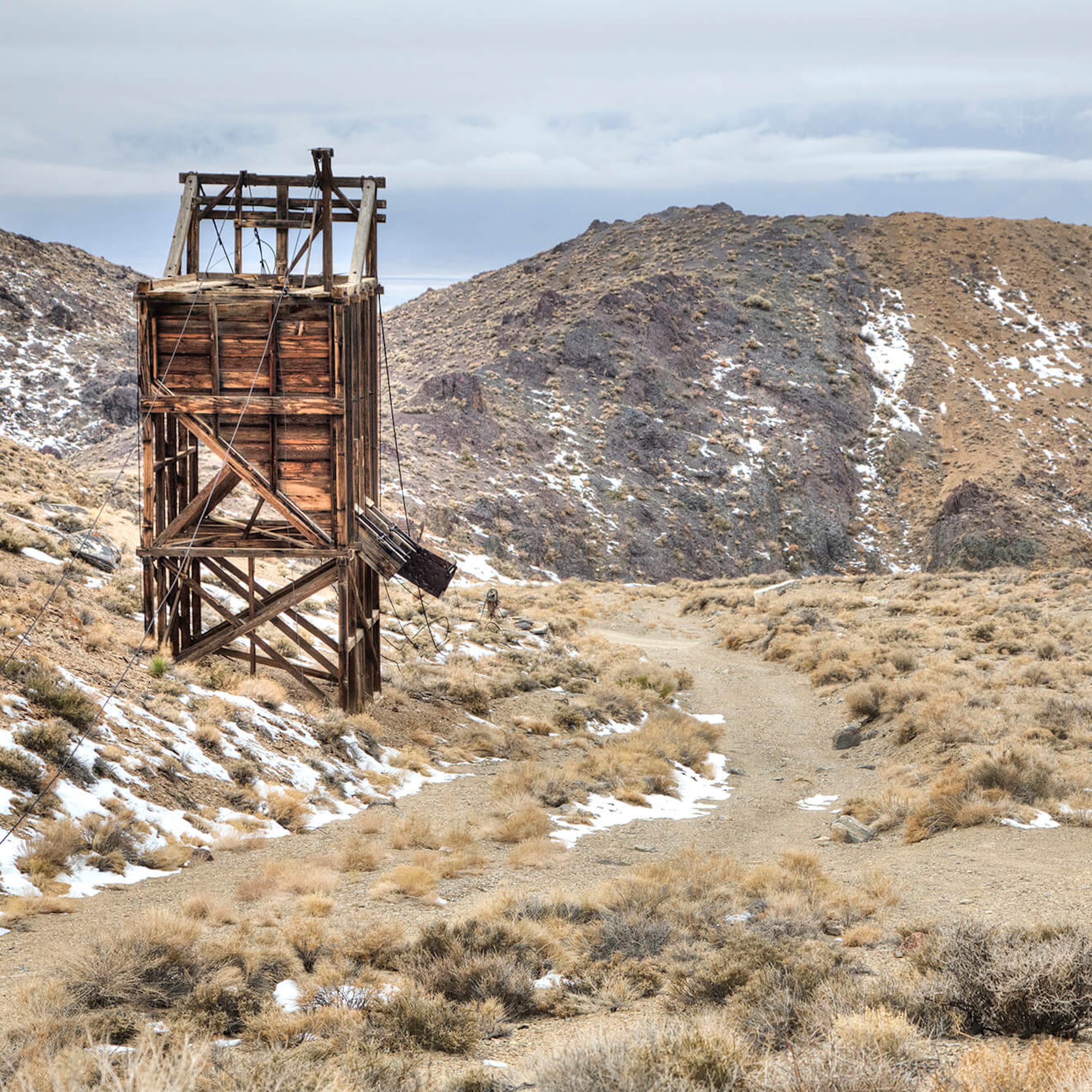
America could be headed toward a future of ghost towns Research suggests that nearly half of US Cities may shrink this century. History offers clues to how once thriving places just disappear. Written by Elizabeth Raine for POPULAR Mechanics Narrated by Kyla Garcia for Apple News subscribers. Ghost towns often conjure visions of tumbleweeds blowing in the desert through what were once mining villages or trading outposts but now contain little more than the skeletons of saloons, shops, houses and other buildings being reclaimed by the barren earth. Shelves are shrouded in dust. Doors creak on rusty hinges. Many of the gold rush phantoms that used to bustle with commerce and commotion were abandoned more than a century ago, and if they aren't haunted today, they seem to be. Ghost towns, it turns out, are not only relics from the past, but may also be harbingers of the future. The city you live in right now could one day become a shell of itself. One 2024 study published in the journal Nature Cities found that many urban areas still pulsing with life are experiencing depopulation that might someday lead them to the same fate as settlements that sprang up during the mining boom of the mid 19th century. In fact, the study reports that nearly half of US cities will have experienced population decline by the year 2100. And it also estimates that urban areas in the Northeast and Midwest may undergo the biggest losses as residents relocate to the south and West. Vermont and West Virginia are most at risk, according to the research, with the potential for 80% of cities in those states to shrink, Illinois, Mississippi, Kansas, New Hampshire and Michigan aren't far behind, with up to 75% of urban areas at risk for population decline. Cities such as Cleveland, Buffalo and Pittsburgh, and even currently growing cities like Syracuse and New Haven in the Northeast may all experience population collapse. Why would a city that's seemingly growing be susceptible to this kind of change. Yuchang Zhang, a doctoral candidate at Tsinghua University in Beijing, is an urban science researcher. In a recent study published in Habitat International, Zhang and his team explored potential ghost cities in newly developed urban areas. They observed that despite newer developments having strong infrastructure such as roads, what they lack is the functional dimension of more established cities. Zhang defines functional dimension as the density of amenities, services, and commercial activities. Newer cities may struggle to attract more residents because they lack what he calls life places schools, shops, and hospitals that support everyday life. People are fundamentally attracted to areas with high urban vitality, defined as a combination of dense road networks, abundant points of interest, and population concentration, he says. Our research found that globally people are still most drawn to older, established urban areas rather than newly developed zones. Post War America seemed to belie that preference. In the mid to late 20th century, many people moved out from dense urban cores towards suburban areas. Highways and rising car ownership after World War II made suburban living more accessible. At the same time, urban manufacturing was declining, leading to further population losses in major cities such as Chicago, Detroit, and Philadelphia. More recently, the COVID 19 pandemic accelerated existing demographic trends. In 2021, the United States recorded its slowest population growth in nearly 250 years. Slower growth can create challenges for cities as unused infrastructure becomes more expensive to maintain and may lead to reduced services like electricity, transit, and Internet access. The critical trend we are observing is urban land expansion, significantly outpacing population growth. This is particularly evident in North America and parts of Asia, Zhang says. In many suburban or peri urban ghost cities, we see infrastructure like wide streets and lighting is built first, but the population and services do not follow. To understand how places that once teemed with life can fall silent, it helps to look at a few very different kinds of ghost landscapes. Some were thriving cities long before European contact, others were boom towns built almost overnight around mineral wealth. And some places were reshaped by human intervention in ways that erased entire ecosystems. Each tells a slightly different story about how populations gather and why they sometimes disappear. Cahokia Mounds Urban areas have been abandoned long before prospectors were scrambling for gold. Cahokia Mounds, now a UNESCO World Heritage Site, was once a thriving pre Columbian metropolis that sprawled over 4,000 acres at the confluence of the Missouri, Mississippi, and Illinois rivers in a fertile region known as the American Bottom. It echoed modern cities with buildings that rose like skyscrapers, spacious central plazas, and several wood henges that were possibly used for solstice observations. Much like England's Stonehenge mysteriously abandoned what is known as the largest indigenous city in North America has been reduced to little more than grassy burial mounds and the foundations of what were once buildings. Urbanism seems to emerge around the world at different times because certain places or landscapes do seem to have the power to attract people who want to be there for the benefits it affords, usually having something to do with improving the social, spiritual, economic, or medical well being of people, explains archaeologist and Cahokia Expert Timothy Pawkotat, Ph.D. professor emeritus at the University of Illinois, Urbana Champaign. It seems to be true that early urbanism generally, and cities in particular, provide a more orderly way of life, especially when we are talking about the earliest cities in their respective parts of the world. Pockatat's work has examined why a city that was apparently flourishing 900 years ago is ended up completely abandoned several hundred years later. Cahokia is thought to have emerged with the cultivation of maize, and the warm, humid climate at the time was ideal for farming. The rise of Cahokia around What is now St. Louis was also not a coincidence. The area had the advantage of plenty of floodplain farmland along with swathes of farmland on the edge of the prairie. But still near the floodplain. This locale was also surrounded by sinkhole caverns, much like the Maya of ancient Mesoamerica, and Cahokians believed that caves were sacred places where the living could connect with ancestors and gods of the underworld. I believe we must link external and internal forces when considering Cahokia's depopulation, says A.J. white, Ph.D. and assistant professor of anthropological archaeology at Indiana University, Indianapolis. External climatic forces, including flooding of the Mississippi river and summer season droughts, which likely occurred in the late 12th century. These external forces would have been a challenge to residents of Cahokia, but they certainly did not cause everyone to leave the site at once, as Cahokia continued for nearly two centuries after this time. When White investigated the ghosting of Cahokia mounds, he took a unique approach. White is an expert on coprolites, or fossilized feces. He and his research team paddled out to nearby Horseshoe Lake and dug up core samples of mud from deep in the lakebed. Back in the lab, they gauged levels of coprostanols. These are byproducts of sterols, steroid alcohols that are broken down by gut flora and found in feces. Coprostanols can be preserved for hundreds to thousands of years and gave White an idea of population shifts in Cahokia over centuries of occupation. Declines in those fecal compounds mean decreasing populations. White measured oxygen isotopes from the time of the most significant population decline, as indicated by the compounds finding what could be evidence of flooding and drought behind the depopulation of Cahokia, those were possibly not the only culprits. At a societal level, I think Cahokia experienced a major change through increased inequality as those most impacted by flooding and droughts lost resources and social standing, whereas those less affected benefited from social and economic obligations of the less fortunate, he says. Just look at the differential impacts of climate change on communities today. Cerro Gordo like many forsaken towns of the Old west that could easily double as movie sets, Cerro Gordo sprang up in Owens Valley on the western slope of California's Inyo Mountains near Death Valley, where when miner Pablo Flores struck veins of Silver in 1865, Mexicans who had previously hunted silver in the area, which they named Fat Hill for its hidden riches had been onto something. With mining and smelting operations underway and businessmen investing heavily in newfound treasure, the town was incorporated into the Lone Pine Mining District a year later, and hordes of prospectors followed. By the 1870s, Cerro Gordo was booming. Unearthing silver ore and shipping it to Los Angeles brought in massive profits as high as $300 per ton, about $8,000 today. There was just one problem. The region was devoid of water sources, and even the nearest taps, which were six miles away and accessible only by foot, mule or horse, were quickly depleted. Firewood that provided charcoal for furnaces was also in short supply. It needed to be hauled in from the forests of the Sierra Nevada, where the local native population lost acres of pinyon pines. An 1872 issue of the Los Angeles News stated that trade with Cerro Gordo was the silver cord that binds our present existence. Should it be unfortunately severed, we would inevitably collapse. The sense of foreboding from that article haunted miners, as furnaces needed to be shut down and the water supply dried up, production temporarily slowed, and while enough ore was dug up to continue for a while, at least one mine was cleaned out. Fires that arose in the dangerously dry climate took down mine buildings. Furnaces closed down permanently, and lead and silver prices plummeted. Some mines were revived by the early 1900s, when the Great Western Ore Purchasing and Reduction Company bought Cerro Gordo with plans to process ore that had been seen as low grade but could now be processed to turn a decent profit. High grade zinc deposits were found a few years later, which kept the town alive from its heyday until 1938, Cerro Gordo grossed about $17 million now nearly $400 million in revenue. Then the few Remaining miners sought their fortunes elsewhere. Abandoned for decades, it had almost literally fallen apart by 2018, when entrepreneur Brent Underwood and his business partner at the time, John Beer, bought it for the bargain price of $1.4 million, intending to restore what remained so tourists could visit a portal to the past. But bringing the weathered bones of Cerro Gordo back to their former glory proved to be a daunting task. Having lived in this ghost town since the pandemic, Underwood runs a YouTube channel, Ghost Town Living, to report on restoration progress and educate the curious. He is currently its sole inhabitant. As he told Popular Mechanics in a 2020 interview, there is nothing he would trade his lifestyle for. But it does have its drawbacks. With Owens Lake drained after Los Angeles decided to redirect its water supply, water is not that much more accessible than it was during the mining years. You can imagine life without running faucets, but living it every day is another story, he said. With no plumbing, I use an outhouse and wash my hands in a bowl to shower. I warm a rubber bag of water in the sun and then let it dribble down on me from above. I long for a sink, a washing machine and a garden hose. Descending the mine shafts for water can be perilous. After Underwood heard rumors of subterranean water leakage and a sump with a dead pump 700ft underground, he recruited an electrician and a lift operator, along with someone who had previous experience going down the shaft to make the journey. The cable of the 150-year-old lift was susceptible to breaking down anytime. When they finally reached the bottom, they replaced the broken pump with a functional one. That is now the reason Underwood's house has the luxury of running water. Though a 2020 fire devastated the empty American hotel, Underwood is optimistic about Cerro Gordo's future and may make it into a tourist attraction like some restored ghost towns, such as the famous Gold rush specter of Bodie in the eastern Sierra Nevada. A couple hundred years from now, I hope people think about the fire of 2020 as just another chapter in Cerro Gordo history, he says. With our new plan, we'll rebuild the American Hotel as authentically as possible. But this time we'll have a sprinkler system. Tulare Lake Some ghost towns were never even towns to begin with. In California's San Joaquin Valley, Tulare Lake was there. Until it wasn't. Then it reappeared, until it was once again gone. Since farmers desperate to water their arid lands drained the lake for irrigation during the 1890s, it has gone through an eerie cycle of materializing and vanishing, Tulare Lake has seen comebacks in the 1930s, 1960s, 1980s, and most recently, 2023. It was once California's most expansive lake. At 100 miles long and nearly 30 miles wide, Fresno was situated just off its banks. It used to be a rest stop for birds on the Pacific Flyway, a migratory route that spans from the edge of the Pacific Ocean and the west coast of Mexico to the Rocky Mountains, all the way north to the Arctic and as far south as Patagonia. When it disappears, it takes an entire habitat with it. During her time as a postdoctoral research fellow at Northeastern University, Vivian Underhill, Ph.D. an expert in groundwater hydrology and environmental justice involving oil and water extraction, investigated the lake and its bizarre history when it experienced its latest resurgence. Most mainstream media coverage has focused on what the lake has flooded farm equipment, crops, dairies, and homes, she notes in a study published in Open Rivers. They frame this water as catastrophic flooding that has destroyed millions of dollars of crops and equipment. But these are not only floodwaters. This is a lake returning before farmers and gold prospectors came to the San Joaquin Valley, the the area around the lake was populated by the Tachi Yokut tribe, who knew it as Paishi, or Big Water. Paishi was more than a lake to these indigenous people. They built their homes near its life giving waters, which were once teeming with fish and surrounded by edible plants, serving as a main source of food for the Tachi population. The Tu reeds that grew around the lake were woven into thatched roofs, mats, baskets, and dolls. The area also used to be a cultural and spiritual center as well as a trade route where they would trade with other Yokut tribes. In the late 19th century, farmers were incentivized to drain water sources because they would be allowed to own otherwise dry land if they could irrigate it enough for it to be arable. The Tachi still felt the lake would return and with it the spirits of their ancestors. The draining of lakes and rivers for farmland had forced them and other Yokut tribes out of their ancestral lands. With colonialism came pollution and climate change that threatened the future of what had become a dry lakebed. Then melting snow and heavy rains brought about Tulare Lake's 2023 resurgence. Not only did creatures endemic to the lake return, but even the weather seemed to go back in time with higher humidity levels and rustling breezes that were at least 10 degrees cooler than what they'd been. While there is a dearth of rainfall in the San Joaquin Valley. Rivers in the area historically filled and often flooded Tulare Lake and others surrounding it. I love the fact that it came back for us, tachi cultural liaison Kenny Barrios told Underhill in the study. I love the fact that it took over the land that was taken from us. I love the fact that it's resilient and it still keeps returning, even through the destruction that they tried to take it away. The lake is just like us. Depopulation from bygone eras may predict the trends of the future. If the dead could speak, what archaeologists and anthropologists are discovering about these forsaken locales may be their final words. That was America could be headed toward a future of ghost towns. Written by Elizabeth Raine for Popular Mechanics, Produced by Apple News.