Loading summary
Transcript35 lines
- [00:05]
Yasmeen Khan
Good morning. As the White House considers a strike on Iran, the President's top general reportedly offers a stark warning.
- [00:12]
Alex Ward
The Pentagon's basically saying, okay, if you want to go big, well, then, you know, the bigger it is, the more risks you incur. Mr. President.
- [00:19]
Yasmeen Khan
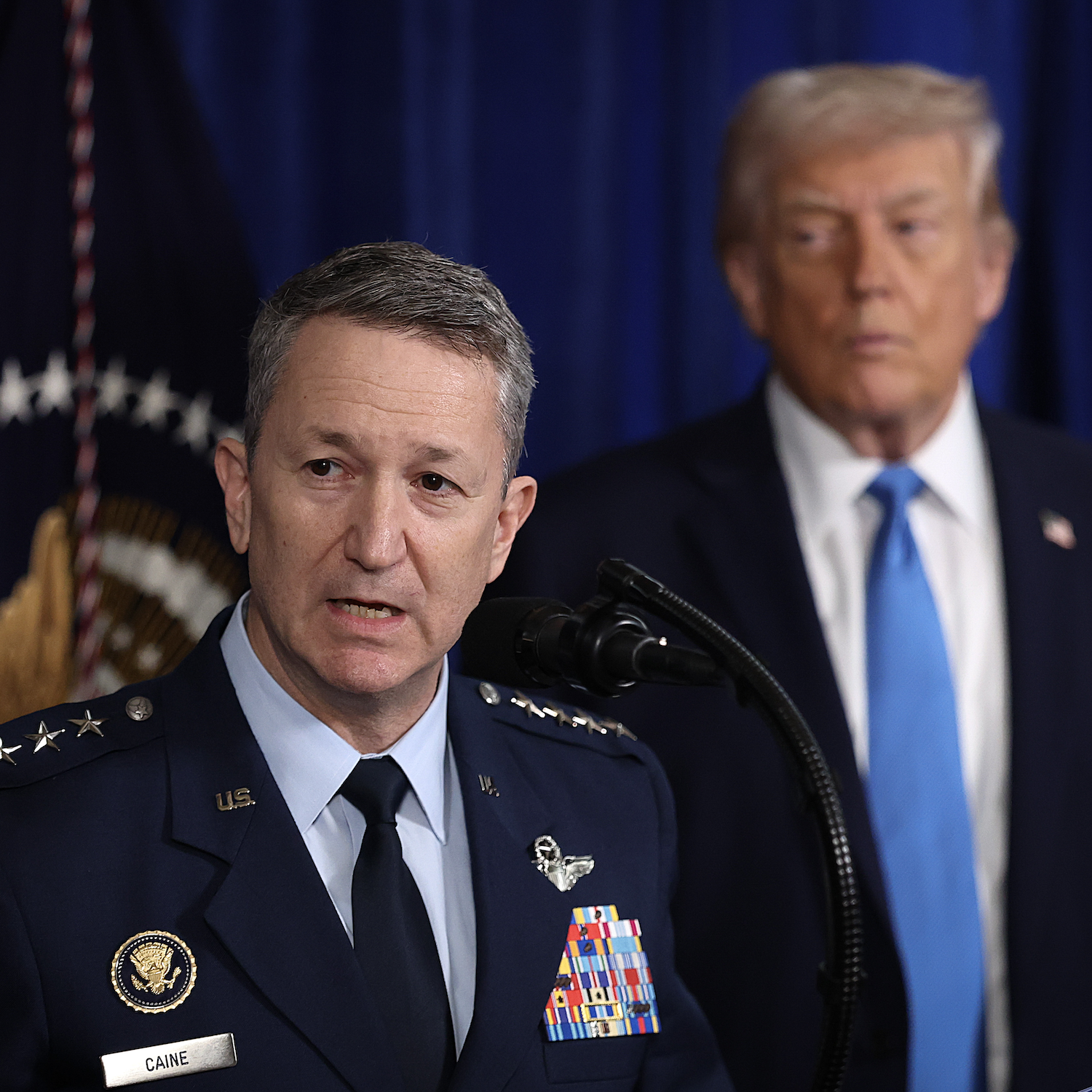
Paramount makes their next move in the battle to take over Warner Brothers. And the New Yorker explores the evidence that weight loss drugs have become a game changer for treating addiction. It's Tuesday, February 24th. I'm Yasmeen Khan and this is Apple News. Today, The Trump administration is seeking major concessions from Iran on its nuclear program amid threats of military action. Talks last week ended without a deal, but President Trump's special envoy, Steve Witkoff and his son in law, Jared Kushner head to Geneva for another round of discussions this week. Yesterday, the US Pulled out its non essential diplomatic staff from Beirut and Lebanon amid growing concerns of conflict. Right now, there's a significant US Military presence already built up near Iran awaiting further instruction. In fact, the US has now assembled the largest amount of air power in the Middle east since the 2003 Iraq war. But the Wall Street Journal is reporting that General Dan Kaine, the Chairman of the Joint Chiefs, is warning President Trump that there could be serious consequences if the US Gets involved in Iran.
- [01:35]
Alex Ward
There are kind of three main things that General Kane is highlighting here.
- [01:40]
Yasmeen Khan
Alex Ward is a national security reporter for the Wall Street Journal.
- [01:44]
Alex Ward
First is that if there was to be an extended campaign that could last multiple days against Iran, that were to happen, it increases the risk of casualties against Americans for obvious reasons. There'll just be more Americans operating likely in and around Iran and of course, allies that we'd be like Israel would be trying to defend. So there's that. There's also the possibility that the US Starts running out of munitions and air defense missiles, which the US Is already running low on. The Pentagon's been warning about this for basically since Trump's been in office, if not before that. And then there's the third thing, which is just over taxing the force. So what Kaine is not advocating necessarily for don't do the strikes. He's just saying, effectively, Mr. President, if you want to choose these massive options against Iran, you, you're welcome to just know that these are the risks that you incur if you choose such options.
- [02:32]
Yasmeen Khan
On Monday, President Trump disputed the reporting about Kaine's concerns, saying the Pentagon is ready for military action. Ward says it's common for the president's most senior military advisor to lay out different scenarios. But Trump continues to say that the US will be ready to strike within weeks.
- [02:50]
Alex Ward
We still don't exactly know what the administration is trying to achieve with these strikes. There are questions about whether it's all about regime change. That's a possibility. It's also just about hitting the Iranians really hard for not giving up any designs on obtaining a nuclear weapon, which Tehran has long denied, or whether it's a very, very belated strikes in support of protesters in Iran.
- [03:11]
Yasmeen Khan
The goals for ongoing talks at least, are a little clearer. According to Reuters, Washington wants the regime to limit the range of its missiles to short distances, withdraw support for armed groups in the Middle east, and agree to zero nuclear enrichment. These are conditions Iran has never previously entertained, and the government there maintains its nuclear program is a right and necessity for peaceful energy related goals. As they prepare for new talks on Thursday, Iran faces big vulnerabilities at home. The economic conditions remain catastrophic and discontent has not gone away despite the violent crackdown. Students in Tehran protested for the third day in a row on Monday, defying their government. But as the Journal's Ward points out, the regime could still act with aggression if they feel they're out of options.
- [04:10]
Alex Ward
After the 12 day war last year and just years of being hit by the US and Israel, Iran is in a weak position. Of course the protests show that it's in a poor political position. So there is no greater time. A lot of people are saying for the US to kind of pushed the Iranians to make a deal here. But that said, the Iranians consider this a kind of existential moment for the regime facing its weakest moment since it came to power in 1979. So they're basically saying, hey America, if you don't make a deal with us and you strike us, we are going to hit you with everything we've got.
- [04:42]
Yasmeen Khan
Iran's president said the negotiations so far had yielded encouraging signals, and an Iranian official briefed Reuters that they were ready to make concessions. The battle to own one of Hollywood's most iconic studios has entered a new phase. Yesterday, Paramount presented a higher offer to Warner Brothers as it tries to muscle out Netflix's deal.
- [05:12]
Dominic Patton
They have been pushing and pushing on the legal front, on the political front, on the regulatory front, and every other front possible to get the board to pay attention to them and not Netflix.
- [05:22]
Yasmeen Khan
Dominic Patton is the executive editor for Deadline. He told us that if the Warner Brothers board deems this new offer to be superior, Netflix will have four days to respond. Speaking on the bafta's red carpet over the weekend, Netflix CEO Ted Sarandos offered a challenge of sorts to his rivals.
- [05:40]
Ted Sarandos
If you want to try to outbid our deal between now and the point we get regulatory approval, just make a better deal. Just put a better deal on the table. Don't make up stories, don't misinformation about market share and all these things. Just put a better deal on the table and see if you can win.
- [05:54]
Yasmeen Khan
As Patton reports, the Department of Justice has now begun investigating whether the takeover would breach antitrust law, adding a new complication to Sarandos bid. Patton says the case could come down to whose math you believe.
- [06:08]
Dominic Patton
If you take Netflix, which has about 330 million subscribers worldwide, and you add that to HBO Max, which has had some pretty good years recently and has jumped up to being the third largest streamer in the world with approximately 128 million subscribers, you have very close to or just above 50% of the streaming market total. That is classically under anyone's definition of antitrust or what we would call monopoly. That is a monopoly of the industry.
- [06:40]
Yasmeen Khan
Netflix doesn't see it that way. Sarandos says if the streamer acquires Warner and HBO Max's customers, it would only grow from having about 9% of the market to 10.
- [06:50]
Dominic Patton
Netflix say, no, no, no, no, your math is wrong. You do not compare us to other streamers. You have to compare us to YouTube. YouTube is what we are really fighting against. And YouTube have like a gazillion people watching it. Subscribers, non subscribers, little kids, big kids, cats who want to put up videos of themselves and everyone else in between.
- [07:10]
Yasmeen Khan
The DOJ is now seeking sworn information from interested parties, like producers or filmmakers, to determine what kind of leverage Netflix has over the industry. There are bound to be some hostile responses. The director James Cameron, recently said a takeover would be disastrous for theatrical releases. Netflix has said it would maintain a theatrical window and accused Cameron of joining Paramount's disinformation campaign as the two companies fight it out. Trump has weighed in with his own demands over the weekend. He insisted that Netflix remove longtime Democratic official Susan Rice from its board. The BBC's Amul Rajan asked Sarandos for his reaction in an interview yesterday.
- [07:52]
Ted Sarandos
This is a business deal. It's not a political deal. This deal is run by the Department of Justice in the US and regulators throughout Europe and around the world.
- [08:00]
Yasmeen Khan
It's quite weird, isn't it, for a
- [08:01]
Dominic Patton
president to be weighing in on this stuff?
- [08:03]
Ted Sarandos
Yeah, he likes to do a lot of things on social media.
- [08:06]
Yasmeen Khan
Trump is a close ally to Larry Ellison, the father of Paramount's owner David Ellison, but he's also spoken fondly about Ted Sarandos, making the president's desire to influence events hard to predict.
- [08:20]
Dominic Patton
I think that there is a lot of moving pieces here. I will say the regulatory issues are real, but they're not insurmountable because again, it's about what part of the math you believe in. But I will also say nobody should cash in their winnings yet. Donald Trump and the Trump administration are nothing if not volatile and temperamental and fickle, and this could change at any time.
- [08:43]
Yasmeen Khan
Warner Brothers shareholders are set to vote on the Netflix deal next month. As weight loss drugs explode in popularity, scientists are learning more about the possible benefits, risks and their long term effectiveness. These GLP1s, as they're called, work by suppressing diet through insulin stimulation and slowing the passage of food through the stomach. But the New Yorker has been looking into how they could benefit one of America's biggest public health challenges, addiction. Dhruv Kullar is a physician and a contributing writer at the New Yorker.
- [09:24]
Dhruv Kullar
Initially, we're hearing story after story that people felt less of an urge to drink alcohol or smoke cigarettes, take opioids, even things like gambling and shopping. And recently there are now randomized control studies that are starting to prove this out, that maybe in fact these diabetes and obesity medicines are having some pretty interesting effects when it comes to addiction.
- [09:45]
Yasmeen Khan
The studies are in early days, but Cullar notes that so far they offer some promising results. Some researchers believe medications like Ozempic can manipulate the brain's mesolimbic pathway, sometimes called the reward system. This is where the brain releases dopamine if it's exposed to certain exciting or addictive activities. In addition to looking at the research, Cullar met some people being studied like Mary.
- [10:11]
Dhruv Kullar
And Mary had struggled with alcohol use for decades. Really. I mean, she started drinking pretty heavily as a teenager. She was now in middle age. And she tried everything. I mean, she tried Alcoholics Anonymous, she tried rehab, she tried medication called ant abuse, and nothing really worked. And she was at a bar one day and she was with a friend who also drank pretty heavily. And she noticed that that friend wasn't drinking at all. And the friend told her that she'd started Ozempic for weight loss. And now if she had more than two beers, she'd basically have to go outside and throw up.
- [10:41]
Yasmeen Khan
That inspired Mary to sign up for a clinical trial studying the drug's effect on alcohol addiction. She lost 55 pounds. But more importantly for her, she lost her taste for beer.
- [10:52]
Dhruv Kullar
She used to ruminate on alcohol when to drink, how to drink, how much to drink, how much not to drink, and all that kind of noise went away. And she was able to think about her life in a more holistic way.
- [11:03]
Yasmeen Khan
Cullar cautions against seeing GLP1s as a kind of miracle drug, and a minority of people in the study experienced side effects. He talked to some people who said they found it difficult to experience pleasure at all. One woman said her mood was dulled and she couldn't enjoy her gardening hobby anymore. And Kular told us, we're still limited right now by the infancy of these studies. And what happens when people stop taking the medications.
- [11:29]
Dhruv Kullar
Drugs only work if you're taking them. Huge numbers of people, by some estimates more than half of people come off these drugs within one year of starting them. So that might be because of side effects or access or cost. But if you're not taking the drug, it's not going to be very helpful for your addiction or anything else. The other thing that is important to note is that some people might develop tolerance to the medication. So it's possible that initially it reduces cravings for alcohol or drugs, but over time, people develop some type of tolerance and those cravings come back.
- [11:56]
Yasmeen Khan
And of course, the drugs don't solve the root causes of addiction in the first place. But Kullar said that after writing his story, he was left feeling optimistic that these drugs could become an option for treatment. And finally, a few other stories were following. Record snowfall hit the Northeast and mid Atlantic as a winter storm left two people dead in Maryland, hundreds of thousands without power in multiple states, and travel in the region significantly disrupted. At least 2ft of snow fell over four states and reported wind gusts reached hurricane levels in some areas. Toppled power lines and trees were the main cause of outages. Nearly 6,000 flights were canceled as a result of the storm. In Rhode Island, a record 32.9 inches of snow fell, and in New York, close to 20 inches blanketed Central Park. Authorities in Boston, which was heavily hit, said it could take up to the weekend to clear out the snow. Officials in many areas are also warning people to stay off of roads because of dangerous conditions. And and the National Weather Service says road travel is nearly impossible in the hardest hit areas. Violence continues in Mexico as cartel members retaliate against the killing of the country's top drug lord. 20 of Mexico's 32 states experienced violence as cars were torched in the resort city of Puerto Vallarta and at least 25 Mexican soldiers were killed. Flights from Mexico were suspended over safety concerns, leaving foreign travelers stranded. Nemesio El Mencho Aceguira was killed in a military raid Sunday. Authorities are bracing for bloody infighting among Aceguira's top lieutenants, who are vying to take control of the syndicate, which had become the most powerful in Mexico. The Wall Street Journal reports. Another civil war in the Sinaloa cartel could spill out into a wider territorial conflict as factions fight over drug routes. And tonight, President Trump will deliver the first State of the Union address of his second term. The speech comes a little over a year after Trump was inaugurated. In the past 12 months, he's implemented a dizzying agenda that includes an aggressive crackdown on immigrants in the US A sweeping tariff plan and military intervention abroad. With the GOP controlling both houses, Democrats have had few opportunities to influence events. But recent polls suggest Republicans face an uphill battle in the midterms later this year, and pundits will be looking for a signal as to what issues Trump wants to fight the election on. The speech is scheduled for 9pm Eastern time. You can find all these stories and more in the Apple News app. And if you're already listening in the News app right now, we've got a narrated article. Coming up next, women's Health reports on the rising risk of stroke in younger women and why experts are confused about what's causing it. If you're listening in the Podcasts app, follow Apple News Narrated to find that story. And we'll be back with the news tomorrow.
- [15:03]
Dominic Patton
Sam.