Loading summary
Transcript28 lines
- [00:05]
A
Good morning. It's Tuesday, September 30th. I'm Gideon Resnick in for Shamita Basu. This is Apple News today. On today's show, explaining Trump's winning streak at the Supreme Court. The clock is ticking to avert a government shutdown and how a new baseball league came together. But first, President Trump made his big pitch for peace in the Middle east yesterday, standing alongside Israeli Prime Minister Benjamin Netanyahu in the White House as they outlined a ceasefire proposal.
- [00:44]
B
The promise of a new Middle east is so clearly within our reach. This is the closest we've ever come to real peace, not fake peace, not political fool's peace. If we can get this difficult problem solved, the opportunities for all within that vast region of this world. It's a vast region. It's unlimited.
- [01:06]
A
The 20 point proposal demands a full return of the remaining hostages and the complete disarmament of Hamas. In return, Israel would suspend military operations, withdraw to an agreed line, and release 250 of the 1700 Palestinians that have been detained since the conflict began nearly two years ago. And it sketches out a new governing body to run Gaza for a transitional period. Hamas have reportedly received the plan, but have yet to agree to anything. Michael Birnbaum is a White House correspondent covering Trump and foreign policy for the Washington Post.
- [01:38]
C
This is really the first time we have a fairly comprehensive vision for what a day after transition plan could look like after the fighting stops.
- [01:53]
A
Gone from the proposal is Trump's ambition for Gaza to become what he called a Riviera of the Middle east in which hundreds of thousands of Palestinians would be relocated and the region would be placed under U.S. control. Instead, an apolitical committee would be set up.
- [02:08]
C
That committee, which would mostly be comprised of Palestinians, would be overseen by a different body that would be chaired by President Trump, and it would include former British Prime Minister Tony Blair and some other international leaders that haven't been named yet. So they would have some sort of oversight and some kind of control over this transitional Palestinian committee.
- [02:34]
A
That group would be called the Board of Peace. There's not much detail on who else might be involved or how the Palestinians will be represented. Hamas would have to step aside entirely, and the Palestinian Authority would undergo a, quote, reform program. That group, which administers parts of the west bank, said that it welcomed Trump's efforts. And as for the bigger question of Palestinian statehood, the compromise that seems to.
- [02:57]
C
Have been worked out here in the agreement is kind of pushing off timelines, leaving it open as a possibility, but not making firm that there will be a Palestinian state that Israel would have to recognize on any immediate timeline.
- [03:16]
A
European leaders urged Hamas to accept the plan, but their agreement is far from certain. There are a lot of details that have been left for negotiators to work out, like the exact nature of Israeli withdrawal. Hamas would have to dismantle hundreds of miles of tunnels and lay down their weapons entirely. But under the terms, militants who did commit to giving up their arms could receive amnesty. If they don't agree, Netanyahu suggested Israel could escalate its military efforts.
- [03:42]
D
But if Hamas rejects your plan, Mr. President, or if they supposedly accept it and then basically do everything to counter it, then Israel will finish the job by itself. This can be done the easy way, or it can be done the hard way, but it will be done.
- [04:08]
A
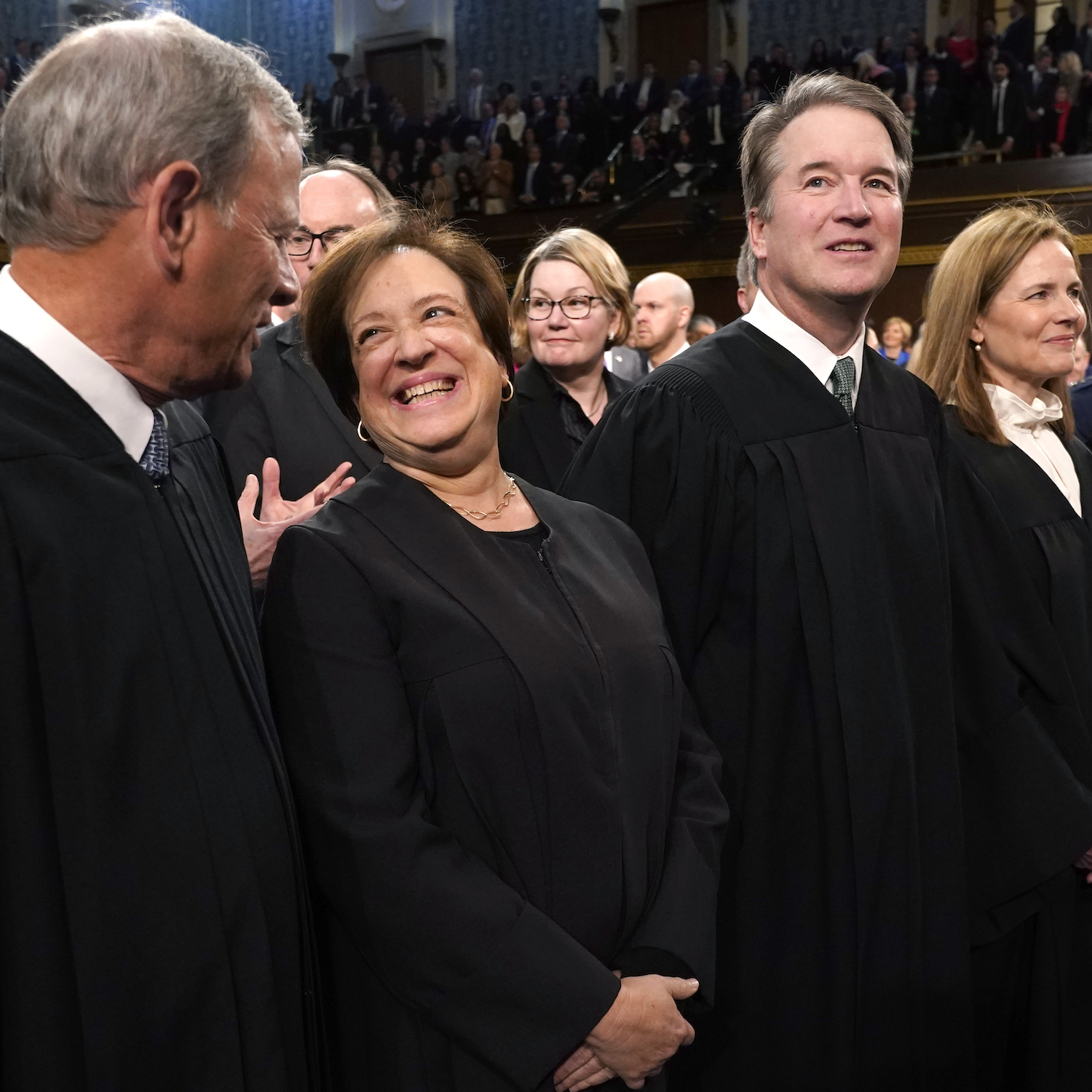
In that event, President Trump said that Israel would have their full backing. This proposal comes as Israel faces growing isolation. An increasing number of world leaders and countries say they will recognize a Palestinian state. Even President Trump has at times expressed frustration with Netanyahu over, among other things, a recent strike against Hamas leadership in Qatar, a key US Ally. Notably, Netanyahu apologized to Qatar for that strike at Trump's behest yesterday. Meanwhile, Israel continues its assault in Gaza City. Hospital sources told the BBC that more than 35 people, including aid workers, were killed in strikes over the weekend. Now to the Supreme Court. A new term begins there next week, and as of late, the White House has been on a winning streak. Last week, the justices ruled that the Trump administration is allowed to withhold $4 billion in spending on foreign aid that had been appropriated by Congress. That decision marked the 20th time that the court has granted a request from the administration to block a lower court ruling, according to NBC News. Lawrence Hurley is a senior Supreme Court reporter there. He told us about Trump's legal strategy.
- [05:22]
E
What we've seen with the Trump administration is that they've been sued, you know, hundreds of times in lower courts, but they've only taken a tiny proport of those cases up to the Supreme Court. And they've had a lot of success there, with 20 of their applications being granted.
- [05:37]
A
Parties affected by administration policies have filed more than 300 lawsuits to challenge them. Most of those cases are still working their way through the courts, but the Trump administration has asked the supreme court to evaluate 28 cases on an emergency basis, and so far, they've only lost two of those.
- [05:55]
E
These are not cases that go through the regular appeals process in the courts, where they get decided by a district court judge, and then they go to the appeals court, then they go to the Supreme Court, and it can take months or even years for those cases to be decided. What they do instead is when a lower court judge blocks something the president wants to do via an executive order or something like that, they immediately ask for a stay of that ruling, that is to put that ruling on hold. And then if they don't get that, they rush to the Supreme Court.
- [06:23]
A
A considerable part of the White House's success comes down to which cases they're taking to the Supreme Court.
- [06:30]
E
They know that the Supreme Court, even though it has a 6:3 conservative majority, isn't going to be with them on. So some of the issues they're going up to the Supreme Court on are kind of long standing advocacy issues that the conservative legal movement has been pushing for decades.
- [06:45]
A
The administration's only losses include the court stopping plans to immediately deport immigrants under the Alien Enemies act and ordering Kilmar Abrego Garcia, who was wrongly deported to El Salvador, returned to the US but those have been the exceptions. While the White House's strategy has seemed to work, its long term effect is unclear. Hurley told us that's because the nation's top court has historically ruled on cases only after careful study of the issues and after multiple lower courts have weighed in and disagreed.
- [07:12]
E
The Supreme Court is getting increasingly involved in these cases at a very early stage and issuing these quite substantive decisions that allow the Trump administration policies to go ahead before fully been adjudicated, whether they're legal or not.
- [07:35]
A
The MLB playoffs begin today, and unlike a number of other major US Sports leagues, there's no equivalent for the women's game. But the 19th reports that an upstart organization called the Women's Pro Baseball League is looking to change that.
- [07:48]
F
WPBL is kind of reimagining this same concept of allowing women to play baseball and live out those dreams, but coming from an approach of not just replacing the spaces that men were taking up, but having their own space altogether.
- [08:03]
A
Sabrina Dawood is a reporter who profiled the WPBL for the 19th. The league, which is set to have its first season beginning next May, will feature six teams. For now, though, the host cities haven't been announced yet. It was founded in part by Justine Siegel, the first woman to ever coach in an MLB organization. Now, it's been decades since women have had a professional baseball league, with the most famous organization being the All American Girls Professional Baseball league of the 1940s and 50s. That was founded by the former owner of the Chicago Cubs, who at the time wanted to keep players on the diamond during World War II. But since so many men were overseas fighting, he turned to women to keep the game active. The league lasted until 1954 and inspired the hit movie A League of Their Own. Save for a short lived attempt in the 1990s. There hasn't been a national outlet for girls who want to build a career in baseball. Here's Billie Jean King, a lifelong Dodgers fan, talking to the MLB Network about the moment at age 9 when she realized that she would have to give up on her dream. I remember sitting there and all of a sudden my heart sank because I realized I will never be able to play professional baseball because of my gender.
- [09:12]
B
I'm a girl.
- [09:13]
D
I was devastated all the way home.
- [09:15]
A
I'll never forget it. Softball has often served as an alternative, but it's different in many ways. There are larger balls, a smaller field and entirely different pitching mechanics. Dawoud says that players who want to participate in the WPBL are excited about those differences.
- [09:31]
F
Something that girls and women who are interested in baseball specifically highlighted was that the aspects of baseball specifically are what resonated with them. They like that style of game. They like that style of play.
- [09:45]
A
Last month, the WPBL held tryouts in Washington, D.C. players participated in drills and skills assessments as league officials evaluated. There were some notable names on the field trying out as well, including Monet Davis, who in 2014 became the first girl to earn a win in Little League World Series history. Dawoud says as she spoke to league leadership about the wpbl, they recognized that women's sports and leagues like the WNBA are having a moment. So it felt like the right time to strike.
- [10:13]
F
I think that we're seeing a lot more women athletics just getting more attention from people who probably didn't even watch sports before, seeing them getting opportunities outside of their sport and just kind of being able to see them as people more and appreciate them.
- [10:31]
A
NBC News reported that the MLB is not involved with the league, but one of its founders said that frees them up to make some rule changes, one that's up for consideration, a home run contest to break ties. Before we let you go, a few other stories we're following Today is the deadline for Congress to reach a deal that would avert a government shutdown. The four top leaders in Congress left a meeting with President Trump yesterday without a breakthrough. Republicans in the House passed a seven week funding extension that would keep the government open as lawmakers finalize larger appropriations bills. Democrats have refused to support the bill in the Senate, where Republicans need at least 8 of their votes to overcome a filibuster. Democrats want an extension of Affordable Care act subsidies that are set to expire at the end of the year. Both sides continue to point fingers at one another after the meeting, and lawmakers have until midnight tonight to pass a stopgap bill to keep federal services operational. Now to what's being called the biggest buyout in history. Jared Kushner's private equity fund and Saudi Arabia's sovereign wealth fund have teamed up to take the video game giant Electronic Arts private in a $55 billion deal. Bloomberg reports that it's the latest effort by the Saudis to enter the gaming industry as they seek to diversify their economy from oil. Bloomberg also notes that the crown prince is a gamer himself and in particular a fan of Call of Duty. The deal would pay stockholders $210 per share in cash, and it comes amid a sluggish market for the console gaming industry. And finally today, voting concludes for an annual tradition pitting gigantic rotund beasts against each other. Fat Bear Week. You might be familiar with how this works, and if not, the name is relatively self explanatory. The public gets to decide on their favorite of the Alaskan brown bears that bulk up for hibernation in Katmai National Park. That competition, like the bears themselves, has grown considerably from what was once a simple Facebook vote in 2014. Last year, more than a million people voted for their favorites, and National Geographic reports that the competition this year will be fierce. That's because the salmon in the parks river were plentiful. One park worker told the New York Times that part of the challenge of the competition is that you need two photos of each competing bear, one at the beginning of the summer and one after they've chunked up for the winter months ahead. You can find all these stories and more in the Apple News app. And if you're already listening in the News app right now, we've got a narrated article coming up next. Bloomberg Businessweek reports on Castle, a startup that was once a fast rising star in Silicon Valley that sought to disrupt the online clothing rental market. The company's CEO now faces allegations of swindling investors out of hundreds of millions of dollars. If you're listening to the podcast app, you can follow Apple News Narrated to find that story and we'll be back with the news tomorrow.