Loading summary
Transcript19 lines
- [00:01]
Shemitha Basu
Hey there, it's Shemitha. I've got a quick request for you. If Apple News Today is an essential part of your morning routine, follow the show in Apple Podcasts. And if you have another 30 seconds, leave us a rating and a review, too. It helps other people find our show and it helps us know what you like about it. Thanks. Good morning. It's Thursday, January 16th. I'm Shemitah Basu. This is Apple News today. On today's show, Biden gives his final address from the Oval Office. What a decade of data reveals about the gun violence epidemic in America and what to know about the FDA's new ban on red food dye. But first to the Gaza ceasefire deal and news this morning that it might be under threat. Yesterday, Hamas leadership confirmed it had reached a deal with Israel, and Israeli President Isaac Herzog welcomed the agreement and urged the Israeli government to accept it. But the Wall Street Journal is now reporting that Israeli Prime Minister Benjamin Netanyahu is accusing Hamas of reneging on parts of the agreement. The Israeli Cabinet has postponed their meeting to approve the deal, which was supposed to take effect on Sunday, initiating a six week pause in fighting. Israel launched more airstrikes in the Gaza Strip overnight, where health authorities have reported at least 81 fatalities in the last 24 hours. Meanwhile, Hamas leadership said early today that it's still committed to the agreement, according to a draft of that agreement reviewed by the Journal. During the first phase of the ceasefire, Israeli forces said they would withdraw from populated areas and 33 hostages were set to be released from Gaza. That included women, children, people with severe injuries, people over the age of 50, and two American hostages. Hamas had also agreed to return the bodies of hostages who died, and Israeli negotiators had agreed to release hundreds of Palestinians from Israeli prisons, and they were going to return to negotiations after a couple of weeks to discuss the possibility of a permanent ceasefire. The Journal reports that the terms of this ceasefire agreement weren't substantially different from the offers put forward months ago, when more hostages were still alive and before thousands of Palestinians lost their lives. More than 46,000 Palestinians have been killed, roughly one out of every 50 residents of Gaza. Last night, before news that the deal might be jeopardized, President Biden spoke from the Oval Office, saying his team had worked hard to secure a deal and that they'd involved Trump's team to make sure all would go smoothly with Trump taking office next week. But now, as this dispute between Israel and Hamas plays out, the US Transition of power is far from the top concern. This is A fast changing story this morning. You can follow along. For the latest in the Apple News.
- [03:02]
Joe Biden
App.
- [03:11]
Shemitha Basu
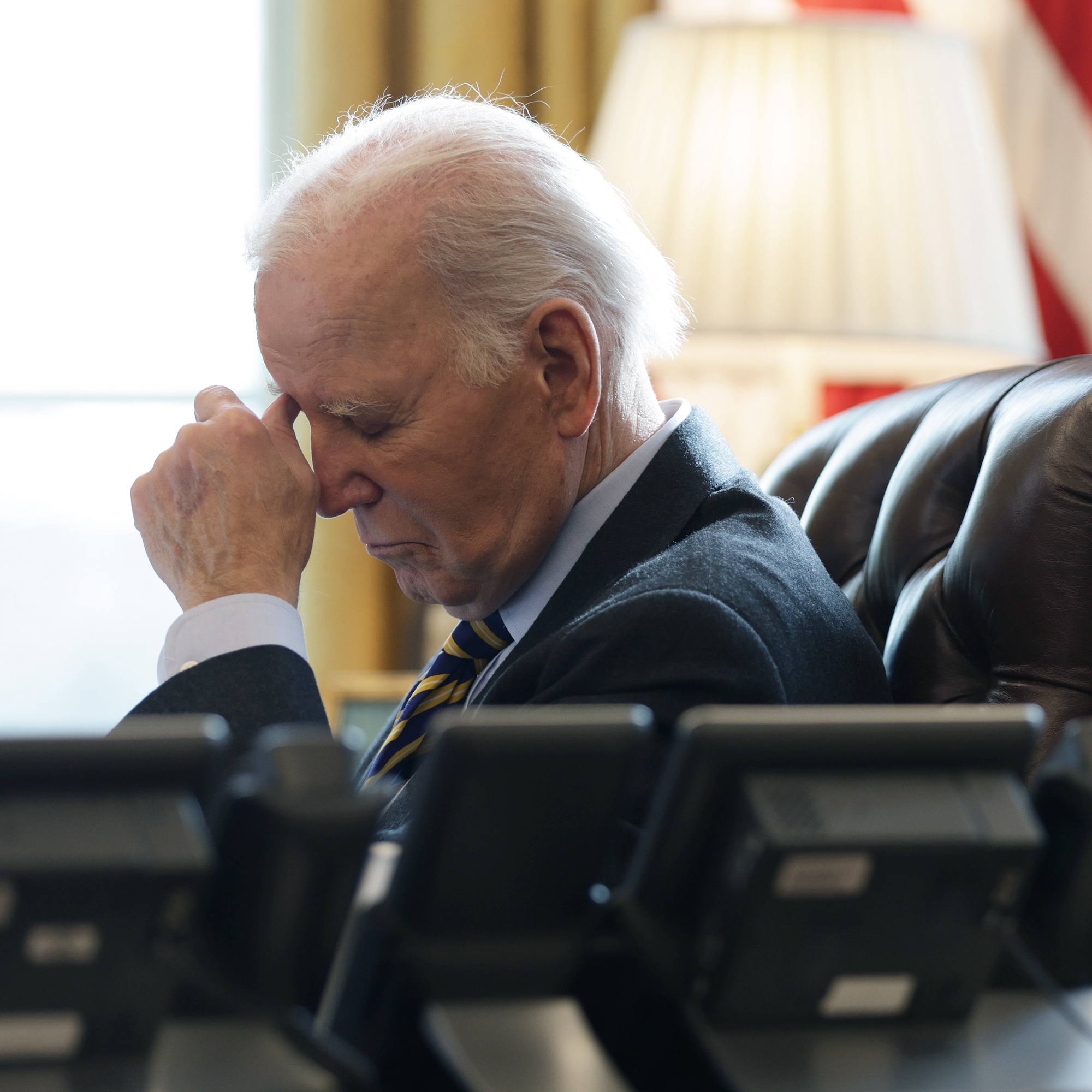
Let'S turn to what else President Biden said in that speech last night, a farewell address in which he said goodbye to the country and to his five decade career in public office.
- [03:22]
Joe Biden
This will be my final address to you from the American people, from the Oval Office, from this desk as president. And I've been thinking a lot about who we are and maybe more importantly, who we should be.
- [03:34]
Shemitha Basu
Polls show Biden is leaving at a low point when it comes to public support. A majority of people are dissatisfied with his performance. A new CNN survey found just 36% of Americans approve of the job Biden did as president. And Biden's approval numbers are especially poor on immigration and the economy. So what went wrong for Biden on domestic issues? He did sign some major pieces of legislation, especially early in his presidency. But many of the benefits of those bills will take a long time for Americans to feel in their daily lives, something Biden himself acknowledged in a recent interview with USA today. Andrea Shellal, White House correspondent for Reuters, spoke with us about that.
- [04:16]
Joe Biden
For most Americans, the bridges, the roads, the factory down the road, those things matter, but they matter in a very diffuse and not tangible way. And what they felt was the price of eggs, the price of gasoline, the.
- [04:36]
Shemitha Basu
Price of housing on the border. Meanwhile, the increase in illegal crossings overwhelmed many states and cities. The Biden administration and Congress haggled over how to respond, only for Trump to kill a deal Biden reached with Senate Republicans. Biden responded by taking executive actions to restrict asylum request, a move Republicans said he should have done all along, Shelal told us Biden also is seen to have fallen short on police reform. Biden came into office shortly after George Floyd was murdered in 2020. It took two years before he signed an executive order aimed at preventing police misconduct. And then, of course, probably the most consequential bucket of issues to voters, the economy. Biden and his administration started out by talking about bolstering the care economy.
- [05:26]
Joe Biden
They talked about the importance of ensuring that people can afford childcare and housing. And coming out of COVID we saw that so many caregivers in the economy either don't get paid at all or get paid very little. And many, many working Americans are struggling to have the resources. Their incomes don't cover the cost, really high cost of childcare, high cost of housing. And so there were promises made to try to address.
- [05:58]
Shemitha Basu
But as Shealal told us, efforts to extend the child tax credit during the pandemic or invest in universal pre k ultimately didn't come to fruition. Prices remained stubbornly high after the pandemic, and in the absence of additional federal assistance, it was much harder for Americans to cope. And all of that translated onto the campaign trail once public concerns about Biden's age and ability to serve came to the foreground, fueled by his disastrous performance in the first debate with his age and mental fitness became an overwhelming concern for voters and was added to the list of reasons many wanted a change.
- [06:38]
Joe Biden
The Democrats lost this election and I think it's just a heavy time for him to be leaving office and to know that much of what he worked for and his administration worked for may be unwound and undone.
- [07:03]
Shemitha Basu
Every year, tens of thousands of people lose their lives to gun violence in America. That's according to the trace, which analyzed 10 years of shooting data from the Gun Violence Archive. And in that analysis, reporters uncovered some surprising trends they say challenge what people think about gun violence in the US first, where gun violence occurs. According to the Trace's analysis, of the 20 cities and towns with the highest rates of shootings, half of them were not large cities. They were in communities of less than 1 million people.
- [07:35]
Samantha Storey
We noticed that 13 out of 20 of the cities were located in the South.
- [07:41]
Shemitha Basu
That's Samantha Storey, managing editor at the trace.
- [07:44]
Samantha Storey
Places like Selma, Alabama, Clarksdale, Mississippi, places you wouldn't expect to have a higher shooting rate per capita than say Chicago or Philadelphia, which are more typically known for having high rates of shootings.
- [07:59]
Shemitha Basu
Even though the numbers tell a different story, that hasn't stopped politicians from pushing the narrative that large Democratic run cities are overrun with gun violence. According to the trace's analysis, many of those cities are actually getting safer. Shooting deaths were down more than 10% through the end of October 2023 nationwide. And that drop was most pronounced in large Democratic run cities with substantial non white populations like San Francisco and Baltimore.
- [08:27]
Samantha Storey
A lot of politicians will tend to sort of tell the story of there being terrible crime in all of these like inner cities. It's something that Trump definitely talked a lot about on the campaign trail, and that's just not always the truth of the matter.
- [08:44]
Shemitha Basu
The TRACE analysis found another trend, an alarming frequency of shootings near schools. 188,000 shootings over the last decade occurred within 500 yards of a school. That's to say not school shootings, but shootings within a few blocks of a school. In 2023 alone, the Trace notes that 6 million kids attended a school that had at least one shooting nearby.
- [09:07]
Samantha Storey
So kids say in Philadelphia have to walk past crime tape in the morning on their way to and from school. And that to me was really eye opening because so much of what we hear about in the media about school shootings are school shootings that take place actually in the schools, on the school grounds.
- [09:26]
Shemitha Basu
The trace also noted that road rage gun incidents over the decades surged more than 400%. And overall, angry drivers shot more than 3,000 people. And while many states passed laws allowing people to carry firearms in public without a permit or training, which gun rights supporters said would deter shootings, those laws did not have that effect. Sixteen of the 20 states that passed these types of laws actually saw more shooting deaths. We'll include a link to their full analysis on our Show Notes page. Before we let you go, a few other stories we're following today. As confirmation hearings for Trump's Cabinet continue, POLITICO took a closer look at Trump's pick to lead the Department of Justice. Pam Bondi, whose hearing continues today. She appears to be on track for a smooth confirmation despite concerns from Democrats about her history as a Trump loyalist. As the former attorney general of Florida, she represented Trump in his first impeachment trial. She also supported his efforts to overturn the 2020 election results in Pennsylvania. But in her confirmation hearings, Politico reports Senate Democrats don't seem to feel that sinking her nomination is worth the political capital. They alone don't have the votes to do it for one. And for some of them, Bondi is more palatable than Trump's original choice, Matt Gaetz, onto an announcement from Starbucks. The coffee chain says if you want to use their bathrooms and hang around in their stores, you gotta pay up. It's a reversal of a policy at most Starbucks locations that their bathrooms were free to the public. CNN describes it as a move to deter people from using Starbucks as a sort of third place, aside from work and home, a hangout spot where you didn't necessarily need to spend money to be there. It's also particularly aimed at unhoused people looking for a safe place to shelter. And lastly, on to reporting from the Los Angeles times on the FDA's decision to ban Red Dye 3 and what took so long. Red Dye 3 has been shown to cause cancer in rats and for humans. Officials banned it in cosmetics and drugs applied to the Skin in 1990. The Times reports the biological process that causes cancer in rats does not occur in humans, which is why it was allowed to be used as a food coloring. But the FDA says they're now going by a more strict law called the Delaney Clause, which states that no color additive can be deemed safe if they're shown to cause cancer in animals or humans. Companies have two years to reformulate their recipes and eliminate the dye. By the way, just because something is red doesn't mean it necessarily has Red 3 Swedish fish, for example, not Red 3. Candy corn, surprisingly, contains Red 3 dye. If you're not sure, it's best to check the ingredients. You can find all these stories and more in the Apple News app. And if you're already listening in the News app right now, we've got a narrated article coming up next from the Atlantic. As Americans spend more time alone, it's changing our politics, our personalities, and our relationships. If you're listening in the podcast app, follow Apple News Narrative to find that story. And I'll be back with the news tomorrow.