Loading summary
Transcript23 lines
- [00:05]
Sumita Basu
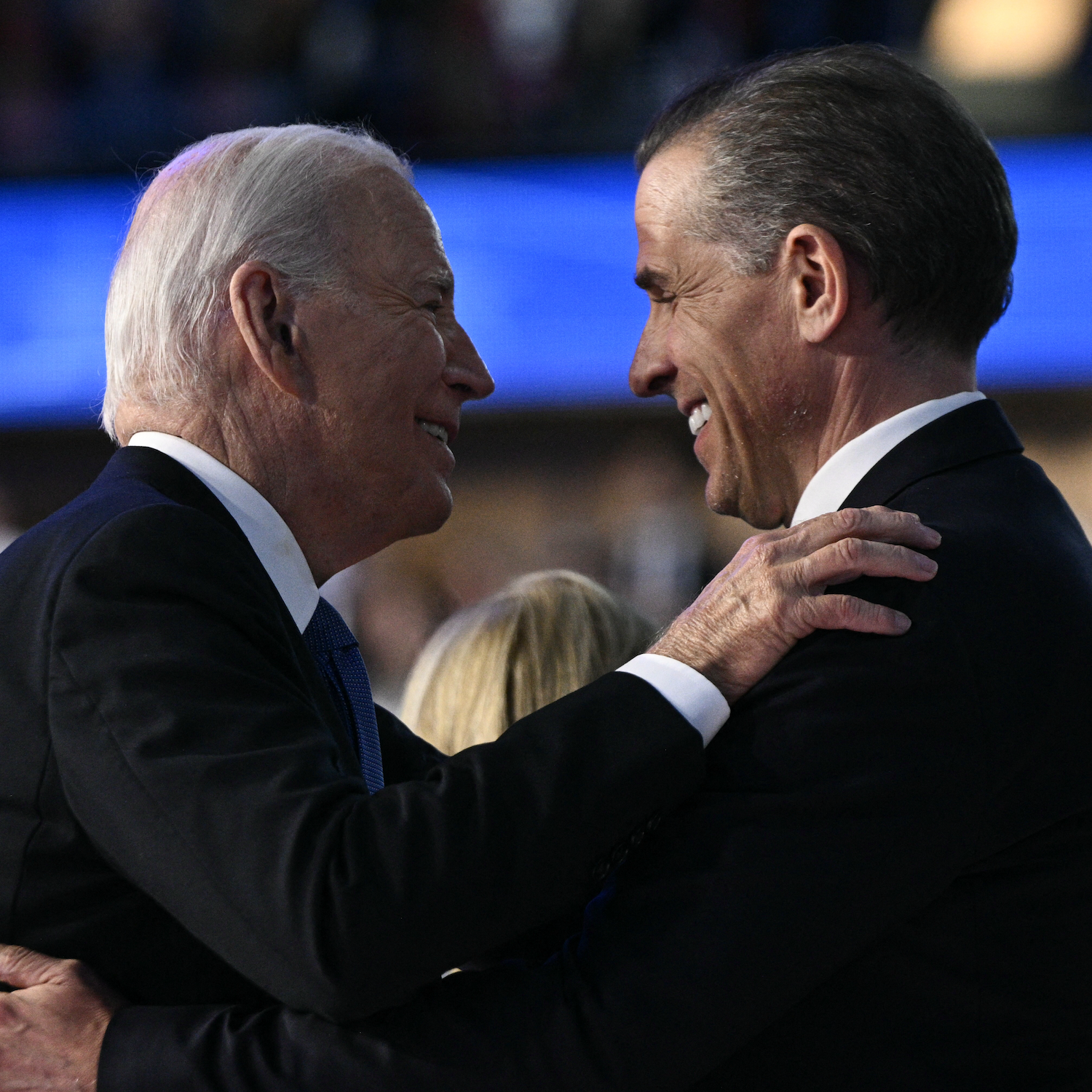
Good morning. It's Monday, December 2nd. Welcome back to Apple News Today. I'm Sumita Basu. Hope you had a nice Thanksgiving. On today's show, how an urgently needed global agreement on plastic fell apart, why health experts want more men to get tested for the BRCA cancer gene. And some things to keep in mind as we head into Cyber Monday. But first to two big developments involving presidents and the perception that justice can be manipulated in their favor. First, last night, President Biden issued a full and unconditional pardon for his son, Hunter Biden, despite repeatedly saying he would not use his executive power to pardon his son or commute his sentence. Earlier this year, Hunter Biden was convicted of three felonies in a federal gun trial, which carried a potential prison sentence, and of three felony count accounts for tax evasion. In a statement, President Biden called the cases against his son politically motivated, saying other people are almost never brought to trial for the same actions, but his son was treated differently. The pardon comes as Biden has just about 50 days left in office. Presidents have pardoned family before. Bill Clinton pardoned his half brother. Trump pardoned Jared Kushner's father. But Biden's decision to pardon Hunter is likely to cause an uproar among some Republicans and even among some Democrats who worry it could be seen as hypocritical. So since one of their central criticisms of Trump is that he'll weaponize the Justice Department for his own benefit. Which takes us to the second big development, this one involving the FBI, the principal investigative arm of the doj. Over the weekend, Trump said he will nominate a loyalist named Kash Patel as the new FBI director, replacing Christopher Wray, who still has three years left on his 10 year term. This is a big deal because Patel, like Trump, has vowed to use the FBI to go after political enemies. So let's take a moment to look at Patel's record. Patel served as a public defender in Florida before entering politics. For a while, he was a pretty obscure staffer in Washington, but rose to prominence when he became known as the man behind the Devin Nunes Memo, a document that alleged misconduct by the FBI and other Justice Department officials in the investigation of Donald Trump and interference in the 2016 election. He is also the author of a book that includes a list of so called deep state officials to target, which Trump has referred to as a blueprint. Patel ended up serving in multiple senior roles in the first Trump administration, including as chief of staff to the defense secretary. At one point, Trump considered tapping Patel to become the deputy director at the FBI. According to the Washington Post, Trump's Attorney General at the time, Bill Barr, reportedly told White House Chief of Staff Mark Meadows that Patel would be deputy director over his dead body and blocked the move. Barr described the incident in his memoir, saying Patel had, quote, virtually no experience that would qualify him to serve at the high highest level of the world's preeminent law enforcement agency. In September, CNN spoke with Patel about what he would do if Trump were to win and he were tapped to run the FBI.
- [03:20]
Kash Patel
I'd shut down the FBI Hoover Building on day one and reopening the next day as a museum of the deep state. And I take the 7,000 employees that work in that building and send them across America to chase down criminals, go be cops.
- [03:34]
Sumita Basu
In a 2023 podcast interview, he said he would go after the people Trump perceives to be his enemies.
- [03:40]
Kash Patel
We're going to come after the people in the media who lied about American citizens, who helped Joe Biden rig presidential elections. We're going to come after you, whether it's criminally or civilly. We'll figure that out. But, yeah, we're putting you all on notice.
- [03:52]
Sumita Basu
Trump and his allies have argued for years that the FBI and DOJ have been taken over by partisans who are out to get him. They cite the multiple investigations into Trump as evidence. In fact, Pam Bondi, Trump's pick for Attorney General, has vowed to go after the prosecutors and investigators who went after Trump. But it's important to remember that Trump appointed the current FBI director, Christopher Wray. And the bureau is supposed to be completely independent and impartial. That's why FBI directors aren't like other agency positions. They hold their jobs for 10 year terms. Here's Jake Sullivan, National Security Advisor under President Joe Biden, reacting to the announcement about Patel on NBC's Meet the Press.
- [04:32]
Jake Sullivan
The current FBI director, Chris Wray, was actually appointed by Donald Trump. Joe Biden didn't fire him. He relied upon him to execute his responsibilities as the Director of the FBI and allowed him to serve out the fullness of his term over the course of the Biden administration. So that's how we approach things. And we would like to ensure that the FBI remains an independent institution insulated from politics.
- [04:57]
Sumita Basu
News of the Patel pick concerned many in the Washington establishment. Former FBI deputy director Andrew McKin Cabe called Patel profoundly unqualified for the job. But several Republicans have already endorsed Patel's nomination, including Senator Ted Cruz, who called Patel a very strong nominee on CBS's Face the Nation.
- [05:17]
Ted Cruz
And I gotta say, all of the weeping and gnashing of teeth. All of the people pulling their hair out are exactly the people who are dismayed about having a real reformer come into the FBI and clean out the corrupted partisans who sadly have burrowed into senior career positions at the FBI.
- [05:36]
Sumita Basu
For Patel's nomination to be considered, Christopher Wray would either have to resign or be fired by Trump. While it's not unprecedented for FBI directors to get fired, it is rare. And if Trump were to fire him, CNN notes that Trump would be the first president to fire two FBI directors, the first being James Comey, who was fired months after Trump started his first the world is facing a massive plastics problem, and this weekend global leaders gathered by the UN failed to reach an agreement to curb it. Delegates from 170 nations met in Busan, South Korea, with the goal of creating a binding agreement that would force countries to drastically cut plastic pollution. But there was a big split on proposed solutions, with more than 100 nations wanting to capture plastic production, while a handful of oil rich countries like Saudi Arabia and Russia argued the world should target plastic pollution instead. Their dissent ultimately tanked the agreement. Here's Juan Carlos Monterey Gomez, a representative of Panama, speaking during the negotiations.
- [06:52]
Kash Patel
Plastics are not convenience. Plastics are poison. Every piece that we allow to produce without limits is a direct assault on our health, on our nature and our children. For those blocking progress, you are allowing this crisis to fester and it will kill us.
- [07:14]
Sumita Basu
He went on to describe the talks as a moral failure. As the Washington Post explains, the world is currently producing more than 450 million metric tons of plastic every year. Most of that is from fossil fuels. Less than 10% of it will ever be recycled, and a lot of it ends up in our oceans and rivers. In fact, by some estimates, we're dumping one garbage truck's worth of plastic in the ocean every minute. Christina Dixon is with the Environmental Investigation Agency, which advocates for better enforcement of environmental law. She says we're increasingly finding plastic waste in unusual parts of the world and parts of our bodies.
- [07:54]
Christina Dixon
Problem is that we're producing and using too much plastic and that is completely overwhelming all of our efforts around waste management and cleanups globally. And if we don't have a kind of common understanding that that is the problem we're trying to solve, it's very difficult to find common solution.
- [08:09]
Sumita Basu
The disconnect over defining the plastics problem comes at a time when plastics are becoming increasingly important to oil producing nations, as more countries around the world are transitioning from cars that run on gas to ones that run on electric Oil rich countries are worried about their economies, which is why they don't want to stop the production of plastic. Instead, they're advocating for developing the technologies we need to deal with plastic waste. The United States positioned itself somewhere in the middle at these talks, saying the Biden administration supports the goal of reducing plastic pollution but doesn't support mandatory production limits. And that's important because we are the world's top plastic waste contributor. The Post notes. We produce almost twice as much plastic waste as China and more than the entire European Union combined. While no treaty was agreed upon, leaders at the summit on both sides of the debate agreed to continue talks in the future. Let's turn now to another big story involving our health. A lot of you are probably familiar with the BRCA gene, commonly known as the BRCA gene and its connection to breast cancer. It was something that first really came into the public consciousness just over a decade ago because of something a celebrity did.
- [09:36]
Kristin V. Brown
You can really trace the awareness of the BRCA gene and its link to breast cancer to Angelina Jolie.
- [09:43]
Sumita Basu
That's the Atlantic's Kristin V. Brown. She told us that actor Angelina Jolie's op ed in the New York Times in 2013 describing her BRCA mutation and her decision to have a preventative double mastectomy really changed the public's understanding.
- [09:58]
Kristin V. Brown
It helped a lot of people who really did need testing, who had a family history of breast cancer get tested and do things like get screenings to help reduce their risk of death from breast and ovarian cancer.
- [10:13]
Sumita Basu
Up until now, it's mostly been women who've been concerned with this gene. But Brown told us there's mounting evidence that men should be concerned about it as well. And that's because it's believed to be linked not just to breast cancer and ovarian cancer, but also to cancers that can develop in the pancreas, prostate, esophagus, stomach and skin.
- [10:32]
Kristin V. Brown
Because the gene has gained fame as the breast cancer gene. A lot of men just don't realize that it's something that they should worry about. Even if they have BRCA in their family, even if they know that there is a history of breast cancer, they just don't think it applies to them.
- [10:50]
Sumita Basu
And Brown told us, we're learning a lot about the genes that can lead to cancer that we just didn't know 20, 30 years ago.
- [10:57]
Kristin V. Brown
The BRCA gene was named the breast cancer gene at a time where we just generally thought that a gene would be linked to a single condition. You know, this was in the 1990s, before we even, you know, sequence the human genome. We really thought that there was going to be like one diabetes gene, one heart disease gene, and it just wound up being so much more complicated than that. So this idea that you would have any gene linked to a single disease is just really outmoded.
- [11:26]
Sumita Basu
One researcher called it a branding problem and said they're working to deepen our understanding of BRCA genes so that more men and their doctors consider testing for it. Before we let you go, a few other stories being featured in the Apple News app. Over the weekend, roughly 2ft of Lake effect snow fell in the Great Lakes region and some of the Northeast. About 4ft fell in parts of western New York. Forecasters say several more feet of snow could come later this week. One event affected by the weather was Sunday night's NFL football game in Buffalo between the Bills and The San Francisco 49ers. Two feet of snow piled up in Highmark Stadium, home of the Bills, ahead of the game. But as is now a bit of a tradition, the team put out a public call for fans to help dig out the field. Volunteers were paid 20 bucks an hour and given food and hot beverages, and the game went on as scheduled. Moving on. We are a few days out from Thanksgiving, and if you're looking at your leftovers and thinking they're looking kind of pitiful by now, now here's a little motivation to figure out how to use them. The LA Times estimates that Americans will have thrown out something like 316 million pounds of food after Thanksgiving. And get this, our food waste is considered one of the biggest contributors to climate change. In fact, the food we throw out is believed to emit five times more greenhouse gases than the aviation industry. So even if you begrudgingly packed up leftover turkey for the freezer, take some comfort in knowing that you have done your part. And finally, today is Cyber Monday. About 72 million people say they plan on shopping online today. That comes after shoppers already spent $10.8 billion online on black Friday, a record as you do your shopping. Amanda Mull, formerly of the Atlantic now at Bloomberg Businessweek, says there are some things you should keep in mind about the way retailers design their services to keep us buying more and more stuff. A lot of it we probably don't really want or need, like making shipping and returns free.
- [13:36]
Amanda Mull
It costs a lot of money to accept this volume of returns and then process them, and consumers are paying for that. So if everything seems really expensive to you, especially things that you're buying online, it is because in part that all of these logistical services are baked into the price of everything you buy, no matter how scrupulous you personally are.
- [13:58]
Sumita Basu
I spoke with Mull for an episode of Apple News in Conversation that raises the curtain on what's really going on with online shopping and offer some tips to help you think about your shopping behavior a little bit differently. If you're already listening in the News app right now, we've got that episode queued up to play for you next. If you're listening in the podcast app, follow Apple News in Conversation to find that episode. And I'll be back with the news tomorrow.