Loading summary
Transcript15 lines
- [00:05]
Sumita Basu
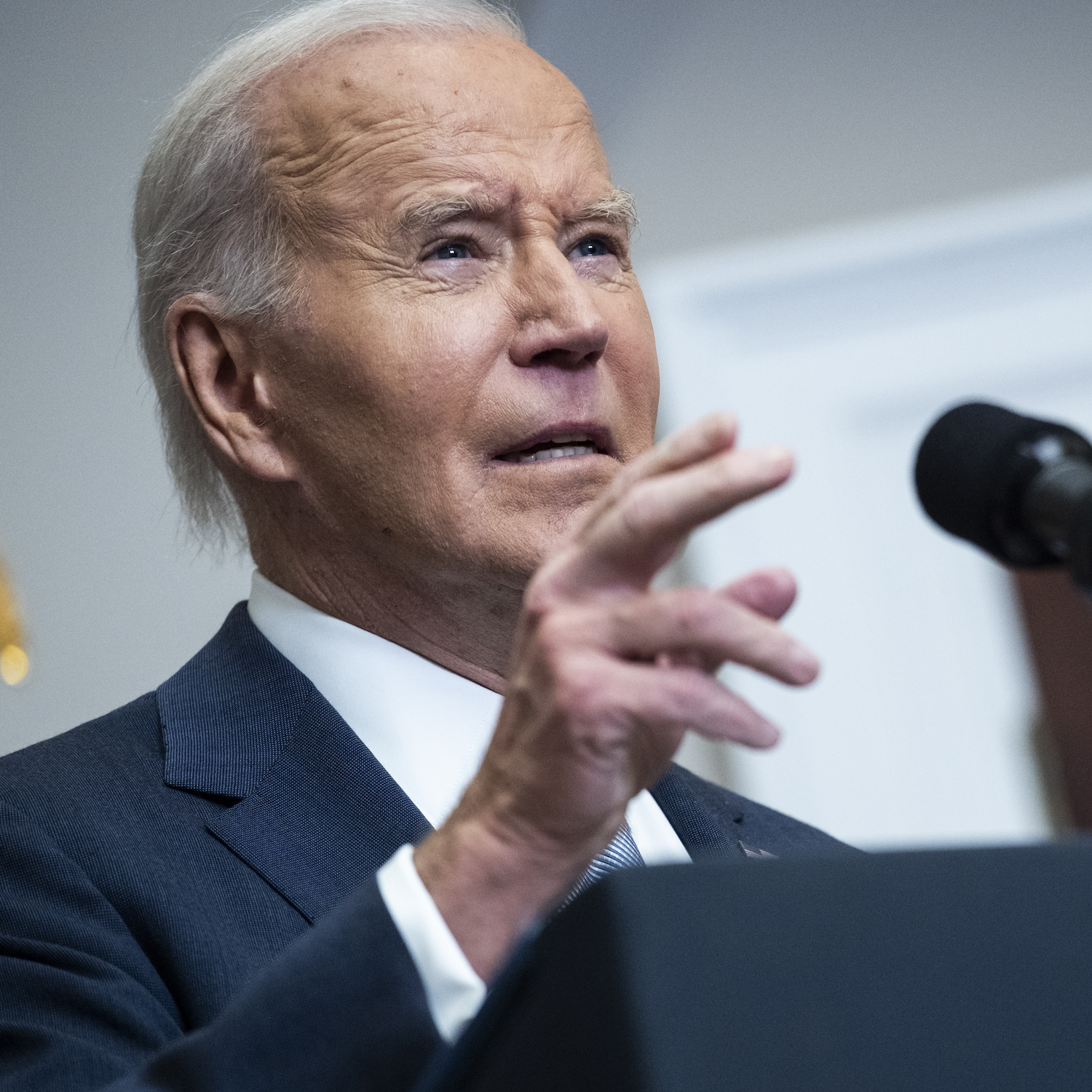
Good morning. It's Monday, December 16th. I'm Sumita Basu. This is Apple News today. On today's show, a cancer causing chemical that's in so many everyday objects. Why doctors in Boston are prescribing solar power to patients and drones over Jersey. What's up with all these mysterious unmanned aircraft sightings? But first, to controversial pardons and clemency granted by President Joe Biden. Last week, the president announced he was commuting the sentences of 1500 people and granting pardons to 39 more. It was the biggest single day act of clemency for any president. And now that we're learning more about who was on the list, some of those names are raising eyebrows. Like Michael Conahan, a former judge in Luzern County, Pennsylvania. He was convicted in 2011 of accepting $2.8 million in kickbacks in exchange for imposing harsh sentences on children to help fill the cells of private for profit juvenile detention centers owned by a friend. More than 2,300 kids, some as young as 8 years old, were put behind bars by Conahan and another judge, Mark Schiavarella. The case got widespread attention. It was nicknamed the Kids for Cash scandal and Conahan's role in it was seen as one of the worst judicial scandals in Pennsylvania history. His house arrest was set to end in 2026. Pennsylvania Governor Josh Shapiro says if anything, Conahan was given too light of a sentence from the start. I do feel strongly that President Biden got it absolutely wrong and created a lot of pain here in northeastern Pennsylvania. This was not only a black eye on the community, the Kids for Cash scandal, but it also affected families in really deep and profound and sad ways. Some children took their lives because of this. Families were torn apart. One of the family members of a victim has spoken out. Sandy Fonzo told the local newspaper the Citizen's Voice about how her 17 year old son was sentenced by one of the judges for possess drug paraphernalia and later died by suicide. After being released, she called the judge's commutation, quote, an injustice for all of us who still suffer. Other names on Biden's list include Rita Cronwell, the former comptroller for the city of Dixon, Illinois, who was convicted in 2012 of embezzling more than $50 million from taxpayers to buy things like jewelry and hundreds of show horses. I anticipate she's dancing in the streets of Dixon with her commutation because she just also conned the president of the United States. That's Jason Wodillo a former U.S. marshal who investigated Crunwell's crimes. Talking to CBS News Chicago, he says he thinks Cronwell never really understood the gravity of what she did. She is not remorseful. She never has been. Her only regret has only ever been that she was caught. Cronwell had a little under four years left on her sentence. Biden's sweeping act of clemency and pardons has been met with criticism on all sides, in particular the pardon of his own son, Hunter Biden, which came prior to his big day of commutations. Some lawmakers say presidential clemency powers need reform, including Democratic Senator Amy Klobuchar. Here she is speaking on CBS's Face the Nation on Sunday.
- [03:42]
Amy Klobuchar
I think that this whole process cries out for reform because otherwise you undermine the justice system. And again, I emphasize this also happened in a big way under President Trump, and you undermine the work of these lying FBI agents, these line prosecutors who have taken on these cases, followed the sentencing guidelines and made a decision. Might you want mercy 10 years later? Yes, you might. But let's at least look at these on a factual basis and a risk basis instead of just in the middle of the night a month before a president leaves.
- [04:29]
Sumita Basu
Let's turn to a new investigation from ProPublica about a toxic chemical found in so many everyday things that regulators are struggling to come up with ways to undo the damage done. Sharon Lerner covers health and the environment, and she told us about the risks of formaldehyde.
- [04:46]
Sharon Lerner
When you compare it to other toxic chemicals in the air, you can see that it causes more cancer by far than any other. And I don't mean by a little. I mean by a lot.
- [04:57]
Sumita Basu
Formaldehyde is produced by emissions from cars, trucks, industrial facilities, but also the gas stove in your kitchen or certain types of furniture and flooring.
- [05:08]
Sharon Lerner
Most of the formaldehyde inside your home and inside stores comes from things like that cheap kind of particle board stuff, which are little pieces of wood that are held together by a resin that can release formaldehyde when it dries. Also scented candles and some cosmetic products.
- [05:28]
Sumita Basu
According to ProPublica's analysis, formaldehyde is exposing us to cancer risk above the goal level set by the epa. The agency, by its own admission, has underestimated the public health risks associated with formaldehyde, like asthma, respiratory illness, miscarriages and fertility problems. But not much has been done to reduce our risk of exposure, in part because it's so widespread.
- [05:52]
Sharon Lerner
Formaldehyde is incredibly useful. It can preserve dead bodies. It can fight viruses in aquaculture. It's used in farming prevents pigs from getting viruses. It's like just incredibly useful, not to one industry, but to many. When I was looking into the different responses that EPA had gotten when it was attempting to regulate or at least assess the health risk from formaldehyde, I found that more than 75 trade groups had written to the agency pushing back against its efforts.
- [06:25]
Sumita Basu
Lerner says she doesn't expect regulation to improve under the incoming Trump administration. Based on his last term, he put.
- [06:33]
Sharon Lerner
Someone into a position in the EPA who had the authority to decide what reports were put out about the toxicity of chemicals.
- [06:45]
Sumita Basu
The EPA at the time had been working for decades on a report about the toxicity of formaldehyde.
- [06:50]
Sharon Lerner
This person who had previously worked for the chemical industry defending formaldehyde managed to kill the report.
- [07:00]
Sumita Basu
It wasn't released until this year. Lerner told us there are some steps you can take at home to reduce your exposure, the main one being ventilation. So opening windows, turning your stove vent on while cooking, or leaving new furniture outside to air out for a few weeks before bringing it in. If you can. All of that helps. ProPublica also put together a tool where you can put in your address to see just how much formaldehyde is in your community and where it's coming from. We'll include a link to that in our show. Notes A group of doctors in Boston are writing somewhat unusual prescriptions for their patients. Solar power Bob Biggio leads this program out of Boston Medical center that identifies patients with chronic conditions who need help paying their utilities, and they effectively prescribe them power. It involves more than 500 solar panels spread across one of the medical center's rooftops. It's simple. The solar panels create power, and then we direct a certain percentage of that power to a particular patient's meter. Dr. Anna Goldman is a primary care physician who co founded the project. She told WBUR she used to hear about patients dealing with energy insecurity on top of their health issues. People who couldn't afford electricity to recharge wheelchairs or keep fridges, air conditioners and CPAP machines running. Someone who had a hospital bed at home. They were using so much energy because of the hospital bed that they were facing utility shut off. Last year, she and her colleagues wrote more than 1600 letters to utility providers asking them to not shut off gas or electricity to these patients. They launched their $1.6 million solar panel project in October of that year, largely using tax credits from the Inflation Reduction Act. About half of the energy produced goes to the medical center. The rest goes to roughly 80 low income patients with complex conditions who get a utility credit of around 50 bucks a month. Biggio told WBUR he's already planning to expand the program. We're looking at all different areas. I think we currently have scoped out almost $11 million worth of additional solar that could be installed on our campus, he says. That could increase the number of patients they help with utilities tenfold. There's another type of unusual prescription some patients get at this medical center, fresh produce grown on the rooftop farm. In addition to the solar panels, the center has plants like tomatoes, bok choy and beans. And their harvest goes toward feeding patients who otherwise don't have access to local organic foods. Before we let you go, a few other stories being featured in the Apple News app. New York Governor Kathy Hochul says the federal government is deploying sophisticated drone detecting technology to help local authorities figure out what's behind a series of reported drone sightings. The sightings continue to baffle residents and government officials. It started four weeks ago in New Jersey, but has since expanded to at least six states. Unnerved residents have reported seeing drones overhead, sometimes in clusters, but so far no one has explained what's happening. New Jersey Republican Congressman Chris Smith told reporters he's drafting legislation that would give local authorities more power to track and potentially down drones.
- [10:43]
Sharon Lerner
This is the wake up call. You know, we've had a month of non action. You know, I was amazed when Secretary Mayorkas when he briefed us and that us means the New Jersey delegation and the governor put that together. He didn't have a clue. And I said, houston, we have a problem.
- [11:01]
Sumita Basu
Federal officials say there is no threat to public safety from the drones and no evidence that they have ties to foreign countries. The Wall Street Journal has exclusive reporting on the secretive Russian spy agency that carries out the Putin regime's agenda. That agenda includes arresting American citizens on Russian soil, which is what happened to reporter Evan Gershkovich. The entire time he was detained by Russia last year for 16 months, he was conducting his own reporting on who ordered his arrest. Now he and his colleagues at the Journal have identified the man at the top of this agency who they say is leading the biggest campaign of internal repression within Russia since the Stalin era. And finally, it's been dubbed the sad beige lawsuit. Sydney Nicole Gifford, an online influencer from Minneapolis, has sued another influencer, Alyssa Scheele, for stealing her signature beige colored aesthetic. Both influencers, homes, clothing and entire lives basically are awash in neutral beige creams and browns. Gifford says Sheil ripped off her brand identity and is asking for up to $150,000 in damages for mental anguish and lost income. She also wants shield's content taken down, which has been described as the ultimate blow to an influencer. The suit is being described as the first of its kind, and it could have ramifications for the influencer world, which is estimated to be worth hundreds of billions of dollars. You can find all these stories and more in the Apple News app. And if you're already listening in the News app right now, we've got a narrated article coming up next. Vanity Fair has a great story about an amateur art sleuth who's made a name for himself by recovering lost, centuries old masterpieces. If you're listening in the podcast app, follow Apple News Narrated to find that story. And I'll be back with the news tomorrow.