Loading summary
Transcript27 lines
- [00:05]
Sumita Basu
Good morning. It's Thursday, November 7th. I'm Sumita Basu. This is Apple News Today. On today's show, how Trump's team landed on a winning message for Americans. Democrats regroup and soul search after Harris defeat and world leaders react to Trump's reelection. But first, it's becoming more clear how decisive Donald Trump's victory was on Tuesday night, building a larger and more diverse coalition of voters than any Republican nominee in 20 years and capturing battleground states that were long considered toss ups. In fact, you could hear some degree of surprise when Trump and his team spoke in the early hours on Wednesday morning when it had become clear that he would win.
- [00:58]
Isaac Arnsdorf
Look what happened. Is this crazy?
- [01:04]
Sumita Basu
And we heard something similar from one of his campaign managers, Chris Lacivita.
- [01:09]
Jasmine Wright
This was unexpected, but I just want to thank, obviously, President Trump for this journey. It was a great one and he's a hell of a candidate and he's going to be a hell of a great 47th president.
- [01:19]
Sumita Basu
Washington Post reporter Isaac Arnsdorf covers politics and has written a book about the MAGA movement. He told us part of the Trump campaign's success was in its organization. Even without a robust ground game, it was far more disciplined and consistent than it had been in 2016 or 2020. And it was able to outsource a lot of ground game efforts to super PACs like Elon Musk's. The campaign was also more focused in who they were targeting. Young, black and brown men.
- [01:47]
Isaac Arnsdorf
The goal very explicitly was to run up the score with men and with these voters that don't vote as reliably. And that seems to have worked. There were fewer first time voters than in 20, but according to the exit polls, they went Trump's way instead of four years ago where they heavily favored Biden.
- [02:10]
Sumita Basu
But Arnstorf says there was also something much larger at play beyond strategic campaigning. So many Americans feel burned by this economy, despite numerous indicators that suggest the economy is actually doing well and recovery from COVID bucked trends under President Joe Biden. And Republicans were able to tap into this pervasive feeling that so many voters have that they were doing better under President Trump than they are now.
- [02:35]
Isaac Arnsdorf
Kind of the simplest explanation is that the Republicans were more in touch with the mood of the majority of the electorate, which was to reject the last four years of Democratic leadership.
- [02:51]
Sumita Basu
Trump's economic plans have been critiqued by experts, including 23 Nobel Prize winning economists who say his plan will make goods more more expensive for many American households and add an estimated $7.5 trillion more to the national debt over the next decade. And his tax proposal would raise taxes for every income group except the top 5% of earners. But Trump's messaging on specific issues like tips and overtime, Social Security and car insurance loans all seemed to resonate with target voting blocs. And Arnsdorf said Trump's general message on the economy was appealing to people all over, even in places where his campaign didn' spend much or any time at all.
- [03:33]
Isaac Arnsdorf
One of the things that I think is really telling is how you saw states and counties move right in the non contested places as much as the contested places, which sort of says to me like a lot of the campaign didn't have that much of an impact and voters were really responding to economic conditions and an information environment that wasn't tightly connected to whatever the candidates were doing or saying.
- [04:01]
Sumita Basu
Ultimately, Arnsdorf says when voters believe their lives could be better, they look for change. And that change came in the form of Donald Trump, with voters able to look past his criminal convictions, his character flaws and his divisive rhetoric.
- [04:16]
Isaac Arnsdorf
You often hear from voters of like, you know, I have a lot of reservations about his character. I know he's controversial. I don't like a lot of the things that he says. I don't like the way that he treats women. But, you know, things were better when he was president.
- [04:44]
Sumita Basu
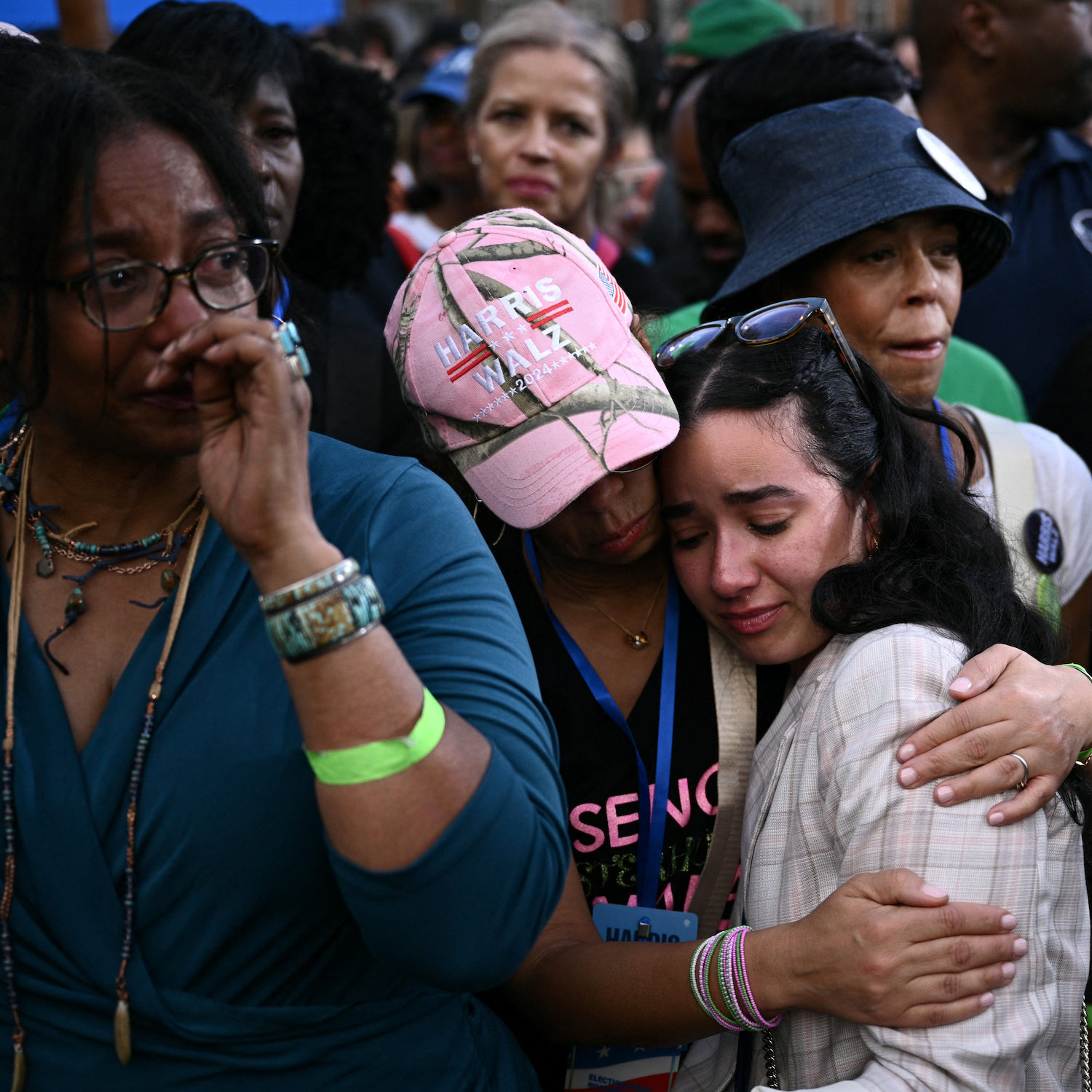
Let's turn now from what went right for Trump to what went wrong for Vice President Kamala Harris. Yesterday, Harris returned to Howard University, the site of what was supposed to be her election night victory party, to concede the outcome of this election is not what we wanted, not what we fought for, not what we voted for.
- [05:07]
Jasmine Wright
But hear me when I say, hear.
- [05:10]
Sumita Basu
Me when I say the light of America's promise will always burn bright. Harris's loss came as a shock to many Democrats, who, even with nail bitingly close polls, believed they had momentum on their side. Harris, after all, got into the race with just over 100 days to go. She quickly and effectively pulled together her campaign and united party leaders, and she outraised Trump 3 to 1. Yesterday afternoon, we caught up with Jasmine Wright, politics reporter, for Notice, a nonprofit, nonpartisan newsroom. She was on three hours of sleep and had already spoken to about a dozen people within the Harris campaign, some of whom told her the blame for Harris's loss should go to the candidate who bowed out of the race.
- [05:57]
Jasmine Wright
The original sin, I think, for most people goes down to Joe Biden and the fact that he decided to get back in the race knowing that he was an 80 year old president knowing that he wasn't particularly liked, knowing that people had a real problem with the economy, with inflation, with higher rent.
- [06:14]
Sumita Basu
Democrats are asking if the headwinds against the Biden Harris administration were too strong for her to overcome and whether Harris made a strategic error not breaking from the president enough on core policy issues like the economy.
- [06:27]
Jasmine Wright
One thing about the vice president is that she has been incredibly loyal to the president. Even I think some people may argue to her detriment.
- [06:37]
Sumita Basu
As for where the party goes from here, Chris Kofinas, a Democratic strategist and former chief of staff to Senator Joe Manchin, called Harris loss a, quote, historic disaster of biblical proportions. He told the Wall Street Journal that this moment could lead to a major political realignment. Just as there once were Reagan Democrats, he says there are now Trump Democrats. And the party will need to find a way to connect with the problems and concerns of working and middle class voters who feel they have been ignored for years. Senator Bernie Sanders put out a statement saying, quote, it should come as no great surprise that a Democratic Party which has abandoned working class people would find that the working class has abandoned them. Tim Miller, a former Republican political strategist, told MSNBC that Democrats have a serious branding problem and can take a lesson from past GOP losses.
- [07:31]
Tim Miller
I look back at 2012, when we lost with Romney, right? And afterwards we did the autopsy and we looked at it. We're like, we need to fix this little thing or that little thing, and that might make the difference if we reached out to this group more or that group. The reality was that the Romney Ryan party did not appeal to broad sloths of the country. It did not appeal to black and brown Americans. It also didn't really appeal that much to working class Americans. That's where the Democrats are right now. It's not about like a talking points. Democrats have to think about what the how their brand is resonating outside of college educated urban and suburban white America.
- [08:04]
Sumita Basu
One of the next decisions the party will have to make is who chairs the Democratic National Committee who could potentially turn things around for the party in 2028. Among the names already being floated, governors like Gavin Newsom of California and Gretchen Whitmer of Michigan and progressives like Representatives Alexandria Ocasio Cortez and Ro Khanna. Meanwhile, there are outstanding questions about what comes next for Harris.
- [08:29]
Jasmine Wright
I think that people privately, to me have questioned where she goes from here, whether or not it's possible for her to run again in 2028. I think that there is a lot of doubt if she did run in 2028 that she would make it out of an open primary, which is kind of a cosmically cruel thing.
- [08:51]
Sumita Basu
Harris told her supporters last night that the immediate work ahead will be focused on finishing out her term and ensuring a peaceful transition of power. Now to how world leaders and the international community are reacting to Trump's re election. His second term will involve foreign policy scenarios that weren't in the picture his first time in office, like the wars in Ukraine and Gaza. Israeli Prime Minister Benjamin Netanyahu has called Trump's win a huge victory. Trump has called for an end to Israel's war, which has killed over 43,000 Palestinians. More than half are women and children. Trump has repeatedly urged Israel to, quote, finish the job and destroy Hamas. But he hasn't said how and has not put forward a plan for how he would achieve a ceasefire. And he'll need to consider the growing tensions across the region, especially between Israel and Iran, who have been trading fire since April. Trump's message to Netanyahu on how to handle that so far has boiled down to, and I'm quoting, do what you have to do. Many of Trump's critics argue his decisions in his first term to withdraw from the Iran nuclear deal emboldened Iranian hardliners. And they say that helped Iran accelerate its nuclear program, which has Israeli officials concerned. In Ukraine, President Volodymyr Zelensky congratulated Trump on his victory. He said he's looking forward to a new era of cooperation between the two countries, though it's not clear what that relationship will look like. Throughout Trump's campaign, he regularly cast doubt on US Involvement in the war. He's repeatedly praised Russian President Vladimir Putin, he has criticized Zelensky, and he's claimed that this war would have never started if he had been president. Despite Zelensky's message of optimism about Trump, Holly Williams, a senior foreign correspondent for cbs, says a lot of Ukrainians are scared for his administration.
- [10:56]
Holly Williams
Many people in Ukraine and in Europe more broadly fear that Trump would actually cut off the supply of American weapons to Ukraine and even pressure the Ukrainians to negotiate a surrender of territory to Moscow. I was in Ukraine just last month. There was extreme anxiety on that front. And if Trump does in fact stop supplying Ukraine with arms, it will be viewed by many Ukrainians, as well as many citizens of America's other allies, as a betrayal.
- [11:21]
Sumita Basu
During his last term, Trump demonstrated that he's willing to overturn longstanding foreign policy and cozy up to authoritarian leaders like Putin and China's Xi Jinping. He's even kept in touch with Putin over the years, talking at least seven times since Trump left office. According to Bob Woodward's latest reporting, which the Trump campaign has denied, Putin was one of the first leaders to congratulate Trump when he won in 2016. A Kremlin spokesperson said Wednesday that Putin did not plan to call Trump, but Evelyn Farkas, the former top expert on Russia policy for the Pentagon, told CNN Putin and Xi Jinping will be happy to see Trump return to the Oval Office.
- [12:01]
Holly Williams
I would say that what the world leaders are going to take away from this is that American people are very happy to let Donald Trump lead the way on foreign policy and that they may prefer an isolationist foreign policy which plays to the advantage, to the advantage of Putin and Xi, because they don't want a strong America on the international stage.
- [12:34]
Sumita Basu
Before we let you go, a few other stories being featured in the Apple News app. Several news outlets are reporting that special counsel Jack Smith is working to wind down his cases against President elect Donald Trump. Smith was appointed by Attorney General Merrick Garland to investigate Trump's efforts to overturn the 2020 election and his handling of classified documents. According to ABC News, the decision to drop both cases is based on longstanding Department of Justice policy that a sitting president cannot face criminal prosecution while in office. Now to some ballot measure outcomes. Yesterday we told you a bit about the abortion ballot measures. Voters in seven states approved protections for abortion rights. Voters in three states rejected them. In other ballot referendums, there were big gains for workers. Voters in Alaska, Missouri and Nebraska passed a measure requiring employers to provide paid sick time to their employees. And in Alaska and Missouri, voters approved measures to raise the minimum wage to $15 an hour, well above the federal minimum, which has been at $7.25 since 2009. Even with this increase, NPR reports that it's still well below what most people need to support themselves and their families. And lastly, in non political news, Hurricane Rafael made landfall in western Cuba late Wednesday afternoon as a Category 3 hurricane with winds of 115 mph. It's the second hurricane to hit Cuba in just a few weeks. The stormy weather comes as Cuba is facing a dire economic crisis with shortages of food, fuel, water and medicine, and frequent power outages. You can find all these stories and more in the Apple News app. And if you're already listening in the news app right now, we've got a narrated article coming up next. Time magazine examines what America could look like under Trump's second term. If you're listening in the podcast app. Follow Apple News Narrated to find that story and I'll be back with the news tomorrow.