Loading summary
Transcript19 lines
- [00:05]
Shemitah Basu
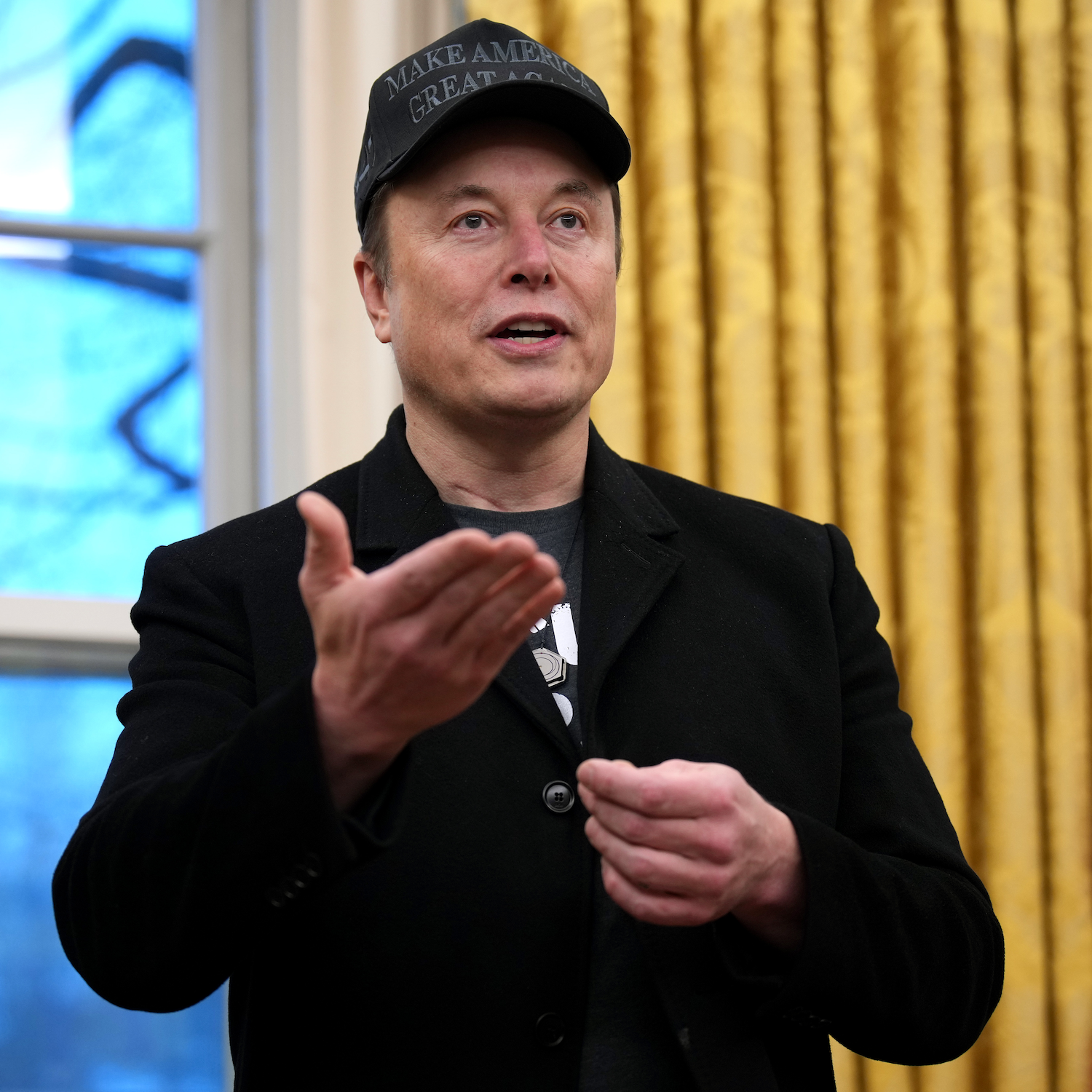
Good morning. It's Wednesday, April 30th. I'm Shemitah Basu. This is Apple News Today. On today's show, the UN Weighs in on Israel's humanitarian aid blockade, how the families of deportees are coping, and everyone's favorite TV painter, Bob Ross, gets his own happy little exhibition. But first, when Elon Musk and his Department of Government Efficiency got to Washington at the start of Trump's second term, they made some big promises. Chief among them to cut waste and fraud from federal spending and make the government more efficient in order to save American taxpayers money. Musk originally said Doge would find $2 trillion in savings. Then he lowered the goal to $1 trillion, then again to $150 billion. But Doge has struggled to reach even that very lowest target. The Doge team claims to have saved $160 billion, but reporting shows their accounting is inflated and riddled with miscalculations and errors. So it's hard to know what exactly they've accomplished. Doge's goals are hitting up against what budget experts and the government's own watchdogs have long said finding and eliminating waste, fraud, and abuse isn't a path to big fiscal savings. There simply isn't enough of it. The bulk of federal spending is associated with Social Security and Medicare, two programs that Trump has promised he won't touch. Still, wired senior writer McKenna Kelly tells us Doge, with Trump's support, has had a profound effect on the federal government over the last 100 days, helping to.
- [01:48]
McKenna Kelly
Lay off tons of government workers. And we've seen attempts to shut down agencies like the Consumer Financial Protection Bureau, usaid, and just trying to completely red do the United States administrative state in Silicon Valley's image, really.
- [02:07]
Shemitah Basu
Kelly is part of the team at Wired that's been closely reporting on what Doge has been doing, speaking to current and former federal workers. In total, Doge has shrunk the federal workforce to 1960s levels by either firing or pushing out nearly a quarter of a million workers. Doge has hollowed out OR shut down 11 federal agencies, and the team says it has cut more than 8,500 contracts and 10,000 grants. Last month, as Doge was getting more scrutiny, Trump said they would use a scalpel to make cuts. But Kelly says that's not what's happened so far.
- [02:41]
McKenna Kelly
Elon Musk got on stage at CPAC holding this chainsaw, and really, that's emblematic of what Doge has done to the federal government.
- [02:49]
Shemitah Basu
Doge has also successfully gained access to troves of data, including Americans personal data. To what end remains somewhat murky.
- [02:57]
McKenna Kelly
The scale with which that they are centralizing American user data has never been done before, and even if you agree with what their stated intents are right, this is the kind of system that can be abused.
- [03:09]
Shemitah Basu
Over the last few months, the American public has soured on Musk and Doge. There have been nationwide protests of Tesla, and the company's profits fell by more than 70% amid the backlash. Only 35% of Americans approve of the government work Musk is doing, according to recent polling, while 57% disapprove.
- [03:29]
McKenna Kelly
As we've gone through these last 100 days, we're seeing just a ton of pushback.
- [03:36]
Shemitah Basu
In the next hundred days, the Doge team will see some big changes. Musk says he's going to step away soon to focus more on Tesla. However, as a special government employee, he didn't really have a choice. He can only spend 130 days a year on government work, and that deadline is coming up in just a few weeks. But that doesn't mean Musk will leave his work in Washington behind entirely. Reuters spoke with four people who say he's already looking ahead to next year's midterms, where he plans to play a major role as a Republican mega donor. Now to the United nations top court, where oral arguments began this week over whether Israel should be compelled to allow the UN and other organizations to provide uninterrupted access to Gaza and the west bank to provide humanitarian aid for Palestinians. And please be advised, this story contains graphic details of war injuries and fatalities. Since March 2, Israel has allowed no food, medicine or supplies to enter Gaza, it says, to pressure Hamas into freeing the remaining Israeli hostages. Aid groups say conditions in the enclave are getting increasingly catastrophic for the over 2 million Palestinians who live there. Groups like the World Food Program say they have no more food to distribute. The supplies they managed to stockpile during the brief ceasefire at the start of the year have run out. And Doctors Without Borders says access to clean drinking water has reached a crisis point. During testimony at the Hague on Monday, Amar Hijazi, the Palestinian ambassador to the Netherlands, told the court that today 9 out of 10 Palestinians don't have access to safe drinking water.
- [05:20]
Gidan Saar
Israel continues to repeatedly forcibly displace and starve the Palestinian population in Gaza. These are the facts. Starvation is here. Humanitarian aid is being used as a weapon of war. Only a handful of hospitals continue to bravely function, thanks to the heroic Palestinian doctors who remain and the brave international doctors volunteering to assist them. Despite the dangers the International Court of.
- [05:51]
Shemitah Basu
Justice heard via a pre recorded video from at least one of these doctors who traveled to Gaza in recent months to Support Palestinians. Here's Dr. Mohamed Mustafa from Australia, speaking from a Gaza hospital where he volunteered last month.
- [06:05]
Dr. Mohamed Mustafa
We've run out of ketamine, we've run out of propofol, we've run out of all painkillers. We can't sedate anyone. There are seven girls getting their legs amputated. No anesthesia. I mean, it was just mostly women and children. Burnt head to toe, limbs missing, heads missing. I don't know what to tell you. This is. I was here in June. Nothing to this intensity. This is unbelievable. And the bombing is still going on. The rooms are still shaking, the screams are everywhere. It is. It's insane.
- [06:44]
Shemitah Basu
Israel did not send a legal delegation to the Hague this week, and it's argued the proceedings are biased. Israeli Foreign Minister Gidan Saar spoke about this at a press conference on Monday.
- [06:55]
Gidan Saar
Israel decided not to take part in this circus. It is another attempt to politicize and abuse the legal process in order to persecute Israel.
- [07:10]
Shemitah Basu
Tsar and other Israeli officials have said unrwa, the main UN agency that provides aid to Palestinians, has been infiltrated by Hamas, though Israel has not made public any evidence to support those claims. In recent months, Israel banned both the UN and UNRWA from operating in Israel and from communicating with Israeli officials. At the ICJ hearings This week, around 40 governments are expected to speak. An opinion from the court on whether Israel should allow uninterrupted aid is not expected for a while, and it will not be binding. However, opinions from the ICJ do carry significant legal weight. As the New York Times points out, a ruling against Israel could reshape how governments across the world navigate their relationships and policymaking with the country. As legal battles over people who were detained and deported continue in courtrooms across the country, their families are engaged in their own battles. For them, it's not about what's legal or illegal. It's about how to survive when someone you love and rely on is taken away without warning. Like Jennifer Vazquez Sura, the wife of Kilmar Abrego Garcia, who the Trump administration wrongly deported to El Salvador. She told the Washington Post last week that she was forced to move to a safe house because Trump administration officials posted a court document on social media that contained her home address, which made her afraid for her and her children's safety. Her husband has been publicly attacked by President Trump administration officials and Salvadoran President Nayib Bukele Here's Vasquezura speaking to CBS after learning her husband was sent to the notorious Secot prison in El Salvador.
- [08:59]
McKenna Kelly
I was very scared.
- [09:02]
Shemitah Basu
Why? Because I've seen news of that prison and I know they take criminals there. My husband's not a criminal. The administration has admitted it deported Abrego Garcia by mistake, but it claims he is a member of MS.13 and it has since defied numerous court orders to help facilitate his return to the United States. Vasquez Sora says her husband is innocent and she told the Post, quote, this is God's battle and I'm going to fight it for Kilmar and for everyone. In another case, a Cuban mother was separated last week from her one year old baby when she was deported. Heidi Sanchez broke down in tears as she spoke to Reuters from Cuba about the incident. Here she is through an interpreter. Then I started crying, I begged, I pleaded. My daughter got nervous and agitated and began to ask for milk. And I told them, look, she's asking me to breastfeed her. She still breastfeeds, but it didn't matter to them. The Department of Homeland Security called Sanchez's account inaccurate, saying all deportees are given the opportunity to take their kids with them. Reuters could not confirm if she was given a chance to do so. Then there is Dr. Noor Abdullah, a US citizen and the wife of Mahmoud Khalil. He's a green card holder who was detained by ICE for participating in protests at Columbia University against Israel's war in Gaza. Abdullah, who was eight months pregnant at the time, was with Khalil when immigration officers in plain clothes stopped them in the lobby of their apartment building and took him away. She immediately called their lawyer, who told her to ask the officers questions like their names and which agency they represented. But as you can hear in this video shot by Abdallah, they refused to answer. Most of them. Can you please specify what agency is taking him? Please excuse me, Nobody. They're not talking to me. I don't know. Last week she gave birth to their child without Khalil by her side. He requested a temporary supervised release to be there for the delivery of his son, but ICE denied the request almost immediately. Abdullah told Al Jazeera she suspected Khalil wouldn't be allowed to attend the birth, but also said she's trying to keep keep the larger picture in mind. My pregnancy and our story has been on every single news channel. Then you think about what about the woman in Gaza that are also pregnant. They end up giving birth without their loved ones while their homes are being bombed. Time magazine reports that cases like these, and in particular Khalil's case, echo Trump's history of using family separations as immigration policy, where over 5,000 children were taken from their parents with no tracking process or records that allowed them to be reunited. To this day, as many as 1300 children separated during Trump's first term have never been reunited with their parents. Before we let you go, a few other stories we're following. President Trump says he will scale back 25% tariffs on imported cars and auto parts that were set to go into effect this weekend, the latest retreat in his tariff policy that has thrown financial markets into disarray. The president says he wants to prevent carmakers from being hit with double tariffs from these and additional new import taxes on foreign metal. Now, automakers can apply for 15% price offsets during the first year of tariffs, then 10% the next. Those offsets will expire in the third year, by which point the administration hopes more of the automaking supply chain will have moved to the U.S. another Columbia University student who was arrested for his pro Palestinian advocacy work is speaking out. Mahsayan Mahdawi, a lawful permanent US Resident, has been in custody since being detained at his citizenship hearing on April 14, and he told NPR in an exclusive interview he's doing his best to stay positive.
- [13:07]
Gidan Saar
I am centered internally. I am at peace. While I still know deeply that this is a level of injustice that I am facing, I have faith. I have faith that justice will prevail.
- [13:22]
Shemitah Basu
Mahdawi grew up in a Palestinian refugee camp in the West Bank. The federal government, in court filings Monday, said Mahdawi's presence in the US could undermine policy to combat antisemitism and peace negotiations in the Middle east, but they provided no evidence as to how. And finally, a museum exhibition honoring the life and work of everyone's favorite public television painter, Bob Ross, will open sometime in the the next year, the Minotrista Museum and gardens in Muncie, Indiana, will feature about 200 works from his television show the Joy of Painting, which ran from 1983 to 1994. The featured works, donated by his estate, will include the last painting he ever did on air, an idyllic wilderness path winding through mountains and the horizon, plus a few pieces that he painted in private and never recreated on air. So if you happen to be in Indiana during the show, consider stopping by to enjoy some happy little trees and clouds if you can. You can find all these stories and more in the Apple news app. And if you're already listening in the news app right now, we've got a narrated article coming up next. An emergency physician writes for the New Yorker about the decimation of Gaza's healthcare system that he witnessed firsthand when he traveled there in late January. If you're listening in the podcast app, follow Apple News News plus Narrated to find that story. And I'll be back with the news tomorrow.