Loading summary
Transcript25 lines
- [00:05]
Shemitah Basu
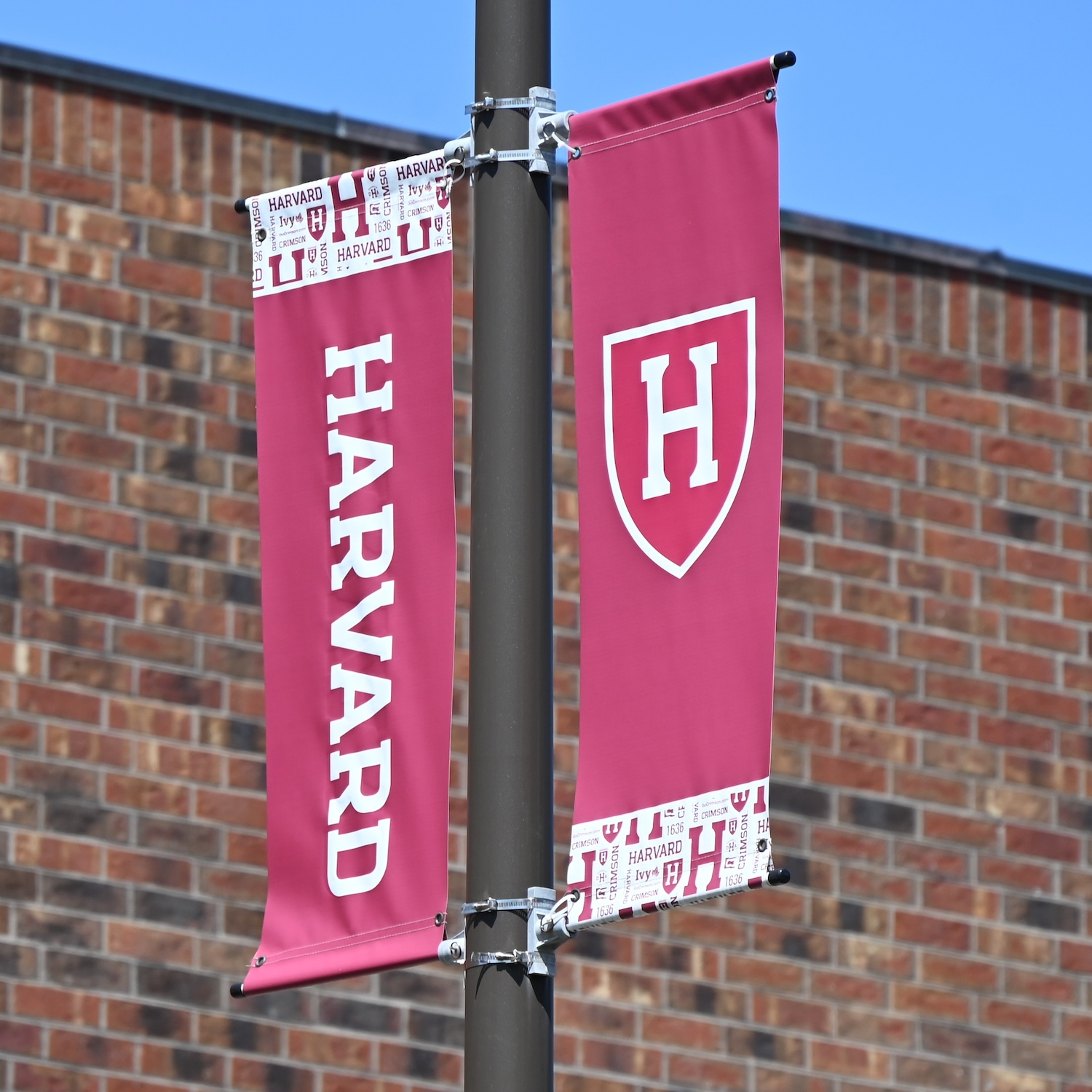
Good morning. It's Friday, May 23rd. I'm Shemitah Basu. This is Apple News today. On today's show, how the Trump family is getting rich off of crypto, where the police reform movement is five years after the killing of George Floyd. And get ready to say goodbye to the penny. But first, the Trump administration says Harvard can no longer enroll international students and that existing foreign students must transfer or lose their legal status. The move comes as the administration has been trying to pressure Harvard, the nation's oldest and wealthiest university, to conform to its policies and political leanings. In a post on X, Homeland Security Secretary Kristi Noem said, quote, it is a privilege, not a right for universities to enroll foreign students. And she said this was a warning to other universities telling them to get your act together. Previously, DHS had threatened to revoke the university's ability to enroll these students if Harvard did not turn over records of what Noem claimed were illegal and violent activities from international students on campus. In this new letter, Noem said their international program certification could be renewed if records are sent within 72 hours. Record Harvard enrolled around 6,800 international students this year. That's a little over a quarter of its entire student body. And international students are a huge source of income because they tend to pay full tuition plus room and board. A spokesperson for the university referred to the administration's decision as unlawful and retaliatory and said it's quickly working to provide guidance to students. Here's Ryan Enos, a professor of government at Harvard and a member of a group of professors currently suing the Trump administration over funding cuts, speaking to cnn.
- [02:06]
Ryan Enos
This is one of the great things about the United States is that people come from all over the world to study here. It's an incredible blessing. It's something that no other country has, where the smartest people in the world come to our institutions to study. And ultimately, that punishment isn't just going to Harvard, it's going to the United States. It has taken away a great resource that has built up through these universities.
- [02:29]
Shemitah Basu
Like Harvard, a resource that in a way subsidizes a lot of other students tuitions, as explained by NBC News correspondent Antonia Hilton.
- [02:38]
Antonia Hilton
So who this is actually going to hurt all of the marginalized and underprivileged Americans who depend on financial aid.
- [02:45]
Shemitah Basu
This is just the latest in a months long back and forth between the administration and Harvard. The New York Times tallied up at least eight investigations the Trump administration has launched against Harvard across at least six agencies. Nearly $4 billion in grants and funding has been frozen, which the university has sued the administration over. Last month, Harvard's president, Alan Garber, wrote a letter to the Harvard community saying it would not surrender its independence or relinquish its constitutional rights, and saying no government should dictate what private universities can teach or who they admit. As for what comes next for international students at Harvard, Hilton said on NBC, many are now deeply worried.
- [03:29]
Antonia Hilton
There are international students waiting for their graduation day in just a couple days. Right now, with this system being revoked, technically, what students are telling me they're fearful could happen. DHS agents, ICE agents could come to the campus if they do not leave and go back to their home countries in the next couple days, and they could essentially go through what we've seen happen to students in other campuses across the country over the last couple months.
- [03:51]
Shemitah Basu
But Harvard might get some short term relief. Just hours after Noem announced this move, a federal judge in California blocked the Trump administration from terminating the legal status of international students nationwide, while another case on the issue is pending now to an invite only crypto gala hosted by the president in Virginia last night. It was an event with an exclusive and expensive door policy. There was no press, no cameras, and to get a ticket you needed to be among the top 220 investors in the Trump family Crypto coin. Declan Hardy covers capital markets for Politico and has been digging into the guest list. He notes that the collective sum to get into the event was over $100 million. Some attendees spoke on the record before the gala.
- [04:51]
Declan Hardy
They're largely saying that this is about meeting the President. It's getting an unusual opportunity to meet the president in a way that maybe wouldn't be available to them in other means. For some critics, there is a concern, however, that others are attending this to curry favor with the president or influence his perspective on certain policies.
- [05:10]
Shemitah Basu
Trump launched his coin in January just before his inauguration, and when people buy Trump Coins, he directly benefits.
- [05:17]
Declan Hardy
Anytime this meme coin goes up in value, that stake becomes that much more valuable. In addition to that, whenever the token itself is traded, whether it's bought or sold, there's a tiny little fee that's collected by the Trump family and its partners who are behind the venture, and that has in total generated millions of dollars in trading fees for them alone.
- [05:39]
Shemitah Basu
Some have been explicit in their desire to buy attention from the President of the United States. A trucking logistics firm purchased $2 million of Trump coin, and the chief financial officer said he was sure Trump, quote, likes to follow who's purchasing his Houston based Freight Technologies justified their purchase by describing it as an opportunity to, quote, champion fair and free trade across the US Mexico border, essentially saying they were hoping to have some sway on tariff policy.
- [06:10]
Declan Hardy
The concern here is multifaceted, and on one end it is about this is the president enriching himself in office? For another perspective, there's a concern here about who the president is associating with, whether these are folks who are looking to influence his policy or his perspective on certain issues, whether that be crypto or something else.
- [06:31]
Shemitah Basu
Democrats want to ban presidents from offering meme coins in the future. Representative Maxine Waters of California, who is the top Democrat on the House Financial Services Committee, introduced a bill along those lines yesterday. Others have criticized last night's event as a pay to play scheme, a blurring of the lines between Trump the president and Trump the businessman.
- [06:52]
Declan Hardy
Some of the president's defenders have pointed out that he comes from a career in business, his family is in business, and they shouldn't be expected to stop doing business while Trump is in office. Others have stated that this really isn't all that different, at least in their perspective, from donor dinners or lobbyist dinners that happen in Washington every night.
- [07:12]
Shemitah Basu
The difference being, he added, money from donor dinners goes toward political parties or organizations, not to a president's personal, personal business ventures. Trump once denounced cryptocurrencies as a scam, but has become its loudest advocate, declaring his intent to be the first crypto president. He has supported a bill designed to regulate and boost crypto potential, which passed the Senate with some support from Democrats this week. He's hired pro crypto regulators, and he's paused federal investigations into firms. But while guests last night won their ticket, they may have lost something, too. The Guardian's analysis shows that nearly half of the top 220 investors have suffered a net loss from purchasing Trump's coin since the coin's January launch. Let's turn now to the state of police reform in America. This Sunday marks five years since the murder of George Floyd by Minneapolis police officer Derek Chauvin. The killing sparked a global protest movement and calls for reforms across the country. Today, we're in a very different place.
- [08:25]
Jamiles Larte
If you take a step back and you look around, you can see all of these kind of different signs of a movement in retreat or of a moment that has passed.
- [08:38]
Shemitah Basu
That's Jamiles Larte, a staff writer with the Marshall Project, a news site that supports criminal justice reform through its journalism. He's been tracking how many police reform efforts have either failed or been rolled back. For example, in Alabama, lawmakers recently passed a law known as Back the Blue. It expands legal immunity for police officers. In Minnesota, an organization that was created to help people pay their bail announced just a few days ago that it would be ending that mission. And in New York, the state Supreme Court voted last month to strip one local police accountability board of their power to investigate cases of misconduct.
- [09:16]
Jamiles Larte
Those were just examples from the last couple of days when we published the story. If we had done that piece a different week, you could have, I could have found five other examples.
- [09:25]
Shemitah Basu
These types of reforms, which lean in favor of police protections and are wary of strengthened oversight and accountability, are also happening at the federal level. The civil Rights division of the DOJ is closing investigations into a number of police departments. The Trump administration announced this week that it's ending oversight agreements for a number of city police departments, including Minneapolis and Louisville, where police fatally shot Brianna Taylor in 2020. Larte explained how these agreements, called consent decrees, have typically been used.
- [09:58]
Jamiles Larte
If we had to put it in kind of really broad strokes. Democratic administrations have tended to use them and Republican administrations have tended not to. But the Trump administration's decision to attempt to unilaterally pull out of all these agreements and end all of these investigations that had not yet led to agreements is unprecedented.
- [10:18]
Shemitah Basu
In response, the state of Minnesota has said that it's still enforcing its own consent decree. And local leaders and law enforcement in Minneapolis have said that they are still committed to police reform. Beyond policy, some of the cultural conversations have shifted, too. For example, for years, a plaza in D.C. that leads up to the White House was renamed and marked with the words Black Lives Matter. That's now erased after threats from congressional Republicans to cut off the city's funding. There's been a political and corporate move away from DEI initiatives, and terms like WOKE are now most commonly used as a criticism.
- [10:56]
Jamiles Larte
Every countervailing movement creates a new movement in its wake. Like, that's just how history moves. So I think it's just, it's difficult to say if we're at the leading edge or if we're hurtling towards the next moment. Right. And does the next moment come the next time someone is killed by, by the police on video and everybody sees it? We don't know.
- [11:27]
Shemitah Basu
Before we let you go, a few other stories we're following. An impromptu vigil was held outside the Capitol Jewish Museum in D.C. yesterday, where two staff members of the Israeli Embassy were shot and killed. On Wednesday night, Hadar Susskind, the president of the New Jewish Narrative, spoke it's.
- [11:45]
Declan Hardy
So important that we're here together to stand in solidarity. We honor the memory of those who were killed yesterday and we speak up and say we have to do better, we all have to do better. We have to be here together working for peace. We have to find a better way to a better future for Israelis, for Palestinians, for American Jews, for Muslims, for all of us.
- [12:08]
Shemitah Basu
The victims, 30 year old Jeroen Leshinsky and 26 year old Sarah Milgram were a couple who were about to get engaged. Meanwhile, the suspect has been charged with murder of foreign officials, among other crimes. Federal authorities raided a Chicago home linked to the suspect and were working on Thursday to authenticate a manifesto posted online about an hour after the shootings. According to court documents, he flew in from Chicago for a work conference on Tuesday, declaring a firearm in his checked bag. In a press conference yesterday, interim US Attorney Jeanine Pirro said it was far too early to say whether they would pursue the death penalty. The Justice Department is investigating it as both an act of terrorism and a hate crime. In other news, there were two big court decisions yesterday relating to education. The first comes from the Supreme Court, which was deadlocked in their decision over whether to allow Oklahoma to establish the nation's first taxpayer funded religious charter school. The 4:4 decision means the lower court's ruling, which blocked its creation, stands. Only Eight justices weighed in after Justice Amy Coney Barrett recused herself from that case. The other major legal decision came from a district judge on Thursday who blocked President Trump's executive order to close the Department of Education. The judge also ordered the administration to reinstate the hundreds of employees who were fired. The Trump administration is expected to file an appeal. And finally, if you're in need of good luck, make a wish on a penny now before it's too late. Yesterday, the Treasury Department announced it will officially phase out the coin as it placed its final order for pennies. It costs nearly 4 cents to make a penny, so the move is expected to save $56 million a year. But as CNN notes, it costs nearly 14 cents to make a nickel. And so far at least, the treasury has announced no plans to phase that coin out. You can find all these stories and more in the Apple news app. And if you're already listening in the news app right now, we've got a narrated article coming up next. The Atlantic has the story of one mom whose son was left unresponsive after a car crash. Doctors believed he wasn't conscious, but she held onto her belief that her son was still aware of his surroundings. Decades later, she was proven right. If you're listening in the Podcasts app, follow Apple News plus narrated to find that story. Enjoy the long weekend for Memorial Day and we'll be back with the news on Tuesday.