Loading summary
Transcript30 lines
- [00:05]
A
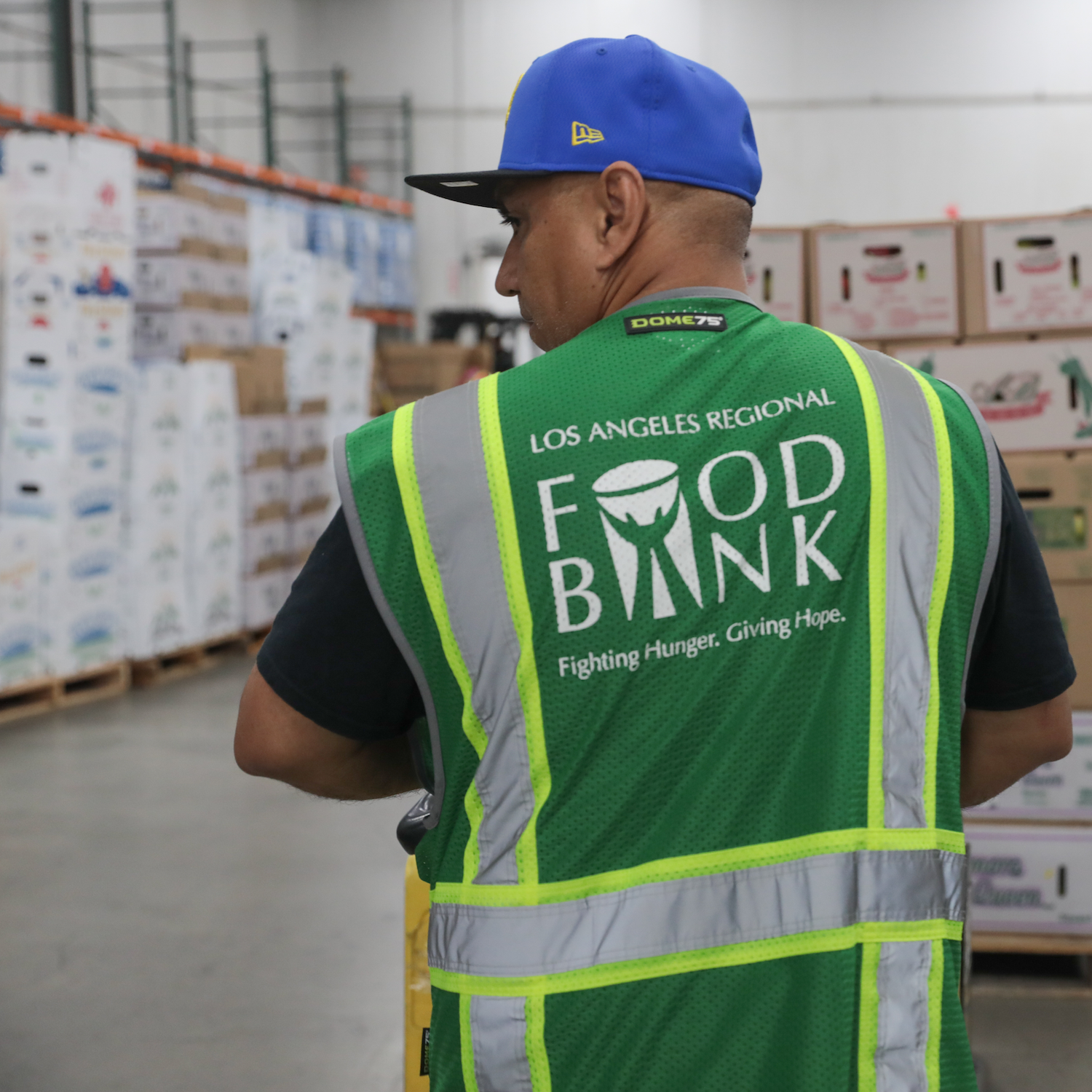
Good morning. It's Tuesday, November 4th. I'm Shamita Basu. This is Apple News Today. On today's show, how more people are avoiding jail after killing someone. Why? All eyes are on a ballot initiative in California this Election Day and your imported fettuccine could get a lot pricier. But first, at midnight tonight, this shutdown will become the longest in history. Up to this point, most people outside the federal workforce have been pretty well insulated from its worst effects, allowing both parties to stand their ground. But the pain for lower income Americans is now coming into full view. Food stamp benefits through SNAP expired last weekend. And yesterday the Trump administration confirmed it would provide only half the normal food stamp benefits to recipients in November. And for many, those payments will be delayed. It comes after a court order last week that compelled the government to find the money to keep the program going during the shutdown. The average monthly payment is around $330, and the program helps nearly 42 million low income and disabled Americans buy food. Here's one SNAP recipient, Michelle Lockhart from Tennessee speaking to cbs.
- [01:28]
B
This is a dire need for us and they need to see it that way. It's not that we want it, it's that we need it to survive. Myself, I was diagnosed stage four cancer in 2022 and I've been unable to work since 2023. A SNAP benefit recipient for about a year now. And it's not just myself, it's others in the community, others like me, people that are no longer able to work. And without the SNAP benefits, we're unable to put food on the table.
- [01:56]
A
The administration is using half the contingency funds available to keep the program going and say depleting that source of money would leave nothing for potential disaster relief. An official told the court that some people might not see their November entitlements for weeks or even months owing to dated decades old processing systems. And it's unclear how long this can go on for. Senate Majority Leader John Thune described the future of the program as uncertain. Food banks, meanwhile, have been left to pick up the slack. Here's Elizabeth Keever with Harvesters Food bank in Kansas City, Missouri, speaking to npr.
- [02:33]
C
We're in uncharted territory. We have always been the supplement to the Supplemental Nutrition Assistance Program. And when you think about the county I was in alone, I was in Jackson county. There are 92,000 folks in that county and who are on SNAP benefits. And the monthly distribution that is anticipated for that county alone is $19 million. So it's nearly impossible to make up the gap that snap is leaving us.
- [03:07]
A
In Houston, Texas, a food bank super site popped up at the NRG stadium over the weekend, NBC reported. Long lines of vehicles turned out to collect groceries. RA reporter Ryan Chandler described it as a scene from the COVID era and spoke to people about to lose their benefits. Been in here since 5 o' clock.
- [03:25]
D
This morning working hard and trying to feed our children at home and being responsible. You know, whatever is going on right now with the shutdown with the government.
- [03:34]
B
You know, is hurting a lot of people.
- [03:36]
A
Speaking to FOX on Sunday, Agriculture Secretary Brooke Rollins said the government had been duct taping support programs for a month and blamed Democrats for not voting to reopen the government.
- [03:48]
B
We are working and looking at all angles right now. The president has been very clear. He wants us to do everything we can to make sure that we can keep these benefits going. So that's what we're doing right now and over the weekend, especially for our most vulnerable populations as the Democrats keep shutting things down. It's just crazy.
- [04:06]
A
Democrats want Republicans to agree to extend health care subsidies for the more than 20 million Americans with coverage through the Affordable Care Act. It appears lawmakers are no closer to cutting a deal to end the shutdown. But Senator Thune said Monday he was optimistic an agreement could be reached this week. It's Election Day. Yesterday we talked about critical races in New York, New Jersey and Virginia. Today let's talk about what voters in California are being asked to weigh in on a ballot measure that could help determine who controls Congress next year. Proposition 50 would suspend California's current congressional maps, which were drawn by an independent commission, and clear the way for new lines to be drawn that favor additional Democratic seats. Melanie Mason, a senior politics reporter with Politico California, spoke to us about why Democrats in the state are making this extraordinary push.
- [05:08]
D
It did this in response to the redistricting efforts in Texas and other Republican led states. So they're sort of positioning this ad as a check on President Trump, a check on the Republicans who are doing these mid decade redistricting efforts all across the country. And California as a blue state is the one sort of bulwark for Democrats to try and pick up a few seats on their side of the ledger.
- [05:30]
A
The campaign recruited former President Barack Obama for their ads and has elicited so many financial contributions that California's Democratic Governor Gavin Newsom asked people to literally stop donating, sending the message that his political operation is feeling confident about their campaigning efforts. The no on Prop 50 campaign, meanwhile, has been funded in part by Charles Munger Jr. Son of the late billionaire business partner of Warren Buffett and the man who helped then Governor Arnold Schwarzenegger create the independent commission in the first place more than a decade ago. Schwarzenegger himself has avoided becoming the face of opposition, but he did criticize Newsom's moves as a race to the bottom on cnn.
- [06:14]
B
This is spreading like wildfire all over the country, and it saddens me to see they'd be going in the opposite direction rather than having an independent commission draw the district lines.
- [06:26]
A
This effort to change how redistricting works in California is just the latest move where Newsom is showcasing a more antagonistic style toward President Trump than many of his peers in the Democratic Party. For months now, Newsom has been posting on social media in a similar style to caps, name calling political adversaries kind of trolling the president. In a recent rally in the state where former Vice President Kamala Harris also made an appearance, Newsom made a few digs at Trump and in a way, at his own party for its general unwillingness to put up a fight.
- [07:02]
C
He didn't expect any of this to happen. He thought maybe we'd have a candlelight vigil, maybe we would hold hands, maybe. Maybe we could all come together and, like, you know, doing op ed in the LA Times and, you know, just say, woulda, coulda, shoulda done something. They never expected this.
- [07:22]
A
Most political observers expect for Prop 50 to pass, in part because of Newsom's messaging on it.
- [07:29]
D
And in some ways it is surprising because Californians like voters, I think across the country, they don't love the idea of politicians drawing their own district maps. But in other ways, I don't think it's all that surprising that it's doing very well. Because what Governor Gavin Newsom and Democrats have done pretty savvily is they've turned this into a broader referendum on President Trump.
- [07:50]
A
Mason told us the campaign has brought in an unprecedented $114 million in just 10 weeks, outspending the no campaign by more than 2 to 1.
- [08:00]
D
I think what's really interesting is that they have raised nearly $40 million in small grassroots digital fundraising, which just doesn't really happen when it comes to ballot measures. Ballot measures are usually like big corporate interests battling each other. So the idea that you have somebody going online and giving $5 or $20 or $100, it's so much more akin to what we see in presidential races. For example, and particularly for Gavin Newsom, who there's a lot of speculation maybe he's going to run for president in 2028.
- [08:28]
A
And if he decides to run, Politico writes that he would have a significant national list of donor names and contacts from this redistricting push. Americans states have long been free to use deadly force to defend themselves within their own homes. But over the last 20 years, many states have expanded those legal protections and more and more people are claiming a very particular kind of defense to avoid.
- [09:00]
B
Jail, murder or self defense. A jury will decide that for Fort Payne man on trial this week for capital murder. His defense Alabama Stand you'd Ground Law.
- [09:10]
C
A dispute over a parking space led to an argument, a fatal shooting, and now a lot more talk about stand your ground law.
- [09:17]
B
Also a developing story, a stand your ground hearing happening right now over a golf course attack. This fairway fight happened at Harbor Hills.
- [09:24]
A
Stand you'd ground laws began with Florida back in 2005. The basic idea is that if you kill someone and claim self defense, the presumption is you acted reasonably and it's on the prosecutor to prove otherwise. Florida's law has become a model for 30 other states since then. Mark Maramont, a senior editor with the Wall Street Journal, has been looking into how these laws have affected homicide data.
- [09:49]
E
We analyzed FBI data over a recent six years and found a significant increase in self defense killings that were ruled to be justifiable in the 30 states with stand your ground laws. In other words, nobody was being punished for these killings.
- [10:06]
A
Maramont found that so called justifiable homicides carried out by civilians jumped 59% in a large sample of cities in counties in those states. And he said that those numbers could be attributed to a number of overlapping factors.
- [10:21]
E
There are a number of these states that actually added the ability for people to carry guns virtually anywhere they wanted to without restrictions, and in addition to which there's been a huge increase in the whole country in gun ownership. So what you end up with is more people carrying guns with them in more places and they end up with some kind of situations and disputes, sometimes trivial disputes that might once have resulted in fisticuffs or an argument and now end up with somebody dead.
- [10:53]
A
Supporters of Stand you'd Ground say the law can deter violent behavior and that it allows people to feel confident they can protect themselves against strangers without fear of punishment. But FBI data shows that many of these cases are not random acts. In fact, around 60% of reported self defense killings involved people who knew one another. The exception to that are road rage incidents, which experts told Maramont are quite common. In one case he highlighted in 2023 two retirees got into an argument in a Las Vegas parking lot.
- [11:27]
E
One man who was a retired contractor with a CIA clearance, had a gun and was known to have a temper and he was shouting at the other man and the other man stopped his car, backed up and both of them got out. And the police said that the retired CIA contractor pulled his gun first and pointed it and it turned out that the man he was pointing the gun at was himself a retired police officer and he pulled out his.45 and shot several times and killed the other man in the parking lot.
- [12:00]
A
Nearly two years after the shooting, Las Vegas detectives determined that the case was a justifiable homicide and the county district attorney said that it wouldn't charge the former police officer because Nevada law would make it difficult to disprove his self defense claim in court. Before we let you go, a few other stories were following President Trump made an 11th hour endorsement in the New York City mayor's race. Trump posted on Truth Social on Monday that he is backing independent candidate Andrew Cuomo over Democratic Socialist candidate Zohran Mamdani and Republican Curtis Sliwa. Trump wrote he would rather see a Democrat who has a record of success win the race rather than Mamdani. Although Cuomo has closed the gap in recent weeks, polls have consistently shown Mudani with a double digit lead over both of his opponents. If you like your pasta authentically Italian, you could soon be in for some steep price hikes. The Commerce Department has threatened to hit Italian businesses with a punitive tariff of over 90% over accusations of dumping, whereby foreign businesses sell goods cheaper abroad than they do at home. The Washington Post reports that new duties would hit roughly 50% of Italy's 780 million million pasta exports to the United States, including 90% of its more expensive premium pastas. Most of the pasta market is domestic US Manufacturing, but the Post says a rise in foodie culture has increased demand for Italian sourced pasta. And to Cairo and the unveiling of what's being called the world's largest archaeological museum, officially opening to the public today, Egypt celebrated with an opening ceremony so grand it looked more like the start of the Olympics. Heads of state and royal dignitaries gathered as the country's president celebrated what he hopes will become the tourism centerpiece of the capital. The museum is decades in the making and sits near the Giza pyramids, one of the seven wonders of the world. It's packed with over 100,000 artifacts covering seven millennia and for the first time will present in one place the entire contents of the intact tomb of the boy king Tutankhamun. You can find all these stories and more in the Apple News app. And if you're already listening in the news app right now, we've got a narrated article coming up next. New York magazine has the story of a couple who hired what seemed like the perfect caretaker for their baby. But after things turned sour, an intense battle ensued over the nannies response refusal to move out of the family's home. If you're listening in the podcast app, follow Apple News plus Narrated to find that story. And I'll be back with the news tomorrow.