Loading summary
Transcript19 lines
- [00:05]
A
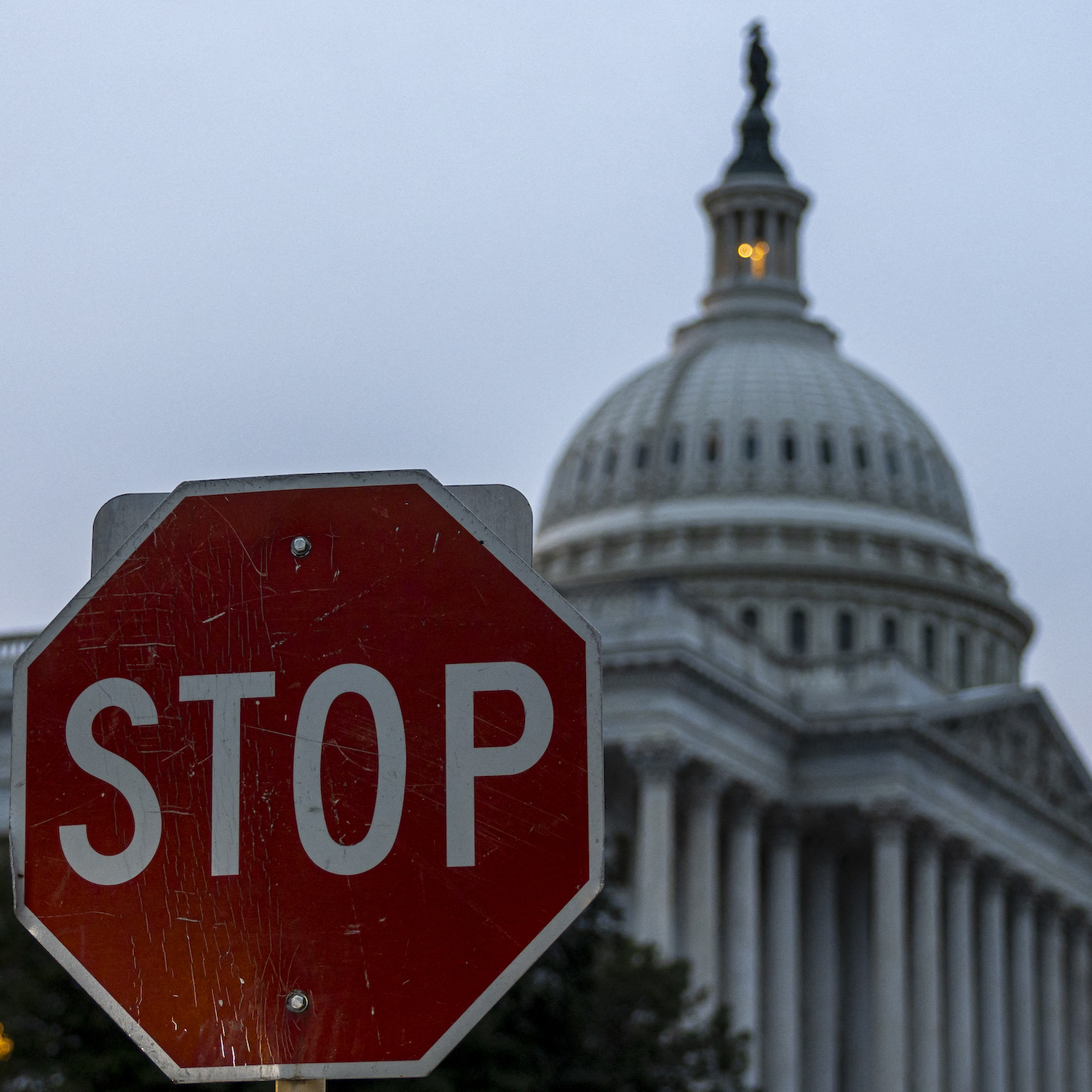
Good morning. It's Wednesday, October 1st. I'm Shemitah Basu. This is Apple News today. On today's show, top military brass gather for a rare politically charged summit. Public media cuts finally go into effect and an incredible fertility breakthrough. But first, politicians have failed in their stopgap funding talks and a government shutdown has begun. Last night, both Senate Minority Leader Chuck Schumer and Majority Leader John Thune left the door open to more negotiations.
- [00:48]
B
We certainly are willing to have negotiations. There's no problem with that. But they've got to be bipartisan and they've got to have real input from from both sides. Tonight was evidence that there is some movement there. And we'll allow our Democrat colleagues to have additional opportunities to vote on whether or not to keep the government open or in the case of tomorrow, now probably to open it back up.
- [01:10]
A
Some Democrats like John Fetterman of Pennsylvania were late to defect from the rest of their party and back the Republican resolution. But most held firm, demanding health care subsidy extensions as a condition of the deal. We've spoken a lot about the political jostling that's gone on, but let's break down what it means to now be in a shutdown. The nonpartisan Congressional Budget Office estimates that as many as 750,000 federal workers could be furloughed. You might not notice an immediate impact because essential services are expected to stay open. But the longer the shutdown goes on, the more likely you are to see the effects. For example, air traffic controllers and most TSA employees will remain on the job even if their paychecks aren't getting issue issued. But in the last significant government shutdown in 2018-2019, some of these workers staged sick outs to protest missed paychecks that led to delays and closed concourses at busy airports. Last night, the government confirmed that national parks would remain open with pared down staffing. Just like the last shutdown. Back in 2019, the campgrounds at Joshua Tree national park were forced shut anyway for health and safety reasons as toilets overflowed. The mail is expected to be delivered as usual. The US Postal Service is mostly self funded, so it isn't quite as impacted by Congress's appropriation schedules. In terms of benefits, Social Security checks will still go out. But ABC News's Alexis Christopherus explained to the network how other types of programs could be severely impacted.
- [02:46]
B
SNAP and WIC benefits. These are food programs that low income and disabled folks depend on. Also mothers with young children and infants. Those payment would continue, but they would fade the longer a shutdown continues.
- [03:01]
A
Meanwhile, federal agencies have their own plans in the works, with the Department of Homeland Security saying that it would mostly continue its work as is. About 14,000 of the agency's roughly 271,000 employees would be furloughed, though the CDC is planning more of a drastic cutback, with nearly two thirds of the agency's staffers expected to be furloughed. Research and patient care at the National Institutes of Health would also see some signal significant impacts. Sick patients hoping to enroll in experimental therapies would have limited access and no new studies would begin. Not all agencies have released contingency plans about how they would operate, but the expectation is that hundreds of thousands of workers would be sent home without pay. Here's the American Federation of Labor President Liz Schuller. This is about our federal workers and everything they do for our communities. There are the TSA agents who are in our airports and the VA nurses who take care of our veterans when they come home. And 80% of federal workers are not in Washington, D.C. they're in our communities. Yesterday, President Trump threatened Democrats that he could make some cuts to the federal workforce permanent.
- [04:16]
B
We can do things during the shutdown that are irreversible, that are bad for them and irreversible by them, like cutting vast numbers of people out, cutting things that they like, cutting programs that they like.
- [04:28]
A
Trump presided over the last shutdown during his first term in office, when he demanded money from Congress to construct a wall at the US Mexico border. It was the longest shutdown ever, lasting 35 days. Eventually, Trump and congressional leaders at the time reached a deal that didn't include border wall money that reopened the government. In recent years, what was once a bipartisan process to keep the government open has turned into a polarizing brawl. This shutdown marks the 21st disruption of federal funding in the last 50 years and the third during a Trump presidency. The last time Congress successfully passed individual bills to fund the government on time was in 1996 mass military gathering organized by President Trump and his defense secretary, Pete hegseth. More than 800 leaders in uniform arrived to the Marine Corps base in Quantico, Virginia on Tuesday for a rare presentation that was a mix of praise, criticisms and warnings. Generals and admirals in command came from across the world to attend, with some of them traveling thousands of miles. Trump delivered a campaign style speech stretching over an hour. He talked at length about his domestic agenda, immigration, the perceived failures of his predecessors, and he defended using soldiers for domestic law enforcement, suggesting that American cities should be considered training grounds for troops.
- [06:02]
B
But we are under invasion from within. We're stopping it very quickly. After spending trillions of dollars defending the borders of foreign countries. With your help, we're defending the borders of our country from now on.
- [06:17]
A
Hegseth, meanwhile, reiterated that the era of diversity efforts within the military was over. He devoted much of the speech to what he saw as a decline in standards, criticizing overweight soldiers and those with beards.
- [06:31]
B
It's completely unacceptable to see fat generals and admirals in the halls of the Pentagon and leading commands around the country and the world. It's a bad look. It is bad, and it's not who we are.
- [06:40]
A
Idris Ali covers the Pentagon for Reuters and gave us his reaction to Hegseth's speech.
- [06:46]
C
It was really fascinating to see someone that senior talking to other senior officials about such minuscule issues that are usually saved for detailed memos sent out to leaders, not an in person meeting of hundreds of generals and admirals. And he really said the issue was with the culture of the military, where commanders weren't willing to take risks and politicians had really looked at agendas and priorities that were not in line with what he said is winning wars.
- [07:16]
A
There were a couple of substantive policy changes announced. Hegseth said that top brass were now walking on eggshells because of the way complaints were handled. So he announced that soldiers under investigation for misconduct would no longer have their careers frozen and could still be eligible for promotion and assignments. That, I should note, is not applicable to those facing criminal investigations, including sexual misconduct or domestic violence. And he announced male fitness standards for all combat roles, a move that will likely lead to fewer women serving in battle. Before his confirmation, Hexseth had voiced his opposition to women performing combat roles, a position he walked back at his Senate hearing. Under questioning from several women senators who are also combat veterans, Ali told us Trump's address was much more overtly partisan and political than the armed forces are used to experiencing. And the audience reaction was different to a MAGA rally.
- [08:14]
C
We have seen President Donald Trump over the years really drag the military back into politics. But today was really another example where you have noticed during the speech most or almost all of those attendees did not clap, did not really show any overt signs of praise or disdain because that's what military officials are supposed to do. They are supposed to be apolitical.
- [08:36]
A
Meanwhile, Trump has ordered the deployment of troops to Portland despite opposition from Oregon's leaders, and to Memphis, where a federal operation is now underway with the support of Tennessee's governor. Today, federal funding cuts to public media go into effect. Those cuts came at the request of President Trump over the summer to pull back about $1.1 billion in already allocated funds for public media. Many broadcasters had already begun to brace for the funding stop with layoffs, and some stations have shut down or are considering doing so next year. Scott Nover covers the press and media freedoms for the Washington Post. He told us while different stations across the country vary in how dependent they are on federal funding, any cutback of this kind is going to leave a mark.
- [09:34]
D
Even if a station only relied on federal funding for 5% of its budget, you're talking hiring freezes, some, you know, laying off contractors, shedding additional services.
- [09:45]
A
Republicans who backed the cuts said NPR suffered from a liberal bias, citing claims by a former long serving senior editor that the network had lost America's trust, something the CEO at the time disputed. But GOP senators often also praised the work of their local broadcasters, especially in more rural communities where they also serve as a primary source of weather and emergency updates.
- [10:10]
D
And really, the rule of thumb is the smaller the station, the more dependent on federal funding it probably is. You're thinking that your stations in big cities like New York and Los Angeles will probably be okay, and your stations in the middle of the country or in Alaska or rural America will be most adversely affected by the cuts to federal funding.
- [10:36]
A
Places like South Dakota Public Broadcasting have begun downsizing, losing an hour long morning radio show and cutting back its staff from 11 journalists to four. The station's executive director, Julie Overgaard, told NPR how challenging it is to keep the operation afloat. We are increasingly facing that news desert conversation that's going around, and I think a lot of people really consider STPB to kind of be the rock and do the work, the important work of making sure that all of our news in South Dakota doesn't eventually get piped in from someplace else. In Texas, 30 radio stations that stream to millions of listeners are figuring out how to make up for a loss in close to $18 million in funding. And a radio and TV station in central Pennsylvania is one of the first stations to fold as a result of the cuts. WPSU, Penn State University's NPR and PBS affiliate, lost $1.3 million of expected funding. An online petition signed by more describe the station as a reliable source of news and in some parts of the state, the only source. In some cases, larger stations with big endowments are stepping in to help smaller broadcasters. New York Public Radio is offering some of its major programs like Radiolab and Science Friday to smaller stations for free for the next year instead of charging the usual distribution fees. While NPR and a lot of member stations have seen listener contributions jump significantly in the wake of federal cuts, and major philanthropic groups have pledged tens of millions of dollars in emergency funding, many broadcasters are having a hard time predicting how their finances will ultimately shape up. Before we let you go, a few other stories we're following. President Trump has withdrawn his nominee to lead the U.S. bureau of Labor Statistics, throwing more uncertainty into the future of one of the country's lead data agencies. Trump had picked E.J. antony, a loyalist to the president's economic agenda and chief economist at the right leaning Heritage Foundation. But conservative and liberal economists alike expressed concerns about the credibility of jobs data if a known partisan was installed. Earlier this year, Trump fired the last BLS commissioner, Erica McIntarfer, after a weaker than expected jobs report. The BLS was set to deliver its next report this Friday, but that will now be delayed because of the shutdown. A federal judge says the Trump administration acted illegally when it targeted international students for detainment and deportation over pro Palestinian activism on college campuses. The judge said an appropriate remedy for the administration's conduct will be determined at a later date. The case involves Trump's campaign earlier this year to arrest non citizen students who spoke out against Israel's war in Gaza. Lawyers argued that students who are lawfully present in the US Are entitled to some protections under the First Amendment, and the judge agreed. A spokesperson for the administration called the ruling outrageous and said it plans to appeal. And finally, an incredible scientific breakthrough. Researchers have for the first time created human embryos with the DNA of people's skin cells and fertilized them with sperm. NPR notes the discovery could eventually benefit a number of people, including those struggling with infertility and same sex coup. By allowing them to have babies with their own genes, scientists say they were able to develop a new form of cellular division that allowed skin cells to shed an extra set of chromosomes, leaving behind a functional egg. NPR reports there are some ethical concerns, most notably things like one day creating designer babies and all the embryos had genetic abnormalities. So this is still a long way away from being proven to be safe and effective. Still, some scientists say the beneficial implications could be huge. You can find all these stories and more in the Apple news app. And if you're already listening in the news app right now, we've got a narrated article coming up next. Texas Monthly has the story of the local government in Odessa, Texas, which it described as being run by far right hardliner politicians. But after two years, voters felt they hadn't delivered and elected an entirely new slate of city leaders. If you're listening in the podcast app, follow Apple News plus Narrated to find that story. And I'll be back with the news tomorrow.