Loading summary
Transcript25 lines
- [00:05]
A
Good morning. It's Monday, December 1st. I'm Shemitah Basu. This is Apple News today. On today's show, as more details emerge about the National Guard shooting, President Trump shuts down all asylum routes to the U.S. the winter storms causing havoc for holiday travel. And what really happens to those Black Friday purchases? You're returning, But first to a Washington Post story that's drawn major scrutiny to the US Military and recent orders by Defense Secretary Pete Hegseth as questions grow over the US Strategy in the Caribbean. The Post reports that Hegseth issued an order back in September to kill all crew members aboard a suspected drug smuggling vessel after an initial strike. A drone feed showed two survivors clinging to wreckage. Then, according to the Post, officials carried out another strike to kill them, too, something the administration never publicly acknowledged at the time. It was the first incident in what's now been a string of US Strikes on boats in the region, which have killed more than 80 people to date. Alex Horton is a national security reporter at the Washington Post who broke the story with his colleague, the Joint Special.
- [01:24]
B
Operations Command commander Admiral Bradley, with Hegseth's orders in mind, made a determination based on the idea that these men could still call some of their colleagues to come pick them up and pick up the drugs and therefore were still viable targets. He ordered another strike to comply with Hegseth's order to kill everyone.
- [01:47]
A
Since this reporting came out, Republican Senator and Chairman of the Armed Services Committee Roger Wicker, along with Democratic Senator Jack Reid, have vowed to conduct vigorous oversight to determine the facts of the case. Hegseth has continued to say that operations in the Caribbean have been lawful, and he dismissed the reporting in general terms as, quote, fabricated, though the Pentagon didn't directly answer the Post's questions. But some ethics experts say this alleged follow up strike would constitute a war crime, even in a situation where the US Were definitively at war with drug traffickers. Horton told us that if the alleged traffickers were seen as combatants, you must.
- [02:28]
B
Follow this sort of conduct and protect people who cannot fight back or defend themselves, such as the case of shipwrecked combatants. The other side of the coin is if they're not combatants, then this is unlawful killing or murder, these experts say. So that's where we're at is like which one of these definitions is true.
- [02:48]
A
Even before this reporting, some lawmakers were already questioning the legality of the bombing campaign in the Caribbean, where Horton said that many Congress members have described the few briefings they've received from the administration as unsatisfactory. Yesterday, Republican Representative Mike Turner, former chair of the House Intelligence Committee, was asked about this on CBS's Face the Nation and he said if the Post's reporting was accurate it would constitute an illegal act.
- [03:15]
B
There are very serious concerns in Congress about the attacks on the so called drug boats down in the Caribbean and the Pacific and the legal justification that's been provided. But this is completely outside of anything that has been discussed with Congress and there is an ongoing investigation.
- [03:33]
A
The Post reporter Horton told us that there is a way for the Pentagon to clear up what happened for Congress and conceivably the public.
- [03:41]
B
There are videos of this happening that have not been made public or even described. We described the particulars of that moment for the first time, but there is in the Department of Defense server somewhere these videos are there. We received pushback from the Pentagon, from Defense Secretary Hegseth himself saying our reporting is inaccurate. They do have an ability to show us that second strike where these two men would have been hit to refute that if they would like.
- [04:05]
A
President Trump sparked speculation of wider military action on Saturday after warning airlines that airspace around Venezuela was closed, but the following day told reporters not to quote, read anything into it. He also confirmed reporting that he had recently spoken to Venezuelan President Nicolas Maduro. The but didn't get into any details. Now to the aftermath of last week's shooting in Washington D.C. that left one National Guard member dead and another in critical condition. 20 year old Guard member Sarah Beckstrom was killed and 24 year old Andrew Wolf severely wounded. The man accused of shooting them, Rahmanala Lakhanwal, is being charged with first degree murder. Some officials have described it as a targeted attack, though investigators are still working to establish a motive. Lachenwell arrived in the US from Afghanistan in 2021 as part of a Biden era program designed for those who supported the American military and he was granted asylum this past April. Michelle Hackman covers immigration policy for the Wall Street Journal and told us how the process worked for him.
- [05:16]
C
We explicitly made promises to people that if they worked at least two years with the US Government that they could then get green and come and resettle in the United States. And that's exactly what this man, this alleged shooter did. He worked with the CIA, actually in.
- [05:31]
A
Fact, he worked with the CIA for about 10 years before leaving Afghanistan in 2021. According to the Washington Post, Lackwell was part of a combat unit that seized and killed suspected terrorists, a role that would have required CIA vetting. In the days since the shooting, the administration has announced a wave of new Immigration policies. Decisions on all inbound asylum claims have been pa. Green cards granted to people from 19 countries will be re examined. And President Trump has posted on social media that he will, quote, permanently pause immigration from what he described as Third world countries without offering more specifics. As for Afghans still hoping to benefit from old promises, Hackman told us the administration was already looking at ways to back away from the resettlement program and.
- [06:20]
C
They have what they believe is now a great reason to move ahead with those things. And so it starts with pausing all processing of any kind of immigration documents for Afghans. That means Afghans who are still abroad and desperate to come here, their visas aren't being looked at. Afghans who are here in the process of trying to win asylum cases, those are on pause. People who are trying to get their green cards, those are on pause. And so everyone is sort of in this state of limbo.
- [06:50]
A
On Sunday, Homeland Security Secretary Kristi Noem told ABC's this Week that the resettlement scheme's vetting processes had failed.
- [06:57]
D
He was brought into the country by the Biden administration through Operation Allies welcome and then maybe vetted after that, but not done well based on what the guidelines were put forward by President Biden. And now since he's been here, we believe he could have been radicalized in his home community and in his home state.
- [07:16]
A
Samantha Vinograd was a counterintelligence official during the Biden administration and defended the vetting process that brought Afghan allies to the US on cbs.
- [07:26]
D
The vetting system is not predictive of whether an individual with no derogatory information is or is not at some point going to become violent. What I can tell you is this, and I was involved in the process. Every Afghan evacuee underwent vetting overseas before they were cleared to be manifested for a flight to the United States. They underwent vetting once they were manifested for a flight at a port of entry before entering the United States. And then Afghan evacuees, including the suspect, were vetted again once in the US by the Biden administration. And this suspect underwent the most comprehensive vetting under the current administration. When he applied for asylum on Sunday.
- [08:06]
A
President Trump said to honor both victims, he has invited their families to the White House. Foreign. Are you one of the many Americans who since Turkey Day has gone and bought something? Black Friday sales rolled right into Cyber Monday today. And even with some economic uncertainty, initial data suggests people are going out and spending more in Black Friday online sales compared to last year. But according to the laws of online shopping physics, as more stuff is Bought more stuff is returned, especially if something we see online doesn't match expectations.
- [08:50]
E
The secondary market has increased significantly. It depends on the product category, but about anywhere from 6% to up to sometimes 30% of products get returned.
- [09:03]
A
Ann Marie Conti is a deputy editor with the New York Times product review site Wirecutter. She and some of her colleagues recently set out to answer the question, what are retailers doing with all of our return stuff? Well, some of it gets donated, some goes back to the manufacturer, and some goes to liquidators who box it all up and prepare to sell it on the secondary marketplace. According to an expert Conti spoke with, these secondary sales have nearly tripled in recent years.
- [09:30]
E
They can end up in factory outlets, they can end up at value retailers, online auction houses that could be something like ebay or whatnot. Dollar stores, salvage pawn shops, flea market charities, any of these places.
- [09:46]
A
In warehouses across the country, these returned items are often placed into mystery boxes that are filled with a hodgepodge of goods. There's an entire content creator industry built in part on opening them up and showing viewers what's inside. Conti was curious to see what this all looked like and persuaded her bosses to buy a box.
- [10:05]
E
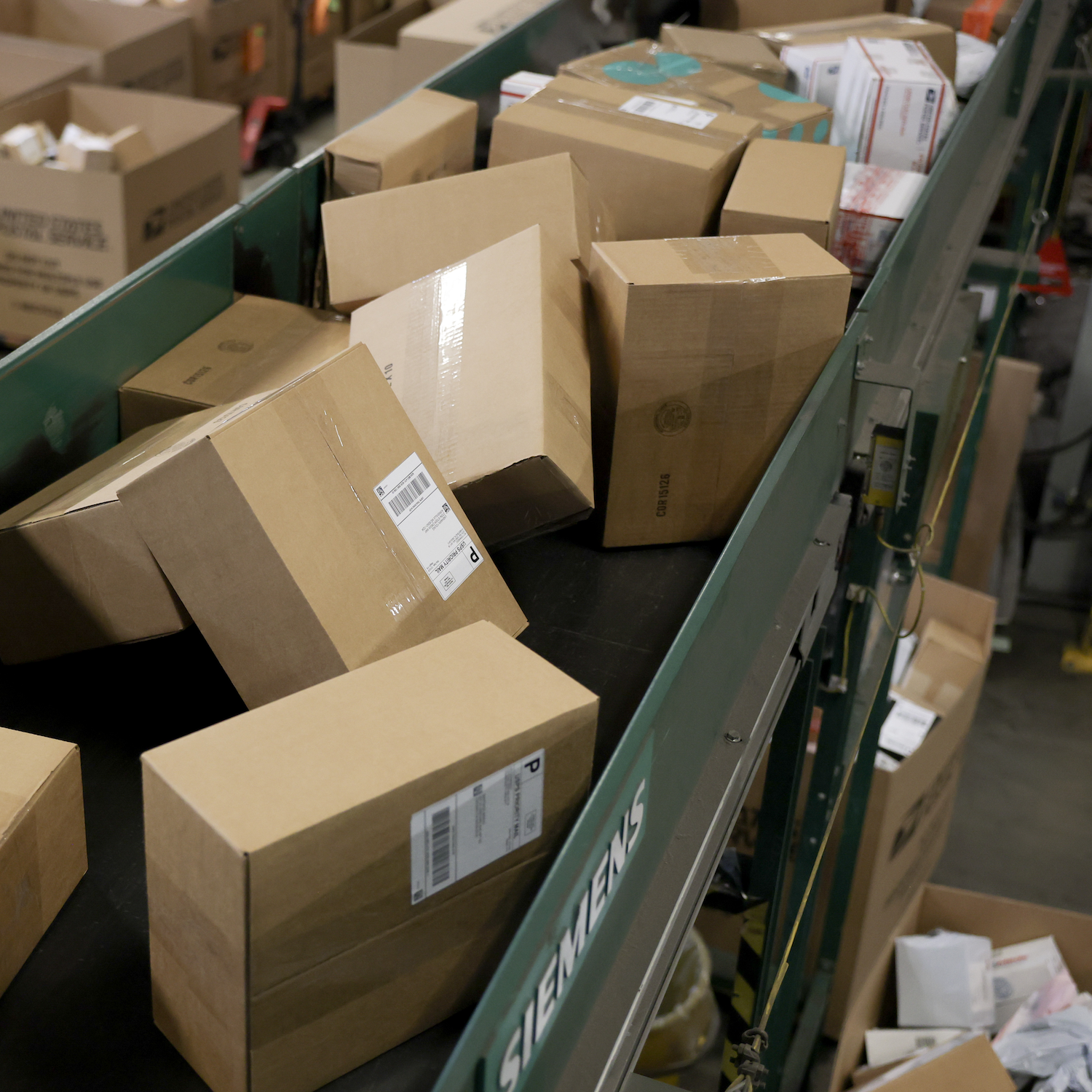
And what we actually got was a returns palette. So what that is is mostly Amazon, though we did see things from a number of retail. It was mostly clothing, so what we bought was about $700. It was 450 pounds, 430 packages and 582 items in those packages. And within those packages was mostly polyester clothing.
- [10:34]
A
Conti found herself overwhelmed by the sheer scale. And she started reaching out to the people on the mailing slips she found in packages to ask them to share a bit of their story on why they sent their item back to be returned. And many were what you would expect, a bad fit or bad quality. But she also came across some deeply personal stories. One man told her his wife had bought a hat but had passed away before she had a chance to wear it. Another woman who lost her home in the Maui fires in Hawaii two years ago returned tops that resembled ones that she had lost.
- [11:07]
E
She's trying to replace her everyday items. And so she had these two like peplum tube tops that she saw online and they looked similar to what she'd had previously. And so she bought them and when she got them, the material was a little, the texture was off. And so these are people who are just trying to get through the day, get through their everyday life.
- [11:28]
A
Conti said many of the people she contacted told her the same thing. They'd never really thought about where their stuff went after they sent it back. And they were surprised to learn they weren't getting restocked and bought by someone else shopping just like them. And it has also made her more thoughtful about her purchases and her returns. Before we let you go, a few other stories we're following. A winter storm this weekend dumped over a foot of snow on parts of the country as millions were making the journey home after the Thanksgiving holiday. Forecasters say the next few days aren't looking much better as another snowstorm will hit a large swath of the US Bringing a mix of messy winter weather, including heavy snowfall, rain and sleet. Up to 6 inches of snow could hit upstate New York and areas in Pennsylvania as well as the lower Great Lakes region and Central Plains. As of Sunday evening, around 850 flights within, into and out of the US were canceled and thousands more were delayed. Aaa says nearly 82 million people were estimated to have traveled at least 50 miles for Thanksgiving, with at least 6 million by plane. Secretary of State Marco Rubio says there's still work to be done, but that talks over ending the war between Russia and Ukraine have been productive. A Ukrainian delegation met with US Officials in Florida on Sunday as they negotiate an American backed 28 point peace plan that critics said favored Russia when it was released. Meanwhile, US Special envoy Steve Witkoff and possibly Jared Kushner, Trump's son in law, will travel to Moscow this week to meet with Russian President Vladimir Putin. And finally, three nuns who ran away from a care home have won the right to return to their former convent on one condition. They put down their phones. The three octogenarians, sisters, Bernadette, Rita and Regina, escaped an Austrian nursing facility they say they were pushed into after their convent living quarters were closed. But with the help of former students and a sympathetic locksmith, they broke back in. Pressure to allow them to stay became intense when an Instagram account following their lives went viral, gaining over 100,000 followers. Now the head of the convent insists that if they want to stay, they must close the social media account. It's worth checking it out while you still can. The videos show the 80 somethings boxing, sliding down staircases and getting a lesson from a world record holder for whistling. But it's not over yet. The nuns haven't fully agreed to the demands. For now, they say they're just happy to be back where they feel they belong. You can find all these stories and more in the Apple news app. And if you're already listening in the news, app right now. We've got a narrated article coming up next, men's health reports on why one of America's favorite healthy snacks, the almond, is under attack by the Make America Healthy Again adjacent social media crowd. If you're listening in the podcast app, follow Apple News Narrated to find that story. And I'll be back with the news tomorrow.