← Apple News Today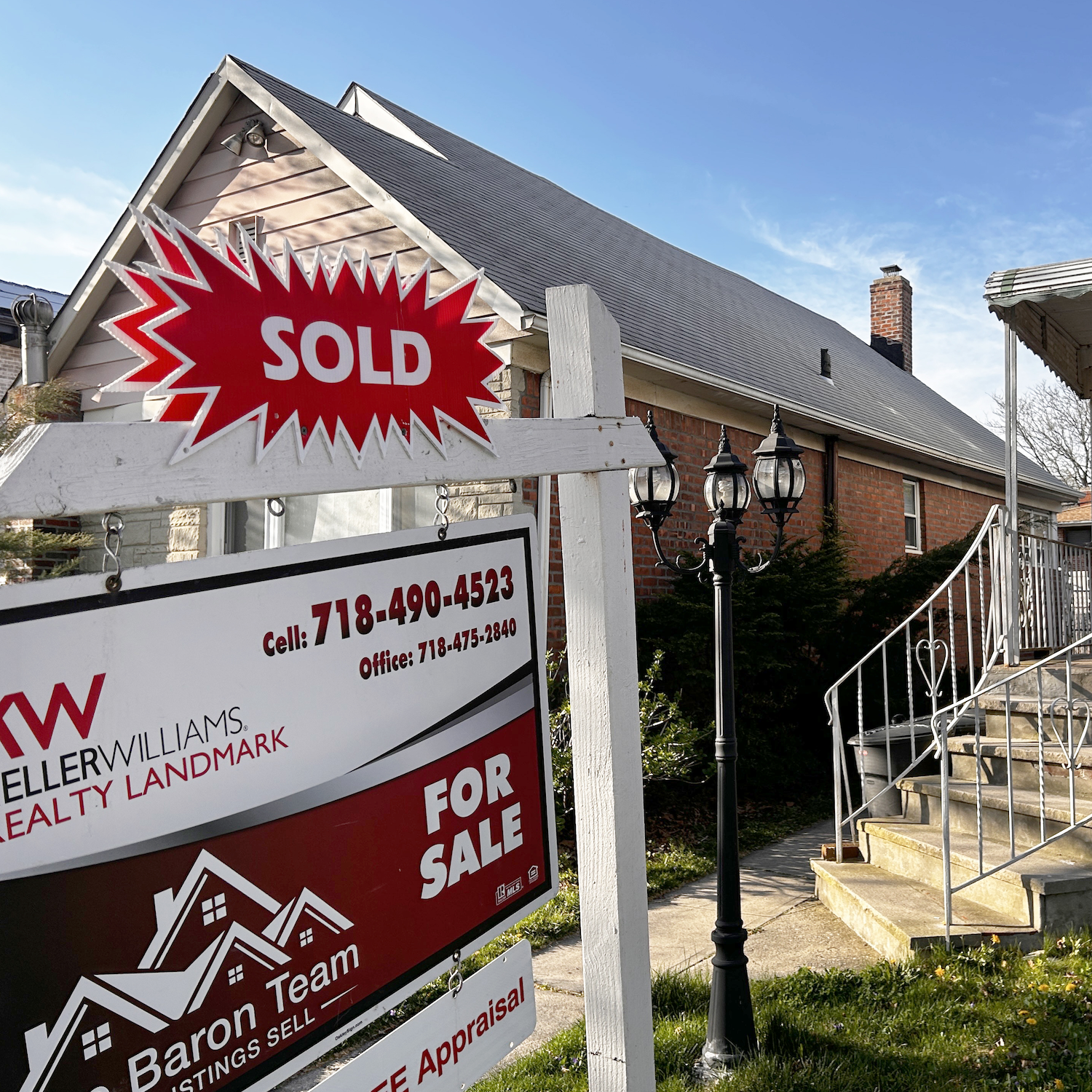
Loading summary
Transcript37 lines
- [00:05]
A
Good morning. The first major housing law in decades finally passes. When you put more housing supply on the market, more people have a chance to become a first time home buyer.
- [00:17]
B
I don't say this a lot, but today I'm proud to be a member of the United States Senate.
- [00:23]
A
This week, the Supreme Court grapples with some of Trump's most notable second term priorities. The Wall Street Journal explains the ones to watch. And the billionaire tax propos proposal pitting Gavin Newsom against some in his own party. It's Wednesday, June 24th. I'm Gideon Resnick in for Shamita Basu. This is Apple News Today. On Tuesday, a truly rare piece of legislation was sent to the President's desk. Rare because it's the first significant housing bill to pass in decades and because it carried overwhelming support from both Democrats and Republicans. Republican Senator Tim Scott introduced the bill with his Democratic colleague Elizabeth Warren, and he explained why the current challenges facing young people had motivated him to act. They're delaying marriage, they're delaying having kids. They're delaying putting down roots, Madam President. Not because they lack ambition, but because housing prices are too darn high and housing supply too low. Experts widely agree that Americans need millions more houses than the US Currently has. And this bill aims to boost the housing supply by rolling back some permitting regulations and reducing environmental reviews. It also sets aside grant money for people rehabbing old homes, for communities rebuilding after disasters, and for developing vacant lots into housing. And the bill would allow a grant program to incentivize local communities to improve the amount of available housing and to ease their zoning laws. Helen Huiskiss, a reporter with the Hill, told us how it works.
- [02:05]
B
It would encourage housing construction by boosting the community's funding from that grant program when they improve their track record on housing and then adjusting it when they don't. So it allows communities to get take action and improve the amount of housing that they're building and reward that success.
- [02:26]
A
The bill also includes one of President Trump's priorities, restricting large investors from buying up single family homes. Senator Warren highlighted that aspect on Monday.
- [02:35]
B
Congress has never before held private equity accountable for anything, and today that changes. No longer will private equity firms come in with an all cash offer to snap up a house while a family loses out on their dream.
- [02:55]
A
The parties differed on language as the bill progressed, but Heiskas says that both Republicans and Democrats were motivated to work together on this legislation. That's because affordability is top of mind for so many voters heading into the midterms.
- [03:08]
B
There's a lot of data that the average age of a home buyer is over 40. It's much older than it used to be. At the same time the last few years, the political conversation has turned to the affordability of housing.
- [03:22]
A
Home prices are up 50% since the start of the pandemic. New data from realtor.com released last week shows that more Americans are being shut out of homeownership, with a record number of adults under the age of 35 still living with their parents. And New York Times Siena polling shows that housing is a top concern for many voters heading into November. Now, it could take years before any of the changes in this bill are felt in a meaningful way. Economists don't expect it to reduce prices in the short term, and a lot of the major restrictions to homebuilding come at the state and local level. But Heiskas told us it's a promising sign that lawmakers might continue to work together.
- [04:00]
B
They hope this is just the beginning of getting legislation like this across the finish line on a bipartisan basis. Things that are focused on real solutions that have a chance at actually driving down costs.
- [04:21]
A
As soon as tomorrow, the Supreme Court may issue rulings on about a dozen cases that they're hoping to wrap up before the July 4th holiday. They span topics including the rights of transgender athletes, campaign finance, mail in voting and more. There are also some that will specifically address a key theme of President Trump's second term in office, the extent of his executive authority.
- [04:42]
C
Overall, Trump in his second term has had quite a favorable record at the Supreme Court.
- [04:48]
A
James Ramoser is the Wall Street Journal Supreme Court reporter.
- [04:52]
C
The Supreme Court has ruled on an array of different Trump related policy moves, mostly on the Supreme Court's emergency docket and in a series of short form emergency rulings. The court has largely allowed most of Trump's policy agenda to take effect even after lower courts attempted to block many of those policies.
- [05:17]
A
That may soon change as the justices weigh whether the administration can alter the long held definition of birthright citizenship, fire a Federal Reserve governor and rescind temporary protected status for migrants. Ramoser said that experts he spoke with believe that Trump is headed for mixed results on these cases.
- [05:36]
C
Most experts believe that even though the current Supreme Court is quite conservative and has often been aligned with Trump, the argument about birthright citizenship to try to redefine that concept as it exists in the Constitution may just be a bridge too far even for most of the conservative justices.
- [05:52]
A
The same goes for the president's attempts to dismiss Lisa Cook at the Fed. But there might be more openness to allowing Trump to remove the heads of agencies like the Federal Trade Commission, which have typically been kept at a distance from prior presidents.
- [06:06]
C
The court insinuated that there was a special historical tradition associated with the Fed and that the Fed might be entitled to more independence than these other regulatory agencies that we're talking about.
- [06:20]
A
Despite the administration's successes at the court, tensions between the justices and the White House have been high. They were exacerbated by a ruling earlier this year that struck down a core Trump policy.
- [06:31]
C
After the court ruled against Trump in the tariffs case, Trump really started denigrating the court, frankly, using language that no modern president has ever used to talk about to the Supreme Court.
- [06:43]
A
I'm ashamed of certain members of the court, absolutely ashamed for not having the courage to do what's right for our country.
- [06:51]
C
He's called them dumb, he's called them subject to foreign influence. Of course, there's no evidence of that, but as a result of that rhetoric, tensions have been running really high, ramoser said.
- [07:03]
A
The justices are keenly aware of these external pressures and tensions even as they maintain that their decision making is insulated from them. But should they rule against the president on some more of these key cases, Ramoser predicts the rhetoric from the White House could get even worse. California Governor Gavin Newsom is scrambling to kill off a possible billionaires tax that could pit him against parts of his own party just as he considers a presidential run.
- [07:35]
D
This ballot measure would impose a one time 5% tax on the wealth of billionaires.
- [07:41]
A
Jeremy B. White is a senior reporter covering California for Politico.
- [07:45]
D
Keep in mind, when I say wealth, I don't just mean their income. It's designed to get all of their assets, yachts, artwork, houses, what have you. And the idea is that this would be used to offset some of the federal cuts to health care spending.
- [07:58]
A
In particular, Newsom has been working behind the scenes recruiting allies to his cause and has until tomorrow to get a health care union sponsoring the measure to pull it. Otherwise, it'll go to voters come November and leave Newsom arguing against the policy that most California Democrats in a poll from earlier this year say that they support.
- [08:17]
D
The state already asks the top earners to pay a great deal of the state's tax revenue. His objection to this is that it will drive a lot of those earners out of state, depriving California of that revenue long term make the state less economically competitive. And we've also heard a lot of arguments from other critics in addition to the governor, that this thing is essentially unworkable. It'll be tied up in court and will cause more harm than good.
- [08:44]
A
In a last ditch effort, Newsom has recruited an unlikely alliance of left leaning unions to come out against the measure.
- [08:50]
D
The proponents of it, a health care union, seiu uhw, has framed this really as sort of a fight against the billionaires, working people versus the ultra rich. That arguably argument becomes harder to make if you're also fighting against unionized teachers, police officers, Gavin Newsom, Planned Parenthood, the California Medical association, what have you.
- [09:10]
A
Some of the state's wealthiest already appear to have voted with their feet, in part because the measure would retroactively target anyone with California residency this year. Google co founder Sergey Brin has reportedly moved himself to Nevada and several business entities he owns out of California. Steven Spielberg established permanent residency in New York on New Year's Day, citing family reasons. And Uber founder Travis Kalanick swapped his home to Austin in late December. Analysis by the California Legislative Analyst's Office suggested the measure would probably increase state tax revenues in the short term, but risk longer term income tax revenue with these kinds of departures from the state. And that's part of the case that Newsom made against it in an interview earlier this year. You would have a windfall one time
- [09:55]
D
and then over the years you would see a significant reduction in taxes because taxpayers will move.
- [10:03]
A
And that is what I fear at a state level. The president of the union pushing the bill is Dave Reagan. White told us he's a polarizing but effective figure in California labor and isn't backing down.
- [10:14]
D
And their argument is we need to do something and the scale of these cuts is so deep that we need something big. But the history here is that again, the union leader pushing this has a long history of using ballot initiatives to try to extract deals and to sort of push for political outcomes and often has a sort of go it alone tactic that tends to rub even other folks in labor the wrong way.
- [10:43]
A
If no deal can be reached, Californians will deliver their verdict in November.
- [10:47]
D
And so then we're switching into campaign mode and I think this will be an all out brawl. It could well be the most expensive ballot initiative in California history, most of that coming from the opponents. And I would want to see how prominent of a role Gavin Newsom would take in that campaign. He has been an early and vocal opponent of this thing, also likely 2028 presidential contender. And so I suspect as part of that we would maybe get a preview of some of the economic arguments we're going to be hearing from the governor down the road.
- [11:25]
A
Here are A few other stories we're following today. For the first time since the war in Iran began, both chambers of Congress have now passed a resolution essentially directing President Trump to fully end the conflict or seek congressional authorization to continue it. Four Republican senators join their Democratic colleagues to get the measure over the line in a 50:48 vote yesterday. Two Republicans missed the vote helping it narrowly pass, and the measure had already gone through the House. Experts seem to believe that the resolution is unlikely to legally bind the administration, which recently struck a deal to end the war in Iran, but it's being seen as a significant bipartisan rebuke. In Texas, eight people were sentenced on Tuesday to decades in prison over a shooting last year during a demonstration at a Texas immigration detention center. One man, Benjamin Song, who was convicted earlier this year of attempted murder for shooting a police officer during the event, received a sentence of 100 years. The others face sentences of 30 to 70 years. In what the Trump administration has heralded as a successful prosecution of so called Antifa members. It followed the signing of an executive order by President Trump last year designating Antifa as a domestic terrorist organization. The case drew attention outside of Texas as critics warned that it could have impacts on First Amendment rights and some legal experts expressed shock at the severity of the sentences while some defendants said they would appeal. And finally, last night was the NBA draft. With the first pick in the 2026 NBA Draft, the Washington Wizards select Anise D' Abanza Jr. From Brigham Young University. The Utah Jazz followed with Darren Peterson out of Kansas, and the Memphis Grizzlies selected Cameron Boozer from Duke at number three. The NBA world was shaken up before the draft with the late night trade of multi MVP Giannis Antetokounmpo. He was moved from the Milwaukee Bucks after 13 seasons to the Miami Heat. According to ESPN, the Heat beat out the Boston Celtics for the Greek megastar who joins LeBron James, Shaquille O' Neal and Jimmy Butler as major acquisitions that were brought to south beach under the tenure of Heat President Pat Riley. There have been eight different NBA title winners over the last eight seasons. Next year, the Heat will hope to become the ninth. You can find all these stories and more in the Apple news app. And if you're already listening to the news app right now, we've got a narrated article coming up next, women's health reports on how alternative healthcare treatments are becoming more mainstream thanks to the Internet and why it's leading an increasing number of women to take a DIY approach to their own career. If you're listening in the podcast app. You can follow Apple News plus narrated to find that story. And I'll be back with the news tomorrow.