Loading summary
Transcript27 lines
- [00:05]
Sumita Basu
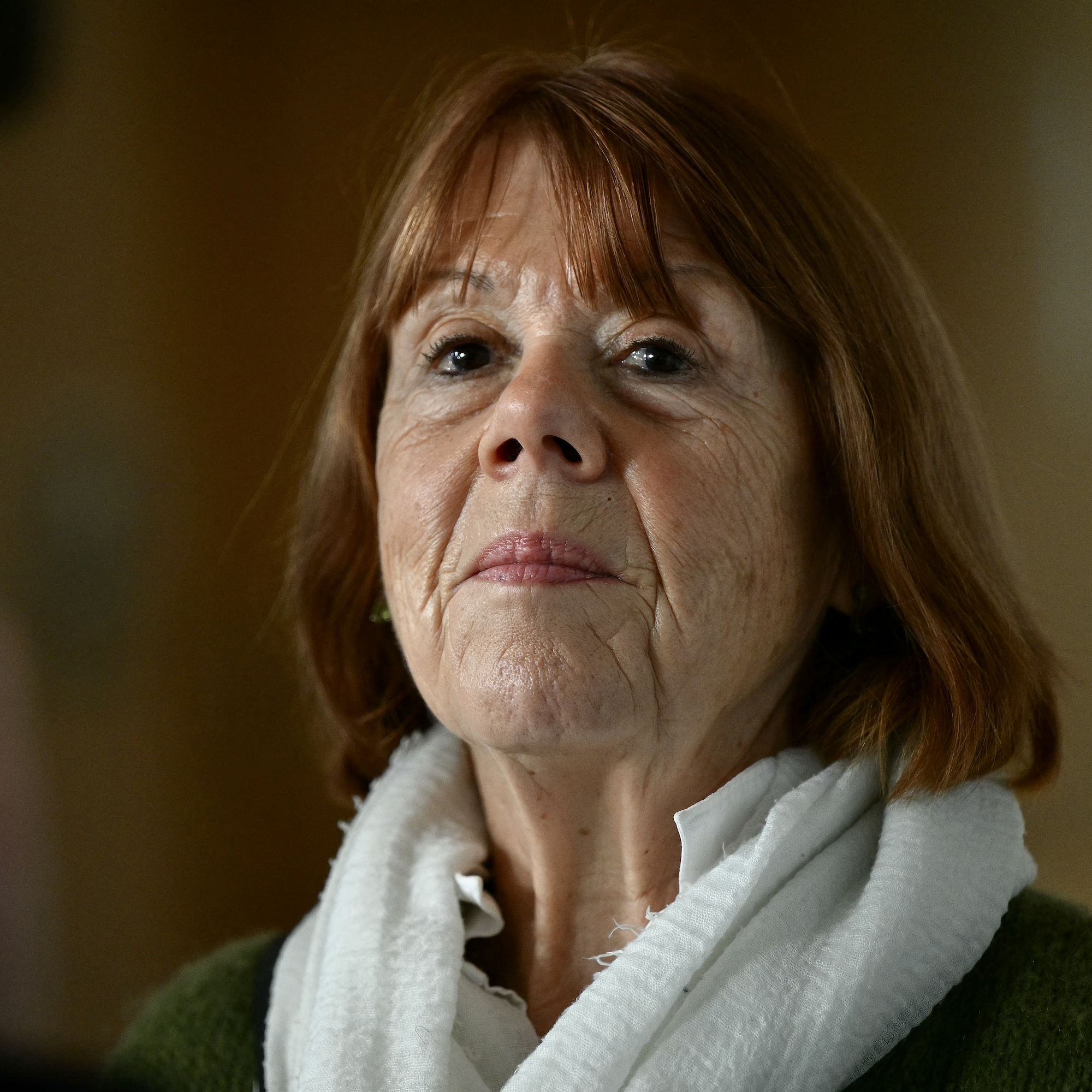
Good morning. It's Wednesday, December 18th. I'm Sumita Basu. This is Apple News Today. On today's show, why Trump wants to move 100,000 federal jobs out of D.C. how climate change is affecting home insurance across the country, and how scientists successfully transplanted a kidney from a pig to a human. But first to a trial in France. The world has been following in horror for months. And a warning. The segment has descriptions of sexual abuse. Any day now, judges will hand down verdicts for dozens of men accused of raping Gisele Pellico. She stunned the world by rejecting her right to anonymity and demanding a public trial for her now ex husband, Dominique, and at least 50 other people allegedly involved. She said she wants to show the world that survivors shouldn't be ashamed. Ashamed of abuse. Police say Pellico's ex husband, over the course of about a decade, repeatedly invited men to their home to rape her after he drugged her with sleeping pills, leaving her unconscious. He arranged the abuse in chat rooms with men between the ages of 26 and 74 from all walks of life. Police identified dozens of suspects from footage of the abuse her husband collected, but authorities believe more than 70 men were involved. Authorities started looking into the husband after he was caught filming up women's skirts in public. It was only until that incident was investigated that Pellico came to learn what happened to her. For years, she had been confused about strange symptoms. Losing her hair, losing weight, losing her memories. She says entire days would just disappear. She thought she might have Alzheimer's. Here is some of her testimony, translated by the BBC, about the day police notified her.
- [02:02]
Gisele Pellico
It was hard to recognize myself. Then the officer showed me a second photo and a third. My world fell apart. I'm speaking now not for myself, but for all the women who are drugged and abused.
- [02:16]
Sumita Basu
Peliko has received apologies from some of the defendants, including her ex husband, who confessed to everything. Others say they're innocent. If convicted, these men face sentences ranging from four to 20 years in prison. To understand where the case could go next, it's important to know how France defines consent.
- [02:35]
Alex English
Consent is really a contested grey area in France. The French law defines rape as an act of sexual penetration committed by violence, coercion, threat, or surprise. And so Giselle's case falls into that surprise category.
- [02:50]
Sumita Basu
That's Alex English with Marie Claire. She told us during the trial, some of the defendants made the argument that they were told she had consented because.
- [02:59]
Alex English
They weren't a stranger in a dark car park, because they didn't have a knife because they didn't hold her down. You know, do all these, like, stereotypical movie Hollywood type ideas of rape so all these men could get up there and go, well, I didn't mean to do that. That wasn't my intention. I thought she was part of this. And then they're protected in that way.
- [03:18]
Sumita Basu
The trial has sparked debate in France over whether the country's legal definition of rape does enough to recognize the role of consent. Last year, French Parliament considered adopting an EU resolution which would create a standard definition and punishment for rape across all member states. That failed, but more recently, French officials, including the President and the justice minister, have said they support amending the legal language.
- [03:42]
Alex English
Women's rights activists and lawmakers have been trying to amend that wording to say that sex without consent is rape, and also that consent can be withdrawn at any time. And then on top of that, that there are certain mental and physical states that a person can be in where they cannot be considered to be giving consent. So, you know, having drunken too much, being in a poor mental state, things like that.
- [04:03]
Sumita Basu
Whether that legal wording changes or not. The trial has shaken France. This is a country where the MeToo movement struggled to find footing. But in recent years, that's started to shift. A number of French women actors have filed lawsuits against male directors alleging abuse. And Pellico's case seemingly lit a fuse, drawing supporters, mostly women, to the court to cheer her on as she entered and left each day.
- [04:35]
Alex English
I have read reports that more women have already started to come forward, which I think is a huge positive sign that things will change. I think what then matters is how they're treated once they come forward.
- [04:58]
Sumita Basu
Let's turn now to Washington and one of President elect Trump's many promises to shake up D.C. he says he'll move 100,000 federal jobs out of the city, which would impact roughly 1 in 3 federal workers in the area. Now, it's not a new thing for incoming presidents to target what they see as government bloat. And Washington Post Enterprise reporter Todd Frankel told us this figure. 100,000 jobs has been popular.
- [05:22]
Todd Frankel
When Reagan came in back in the 80s, he talked about cutting 100,000 federal jobs. And actually, even when Clinton came In the 90s, he talked about the same number cutting 100,000.
- [05:32]
Sumita Basu
But what sets Trump apart is his focus on D.C. jobs.
- [05:36]
Todd Frankel
He really wants to sort of target this deep state that he's talked plenty about on the campaign trail and during his previous administration.
- [05:43]
Sumita Basu
Trump tried this on a smaller scale in 2019, moving a number of agencies out of D.C. about 1,300 jobs in all. Frankl says it didn't play out exactly as he imagined, like at the Bureau of Land Management.
- [05:56]
Todd Frankel
So they opened up this new headquarters in Grand Junction, Colorado, which is a small city about three hours west of Denver. And like three or four employees showed up, right. So everyone else left. They've lost lots of experienced workers, lots of folks who knew how the agency run. It was seen as a bit of a disaster.
- [06:15]
Sumita Basu
Frankel reports that short of moving the Pentagon, the National Institutes of Health, or another very large agency, it's not clear how Trump would move 100,000 jobs out of Washington. Still, local economists and leaders told him it would be a huge blow to their economy.
- [06:30]
Todd Frankel
100,000 jobs, if somehow he were to get to that number would be devastating even to a region that has 6 million people in it.
- [06:38]
Sumita Basu
Trump's transition team did not respond to a request for comment from the Post. The America First Policy Institute, a Trump aligned group, has argued that moving these jobs would save over $1 billion in payroll costs by going to places they claim are less expensive. Critics of the plan say Trump's past attempts prove that cost savings are questionable. And they say these plans interrupt government work and put experienced talent at risk. So far, Trump's team has named two small agencies they want to move. Together. They have about 1,000 people on staff. From hurricanes to wildfires, we are increasingly seeing how climate change can affect the cost of home insurance. Many big names in the insurance game, like Allstate and Liberty Mutual, have decided to pull out of some areas. They say it's just not worth the cost. As the price tag of extreme weather gets higher, and as these conventional, highly regulated insurers pull away, smaller, less regulated insurers are popping up to fill the.
- [07:47]
Leslie Kaufman
Void they come in. They say no one else wants you. We'll sell you an insurance policy at a price. But it's important for consumers to know these are not backed by a guarantee fund.
- [07:58]
Sumita Basu
That's Leslie Kaufman, who reports on climate change for Bloomberg News.
- [08:02]
Leslie Kaufman
It essentially means that if your insurance company for some reason fails you as the person who bought the policy, still have a way to get paid out your claim. So that's a very important backup.
- [08:15]
Sumita Basu
These smaller businesses, known as non admitted insurers, don't have that protection, which means you run the risk of not getting a payout. Kaufman found some of these companies are not as financially sound as more established insurers. They might be structured in a way that makes price hikes or sneaky hidden fees for consumers.
- [08:34]
Leslie Kaufman
More likely, some experts who have looked at their balance sheets are deeply concerned. They do not feel that if they were in a regulated environment, they would be allowed to keep going.
- [08:46]
Sumita Basu
These companies represent a small portion of the overall insurance market, but they're growing in high risk markets where homeowners have few other options, like in California, Florida and Louisiana. These states and others offer state sponsored insurance too, as a sort of last resort option. However, in Florida, officials have have said so many people use it because so many big insurance companies left that they're just one disaster away from serious trouble. And in California, many residents say the payout isn't enough to cover the full price of their properties. Kaufman says it really calls into question how long these sort of startup insurers will be around and what that means for the people buying into them.
- [09:28]
Leslie Kaufman
We don't know what really will happen when they get hit by the next big storm, whether they will have enough reinsurance to cover all their claims or whether they'll go bankrupt and whether it'll affect people. It's a big gamble that's playing out right now.
- [09:53]
Sumita Basu
Before we let you go, a few other stories being featured in the Apple News app. New York Congresswoman Alexandria Ocasio Cortez lost her bid to be the top Democrat on the House's powerful Oversight committee. We talked about this on the show recently. Ocasio Cortez and another a number of other younger Democrats sought to replace aging members of the party who've held onto powerful positions, sometimes for decades, as they prepare for the second Trump administration. Yesterday, Democrats passed over Ocasio Cortez to elect 74 year old Jerry Connolly to that committee seat. NBC reports the votes were a litmus test of the future of the Democratic Party to get that younger, bolder leadership. But ultimately Connolly had strong support from former House Speaker Nancy Pelosi and other centrist Democrats. Connolly, who announced last month he was diagnosed with esophageal cancer, said he is ready to lead the committee in overseeing the incoming Trump administration. Meanwhile, President Elect Trump has made it clear that he's willing to go after the media even before stepping into office. He's suing the Des Moines Register over a poll released before Election Day that said Vice President Kamala Harris led the state by a significant margin. Trump ended up winning the state handily. The hell reports Trump accused the paper and its pollster of violating the state's consumer fraud laws, calling it election interference. The pollster, Jan Selzer, announced she was ending her polling work after the election in a separate media related case. Just a few days ago, ABC News agreed to pay $15 million in a defamation suit brought by Trump over inaccurate on air statements by the anchor George Stephanopoulos. And finally, for the first time in eight years, Tawana Looney, a woman from Alabama, is off of dialysis after receiving a kidney transplant from a genetically modified pig. That's according to the health publication Stat. She herself donated a kidney to her mother in the late 90s, but after a complicated pregnancy, her other kidney started to fail. It's the third time doctors have transplanted a pig kidney to a living recipient. And Stat reports the latest procedure inches us closer to a world where xenotransplant presentation is more common. Loony says she feels blessed, full of energy, and can't wait to travel again. You can find all these stories and more in the Apple News app. And if you're already listening in the News app right now, we've got a narrated article coming up next, all about risotto. No one knows for sure when this highly finicky but tasty rice dish first appeared or where exactly it came from, but the New Yorker tries to follow the trail while sampling a lot of varieties along the way. If you're listening in the podcast app, follow Apple News Narrated to find that story and I'll be back with the news tomorrow.