Loading summary
Transcript37 lines
- [00:05]
Shemitah Basu
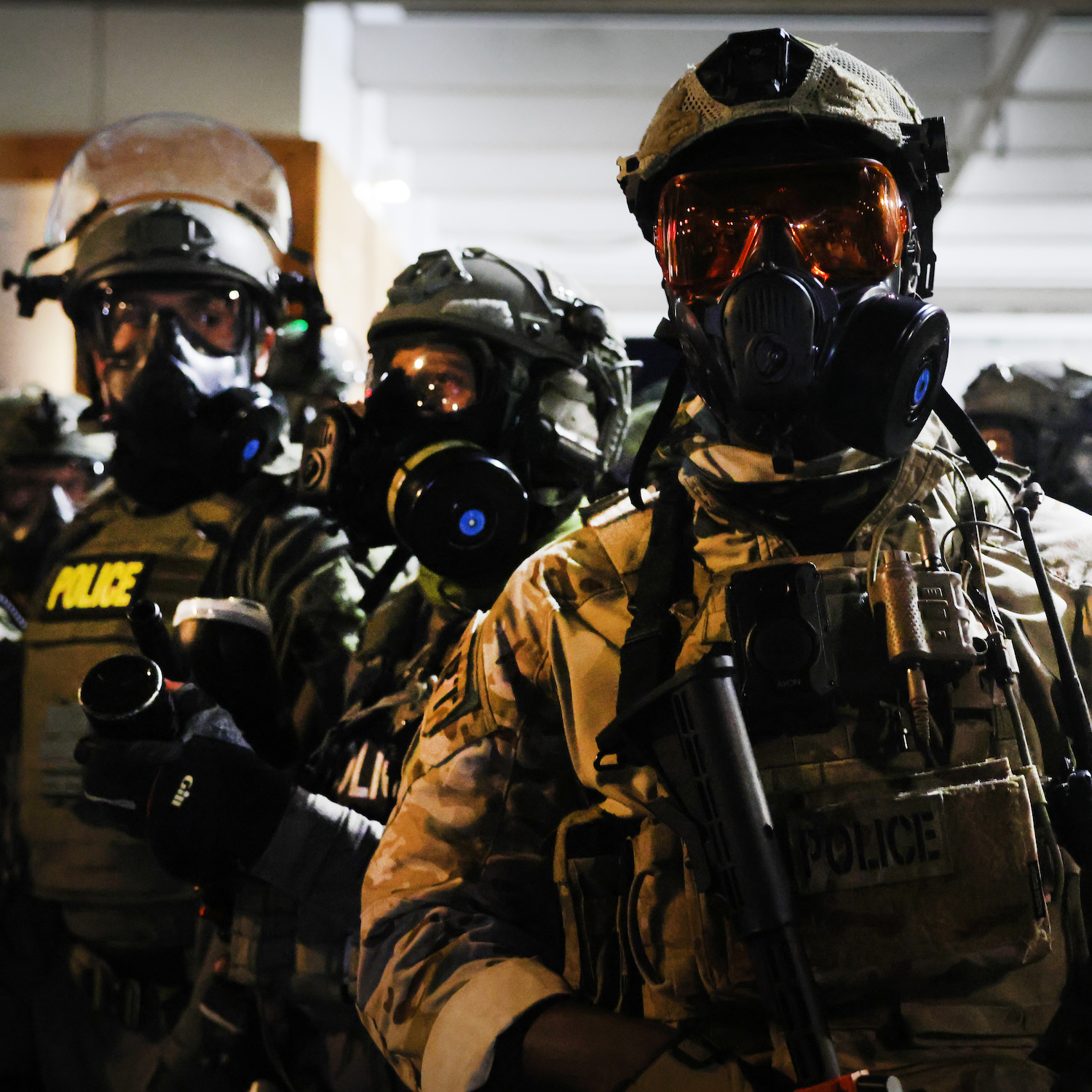
Good morning. Federal and local government battle over the ICE presence in Minnesota as protesters call for accountability for a fatal shooting. NBC explains how oversight has changed in Trump's second term.
- [00:18]
Julia Ainsley
And even though ICE is now the most well funded law enforcement agency in the entire country, not a dollar of that money went toward accountability.
- [00:28]
Shemitah Basu
USA Today breaks down a major Supreme Court case for transgender gender athletes being hurt today and why the first stop on your way to the American dream, the starter home is fading fast.
- [00:40]
Julie Weil
Well, if you don't become a homeowner, how does that change your entire economic Future?
- [00:47]
Shemitah Basu
It's Tuesday, January 13th. I'm Shemitah Basu. This is Apple News Today. As Homeland Security Secretary Kristi Noem announced plans to expand the presence of ICE agents in Minneapolis. City and state government is suing the administration to halt the crackdown. Minnesota Attorney General Keith Ellison said the surge had sown chaos in the Twin Cities.
- [01:14]
Julia Ainsley
The deployment of thousands of armed mass DHS agents to Minnesota has done our state serious harm. This is, in essence, a federal invasion of the Twin Cities and Minnesota, and it must stop.
- [01:28]
Shemitah Basu
The administration has defended the agent's decision to fire at Renee Nicole Good even before an investigation concludes. The FBI is looking into the incident but has refused to involve state officials, leading Governor Tim Walz to question the legitimacy of that investigation. As politicians debate even the nature of the investigation, it's raised questions over how ICE and Border Patrol accountability actually works in practice, with many of the protesters over the weekend demanding more scrutiny. In Chicago last October, for example, a Border Patrol officer shot and injured a woman who was driving around warning people of ice. ICE presence similar to Minneapolis. That officer claimed they were defending themselves from a car ramming. And in Los Angeles, officers last summer hid in a rental truck and detained day laborers at a Home Depot parking lot in an operation they called Trojan Horse.
- [02:25]
Julia Ainsley
So there are really two ends of the spectrum when it comes to how ICE trains its officers and what they're allowed to do.
- [02:31]
Shemitah Basu
Julia Ainsley is a senior Homeland Security correspondent at NBC News.
- [02:36]
Julia Ainsley
On one end, you have what would be outside of the scope of duties. Say an ICE officer starts a bar fight while on duty and somebody gets hurt. That's outside of their scope of what they're supposed to do as a federal officer. And so the federal government wouldn't even protect that officer in a court of law to defend those actions. Then on the far other end, you have best practices.
- [02:59]
Shemitah Basu
Best practices, Ainsley says, is what officers learn in training but are not mandated rules. And even if officers don't always follow them they're still protected since it falls under the scope of their duties. That's where goods shooting falls, according to the government.
- [03:14]
Julia Ainsley
What I do hear from DHS officials who are looking at this video, they say it was not within the best practices to step in front of the car. And you see that this officer walks around the car and makes the choice to come back in front of it. And we didn't see that in the first video, but now we see a much longer interaction where he's really walking around the car and that was his choice to cross in front of her. And so that would be against the best practices.
- [03:41]
Shemitah Basu
Ainslie also told us federal cutbacks have hampered DHS's ability to hold its own officers accountable.
- [03:49]
Julia Ainsley
There is an office that was with inside ICE that would do more of these investigations into officer conduct that has been eroded under this administration. You also see weakened inspector generals throughout the entire federal government.
- [04:05]
Shemitah Basu
DHS has also cut staff at agencies that are watchdogs who investigate misuse or excessive use of force. The administration called them roadblocks to enforcement.
- [04:16]
Julia Ainsley
Doge took really a sledgehammer across the federal government. But DHS was not a place where they were especially heavy handed. And a lot of the cuts that happened at DHS had more to do with cutting out areas that were not in line with the administration's priorities. So for example, you saw a lot of asylum officers, people who approved asylum applications be taken out. You saw the Civil Rights and Civil Liberties Office, the reviews. Whether or not immigrant civil rights and civil liberties have been violated while they're in ICE detention or while they're being arrested anywhere during the process, that office. I've heard the term gutted.
- [04:52]
Shemitah Basu
Last year a whistleblower report sent to Congress alleged that staffing cutbacks had meant hundreds of complaints had been left abandoned. Today the Supreme Court will hear arguments on the rules for transgender athletes. It's actually two separate cases and the plaintiffs have appealed state bans that prohibit trans girls and women from participating in women's sports. One relates to 15 year old Becky Pepper Jackson, who sued the state of West Virginia in 2021 when she was barred from joining her school track and field team.
- [05:32]
Julia Ainsley
Sport is something that everybody should have the opportunity to do. I wish these people would educate themselves.
- [05:38]
Maureen Grappi
Just so they would know that I'm.
- [05:41]
Julia Ainsley
Just there to have a good time.
- [05:43]
Shemitah Basu
Over the last few years, there's been a lot of legal back and forth in Pepper Jackson's specific case with a court at first siding with the state, then on appeal concluding it had violated her rights. Maureen Grappi is the Supreme Court correspondent for USA today. She explained what is being considered at the court today.
- [06:03]
Maureen Grappi
There are two issues. Whether these laws violate the Constitution's guarantee of equal protection that says that people who are in similar situations should be treated similarly under the law. There's also the question of whether these laws violate Title 9, which is the civil rights statute that prohibits discrimination based on sex in educational programs.
- [06:26]
Shemitah Basu
State officials have argued that the equal protection clause doesn't apply because transgender girls and women are different to people assigned female at birth. And supporters of bans like West Virginia's Republican attorney general contend that allowing transgender girls to participate basically forces cisgender girls and women to participate against athletes that would have physical advantages against them.
- [06:49]
Maureen Grappi
One of the disputes in this case is how big a problem there is that these laws are trying to address. The states that are passing these laws say there's a huge problem out there with transgender athletes unfairly competing against non transgender females. The other side, the students who are challenging this say these laws are way broad and they're only affecting a small group of people. In the case of the West Virginia student who's challenging it, she says West Virginia's ban, she's the only person who the ban applies to in the entire state.
- [07:27]
Shemitah Basu
The Trump administration has issued an executive order to revoke funding for schools that allow transgender girls and women to compete on women's and girls teams, and filed a friend of the court brief in which it told the Supreme Court that these laws were reasonable. In 2020, the Supreme Court ruled that workplace discrimination against transgender people did violate civil rights law. And Pepper Jackson's lawyers have argued that the same logic should extend to Title ix.
- [07:55]
Maureen Grappi
The states say that their bans are different because while someone's gender doesn't usually make a difference in the workplace, they say that whether you're a boy or a girl has a huge difference for how you were able to compete on the playing field.
- [08:11]
Shemitah Basu
In that 2020 ruling, it was Supreme Court Justice Neil Gorsuch who wrote the opinion, surprising some conservatives. He may very well be in the spotlight again as he considers these cases. Foreign. Let's turn now to housing and the specific challenge of finding what's often called a starter home in the US you probably know what I'm talking about. It's a first ever home purchase on the smaller side, used as a keystone to building equity, where eventually the homeowner could trade for something bigger or better. But increasingly, this stepping stone is just not happening for many people as first time buyers have been priced out of the market.
- [08:56]
Julie Weil
Homeownership is a huge economic choice that shapes your whole reality in the economy.
- [09:02]
Shemitah Basu
Julie Weil covers affordability for the Washington Post.
- [09:05]
Julie Weil
And if that first rung of the ladder is gone, it's hard to get on the ladder at all.
- [09:10]
Shemitah Basu
She told us that this critical first step up is disappearing for a number of reasons. First is costs have skyrocketed in recent years. The US median home price is up almost $100,000 since 2019. And then there's an inventory issue as well. Developers have prioritized building homes with larger floor plans over the last 50 years. In the 1970s, homes with four or more bedrooms accounted for one in five homes. In 2022, close to half of all new construction met that metric.
- [09:43]
Julie Weil
And if what you can afford and what you really need for your family, maybe your one or two people, and is a small house, that's harder to find because there are simply fewer of them being built.
- [09:55]
Shemitah Basu
Part of the problem is that there are a lot of incentives for these bigger homes to get built. For one, builders see higher profit margins, and there are local regulations and zoning requirements that have contributed to the trend.
- [10:08]
Julie Weil
There are many places where you're simply not allowed to build the kind of denser, smaller homes that some people are looking for. There are land use regulations. Maybe you can only build a single family home on the lot, or the lot has to be a certain size. Most of the country there are zoning requirements that are going to constrict what you can build.
- [10:32]
Shemitah Basu
Buyers who are looking for larger homes have also driven the demand for extras that accompany them, like larger garages, for example, and at least two full bathrooms. All of that, Weil says, has made it tougher and more demoralizing for people trying to quite literally get their foot in the door of a starter home.
- [10:52]
Julie Weil
A conversation I have over and over and over is with people who are usually millennials, usually in their early 30s, say, and these are people who often have good jobs. They're making a middle class or even upper middle class income. But they look at the housing market, especially in some of the really expensive coastal cities, and they just say, even with a good job, this is just not something I can afford.
- [11:19]
Shemitah Basu
Recently, there have been some signs of change. The share of two bedroom and smaller homes has crept up a bit in recent years, while the share of larger homes has declined, according to census data. And a number of cities like St. Louis and Minneapolis, as well as states like Arizona, Texas and Colorado, have been working on initiatives to help get these smaller homes constructed and on the market. And finally, a few other stories we're following. All three living former Fed chairs are speaking out against the DOJ's inquiry into Jerome Powell. A statement signed by past chiefs Janet Yellen, Ben Bernanke and Alan GreenSpan, along with 10 other former officials, called it, quote, an unprecedented attempt to use prosecutorial attacks to undermine the Fed's independence. Several Republicans also criticized the probe. Senator Thom Tillis of North Carolina, a key GOP member on the Senate Banking Committee, which oversees the Fed, said he would oppose any new nominees until the legal matter is resolved, according to cnn. Treasury Secretary Scott Besant is also unhappy about the decision. Trump has so far distanced himself from the investigation, telling NBC News that he didn't know anything about the subpoenas that were issued. One of New York City's nurses unions went on strike Monday night at midnight as some 15,000 nurses walked off the job in the city's largest such strike, 231123. The stoppage involves several of the city's private and nonprofit hospitals. The strike brought out New York Mayor Zahran Mamdani, who joined nurses on the picket line and spoke at one of the strike sites. The nurses issues include staffing levels, security, benefits and wages. The hospitals have called the nurses demands extreme and reckless. Hospitals have also started hiring replacement nurses to fill the vacancies. And finally, Mattel has added a new Barbie to its lineup, one who has autism. The doll features articulated wrists and elbows to simulate stimming, which is defined as repetitive movements to help those with autism regulate senses. She also has noise canceling headphones, sensory sensitive clothing, and a fidget spinner. A spokesperson for the Autistic Self Advocacy Network, which partnered with Mattel to develop the new doll, said it is so important for young autistic people to see authentic, joyful representations of themselves. That's exactly what this doll is. You can find all these stories and more in the Apple News app. And if you're already listening in the news app right now, we've got a narrated article coming up next. Bloomberg businessweek reports on how rising prices in the cryptocurrency market have led to an unexpected surge in home invasions and kidnappings, and how countless people are now exposed to a type of risk that doesn't exist in traditional finance. If you're listening in the podcast app, follow Apple News plus narrated to find that story. And I'll be back with the news tomorrow.