Loading summary
Transcript27 lines
- [00:05]
A
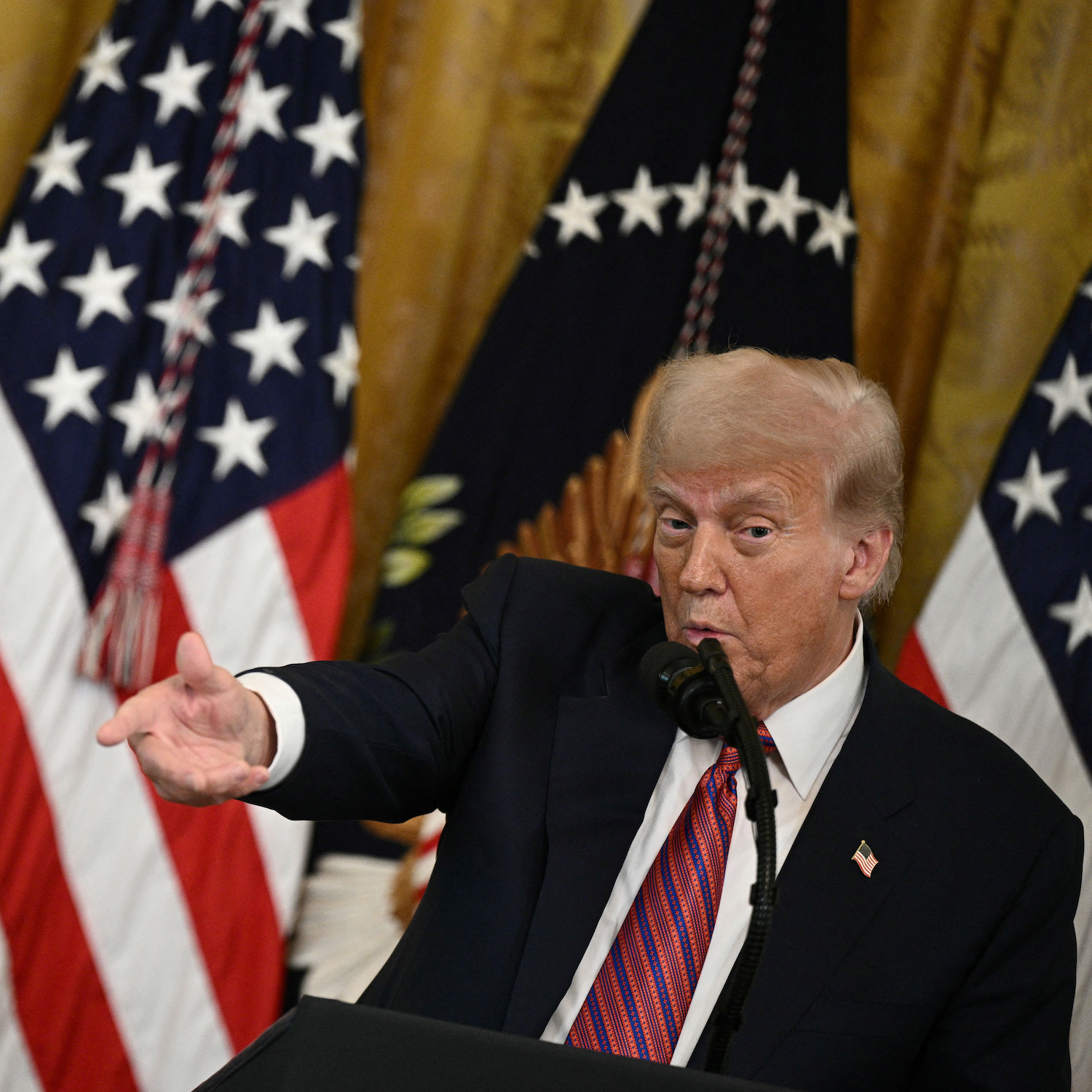
Good morning. It's Wednesday, August 20th. I'm Shemitah Basu. This is Apple News Today. On today's show, how one major city significantly moved the needle on its homelessness crisis. Why some California homeowners are against a fire code that could prevent wildfire damage. And the US Open revamps its mixed doubles competition. But first, for as long as President Trump has been in the public eye, he has built his reputation around his money and businesses. He entered the oval office in 2017 a billionaire, one of the richest people to ever win the presidency. And his wealth has skyrocketed since. But one question that's been difficult to answer is just how much money he and his family have made over the years as a result of his presidencies. So New Yorker staff writer David Kirkpatrick spent months digging through deals to try and calculate it.
- [01:06]
B
And to do that, I went through all of the different sources of revenue. New deals, new businesses, new income streams that I could find. And I asked with each one, is this coming from the presidency? Is this leveraging the presidency? Does this depend on the presidency? Or is this money that the family would have made in their old business? As an owner of real estate and a reality television star, he decided to.
- [01:32]
A
Focus primarily on Trump's liquid assets, the cash in the bank versus things like stocks or meme coins, which can change in value. And he arrived at a dizzying total.
- [01:42]
B
The tally comes out to $3.4 billion, which I think by any measure is a lot of money. So I think that what I've come up with is really probably a baseline, is probably a minimum and not at all a maximum. And the thing that really stood out to me is the speed at which they're bringing this money in and the evident eagerness, even zeal, for making money. So much more so in this term than in the first term.
- [02:09]
A
When you dig into that $3.4 billion total that Kirkpatrick found, Trump's various cryptocurrency ventures make up the biggest piece of the pie. Kirkpatrick estimates they've generated at least 2.37 billion in and counting.
- [02:24]
B
On the day the piece was published, they did another deal through one of their crypto companies with a headline value of $1.5 billion. Now, I don't know how much of that is necessarily gonna go into their pockets, but it just gives you a sense of how fast this meter is ticking upward.
- [02:41]
A
At Trump's private Mar A Lago club, members now pay a million dollars to join and mingle with Trump and his inner circle. That's 10 times more than he was charging back in 2016. Kirkpatrick estimates the club has raked in an extra $125 million off of Trump's presidencies. He's collected over $127 million in legal fees and merchandise sales. And Kirkpatrick says there are a number of property deals that can only be explained by Trump's ascent to power.
- [03:11]
B
The Trump Organization has acknowledged trying for years to plant that flag around the Persian Gulf. And somewhat out of nowhere, beginning in late 2022, after Trump has emerged as the presumptive Republican. No dowdy company does five different deals with the Trumps across the Persian Gulf, big deals and deals unlike any that the Trump family had done before. There's no way to understand that absent the presidency.
- [03:37]
A
The big question underlying all of this reporting is is this legal? There's nothing prohibiting a president from owning or operating a private business. And Kirkpatrick told us there's no evidence of Trump selling official actions for private payments, though he said he spotted a lot of timing that seemed to him suspic. Kirkpatrick said it ultimately is up to voters to decide how they feel about Trump's use of the presidency to enrich himself as president. Trump uses federal force to crack down on DC's unhoused population advocates say their methods will ultimately make it harder to get people into long term housing. To understand what methods actually help and what can hurt efforts to tackle homelessness in a lasting way, it helps to look at success stories. The Washington Post has some reporting about how Dallas has had great success in its approach. In May, the city declared an end to downtown homelessness after officials said more than 270 people moved off the streets. Rachel Siegel, a housing reporter at the Post, told us how Dallas has become a national model, largely thanks to a federal program called Continuum of Care that.
- [04:57]
C
Is a program from the Department of Housing and Urban Development that basically gives money for areas to coordinate homelessness efforts, which means that there's money to pull in city hall and emergency shelters and landlords and businesses all to have a piece at tackling homelessness, also with an eye towards getting people into their own homes and getting them into their own homes permanently.
- [05:22]
A
But Siegel reports that the $3.6 billion program has been left out of the White House's budget proposal for the next fiscal year and they've proposed repurposing funds to focus on shorter term solutions.
- [05:35]
C
They want to use funds that go to homelessness efforts towards emergency shelter, temporary housing, sobriety programs, mental health programs Basically to reduce dependence on aid. And the administration says that those programs can help people get on their feet, but they're not going to be offering permanent solutions.
- [05:55]
A
The difference between offering someone temporary housing versus long term housing could be key to getting them off the street permanently. Siegel told us about one man, Donald Wilson, who spent four months living in a tent in downtown Dallas before he was approached by an outreach worker from the Continuum of Care program.
- [06:14]
C
He raised his hand for those services. He also got an updated driver's license. He got medication through all these wraparound services that the Continuum provides. And he ended up moving into his studio the day before Thanksgiving. If the only option had been to go to an emergency shelter, he might not necessarily have gone, or he might still be trying to find housing, because often people directed to shelter but beds are not turning over in a way that gives them a place to go after that.
- [06:42]
A
For years, experts on homelessness have emphasized this housing first strategy. Dr. Katherine Crosland, who serves on the board of directors for the National Health Care for the Homeless Council, told npr, it makes a huge difference. I can tell you so many stories about the way in which housing is health care and housing has saved my patients lives. When Siegel asked officials with the Department of Housing and Urban Development about the proposal to end the program, they said more than $4 billion would still be allocated toward combating homelessness. And they pointed to data that says homelessness has still climbed despite more permanent housing being built.
- [07:22]
C
On the other hand, there's a lot of research that says that permanent housing is able to sustain people for much longer. It's cheaper than emergency solutions or temporary housing. It reduces interactions with the police or time that people spend in jail or in hospitals. So I think like with a lot of issues, there's a lot of research that can be used to argue certain claims. But a big focus here is what ends up being more effective in reducing homelessness and in keeping people housed over the long term.
- [08:02]
A
As California grapples with heat and blazes in the middle of wildfire season, people are still contending with the aftermath of devastating fires across Los Angeles earlier this year. Bloomberg News reports that regulations that were supposed to be in place that could have helped mitigate the damage from the January fires were long delayed. Todd Woody, a reporter with Bloomberg, explained to us why this happened.
- [08:26]
D
In 2020, the governor signed legislation into law that required what they call Zone Zero to create an ember resistant zone within 5ft of homes in high risk wildfire areas across the state, which affects about 2 million homes.
- [08:42]
A
That entailed removing vegetation, wood gates, furniture and other combustible material within five feet of a residence. But in the five years since the governor signed Zone Zero into law, the state's Board of Forestry still hasn't finalized language to enforce the regulations. Woody told us for years it was held up by a combination of insurance lobbyists and fire officials demanding more stringent protections.
- [09:07]
D
They took their concerns to the governor's office. The governor's office was concerned about the cost to homeowners. And then in October 2023, this agency that oversees the Board of Forestry put the rules on hold, so all work on them stopped while they spent most of 2024 trying to find funding that would help offset the cost to homeowners. And that's where things stood when the Los Angeles wildfires broke out this past January.
- [09:34]
A
And now, more than six months after those fires, the regulations are still not complete. Bloomberg cites independent investigators who found had they been in place in January, they would have lessened the damage to 16,000 homes and the loss of 31 lives.
- [09:50]
D
We'll never know exactly, but fire officials I talked to testimony they gave to the Board of Forestry and independent researchers say it would have curtailed the extent of the destruction. I mean, we were facing 100 mile an hour winds, so houses were going to burn. But if you know, the entire community of Pacific Palisades, for instance, had enacted Zone Zero, fire officials scientists tell me the the extent of the destruction would have been much less.
- [10:19]
A
Scientists who analyzed data from tens of thousands of structures damaged by California wildfires between 2017 and 2020 projected that Zone 0 would have nearly doubled home survival rates. Woody said that some homeowners have continued to be resistant to changes because taking away vegetation could alter the aesthetics of their neighborhoods. And there are still worries about the costs.
- [10:43]
D
The Board of Forestry estimated the statewide cost to homeowners would be $58 million. On the other hand, the insured losses from the LA wildfires are estimated to be $45 billion. So there's a huge gap between what the cost would be and what the potential losses would be in a catastrophe.
- [11:02]
A
It's a difficult pill to swallow for many in California who are grappling with the reality of climate change intensifying wildfire seasons and what that might do to the place they call home.
- [11:13]
D
I think wildfire officials and scientists are just pretty steadfast in that if we don't do this and we don't harden homes, we're going to see a repeat of the disaster in Los Angeles.
- [11:25]
A
After the LA fires in January Governor Newsom issued an executive order to have the board complete the regulations by the end of the year. The forestry board did not respond to an interview request from Bloomberg, and Newsom's office referred questions to the agency in charge of that board. Before we let you go, a few other stories we're following. State officials say the measles outbreak centered in West Texas is officially over. As of Tuesday, no new cases were reported in the state for more than 42 days. Texas Health and Human Services says a total of at least 762 cases of measles have been confirmed since the outbreak began in late January. Two school age children who were not vaccinated against the disease died. The outbreak was centered in Gaines county, where vaccination rates among kindergartners are among the lowest in Texas. Health officials say a coordinated effort that included testing, vaccination and monitoring are what helped end the outbreak. Continuing with public health news, the American Academy of Pediatrics on Tuesday issued guidance recommending parents vaccinate their children aged 6 to 23 months against COVID 19. The guidance is in direct contrast to what CDC officials currently recommend. The CDC says parents should talk to their doctor about the risks and benefits of the COVID vaccine for young kids. Health Secretary Robert F. Kennedy Jr. Attacked the AAP, saying they should disclose their, quote, corporate entanglements and criticize the organization for accepting donations from vaccine manufacturers. The AAP says they recommend Covid shots for children because they are still at risk of severe cases and that their decision is based on the science. And finally, tennis fans at the US Open this year are getting a glimpse of something never before seen at a major the historically popular but often forgotten mixed doubles competition this year is being contested in a compressed two day format. Mixed doubles, which features teams of one man and one woman, are only contested at Grand Slam championships like the US Open and the Olympics. The tournament kicked off Yesterday where the 16 team bracket was whittled down to just four teams who compete today in the semifinals with the finals scheduled for later tonight. The semis include two big names, the world number two ranked woman IGA Swiatek and the number four ranked woman, Jessica Pugula. Other notable names who competed are men's world number two Carlos Alcaraz and all time record men's Grand Slam title holder Novak Djokovic. You can find all these stories and more in the Apple News app. And if you're already listening in the news app right now, we've got a narrated article coming up next. Scientific American examines how sleep plays a critical role in emptying waste from our brains and the health benefits that come with it. If you're listening in the podcast app, follow Apple News Narrated to find that story. And I'll be back with the news tomorrow.