Loading summary
Transcript25 lines
- [00:05]
Shemitah Basu
Good morning. It's Thursday, March 27th. I'm Shemitah Basu. This is Apple News today. On today's show, Trump targets law firms that have challenged him how calls to defund PBS fit into this administration's escalating attacks on the press. And are robot umpires ready for the big leagues?
- [00:29]
Todd Frankel
Foreign.
- [00:34]
Shemitah Basu
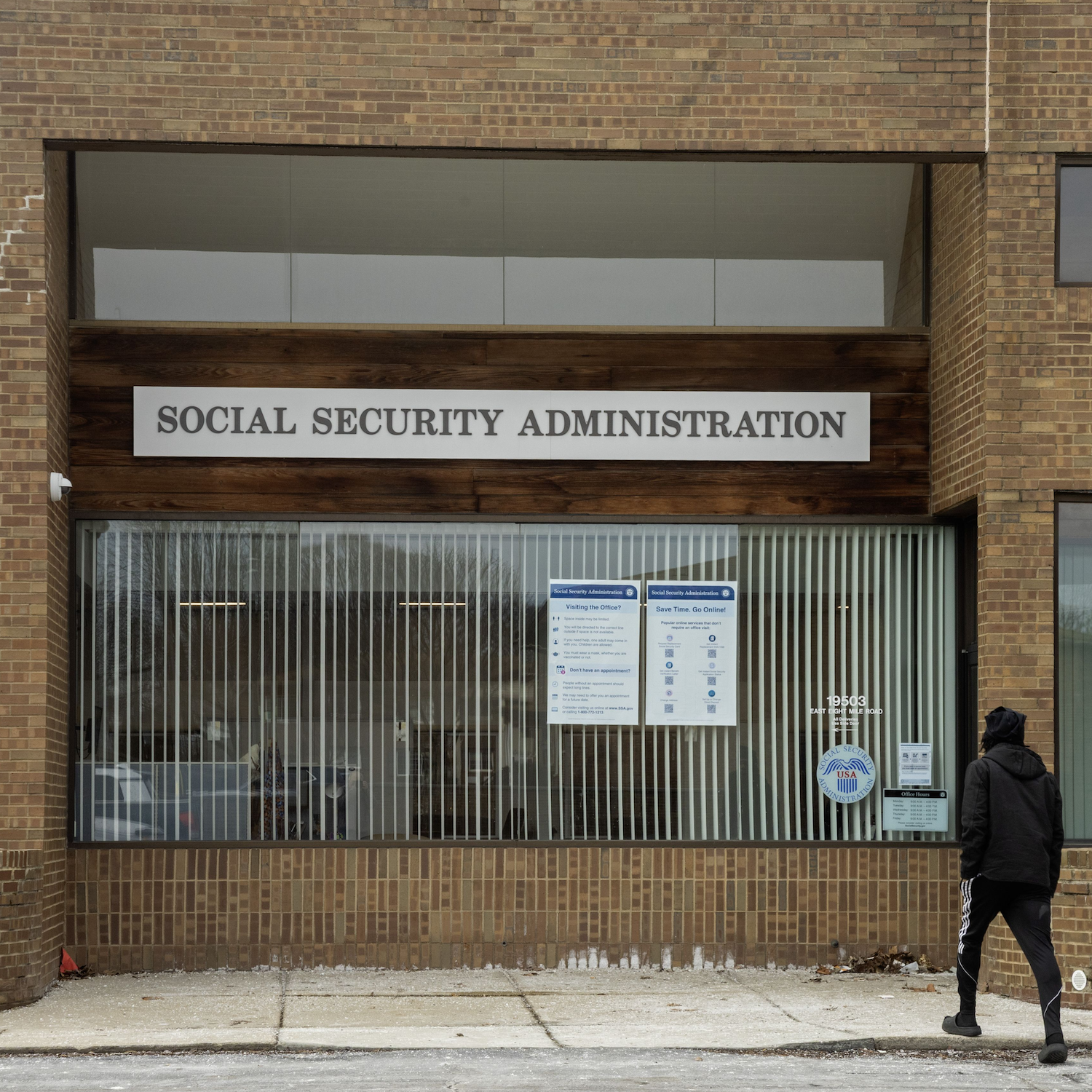
But first, a new Social Security policy goes into effect today. It's rare, but sometimes Social Security overpays someone. It can happen if there's been a miscalculation or if that person didn't update their income. In the past, the agency would withhold 10% of that person's future benefits until they paid back the overpayment. But starting today, the agency will take 100% of future benefits until the overpayment has been corrected. A 2024 internal audit found overpayments accounted for less than 1% of all benefits paid between the 2015 and 2022 fiscal years, about $72 billion. Two thirds of that money was eventually recovered. For context, Social Security distributes close to $1.6 trillion in benefits every year. It's also important to note Social Security is paid for by Americans through a dedicated payroll tax. This is just one of many changes President Trump and Elon Musk have made to Social Security in the past few weeks. And in spite of what internal audits like the one I just mentioned have shown, Trump and Musk claim the benefits system, which serves over 70 million retired people, is plagued by waste and fraud. The administration has announced plans to eliminate thousands of jobs at the agency, close offices, and eliminate the ability for people to file claims by phone. They they initially planned to require all claims be filed either in person or online, but they partially walked back that plan after media organizations started reporting on it. Still, the Washington Post reports that the Social Security website has been so overloaded that it crashed at least four times this month. And staffing at the agency has already gotten so low some offices are struggling to handle the influx of calls. Some callers report being on hold for four or five hours. One reason why Musk is so focused on cuts at Social Security is because the agency accounts for about 20% of all federal spending. But Washington Post reporter Todd Frankel told us some of the moves the DOGE team has made will actually make it more difficult to root out potential fraud.
- [02:44]
Todd Frankel
At Social Security Administration and pretty much every other federal agency. They have their own inspector generals. Who are these teams who are supposed to hunt down the exact same thing? Waste, fraud and abuse. And when Trump came into office, there were 17 different inspector generals the federal government. He fired them all.
- [03:00]
Shemitah Basu
Frankel says Social Security is one of the most scrutinized and audited agencies in government.
- [03:06]
Todd Frankel
The federal government actually has a fairly robust system of checks and balances to keep an eye on where that money is flowing.
- [03:13]
Shemitah Basu
Social Security is also subject to frequent probes by its Office of Inspector general, which has 500 people on staff. It pays outside auditors to examine its books. Congress regularly questions agency officials, and government watchdogs have not found fraud anywhere close to the level Musk has claimed exists. Frankel reports that the changes to Social Security, both ones that have been considered and those that have been enacted, threaten to disrupt the agency's ability to serve the public. And Social Security is popular among Americans. In fact, an AP Nork poll earlier this year said two thirds of Americans think the government is spending too little on Social Security.
- [03:53]
Todd Frankel
It's known as the third rail in politics because the third rail is electrified in subways and politicians are fearful to touch it, to mess with it. And President Trump has said that he's not going to cut Medicare or Social Security. It's an incredibly popular benefit. It was established to sort of curb this epidemic of poverty amongst senior citizens in the US and so I think what's really caught folks ideas in their minds today is Doge says they're going after waste, fraud and abuse. But if there isn't too much waste, fraud and abuse within Social Security, well, where are you going to get those savings from? So folks are worried that they're going to go after the actual benefits themselves.
- [04:42]
Shemitah Basu
President Trump is threatening and in some cases sanctioning some of the most powerful law firms in the country, firms whose lawyers have challenged him or his administration. Legal scholars are calling this an unprecedented series of actions by a U.S. administration against the legal establishment. In a series of recent executive orders, Trump revoked security clearances for a number of lawyers at the firm Covington and Burling, who did work for former special counsel Jack Smith. Trump also took away security clearance for the firm Perkins Coie. Two lawyers who used to work there did opposition research for Hillary Clinton's 2016 campaign. The president issued a similar order against the firm Paul Weiss, which had employed a lawyer who spent several years trying to build a criminal case against Trump in Manhattan. And the president has directed his attorney general, Pam Bondi, to launch a broad review of attorneys involved in litigation against the government over the last eight years so he can decide if he wants to levy more penalties on other firms. The Wall Street Journal reports that more than a dozen law firms have been identified as possible future targets. National legal affairs reporter Erin Mulvaney told us these moves have shocked the legal industry and are intimidating high profile firms.
- [05:57]
Erin Mulvaney
I think it is a fear of just not being in the crosshairs and that's why a lot of big firms are just trying to stay quiet, especially those that haven't been targeted at all at this point.
- [06:08]
Shemitah Basu
Trump's orders aim to strip these law firms of their business by banning lawyers from government buildings and barring companies that have federal contracts from employing these firms.
- [06:18]
Erin Mulvaney
So many of these big giant companies have federal contracts that are very lucrative, so that would be probably the most destructive to their business.
- [06:27]
Shemitah Basu
Some of the firms named in Trump's orders are losing clients who say they're afraid of being affiliated with a firm he's targeting. Some places, like Perkins Coie, have sued the administration. A judge issued a temporary restraining order in their case and the Trump administration is now seeking to remove the judge from that case. Meanwhile, the firm Paul Weiss decided they would make concessions and agreed to provide $40 million in pro bono work on issues that Trump says support the administration's initiatives. In return, the president rescinded his executive order targeting Paul Weiss. But Mulvaney reports a number of firms are split on whether they would take a similar deal if targeted or fight back in court.
- [07:09]
Erin Mulvaney
You might win in court, but at the end of the day your law firm may not survive and I think that's why there's so much fear and anxiety right now.
- [07:19]
Shemitah Basu
Yet another firm was targeted on Tuesday because it had employed a lawyer who worked with special counsel Robert Mueller who previously investigated Trump during his first administration. Administration the Washington Post reports the effects of the crackdown are just starting to be felt. Some Biden era officials told the Post they're having trouble finding lawyers willing to defend them. And some small non profits poised to challenge the Trump administration say the well resourced law firms that they might have turned to for backing are now steering Clear.
- [07:56]
Todd Frankel
Foreign.
- [08:00]
Shemitah Basu
Yesterday, Public Media went to Washington to defend itself against calls to defund it. A subcommittee in the House led by Republican Representative Marjorie Taylor Greene called on the CEOs of NPR and PBS to testify. Green claimed their programming is biased toward the political left and doesn't represent the views of the majority of Americans. The executives of PBS and NPR rejected claims of bias, saying the networks are a crucial source of accurate information for millions in the US Particularly in rural areas where people rely on access to emergency broadcasts. The funding bill passed by Congress earlier this month approved funds for public broadcasting through 2027. This is in some ways a very old story. Congressional Republicans have tried and failed to cut funding to public broadcasters several times.
- [08:52]
Brian Stelter
In recent decade, and yet in every budget the money is still there because there are enough Republican lawmakers who don't want to face constituents back home who are angry about missing Big Bird, who are angry about missing the PBS NewsHour who are angry about missing Nova.
- [09:09]
Shemitah Basu
That's CNN Chief media correspondent Brian Stelter.
- [09:13]
Brian Stelter
The public media funding fight is maybe one of the least dramatic examples of what is a really dramatic attempt to stifle the free press, stelter told us.
- [09:24]
Shemitah Basu
There's already a noticeable difference in how Trump is positioning himself against news and public media. In the first term, it was more about words insulting the press, trying to discredit them.
- [09:35]
Brian Stelter
In his second term, he's trying to translate those words into actions. He is not just bullying the press, but in some cases taking actions against the press. And we may just be in the beginning stages of those actions.
- [09:48]
Shemitah Basu
Let's quickly recap some of what's happened so far. The administration is trying to shut down Voice of America, an outlet that provides news to hundreds of millions of people worldwide, including in countries where governments censor information. That move is being challenged in court. The administration has banned the AP from covering White House events after it chose to continue using Gulf of Mexico as its preferred terminology instead of Trump's name, Gulf of America. In other cases, the White House has made moves to limit access. The Defense Department removed several outlets, including npr, NBC, Politico and CNN, from their workspaces at the Pentagon. The White House broke from protocol and took control of the press pool, which is responsible for following the president almost everywhere he goes and distributing information to other media outlets. The White House instead filled the pool and the press briefing room with outlets that are more friendly to Trump, stalter told us. All of this appears to be a multi pronged attack on the media.
- [10:50]
Brian Stelter
What I see President Trump and his allies doing are looking for every conceivable pressure point against the American news media and then applying as much pressure as possible. We're seeing that on every front, from FCC investigations to much more intense hostility on social media. Journalists are not meant to be popular. You're always going to tick off powerful people who don't like to see their favorite politician be questioned, be scrutinized, be interrogated. But one of the roles of journalism is to be that dissenting voice showing up on behalf of the public and holding politicians of all parties accountable.
- [11:37]
Shemitah Basu
Foreign before we let you go, a few Other stories we're following President Trump Wednesday announced steep tariffs for the auto industry. A 25% tariff will be levied on all cars and some auto parts imported to the US starting April 3rd. The White House says the move will spur domestic production. Carmakers, however, might feel the squeeze since they rely on a global supply chain. Earlier reciprocal tariffs announced by Trump on goods worldwide are also expected to go into effect on April 2nd. The latest college student to be detained by US immigration authorities is 30 year old Rumesa Ozturk, a Turkish doctoral student at Tufts University, here legally on a student visa. Footage of her arrest was captured by a nearby security camera, and it shows her being startled, then led away by masked plainclothes officers. U.S. officials say Ostark engaged in activities in support of Hamas, which is grounds for terminating her visa. Ostark had voiced support for Palestinians in an op ed piece last year that criticized Tuft's response to the conflict. Her lawyer called her arrest unlawful and quickly filed suit. A district judge ordered she be kept in Massachusetts for at least 48 hours, though the New York Times reports ICE records show a person with her name was being held in a Louisiana detention center on Wednesday. And finally, today is opening day for Major League Baseball, One thing that's getting left behind in spring training but could still play a role in baseball's future robot umpires. The technology allows batters to challenge balls and strikes. So far, it's had some mixed reviews among players. It's only been tested. The robots spent a few years in the minor leagues. The system isn't quite ready for the big leagues and won't be used in any games this season, but the athletic reports it could be a reality one day. And for all you baseball fans listening, don't forget Friday Night Baseball, a weekly double header on Apple TV plus, will be back starting tomorrow for the 2025 regular season. You can find all these stories and more in the Apple News app. And if you're already listening in the News app right now, we've got a narrated article coming up next. Let's stay with baseball. Caitlin Tiffany writes for the Atlantic about her love of the game, her experience at a women's fantasy camp where she got to play in a professional facility, and how the sport historically has not opened its doors to women in the same way other sports have. If you're listening in the podcast app, follow Apple News plus narrated to find that story. And I'll be back with the news tomorrow.