Loading summary
Transcript25 lines
- [00:05]
A
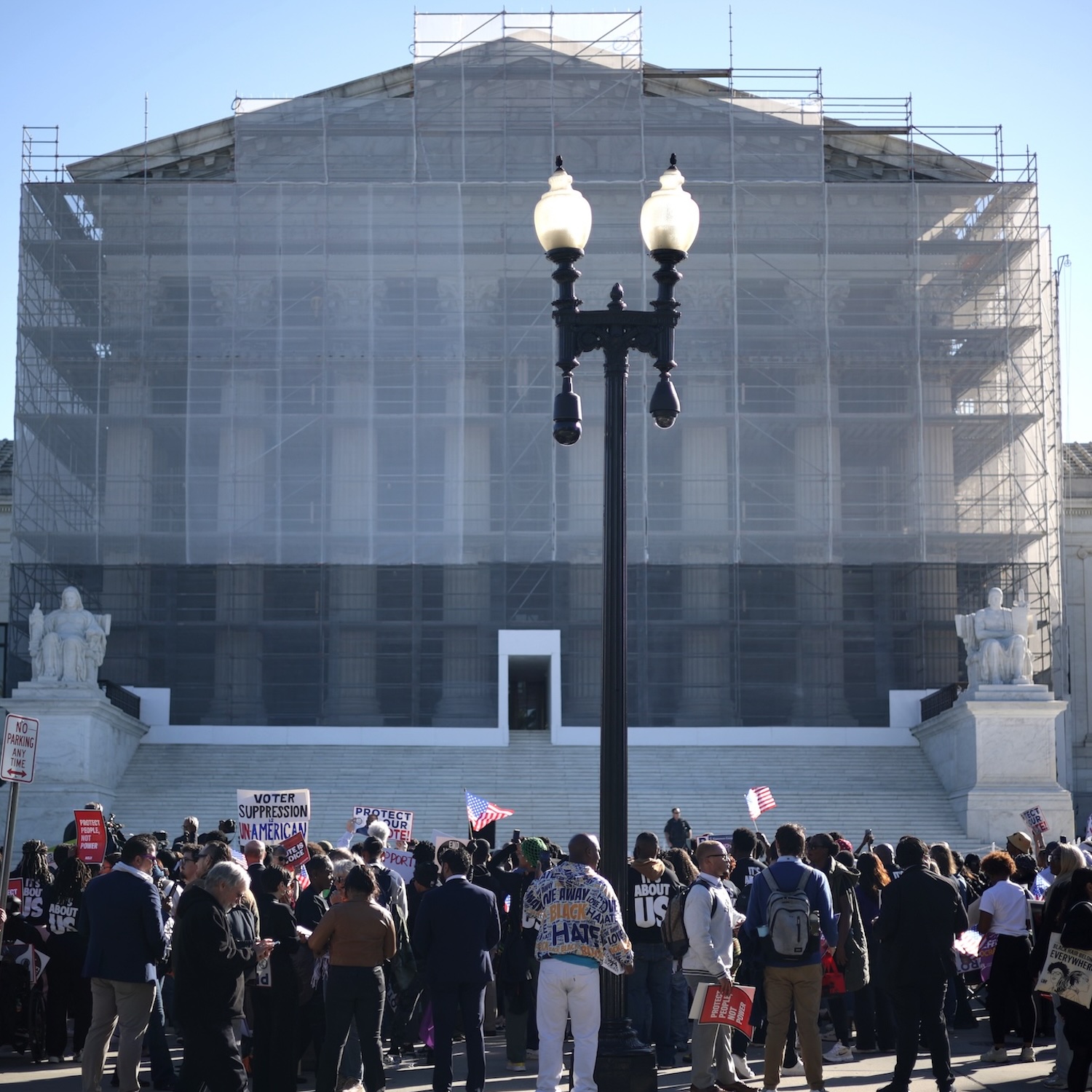
Good morning. It's Thursday, October 16th. I'm Shemitah Basu. This is Apple News Today. On today's show, why Journalists who walked out of the Pentagon yesterday aren't welcome back how the VA's disability program became a target for fraud and a legal battle over uncrustables. But first, to a case before the Supreme Court that could weaken the Voting Rights Act. Its outcome could also shape how representation of marginalized groups is reflected in Congress, and it could affect the upcoming midterms. The Voting Rights Act's Section 2 is intended to ensure minority groups aren't shut out of the electoral process through redistricting, and that's what's at stake here. Yesterday, justices heard oral arguments over Louisiana's electoral It's a state where a third of the population is black, but until recently, only one of its six congressional districts were majority black. The issue has gone back and forth in the courts and after a legal challenge compelled the state to add a second majority black district, a self described non African American group of voters has responded by challenging that.
- [01:22]
B
They allege that by considering race in drawing the new map to remedy what was a violation under the Voting Rights act, the the state actually violated the 14th and 15th Amendment of the U.S. constitution, which prohibits race discrimination and protects right to vote.
- [01:40]
A
That's Lawrence Hurley, senior Supreme Court reporter at NBC News. He spoke to us after watching oral arguments on Wednesday.
- [01:47]
B
And the Supreme Court is now weighing this new argument as to whether when you're trying to comply with the Voting Rights act in redistricting, you can ever consider race in drawing those new districts.
- [02:01]
A
Early says Brett Kavanaugh was the justice everyone was watching closest. Two years ago, he voted with liberal justices to uphold the use of race in this way. Yesterday he showed some signs of skepticism, asking whether there should be a time limit to decades old provisions designed to remedy discrimination.
- [02:19]
B
The court has already adopted that in another context, which is in affirmative action in college admissions, which in another ruling two years ago, they said, well, even if you were allowed to consider race at one point in order to foster diversity in college classes, that time is now over.
- [02:36]
A
Outside the courts, this debate is happening in the context of a partisan redistricting battle between Democrats and Republicans. The window for passing new congressional maps before the 2026 midterms is closing. And lawmakers, some at President Trump's urging, have been explicit about wanting to redraw maps to favor their candidates. After Louisiana was forced to add a second majority black district, its solicitor general said the maps were not being drawn on racial grounds, but on political grounds, which made it defensible. Critics fear that if the Supreme Court sides with Louisiana and the Trump administration's arguments, it will lead to a nationwide rush to transform electoral maps and scrap districts once designed for majority minority populations. Hurley told us that could have major consequences for representation and for politics.
- [03:28]
B
It would have quite a big effect, especially in the south, where black people tend to vote for Democrats and white people tend to vote Republican.
- [03:35]
A
Louisiana's top election official has asked the Supreme Court to rule in this case by early January to avoid disrupting the state's preparations for the midterms. Now to the Pentagon, where this week the Defense Department gave journalists an Agree to a new policy that restricts reporters from communicating with military sources and using so called unauthorized information or hand in your Pentagon press badge. The deadline to sign the agreement was yesterday and so dozens of journalists were seen at the end of the day, boxes in hand, filing out of the Pentagon. Melissa Korn is the deputy bureau chief for media at the Wall Street Journal. She told us what the new policy laid out.
- [04:25]
C
The new and we believe final version states that military personnel need approval before sharing information with the media, even if it's not classified information, and that asking agency personnel to share this unauthorized information isn't protected under the First Amendment.
- [04:43]
A
The Pentagon Press association, which represents more than 100 journalists from various newspapers, wire services and TV outlet, said the new rules pose a threat to reporters trying to do their job of informing the public, which sometimes involves seeking out information that hasn't been pre approved by the administration.
- [05:01]
C
And the concern by many members of the press was that this would open them up to potential consequences of their own if they were to publish stories using this unauthorized information, which is what many of them say is just normal news gathering.
- [05:16]
A
Many media outlets have refused to sign the agreement, including the Wall Street Journal, the New York Times, the Associated, Reuters, NPR and the Washington Post. And several broadcasters like ABC News, CBS News and Fox News issued a statement together saying the new rules would, quote, restrict journalists ability to keep the nation and the world informed of important national security issues. One America News, a far right news outlet, is the only media organization so far that has publicly agreed to the new rules.
- [05:49]
C
In some instances, Hegseth posted on X kind of a hand waving emoji, like a waving goodbye to the various outlets as they issued their statements.
- [05:59]
A
These restrictions are just the latest clampdown on the way the press covers the Pentagon under Defense Secretary Pete Hegseth. Over the past few months, journalists say once routine news briefings have become rare Multiple outlets that had workstations in the Pentagon's media room were kicked out, and access within the building itself is severely limited unless reporters have an escort. CNN reports that the changes are a result of Hegseth's frustration with the press over leaks.
- [06:27]
C
From talking to a lot of reporters who have spent their careers covering the Pentagon, covering military affairs. A lot of them say, listen, our job is not to sit in briefing rooms and be told information and then report on that information. That's part of the job, certainly. But their best journalism comes from other conversations. Running into somebody in the hallway, grabbing somebody as they're about to go into the office, noticing who's walking into the office for a meeting with a high official. Those sorts of things help build out their robust journalism. And they say that not having that access is really problematic.
- [07:03]
A
Reporters having access to the Pentagon has been standard practice for decades. And Korn says journalists who cover the military will have to figure out new ways to keep covering the Pentagon, even without their building badge.
- [07:15]
C
Given how enormous the Department of Defense is, how much money, taxpayer money it gets, how involved it is in conflicts around the world. These are stories that need to be told. And the people I've spoken to for my story said, you know, they're still going to keep doing their work. They're still going to report the heck out of all the stories they can. But some of it gets a little harder. And they're extremely frustrated by the suggestion that there will still be any sort of transparency.
- [07:54]
A
Now to an investigation from the Washington Post into apparent disability fraud from American veterans. The Post reports that abuse is rampant at the Department of Veterans affairs, with dubious claims costing billions of dollars a year. The VA provides veterans with free or subsidized health care and prescription drugs. Its disability benefits program is available for service members who got sick or injured while serving or whose pre existing conditions worsened over their time in the military. The disability program alone is one of the largest line items in the federal budget at $193 billion. It's greater than the budget to run and equip the entire U.S. army. Craig Whitlock is an investigative reporter for the Post. He and his colleagues analyzed 25 years of data on disability claims and sued the government for records and also got access to surveillance videos of vets who committed outright acts of fraud.
- [08:52]
D
By fraud, I mean people breaking the law, committing crimes, you know, out and out lying. We found cases of veterans saying they're blind or a veteran saying they're paralyzed. And then surveillance videos showed they weren't. They could see perfectly fine, they could run around. So these are people just flat out making stuff up, and that's fraud.
- [09:11]
A
The Post reviewed 70 cases prosecuted since 2017 and found the VA regularly fell for what these reporters describe as half baked schemes. To be clear, Whitlock says that type of outright fraud is difficult to quantify, but that the bigger problem lies with veterans who exaggerate their conditions, things like migraines, depression and back pain, which are hard for a medical professional to measure or verify. In those cases, the VA is required to essentially give vets the benefit of the doubt, and Whitlock says there is a good reason for that.
- [09:44]
D
After Vietnam, it was not a well done program. It was hard for veterans to get the compensation or benefits that they were due. And gradually, over time, but particularly after 9 11, after the wars in Iraq and Afghanistan, members of Congress and veterans advocacy groups made a lot of changes to the laws over a period of time to make it easier for veterans to claim these benefits.
- [10:09]
A
That pendulum swing, he says, also made it easier for some vets to take advantage of. And now a surge of disability claims have hit the system. Whitlock reports that while the number of living veterans has shrunk since 2001 from 26 million to 17.6 million today, the proportion of vets receiving disability benefits jumped from about 9% to 34%. And millions of claims are for minor or treatable conditions that rarely hinder employment, things like hair loss or acne. Whitlock told us that the rise in dubious claims can make it harder for some former service members to get approved for valid ones.
- [10:49]
D
This is something we found in the response to our coverage is a lot of veterans are angry. They're angry at the people who cheat or exaggerate because they say, look, I've got legitimate needs or I served in Afghanistan and there are some people who are really broken from that and they need help and all this time, attention and resources that goes to these other cases for people with hemorrhoids, for instance, it just kind of cheapens the system, makes it harder for veterans with legitimate needs to get the help they deserve.
- [11:19]
A
The VA declined to answer the Post's questions regarding this story, but said in a statement, quote, america's veterans earned their VA benefits and it should be easier, not harder, to get them. One veteran, in a letter published in the Post said that this reporting hurt them and that while it's important to expose fraud, the story might inadvertently lead people to wrongly believe all or even most veterans are exploiting the system. Whitlock said they were careful not to paint with a broad brush and that the system deserves scrutiny. A former VA secretary who served under the first Trump administration told the Post, the vast majority of veterans are trying to follow the rules, but that the system is flawed and people are right to be concerned. Before we let you go, a few other stories we're following. A federal judge temporarily blocked President Trump's attempt to fire thousands of federal workers during the government shutdown. Unions representing government employees sued before the shutdown started to prevent the administration from dismissing workers while the government is closed. They argued in court the layoffs were politically motivated and improperly handled. The judge in the case said the administration had taken advantage of the lapse in government to assume all bets are off and the law doesn't apply to them. The government has said agencies have broad authority to reorganize the workforce in line with the president's priorities. The ruling came less than a week after Trump announced more than 4,000 employees at major government departments would be let go. In other news yesterday, President Trump confirmed he has authorized covert CIA actions in Venezuela and is considering ground strikes in the country. Trump said the move was a result of the flow of drugs and migrants into the United States. Trump's authorization comes a day after US Forces destroyed a fifth boat off the Venezuelan coast. The administration, without presenting evidence, said that boat and four other craft that have been destroyed were carrying drugs to the U.S. the administration's actions have raised concerns over their legality, and Venezuela's government said that Trump's recent moves were aimed at legitimizing regime change in the country. And finally, Trader Joe's, known for making endless dupes of America's favorite snacks, is being sued for allegedly copying an iconic treat, the Uncrustable. The J.M. smucker Company, makers of JIF peanut butter and Smucker's jellies, says Trader Joe's went too far in copying its puck shaped crustless pocket PB and J and is seeking damages for trademark infringement and deceptive trade practices. Their lawyers say their shape is immediately recognizable and Trader Joe's is looking to cash in on the famous sandwich. Trader Joe's has not responded to the allegations, and one fun fact that I learned while reading into this story NFL teams are rumored to go through anywhere from 3,600 to 4,300 uncrustables a week. You can find all these stories and more in the Apple News app. And if you're already listening in the news app right now, we've got a narrated article coming up next Scientific American delves into why our brains are at first averse to things like lying or cheating. But over time, the more we lie, the easier it gets to keep doing it. If you're listening in the podcast app, follow Apple News plus Narrated to find that story and I'll be back with the news tomorrow.