Loading summary
Transcript40 lines
- [00:05]
Gideon Resnick
Good morning. The Trump administration quietly makes a major change to U.S. immigration policy. The Associated Press tells us how it could work. Putin is struggling to make gains in Ukraine. One of the last Western journalists in Russia explains the growing unease in Moscow as casualties mount.
- [00:21]
Guy Falkenbridge
The numbers are truly astounding. It really is the most deadly war in Europe since World War II and
- [00:26]
Gideon Resnick
the backlash spanning ages and politics.
- [00:29]
Amrith Ramkumar
Recent public polling shows that Americans are increasingly angry and upset about AI. And these polls have really painted a picture of a lot of those fears coalescing to create this powerful political movement.
- [00:40]
Gideon Resnick
It's Thursday, May 28th. I'm Gideon Resnick in for Shamita Basu. This is Apple News.
- [00:44]
Amrith Ramkumar
Today,
- [00:51]
Gideon Resnick
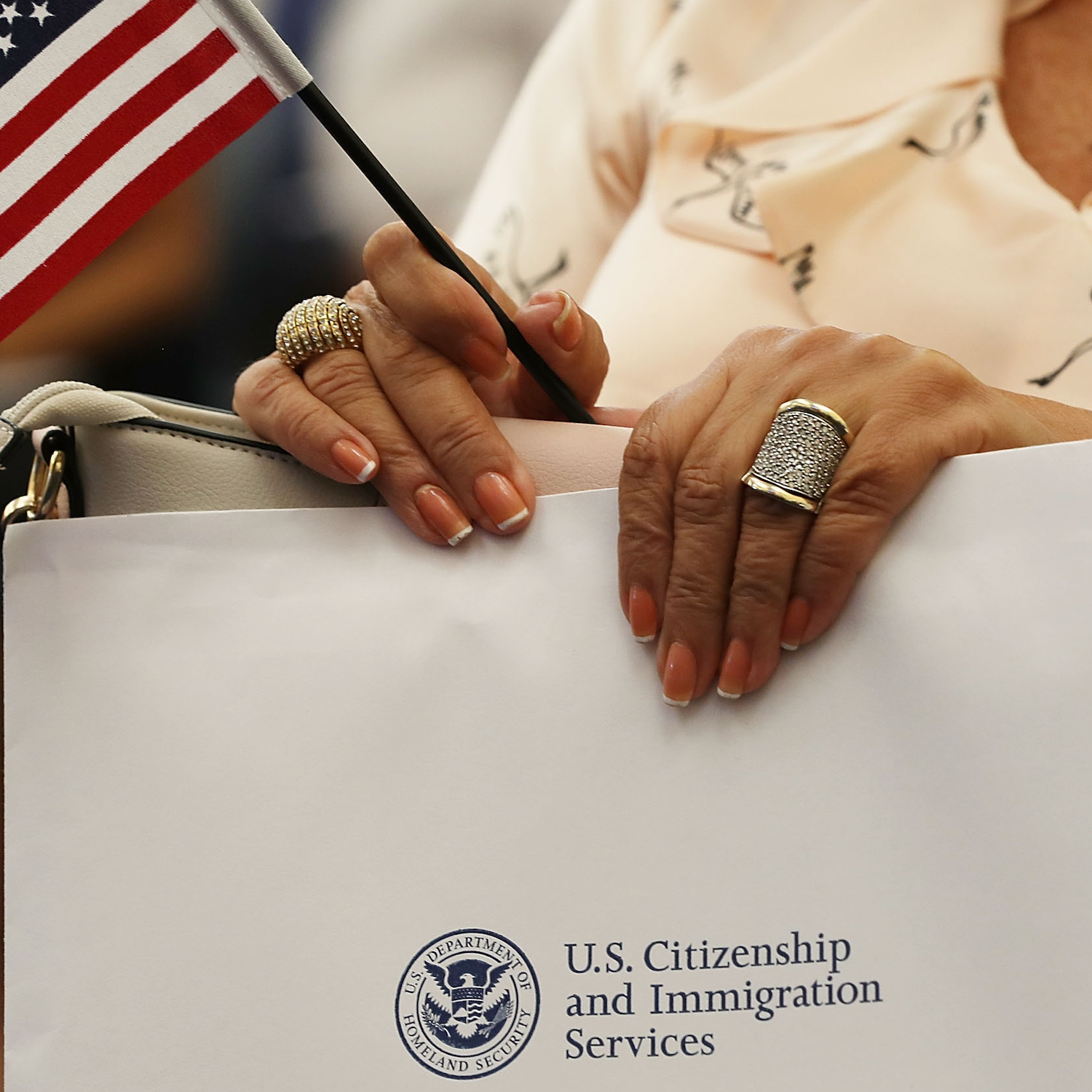
The Trump administration's latest change to immigration policy was released without much executive fanfare. But it could end up being one of the more dramatic moves to curb the number of people settling in the US if it's interpreted in an expansive way. Last week, the government announced it would force people applying for a green card to do so in their home country and not within the US Reversing decades of precedent. Yesterday, the Washington Post reported that officials have wasted no time on the new rules and have already begun asking certain applicants why they're still in the United States.
- [01:23]
Rebecca Santana
It's raised a lot of concern because if potentially all of these people had to go back to apply in their home country, you're talking just a sheer number of people, hundreds of thousands of people do this process every year.
- [01:35]
Gideon Resnick
Rebecca Santana covers immigration for the Associated Press. In 2024, more than half of the 1.4 million people who obtained green cards did so from within the U.S. but under these new rules, Santana notes that many of those could now be left with no viable route to permanent residency.
- [01:53]
Rebecca Santana
There are a lot of countries that the Trump administration where they have restricted the ability of people to apply for immigration visas in their country of origin. So some of the people we've talked to have said, hey, this is a little bit of a catch 22. You're telling people they might have to go abroad or they're going to have to go abroad back home in order to apply for this visa. But once they get there, they don't have that option.
- [02:16]
Gideon Resnick
The policy would target those with temporary status visas, some of which leave the door open for more long term pathways. Think students, specialized workers, or someone who married an American. If the new rule is applied strictly, it could lead to big complications. Spouses, for example, could be forced apart for months or even years. But that is still a bit of an unknown. The announcement lacked much detail and leaves a lot of discretion to individual immigration officials. The government says officials can waive the restrictions, that is, if the applicant can demonstrate they're an exceptional case, that there would be an economic benefit or that leaving would create a burden on families. Santana said that the announcement could ultimately deter a lot of people from applying altogether, and she told us that this marks a shift in emphasis from the White House as it looks to deliver on its promise to limit migration into the country.
- [03:07]
Rebecca Santana
The administration, especially during that first year, there was a lot of crackdown on illegal immigration, and people, I think, are very aware of ice, what they've been doing, what border control has been doing across the country, and how they've been trying to arrest and deport people in the country illegally. But what we've seen in recent months is a lot of efforts to address legal immigration and in a lot of ways make it more difficult for people who are either trying to come to the US or who are already here and would like to change their status so they can stay longer.
- [03:41]
Gideon Resnick
The administration says the change is designed to close what it describes as loopholes, arguing that applying from within the US Gives some people the time and space to remain in the country illegally even after their application is rejected. A DHS spokesperson told USA TODAY that the changes would not impact qualified applicants and skilled professionals who have followed the law.
- [04:03]
Rebecca Santana
Foreign.
- [04:09]
Gideon Resnick
Is Russia losing momentum in its war with Ukraine or preparing to ramp up its assaults? The picture has turned against Russian President Vladimir Putin in recent weeks. Russia has failed to meaningfully push forward its front lines, and its military is struggling to come up with a counter strategy to Ukraine's advanced drone warfare. Last weekend, Putin looked to demonstrate Russia's capabilities, piling pressure on Ukrainian President Volodymyr Zelenskyy with a bombardment on his doorstep. Russia struck Ukraine's capital, Kyiv, in one of the biggest overnight aerial assaults since the war began. Now it's warning foreign nationals to leave the city and threatened a fresh wave of attacks. But inside Russia, there is growing pressure that something has to change in this conflict soon.
- [04:57]
Guy Falkenbridge
The big picture for this year is that the Russian advance has really slowed.
- [05:02]
Gideon Resnick
That's Guy Falkenbridge, Reuters bureau chief in Moscow, one of the very few Western journalists still operating there.
- [05:08]
Guy Falkenbridge
They've taken about 700 square kilometers of land from Ukraine this year, so that's a real slowdown. That's not a great result for Russia.
- [05:15]
Gideon Resnick
The war is now in its fifth year. That means Russia has been fighting longer than they did in the Second World War, which Falkenbridge says caused Some people to ask questions.
- [05:24]
Guy Falkenbridge
I think that was a really important point that we got to earlier this year, that once you've sort of gone past that point, people started saying, well, hold on a second. How much have we actually achieved in this war?
- [05:37]
Gideon Resnick
Yesterday, the UK's intelligence services said they estimated that nearly 500,000 Russians had been killed in the war. That's around 10 times the number that Ukraine say they've lost. It highlights the sheer numerical advantage that Russia has. But Ukraine's recent use of drones, which can hit precision targets at lower cost, has prevented Russia from overwhelming them. It even caused Putin to scale back his annual military parade over fears of strikes. Falkenbridge says the drones are putting the conflict closer to more people's homes.
- [06:07]
Guy Falkenbridge
Moscow and St. Petersburg have been very well insulated from the war, but the sheer number of drones that are now being launched in this war means that some are getting through, certainly to the suburbs of Moscow. There was one wasn't too far away from my house the other day. And so I think there is a greater realization that there is a war on in Moscow.
- [06:28]
Gideon Resnick
Recent polling suggests that more than 60% of the Russian population now favors peace talks, and only 27% want to carry on fighting, a striking figure in a country that suppresses internal opposition to the war. Meanwhile, the US has diverted its priorities to the Middle East. Ukraine has so far resisted pressure from U.S. negotiators to give up swaths of land as the price of peace, and they've instead continued to fight as those peace talks stall. Their resistance may have surprised some, assuming Ukraine was heading for defeat. But Falkenbridge told us that it's far from certain it will bring Putin back to the negotiating table.
- [07:03]
Guy Falkenbridge
There's obviously a feeling within the system that we maybe haven't fought this war the right way. Now, I think some people take the wrong conclusion of that. They say, oh, well, that means that the war's going to end tomorrow. I'm not convinced that's the right interpretation. There's another interpretation, of course, is that we haven't been fighting this war aggressively enough, so we need to become more aggressive. Now it's war room peace. At the end of the day, you either stop the war or you fight it more aggressively. But I think the feeling maybe is that it can't just go on as it has been for the last four years.
- [07:42]
Gideon Resnick
AI is booming with tech companies spending billions on its future. But the only thing that seems to be growing even faster is American skepticism and in some cases, anger over how it could impact their lives. College graduates have been booing commencement speakers who talk about AI.
- [07:58]
Rebecca Santana
The rise of artificial intelligence is the next industrial revolution.
- [08:10]
Gideon Resnick
In the first major theological statement of his papacy, issued on Monday, Pope Leo called on world governments and tech leaders to slow down. Artificial intelligence needs to be disarmed. The word is strong, I know, but deliberately chosen because this moment needs words capable of attracting attention, awakening consciences, and indicating paths forward for humanity. And across the country, from Maine to Arizona, dozens of communities have been mobilizing to stop plans to build data centers that would power AI.
- [08:45]
Guy Falkenbridge
People over profit.
- [08:47]
Rebecca Santana
People over profit.
- [08:48]
Gideon Resnick
People, people overprofit. A record number of these proposed data centers, at least 20 have been blocked or delayed in the first three months of 2026. People are concerned about the noise, the environmental impact, and possible spikes to their utility bills. Some polling experts and historians told Journal reporter Amrith Ramkumar that they've never seen public opinion sour so quickly.
- [09:11]
Amrith Ramkumar
This is a trend to watch going into November because the recent polls show that the backlash is really growing and people's feelings are getting much stronger.
- [09:19]
Gideon Resnick
27% of people in a Quinnipiac poll released in late March said they can hardly ever trust AI. A Gallup survey released in April found only 18% of young people between the ages of 14 and 29 say that they feel hopeful about the future of AI. And in a survey of over 1500Americans released by YouGov and the Economist this month, over 70% of people said AI is advancing too quickly.
- [09:44]
Amrith Ramkumar
They feel like it's being shoved down their throats in some instances. They're worried about job losses. They're worried about kids being being safe online and talking to chatbots. Something like 360,000Americans are now in Facebook groups opposing local data centers. And at the end of last year, that number was roughly 90,000. So that's quadrupling in just a few months. And these polls have really painted a picture of a lot of those fears coalescing to create this powerful political movement,
- [10:10]
Gideon Resnick
a movement that appears to be bipartisan.
- [10:12]
Amrith Ramkumar
A lot of Republican communities are pushing back against data centers, and they might do so for different reasons than a lot of Democrats who don't like the environmental impact, for example. But the point is they are pushing back, and they are very skeptical of the technology.
- [10:26]
Gideon Resnick
But this doesn't mean that people aren't using AI. In fact, in that Quinnipiac poll I mentioned earlier, more Americans said they've tried AI over the last year compared to this time last year. So we're seeing a contradiction between adoption and trust. Still, Ramkumar says tech companies are in a kind of crisis mode right now, racing to turn the tide of public opinion ahead of elections in November.
- [10:48]
Amrith Ramkumar
In recent weeks, they've promised to pay more for their power on data centers. We've seen companies like OpenAI Endors Kids safety legislation, and they're putting in hundreds of millions of dollars to this year's elections across the board to support and oppose various candidates. So this is now a big problem for the tech industry and is expected to play a big role in the midterm elections.
- [11:14]
Gideon Resnick
And to a few other stories we're following, the Justice Department has launched an investigation into E. Jean Carroll, the woman who accused President Trump of sexual assault. That's according to the New York Times and cnn. Quoting sources close to the investigation, CNN reports that the DOJ is exploring whether the former magazine writer committed perjury in testimony tied to her two civil lawsuits against Trump. Carol, now 82, alleged that Trump defamed her and that he sexually abused her in a New York department store in the mid-90s. She won a $5 million civil judgment. The New York Times reports that Acting Attorney General Todd Blanche has recused himself from the probe because of his representation of Trump in that case with Carroll. The United States plans to send Americans who have been exposed to Ebola to a quarantine facility in Kenya, according to multiple outlets. Health officials said the plan marks a departure from what has typically happened in the past, where Americans are flown back to the US to quarantine. An administration official told NBC News that this facility was intended to get Americans access to care faster and to avoid longer flights back to the states. Infectious disease experts have said that quick medical care is critical, especially as this particular strain does not have an approved vaccine. Finally, if you missed out on a job, would you prefer a message or a phone call? If you'd rather that personal touch, you might be upset with how the US national soccer coach Mauricio Pochettino broke the news to players who didn't make the World cup with an email. A spirited debate has now broken out among fans, former players and Pochettino himself over his choice. Poch, as he's affectionately called, said that he'd been let go from lots of clubs in the past and he personally never wanted a phone call.
- [12:56]
Guy Falkenbridge
I understand the player. They didn't make the roster. They don't want to hear me to say, oh, apologize. Oh what I care? Do you know why I care? Because during two weeks I didn't sleep.
- [13:09]
Gideon Resnick
Those selected will now gather for their final preparations before kicking off in two weeks time. You can find all these stories and more in the Apple News app. And if you're already listening to the News app right now, we've got a narrated article coming up next. The New Yorker dives deep into the world of Christian filmmaking and how projects are finding success by bucking Hollywood's fragile sink or swim economic model. If you're listening in the podcast app, you can follow Apple News Narrated to find that story. And I'll be back with the news tomorrow.