Loading summary
Transcript143 lines
- [00:05]
Host
Good morning.
- [00:06]
Shemitah Basu
It's Wednesday, August 13th. I'm Shemitah Basu. This is Apple News Today.
- [00:11]
Host
On today's show, with Israel's targeted killing.
- [00:14]
Shemitah Basu
Of journalists, our lens into Gaza is.
- [00:17]
Host
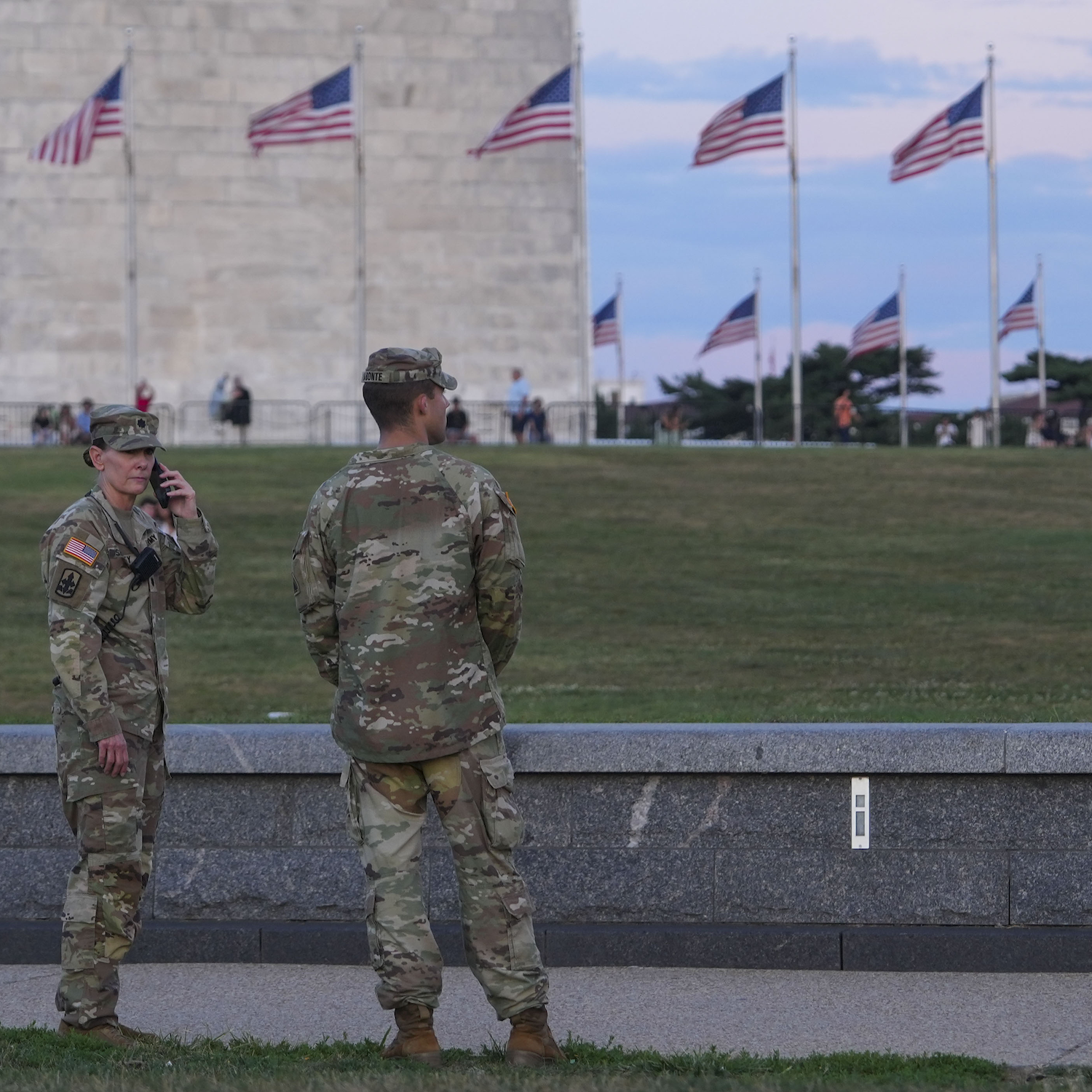
Shrinking Trump's unprecedented deal with the world's most valuable company. And there's no escaping ads at the movies. But first, members of the D.C. national Guard started to deploy last night after.
- [00:39]
Shemitah Basu
President Trump's decision to seize control of.
- [00:41]
Host
DC's police and mobilize the military to.
- [00:44]
Shemitah Basu
Address crime in a city where violent crime is at a 30 year low.
- [00:49]
Host
They've been told they'll be stationed in.
- [00:51]
Shemitah Basu
The Capitol until September 25, but what role the Guard will actually play remains unclear. To D.C. s Mayor Muriel Bowser says her expectation is that they will patrol federal properties, including parks, monuments and federal buildings.
- [01:05]
Host
Pentagon officials say the Guard will not.
- [01:07]
Shemitah Basu
Participate in law enforcement.
- [01:09]
Host
They'll only support other federal agents. But officials did leave open the possibility that these armed troops would be allowed.
- [01:15]
Shemitah Basu
To temporarily detain people.
- [01:18]
Host
Throughout his second term, the president has.
- [01:21]
Shemitah Basu
Pushed the boundaries of how the American military can be deployed on US soil.
- [01:26]
Vera Bergengrun
This has been an ongoing pattern for President Trump, even from his first administration.
- [01:31]
Shemitah Basu
Vera Bergengrun is a national security reporter at the Wall Street Journal.
- [01:35]
Vera Bergengrun
He often sees the military as something he wants to call in or to show that he's serious about something, especially when it comes to law and order or fighting crime.
- [01:45]
Host
Very few presidents have been so willing.
- [01:47]
Shemitah Basu
To deploy the military for domestic purposes.
- [01:50]
Vera Bergengrun
It's a step that most presidents are really hesitant to take unless there's a major crisis or disruption somewhere. And this has happened the past couple of decades. But Trump has done this at least three or four times. Only in the last six months.
- [02:03]
Host
He sent the National Guard to the.
- [02:05]
Shemitah Basu
US Mexico border, where they've been involved in detaining migrants.
- [02:09]
Host
And he sent the Guard and hundreds.
- [02:10]
Shemitah Basu
Of Marines to Los Angeles earlier this summer in response to demonstrations over ice, immigration raids and arrests.
- [02:17]
Host
Hundreds of troops are still in the city today, and this week, a federal.
- [02:21]
Shemitah Basu
Judge is hearing arguments about whether the administration violated federal law by mobilizing them to la. California's Democratic governor, Gavin Newsom, is challenging Trump's order and asking the judge to return control of California's Guard to him.
- [02:37]
Host
The administration is also planning to expand.
- [02:39]
Shemitah Basu
The military's role in immigration enforcement by using more military bases to house people the administration suspects of being in the country illegally.
- [02:48]
Host
It's already used a number of bases.
- [02:50]
Shemitah Basu
For this, including Guantanamo Bay in Cuba, which was challenged in the courts. Bergen Gruen says one reason Trump has been using the military more to support his political agenda in this term is.
- [03:03]
Host
Because he has fewer people in his.
- [03:04]
Shemitah Basu
Inner circle telling him not to.
- [03:07]
Vera Bergengrun
In his first administration, his then chief of staff, John Kelly. He later told others that one of his biggest challenges was trying to persuade Trump not to use the military, and that Trump didn't seem to understand that it really was a last resort and he couldn't just rely on the military to back him up when he wanted to show that he was serious about something. And in this case, you know, there are fewer John Kellys around.
- [03:30]
Host
But former and current members of the.
- [03:32]
Shemitah Basu
Military told her the presence of US Troops deployed onto American streets more often sets a concerning precedent.
- [03:39]
Vera Bergengrun
The fact that they would be desensitized to seeing them on their streets or start kind of considering law enforcement in a way that isn't part of the U.S. constitution or the way that the United States runs is something that doesn't sit well with a lot of current and former military.
- [03:55]
Host
D.C. is unique in that Trump has.
- [03:58]
Shemitah Basu
Direct control of its National Guard in.
- [04:00]
Host
A way that he doesn't have with.
- [04:01]
Shemitah Basu
Others around the country.
- [04:02]
Host
A former professor at the U.S. army.
- [04:05]
Shemitah Basu
War College told Bergengrun, at best, his decision to deploy the guard to D.C. will give him a way to take credit for the already historically low crime rates in the city. But at worst, she says, this could be a test run for more legally dubious use of military force around the country.
- [04:30]
Host
Now to an unusual deal between the Trump administration and the world's most valuable.
- [04:34]
Shemitah Basu
Company, Nvidia, which is raising questions over its legality and the repercussions for national security.
- [04:41]
Host
Nvidia produces chips that power many of.
- [04:44]
Shemitah Basu
Technology'S fastest growing products, especially in the realm of AI.
- [04:48]
Host
But the company had been facing challenges because of restrictions put in place by the Biden administration on selling its chips to China, which the government had defended.
- [04:57]
Shemitah Basu
On national security grounds.
- [04:59]
Host
In April, Trump added certain Nvidia chips to those restrictions. But now he's reversed course and told reporters that Nvidia's CEO Jensen Huang, was.
- [05:08]
Shemitah Basu
Free to sell into the Chinese market, but for a price.
- [05:13]
Jensen Huang
So I said, listen, I want 20%. So I just wanted. So when I say I want 20, I want for the country, I only care about the country. I don't care about myself. And he said, would you make it 15? So we negotiate a little deal, it.
- [05:28]
Host
Means that the government will get a cut for their sales. Now, that sounds like an export tax.
- [05:33]
Shemitah Basu
Which is banned by the Constitution.
- [05:35]
Host
But this deal is being described as.
- [05:37]
Shemitah Basu
Voluntary, which would be a way around.
- [05:39]
Host
The ban, white House Press Secretary Caroline Levitt told reporters on Tuesday. The legality of it is still being ironed out. Lisa Etochico, tech editor at CNN Business.
- [05:51]
Shemitah Basu
Told us about the deal.
- [05:53]
Lisa Etochico
There really aren't many, or if any at all examples of the government kind of taking a cut of exports in this way. An arrangement like this is definitely unusual, but it could also be perhaps an acknowledgement that, you know, China is going to move forward in AI. So this is a way for the US to actually kind of benefit from China's AI expansion and maybe have them kind of rely on our technology for part of that.
- [06:19]
Host
But Atachico said that for some government officials, national security concerns around selling chips to China haven't gone away, even if.
- [06:26]
Shemitah Basu
The government has secured additional revenue. Republican Congressman John Moliner, who chairs the House Select Committee for China, warned against.
- [06:35]
Host
Setting a precedent that incentivizes the government.
- [06:37]
Shemitah Basu
To grant licenses to sell China technology that will enhance its AI capabilities.
- [06:44]
Host
The chip in question is called the H20, thought to have helped in the development of the popular Chinese AI system DeepSeek. Etachiko told us it's not one of.
- [06:53]
Shemitah Basu
Nvidia's most powerful chips, but it could be a key source of revenue for the company going forward.
- [06:59]
Host
And she said this deal could become.
- [07:01]
Shemitah Basu
Important to the wider trade talk discussions between China and the U.S. it certainly.
- [07:06]
Lisa Etochico
Gives the Trump administration a card to play. It kind of opens up the, the flow of these mid tier chips again, not the highest end chips to China, while giving the Trump administration, you know, a bargaining chip in its ongoing trade talks.
- [07:19]
Host
Chips have become an increasingly important part.
- [07:22]
Shemitah Basu
Of Trump's engagement strategy with tech companies.
- [07:25]
Host
He has threatened 100% levies on semiconductor.
- [07:28]
Shemitah Basu
Chips, but carved out exemptions for companies like Apple, among others, who committed to domestic investment.
- [07:35]
Host
Trump has also left the door open.
- [07:37]
Shemitah Basu
To further deals for even more powerful technology.
- [07:40]
Host
He said he was in talks with.
- [07:41]
Shemitah Basu
Nvidia's CEO over their most advanced chip.
- [07:44]
Host
The Blackwell, and that he was open.
- [07:46]
Shemitah Basu
To a deal there too for 30 to 50%.
- [07:59]
Host
Funeral processions for the six journalists killed.
- [08:02]
Shemitah Basu
In Gaza by a targeted Israeli airstrike were held this week. The killings drew swift condemnation from the un, the EU, and several press freedom groups. Intentionally targeting and killing a journalist or any civilian is considered a war crime under international humanitarian law.
- [08:19]
Host
The most well known of those killed and the person Israel said they were.
- [08:23]
Shemitah Basu
Targeting was Anas al Sharif, a correspondent for Al Jazeera who CNN reports had become a household name and vital news source for those in the Arabic speaking world. With millions of social media followers, he could often be seen reporting among rubble or speaking to Palestinians on the ground in Gaza. His final broadcast from a hospital in Gaza focused on the worsening hunger crisis, showing how starving children are suffering from Israeli restrictions on aid.
- [08:58]
Host
Israeli forces had been targeting Al Sharif.
- [09:00]
Shemitah Basu
For months and accused him of working with Hamas.
- [09:03]
Host
The idf, however, has not shared substantial.
- [09:06]
Shemitah Basu
Evidence to support their accusation that he was involved in military activities, and both.
- [09:11]
Host
Al Jazeera and the Committee to Protect.
- [09:13]
Shemitah Basu
Journal have strongly refuted the allegations.
- [09:16]
Host
Here's what the chief executive of CPJ.
- [09:18]
Shemitah Basu
Told NPR after Israel first made these accusations.
- [09:22]
CPJ Executive
This is part of a pattern that we've seen from Israel in which Israel alleges that journalists are terrorists and then fails to produce any real, credible evidence that they are such.
- [09:37]
Host
Israel has not provided any explanation for.
- [09:40]
Shemitah Basu
Why it targeted the other journalists in the strike.
- [09:42]
Host
Mohammed Kreika and Ibrahim Zaher and Mohammad.
- [09:46]
Shemitah Basu
Nufal all worked for Al Jazeera, plus two freelance reporters named Muhammad Aliwa and Mohammed Al Khaldi.
- [09:54]
Host
Throughout this war, the world has relied.
- [09:57]
Shemitah Basu
On Palestinian journalists like Al Sharif to provide a direct lens into what's happening in Gaza.
- [10:03]
Host
Israel has not allowed international journalists to.
- [10:06]
Shemitah Basu
Enter and work freely from Gaza, only offering supervised tours in rare cases, and.
- [10:12]
Host
The number of working journalists left has rapidly shrunk. According to Reporters Without Borders, Israel has.
- [10:18]
Shemitah Basu
Killed almost 200 journalists in Gaza since October of 2023. Roughly a quarter of them were directly targeted while working, and Gaza is considered the deadliest place in the world for journalists today. Irene Khan, the UN Special Rapporteur on freedom of opinion and expression, told Democracy now how this threatens how the world understands the war.
- [10:42]
Irene Khan
It is not killing in the context of war. It is a deliberate strategy to stop independent voices reporting, so it's as much a threat to independent journalism as it is to the journalists themselves, as well as a blatant attempt by the Israelis to stop the world witnessing what they are doing.
- [11:03]
Host
Before he was killed, Al Sharif wrote.
- [11:05]
Shemitah Basu
A social media post for Al Jazeera to share in the event of his death.
- [11:09]
Host
In it, he says despite the pain.
- [11:11]
Shemitah Basu
And suffering he and other Palestinians have experienced, he never hesitated for a single day to do his work.
- [11:28]
Host
Before we let you go, a few.
- [11:29]
Shemitah Basu
Other stories we're following.
- [11:31]
Host
Ukrainian President Volodymyr Zelensky has ruled out.
- [11:35]
Shemitah Basu
Giving up the eastern part of his.
- [11:36]
Host
Country, set to be the key discussion.
- [11:38]
Shemitah Basu
Point of upcoming talks between Donald Trump and Vladimir Putin.
- [11:42]
Host
Trump had already said some swapping of.
- [11:44]
Shemitah Basu
Territories would be needed for any deal.
- [11:46]
Host
And that the meeting would be a.
- [11:48]
Shemitah Basu
Chance to feel out his Russian counterpart.
- [11:51]
Host
Meanwhile, Reuters reports that in advance of.
- [11:53]
Shemitah Basu
The meeting, Russia has carried out its most extensive incursion so far this year as it looks to increase pressure on Ukraine to give up land.
- [12:03]
Host
There were some big changes in the.
- [12:05]
Shemitah Basu
State Department's long awaited report on international human rights.
- [12:10]
Host
Detailed criticisms against some of Trump's allies.
- [12:12]
Shemitah Basu
Like Israel and El Salvador Salvador have been removed while countries at odds with the President like Brazil and South Africa have come under attack.
- [12:21]
Host
Sections on gender based and LGBTQ violence.
- [12:24]
Shemitah Basu
Have been limited or removed completely.
- [12:27]
Host
And there were new criticisms for traditional.
- [12:29]
Shemitah Basu
Allies like the UK and France over what it described as curbing freedom of expression.
- [12:35]
Host
The report was quietly delivered to Congress.
- [12:37]
Shemitah Basu
Almost a half year late while lawmakers are on recession.
- [12:43]
Host
And finally, you thought you were safe from commercials at the movies. But the Washington Post reports that AMC.
- [12:48]
Shemitah Basu
Theaters has bowed to financial pressure.
- [12:51]
Host
In July, the theater introduced commercials before.
- [12:53]
Shemitah Basu
The movie, not during for the very first time.
- [12:56]
Host
And it appears to be a bet that is paying off. Moviegoers are now being told in the app that they should expect the movie.
- [13:02]
Shemitah Basu
To begin 25 to 30 minutes after the listed start time. So now you you know exactly how late you can plan to show up.
- [13:11]
Host
You can find all these stories and.
- [13:13]
Shemitah Basu
More in the Apple News app.
- [13:15]
Host
And if you're already listening in the.
- [13:16]
Shemitah Basu
News app right now, we've got a narrated article coming up next. Bloomberg businessweek goes inside a crime rink that's targeting star athletes.
- [13:25]
Host
If you're listening in the podcast app.
- [13:27]
Shemitah Basu
Follow Apple News Narrated to find that story.
- [13:30]
Host
And I'll be back with the news tomorrow.
- [13:33]
Co-Host
It.