Loading summary
Transcript17 lines
- [00:05]
Shemitah Basu
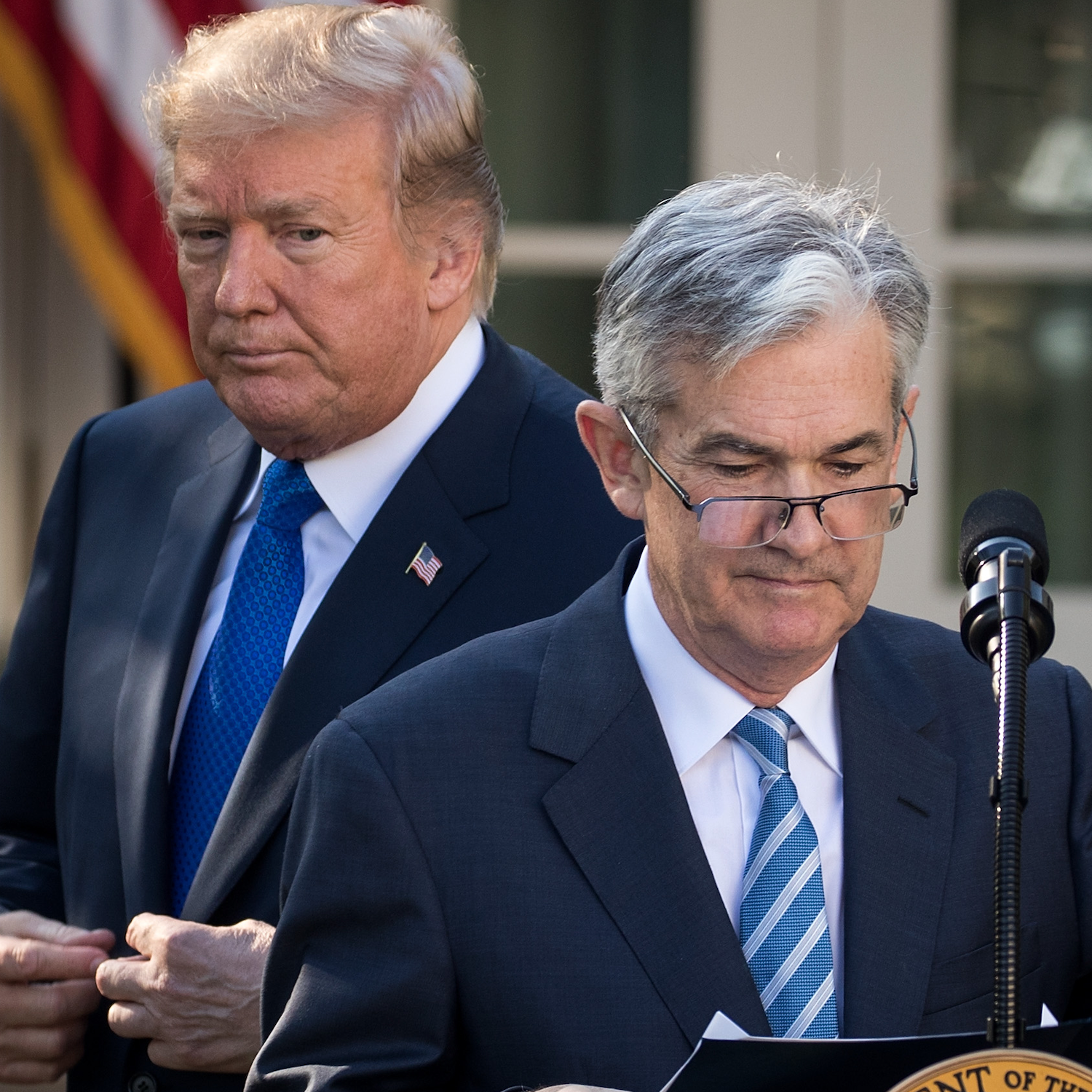
Good morning. It's Thursday, July 17th. I'm Shemitah Basu. This is Apple News today. On today's show, the Senate voted to approve big cuts to public media. What that could mean for small broadcasters, why it's taking so long to rebuild after the wildfires in la and Trump lashes out at his base over Epstein. But first, to Trump's latest attempt to fire Federal Reserve Chair Jerome Powell and what his ongoing efforts to do so could mean for the future of the Fed. The president spent the last 48 hours flip flopping on threats to remove Powell from his position, which triggered a brief market sell off. Trump first told GOP lawmakers Tuesday that he was considering it and asked for their opinions. Then he reversed course Wednesday, saying it was highly unlikely. Now, it's worth noting presidents have the power to appoint chairs to the Federal Reserve. In fact, it was Trump who originally appointed Powell back in his first term. But legal experts say presidents do not have the power to fire Fed chairs unless they have reasonable cause, which the Supreme Court recently underscored in a ruling this may still. For years now, dating back to his first term, Trump has made repeated threats to fire or remove Powell over interest rate decisions. All year, the Fed has held interest rates steady, citing Trump's tariff policy as a risk for inflation, which has frustrated the president, who wants to see interest rates fall. But interest rate decisions do not count as reasonable cause to fire a Fed chair. The Fed is, after all, designed to be an independent agency. So Trump, it seems, has started exploring an alternative route, trying to make the case that Powell committed fraud in renovations of the Federal Reserve's headquarters in D.C.
- [01:57]
Neil Irwin
It'S a very expensive project, $2.5 billion over budget.
- [02:01]
Shemitah Basu
Neil Irwin, chief economic correspondent with Axios, told us about it.
- [02:05]
Neil Irwin
This has kind of come out of nowhere. I mean, the fact that their cost overrun has been known for years. It really does look like this is an excuse to go after Powell for something other than just, oh, you got to cut interest rates tomorrow to try and establish some predicate, some legal way that they can fire Powell before his term's up, which is only 10 months from now.
- [02:22]
Shemitah Basu
The Fed disputes any wrongdoing and says the cost of the renovation project increased due to changes with the original design, more exp. Expensive labor and materials, and unforeseen expenses like needing to mitigate asbestos. And legal experts told Barron's they don't think a higher than expected price tag for the project qualifies as grounds for removing Powell under the Federal Reserve Act. The Fed has control over its buildings. Powell has asked the Fed's inspector general to review the renovation project. Ultimately, Irwin told us, this all really seems to be about the administration testing out ways to assert more authority over the Fed, which is supposed to operate entirely free from political pressure.
- [03:04]
Neil Irwin
That's clearly what Trump wants. He wants the Fed chair to snap to when he says it's time to cut rates. And if we enter that world, all bets are off on what the future looks like for all kinds of US Financial assets, borrowing costs, and the dollar. Think about it this way. If you're going to lend the U.S. government money, if you're going to buy a U.S. treasury bond, you're betting on inflation staying low, you're betting on kind of stability, and that this is a very safe asset. And part of the way that reputation for US Treasuries as a super safe asset was established is by having this independent central bank.
- [03:44]
Shemitah Basu
Now to Congress, where public broadcasters like PBS and NPR were dealt a huge blow after the Senate passed a bill that will cut over $1.1 billion in previously allocated federal funds for public media. It passed after an extended voting session that started on Wednesday afternoon and stretched into the early hours of this morning. The package now goes back to the House for a final vote, where lawmakers are expected to approve it and send it to President Trump's desk. Now what does this mean for popular public TV programs like Sesame street or Daniel Tiger's neighborhood? They will probably be okay for PBS, federal funds make up about 15% of their budget, and at NPR, about 1% of its annual budget comes from the federal government. But local public broadcasting stations, particularly those in rural communities, are especially vulnerable. That's because about 70% of the money Congress allocates for public media goes directly to local radio and TV stations. PBS President Paula Kerger told Scripps News how cuts would threaten their network. For a significant number of stations, it represents as much as half of their funding. And so this is why we are so focused on trying to make the case that if these cuts go through, it's about eliminating the possibility of funding and sustainability, frankly, for many of our stations. PBS has more than 330 member stations. In many communities. They are the only media organization and the only ones that are focused on their communities and ensuring that people have all the resources that they need in emergencies. Public radio is often the only source of information for things like weather updates, road closures, and where to find support in the aftermath of a disaster. NPR CEO Catherine Marr recently spoke about this with cnn. Broadband service is not universal and heck, even cell phone service is not universal. There's a real understanding of the need there, as well as for emergency alerting, in which public media plays an extraordinarily important role. Across its network of member stations, NPR estimates up to 18% of them would be forced to close, meaning about 30% of listeners nationwide would lose access to NPR programming. That's according to an internal report from 2011 obtained by the New York Times. And the future of these local stations has a direct impact on the national networks. The way the public media system works, federal funding that goes to local stations trickles back up to the national networks through things like dues and fees from member stations. Local stations pay for the rights to air shows distributed by PBS and npr, and that helps support national programming. It's how popular shows like NPR's Morning Edition and PBS NewsHour are funded. For example. As Congress has been debating the rescission bill, CNN reports national networks have been bracing for this domino effect. Some public media executives are reportedly already planning layoffs and other cost cutting moves. If the rescission is approved, states would start to feel the impacts as soon as this fall. Let's turn now to Los Angeles, where six months after some of the most destructive and costly fires in state history, the county is struggling to rebuild more than 16,000 homes and other buildings that were lost.
- [07:10]
Umair Irfan
So there's an intense need to rebuild and trying to get people back home, but the process has been pretty slow.
- [07:17]
Shemitah Basu
That's Umair Irfan, a correspondent at Vox, who reported on the various stumbling blocks facing people who have lost homes in California.
- [07:25]
Umair Irfan
A lot of residents are now complaining that basically as they're trying to rebuild, they've had delays as far as getting permits approvals, but also other issues relating to how expensive it is and other kinds of administrative hurdles as well.
- [07:40]
Shemitah Basu
California has for decades required state and local governments to look for any potential environmental harms that could come from a new construction project. One particularly impactful law has been the California Environmental Quality act, which was signed into law in 1970 by then Governor Ronald Reagan, but has since become a bit of a flashpoint for people who have been eager to address the housing crisis in the state.
- [08:04]
Umair Irfan
For the most part, it was a very well intentioned law, but over the years a lot of people have said that it's being used and kind of weaponized to prevent all kinds of development, that basically any new kinds of housing.
- [08:14]
Shemitah Basu
Governor Gavin Newsom recently signed an executive order suspending the requirements for LA county in an effort to expedite rebuilding. He also signed other legislation attempting to lessen the requirements statewide. But even with these relaxed rules, the LA Times reported that less than a quarter of people who had applied for rebuilding permits as of early this month had received them. There are other insurance related challenges too.
- [08:38]
Umair Irfan
A lot of folks are finding that they aren't getting the settlement claims that they were hoping in the same size, and so that's led to a little bit of litigation as well. And then on top of that, the insurance industry in California has been struggling and so you can't get a mortgage, for instance, unless you have homeowners insurance.
- [08:53]
Shemitah Basu
If that's not enough, some homeowners might find that material and labor costs are much higher now than they were when their home was initially built. Irfan said that all of this is specifically concerning for areas like Altadena and Pasadena, where many black homeowners accrued generational wealth through their properties.
- [09:12]
Umair Irfan
These communities that were once held together for a very long time, that were very diverse, are slowly going to start changing in the wake of these fires and they may not go back to exactly the way they were and with so much cost that goes into rebuilding. It just means that very likely we'll see that skewed towards more wealthy people and less of the working class communities and the minority communities that were initially there to begin with.
- [09:44]
Shemitah Basu
Before we let you go, a few other stories we're following. President Trump might be ready to move on from the Jeffrey Epstein case, but many of his supporters are not, including some in Washington. According to a CNN poll released Tuesday, half of Americans are dissatisfied with the amount of information the federal government has released on this case. And several Republican lawmakers, most notably House Speaker Mike Johnson, have called on Trump in recent days to be more transparent about the government's investigation, which the Justice Department closed earlier this month. Trump, in return, has been attacking his Republican critics in Congress, calling them stupid and foolish, and he's now trying to blame Democrats for the conspiracy theories still swirling around Epstein's case. That's despite the fact that for years Trump and some of his Republican allies promised voters the Epstein files would be released and fueled theories about what they contained. Meanwhile, Maureen Comey, daughter of James Comey, was fired on Wednesday without explanation. She was a prosecutor for the cases against Epstein and his associate Ghislaine Maxwell. And yesterday Trump named without evidence her father as someone who made up files related to Epstein's crimes to the Middle east, where Israel has bombed Syria, hitting the Defense Ministry in Damascus and areas near the presidential palace. Israel says it was defending the Druze community, an Arab minority with close historical ties to Israelis, against attacking government forces. The strikes were a major escalation against the new Syrian government, which Trump has recently embraced. Israel said it would intensify attacks if Syrian forces did not withdraw from Suwayda, a strategically important province near Israel. More than 250 people are reported to have been killed in the region in recent clashes between warring tribes. The Syrian Foreign Ministry accused Israel of treacherous aggression, but Secretary of State Marco Rubio posted last night that they had, quote, agreed on specific steps that will bring this troubling and horrifying situation to an end. And finally, eight babies have been born using the genetic material of three people in a groundbreaking IVF procedure designed to prevent the children from inheriting high risk and life threatening mitochondrial diseases. It was carried out in the UK for the first time 10 years after it was made legal. Most of the DNA comes from the two parents, but a tiny amount, about 0.1%, comes from a third person who contributes healthy mitochondria, part of the human cell. One of the new mothers said that after years of uncertainty, this treatment gave us hope and we are overwhelmed with gratitude. You can find all these stories and more in the Apple News app. And if you're already listening in the News app right now, we've got a narrated article coming up next from Texas Monthly, A senior editor shared his family's experience living through the devastating Texas floods when a couple torrent of flood water quite literally tore their home and family apart. If you're listening in the podcast app, follow Apple News Narrated to find that story and I'll be back with the news tomorrow.