Loading summary
Transcript31 lines
- [00:05]
Shemitah Basu
Good morning. It's Tuesday, April 29th. I'm Shemitah Basu. This is Apple News Today. On today's show, a pulse check on the state of the economy, an education case challenging the separation of church and state. And Canada's Liberal Party wins national elections.
- [00:29]
Nick Timiros
Foreign.
- [00:34]
Shemitah Basu
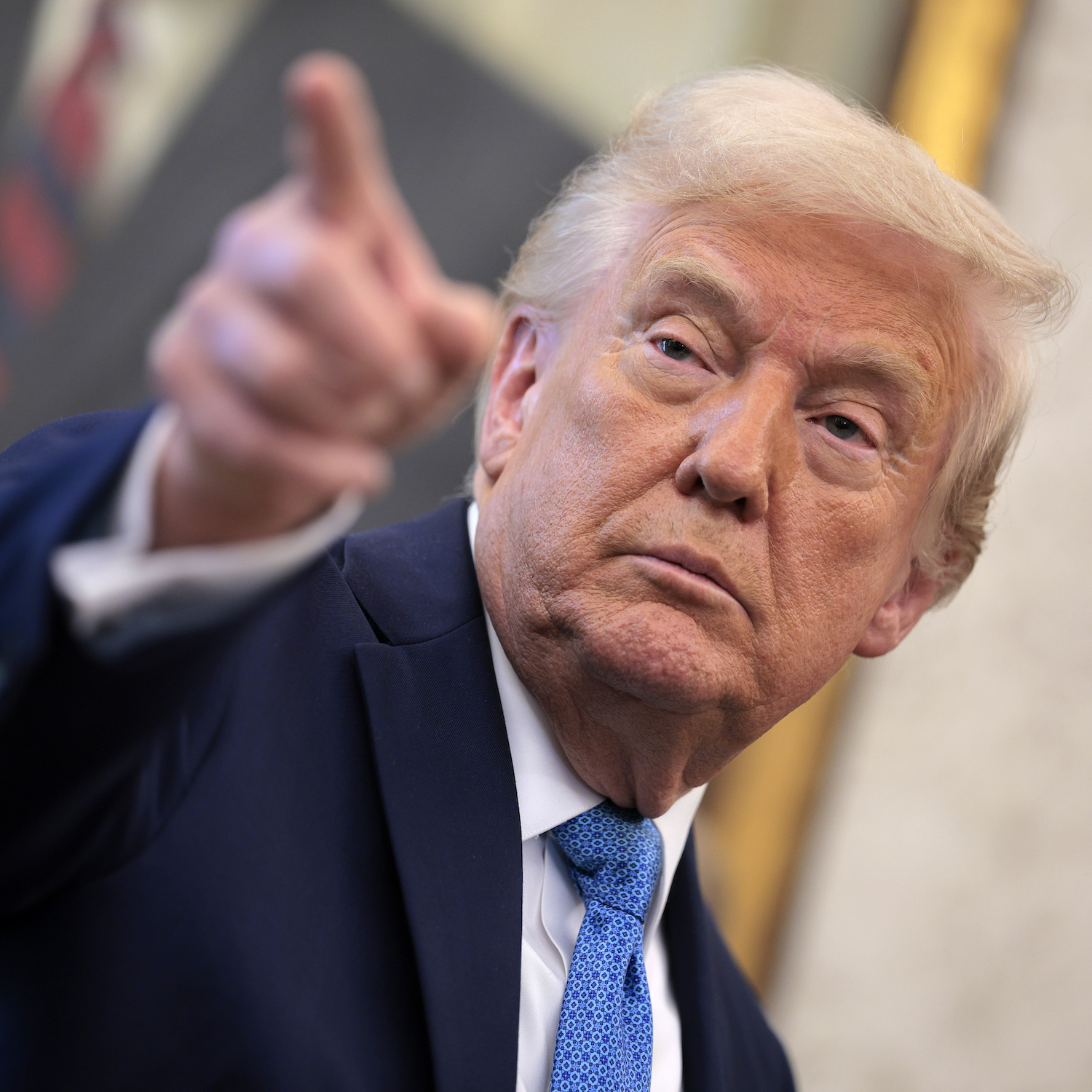
But first, today marks Donald Trump's 100th day in office. Since starting his second term, Trump has fundamentally changed the country and our economic prospects. He launched a global trade war that's led to mass uncertainty about whether the country is headed for a recession. He and Elon Musk have slashed spending and staffing across numerous government departments and and Trump has clashed with the judiciary, seemingly ignoring court orders in a few instances related to his immigration policy. He has fulfilled other promises, too, like ending DEI initiatives, reversing protections for transgender Americans, deporting and detaining migrants who are here illegally, and bringing border crossings to historic lows. So let's start today by hearing from voters in their own voices. Journalists from outlets like Reuters and CNN have been traveling the country in recent weeks to ask Americans where they stand on the Trump administration. Rod Ohrud is a farmer and Trump supporter in South Dakota. He told CNN that while he's concerned about the impact tariffs could have, he is urging Americans to be patient and give Trump a shot to see if he can get the kind of foreign trade deals he's promising.
- [01:46]
Nick Timiros
I just think we need to let the president do what he's doing and we need to just see what's going to happen here and give him a little latitud so that, you know, if it doesn't work, then we're going to have to try something different.
- [01:57]
Shemitah Basu
But some Trump supporters are much more on edge, like Stephen Egan in Florida and Jim Hartman in North Carolina, who spoke with Reuters and cnn.
- [02:06]
Nick Timiros
I did vote for Trump, and now I will deal with the aftermath of the tariffs. I compared 2024 first quarter to 2025 first quarter. I am down 70%.
- [02:20]
Shemitah Basu
I never thought I was going to lose this much money this fast. Beyond the economy, another big area of concern are the cuts being made by Elon Musk and his team. Here's Tamara Varga, a lifelong Republican and Trump supporter from Arizona, speaking to cnn. I'm worried about Medicaid and Medicare and Social Security. He did say that he wasn't going to cut them, that he was just going to find the waste. And I really hope that he sticks to that because we need to take care of our people with disabilities and our elderly. According to the nonpartisan Congressional Budget Office, the Only way Republicans will be able to turn the blueprint for Trump's spending bill into policy would be by making cuts to Medicaid. On the other end of the spectrum, Fox News recently spoke to a panel of Gen Z voters. Here's one happy with how Trump has gone after universities.
- [03:11]
Nick Timiros
This is not an unprecedented attack on higher education. It's simply President Trump saying that we're going to ensure that all students are treated with equality under the law. Why I campaigned and voted for Donald Trump.
- [03:22]
Shemitah Basu
Meanwhile, many Democrats told reporters that they're watching what's happening with horror. Here are the voices of two Democrats speaking to cnn. Melissa Cordero, an Air Force veteran who voted for Trump in 2016 but not in 2024. And Becky Hofer.
- [03:38]
Rachel Lazer
He's like crazed right now. I'm constantly going, can he do that?
- [03:43]
Shemitah Basu
I just feel like nobody cares right now until it affects them. And I don't understand how they don't see that. They're not dumb. These people aren't dumb. And they're not unkind people and selfish people and thoughtless people. So I don't understand why they're okay with it. While these voices of voters don't alone paint the full picture, what they do reveal is that there is waning enthusiasm among Americans for Trump's time in office so far, even among many Trump backers who say they are willing to wait and see. And three weekend polls are also fairly bleak for Trump. With his approval rating somewhere between 39 and 45%. Those are some of the lowest numbers for any president at the 100 day mark in more than 70 years. Sticking with Trump's 100 days in office, we're going to spend a few minutes now diving deeper into the state of the economy. As we just heard from so many voters, it's the top issue on their minds. But new analysis suggests this has been the worst opening 100 days for the stock market of any president since Richard Nixon. Both the Federal Reserve and the International Monetary Fund are now predicting slower US Growth as a result of Trump's tariffs. And several economists have said a recession in 2025 is likely.
- [05:06]
Nick Timiros
His first hundred days have been shock and awe for businesses and consumers.
- [05:13]
Shemitah Basu
That's Nick Timiros, chief economics correspondent at the Wall Street Journal.
- [05:18]
Nick Timiros
President Trump keeps things in turmoil and we do not know what he will do next. So even businesses that are supportive of bringing manufacturing jobs back to the US Are worried that they are going to be hurt by this. You're seeing it already. Traffic, shipping containers to the west coast ports projected to fall, notably in the coming weeks. And so there's a lot of disruption that just goes beyond the short term pain that White House officials had been talking about.
- [05:48]
Shemitah Basu
Trump's Treasury Secretary, Scott Besant, has argued the turmoil is a feature of their strategy, not a bug. But for businesses, the uncertainty doesn't feel strategic, with many saying it makes it impossible to plan how to hire, how to restructure supply chains and how to price goods and services. Timoros also reminds us that all of this was pretty avoidable.
- [06:09]
Nick Timiros
Donald Trump inherited an economy that looked pretty good. The unemployment rate at 4%, inflation coming down after years of being quite high. There were some vulnerabilities. The housing market didn't look great. You had some challenges in the economy. But overall, Donald Trump inherited what looked like a much better economy than anybody might have anticipated.
- [06:31]
Shemitah Basu
And though Donald Trump said multiple times on the campaign trail that he would enact sweeping tariffs, a lot of consumers say this isn't the outcome they were hoping for. Instead, they're yearning for the type of results they saw Trump get in his first term.
- [06:44]
Nick Timiros
You know, the economy of 2018 and 2019, when I talked to voters, that's what they reflected on. They wanted to go back to that economy that we saw in Donald Trump's first term. And so we'll see how long the public's patience is for getting through some of this short term disruption and back to that economy that we had before the pandemic.
- [07:06]
Shemitah Basu
The White House has defended its economic policies, saying any pain being from tariffs will only be short lived and will lead to longer term gains. They've also promised trade deals, peace deals and tax cuts in the next 100 days with white House press secretary Caroline Levitt saying, quote, more American greatness is on the way.
- [07:29]
Nick Timiros
Foreign.
- [07:36]
Shemitah Basu
Let'S turn now to the Supreme Court, which will hear a case tomorrow that could have huge implications for not just education, but for the separation of church and state.
- [07:45]
Maureen Grappe
They're going to be deciding whether Oklahoma can create the nation's first religious charter school.
- [07:51]
Shemitah Basu
That's USA Today Supreme Court reporter Maureen Grappe.
- [07:55]
Maureen Grappe
We already have some form of public support for religious schools in the form of school vouchers. A number of years ago, the Supreme Court allowed vouchers to be used for religious schools. But this is much broader than that because vouchers just cover a portion of tuition and charter schools are pretty much all of the funding comes from public sources. And that would be a major change in how we think about the separation of church and state.
- [08:22]
Shemitah Basu
The school in question is based in Oklahoma. It teaches all of its classes online and has a mission to fully embrace the Catholic Church's teachings and fully incorporate them into every aspect of the school, from everything from reading class to math. A few years ago, it was recognized by Oklahoma's state charter school board, meaning taxpayers pay for the school to operate and students attend for free. But Oklahoma's attorney general, who is a Republican, filed a lawsuit arguing that allowing the school to operate as a charter school and receive public funds would violate state and federal law. The state Supreme Court sided with the attorney general. Other conservatives in the state urged the U.S. supreme Court to take up the case, including the governor and the superintendent, who supports teaching the Bible in public schools. They cite recent Supreme Court cases that have expanded religious institutions access to public money. Here's how Kate Anderson, one of the lawyers for the statewide charter school board, put it to npr.
- [09:23]
Rachel Lazer
The Supreme Court has every single time said that these monies can go to religious entities when they're taking part in a program that should be open to them, but for them being religious. So they need to be treated fairly, the same as any other organization, and they cannot be excluded simply because of their religious character, which is exactly what happened here.
- [09:43]
Shemitah Basu
But opponents say it would open the door to taxpayers funding religious schools, violating the core American value of separation of church and state. Here's Rachel Lazer, president and CEO of a group whose mission is disassociating government and religion, speaking with npr.
- [10:01]
Rachel Lazer
I'll quote Thomas Jefferson that it's sinful and tyrannical to require a man to fund a religion that's not his own. So that is fundamentally why it would violate America's DNA to fund this type of education directly and fully with tax dollars.
- [10:20]
Shemitah Basu
One potential twist in tomorrow's oral arguments, only eight justices will weigh in. Justice Amy Coney Barrett recused herself, reportedly because she has close ties to someone connected to the school. Barrett's recusal means that the 6. 3 conservative majority on the court will now be a 53 majority. If the court were to allow the school to move forward, it could make charter schools the next frontier in the debate over religion and public education.
- [10:51]
Nick Timiros
Foreign.
- [10:57]
Shemitah Basu
Before we let you go, a few other stories we're following. The CBC reports Canadian Prime Minister Mark Carney's Liberals will win Canada's federal elections. Carney will now keep the job of prime minister, which he assumed just last month. Previous polls showed Conservative leader Pierre Poliev would easily cruise into power. But after former Prime Minister Justin Trudeau resigned and Trump's tariffs, the political winds shifted dramatically. Carney campaigned on the message that Trump is trying to break Canada so America can own it. His message to voters on the campaign trail was that will never happen. The Washington Post reports that about half of the nearly 400 lawyers in the DOJ's Civil Rights Division either have left or are leaving. Their departures come as the new head of the office has redirected staff to focus on things such as anti Christian bias, anti Semitism and combating DEI initiatives, a big departure from their mission under previous administrations, which focused much more heavily on racial discrimination. In addition to changing their mission, the Washington Post reports more than a dozen career staffers were reassigned, some to areas outside of their legal expertise. While many are used to the goalposts shifting when administrations change, some attorneys said this time around, the new directives have been more extreme than anticipated and Spain and Portugal suffered a massive power outage Monday that caused chaos across the Siberian peninsula. Trains stopped working ATMs and traffic lights went dark. Hospitals, airports and other emergency services operated on backup electrical systems. Both countries declared states of emergency as authorities worked to restore power. One interesting detail. CNN notes that Portugal imports its electricity from Spain, so if Spain's power goes down, so does Portugal's. Portuguese officials ruled out a CyberAttack and an EU Commission executive called it one of the most serious episodes record in Europe in recent times. You can find all these stories and more in the Apple News app. And if you're already listening in the news app right now, we've got a narrated article coming up next and it's the Apple News plus Story of the Month for April. New York magazine investigated a podcast called the Telepathy Tapes, which has been climbing up the charts. It focuses on non speaking people with autism who seem to have telepathic abilities, which has launched a nationwide debate about what's really happening. If you're listening in the podcast app, follow Apple News plus Narrated to find that story and we'll be back with the news tomorrow.