Loading summary
Transcript23 lines
- [00:05]
Shemitah Basu
Good morning. It's Tuesday, February 4th. I'm Shemitah Basu. This is Apple News today. On today's show, why Trump keeps referencing the original tariff man President how worried should we be about bird flu? And a critical meeting between Trump and Israeli Prime Minister Netanyahu. But first, it's been a dramatic few days at USAID, the U.S. agency for International Development. After Elon Musk's team entered USAID's headquarters over the weekend and announced his intentions to shut down the agency, staffers were told in a late night email not to report into work on Monday. Then yesterday, workers showed up to find the lobby entrance was blocked by yellow tape. When some Democrats tried to enter the agency's headquarters, they were initially blocked by federal officers. Congressman Jamie Raskin was one of them. Here's what he told npr.
- [01:07]
Jamie Raskin
Well, I represent thousands of federal workers, and a lot of them work in foreign aid and at usaid. And I wanted to go and see what's happening. They told me they were locked out of their workplace. And sure enough, we got inside and they said it had been closed. And all of the workers there were told to be teleworking, which is also, I understand, against the law under one of Trump's new executive orders. But it's an attempt, really, to shut down an essential government function.
- [01:35]
Shemitah Basu
Now, Secretary of State Marco Rubio says he's the acting administrator of the agency, even though USAID is an independent body and has been for 60 years. And he appeared to walk back plans for a full shutdown, saying the agency's functions should be overhauled. Also yesterday, Democratic Senator Brian Schatz of Hawaii told the Wall Street Journal that he would block all of Trump's State Department nominees, effectively preventing Trump from installing his foreign policy team. Schatz said he'll delay those nominations from getting through until the administration's attack on foreign aid agencies ends. So how did usaid, which funds disaster relief, medical services, access to clean water and other programs around the world, become the focus of President Trump and Elon Musk's efforts to slash federal spending? Here's what Trump told reporters on the tarmac outside of Air Force One on Sunday.
- [02:30]
Donald Trump
It's been run by a bunch of radical lunatics, and we're getting them out. Usaid, run by radical lunatics, and we're getting them out, and then we'll make a decision.
- [02:42]
Shemitah Basu
Foreign aid makes up a very small portion of the federal budget. In the 2023 fiscal year, USAID handled more than $40 billion. That's less than 1% of the federal budget. Musk has claimed without evidence that USAID is corrupt and wasteful.
- [02:59]
Donald Trump
As we dug into usaid, it became apparent that what we have here is not an apple with a worm in it, but we have actually just a ball of worms.
- [03:07]
Shemitah Basu
The agency does work that many say is essential and that for a long time people of both parties have taken pride in like treating malnourished children in Sudan, which working to eliminate polio in dozens of countries, reducing HIV rates and providing beds, food and other critical services to refugees of Russia's war in Ukraine. The Washington Post calls it the world's largest provider of food assistance. Democrats say the attack on USAID is a sign of just how much power Elon Musk is wielding in Washington. And they say Trump doesn't have the authority to shut it down on his own. Democratic Senator Chris Murphy spoke about this on Monday.
- [03:45]
Donald Trump
This is a constitutional crisis that we are in today. Let's call it what it is. The people get to decide how we defend the United States of America. The people get to decide how their taxpayer money is spent. Elon Musk does not get to decide.
- [04:05]
Shemitah Basu
But for people who have long followed Elon Musk, this feels like a familiar pattern. CNBC's Steve Kovach points out. We saw Musk take a similar approach with his social media platform.
- [04:16]
Jess Craig
We're really watching the Twitter playbook play out here. When Elon Musk took over Twitter two and a half years ago, this fork in the road email, this idea of going into agencies claiming fraud even though there wasn't not paying bills and things like that. We're seeing this play out now in the federal government. From Elon Musk.
- [04:34]
Shemitah Basu
More than 10,000 people work for USAID in over 100 countries and they're just the latest targets in Trump's attack against American foreign aid programs. Last week he also paused programs that provide heat and electricity for Ukrainian refugees and disease monitoring in Africa. ProPublica calls what we are seeing the most consequential and far reaching shift in U.S. humanitarian policy since the Marshall Plan. And ProPublica recently wrote about the impossible position the freeze on foreign assistance is putting aid workers in on the ground. In Sudan, staffers at US Funded medical facilities had to make the choice last week between caring for severely malnourished malnourished children or following orders to immediately stop their work and possibly let up to 100 babies and toddlers die. They chose to keep working. Let's Talk tariffs. President Trump's promised 10% tariffs on Chinese goods went into effect overnight. Beijing responded with a number of retaliatory tariffs and restrictions on American goods and companies. This comes after Trump pulled back on his tariff threats against Canada and Mexico, our two biggest trading partners. Those tariffs are on pause for 30 days while mediators negotiate what should happen next. Canada and Mexico have already agreed to some concessions regarding border security. Trump's fixation on tariffs as a tool for economic growth and as a way to put pressure on other countries in negotiations has roots in some very interesting history. You'll often hear Trump invoke the name of the 25th president, William McKinley. Trump has praised McKinley many times, saying the country was prosperous under him because of tariffs he imposed.
- [06:26]
Donald Trump
President McKinley made our country very rich through tariffs and through talent. He was the tariff king, and he I don't think he was as bad as I am. I think I believe in him even more than him, but he believed in him very strongly. He was really a very good businessman and he took in billions of dollars at the time. That was when we were the richest. Relatively speaking, we were the richest during that period of time. That was tariffs from other countries.
- [06:53]
Shemitah Basu
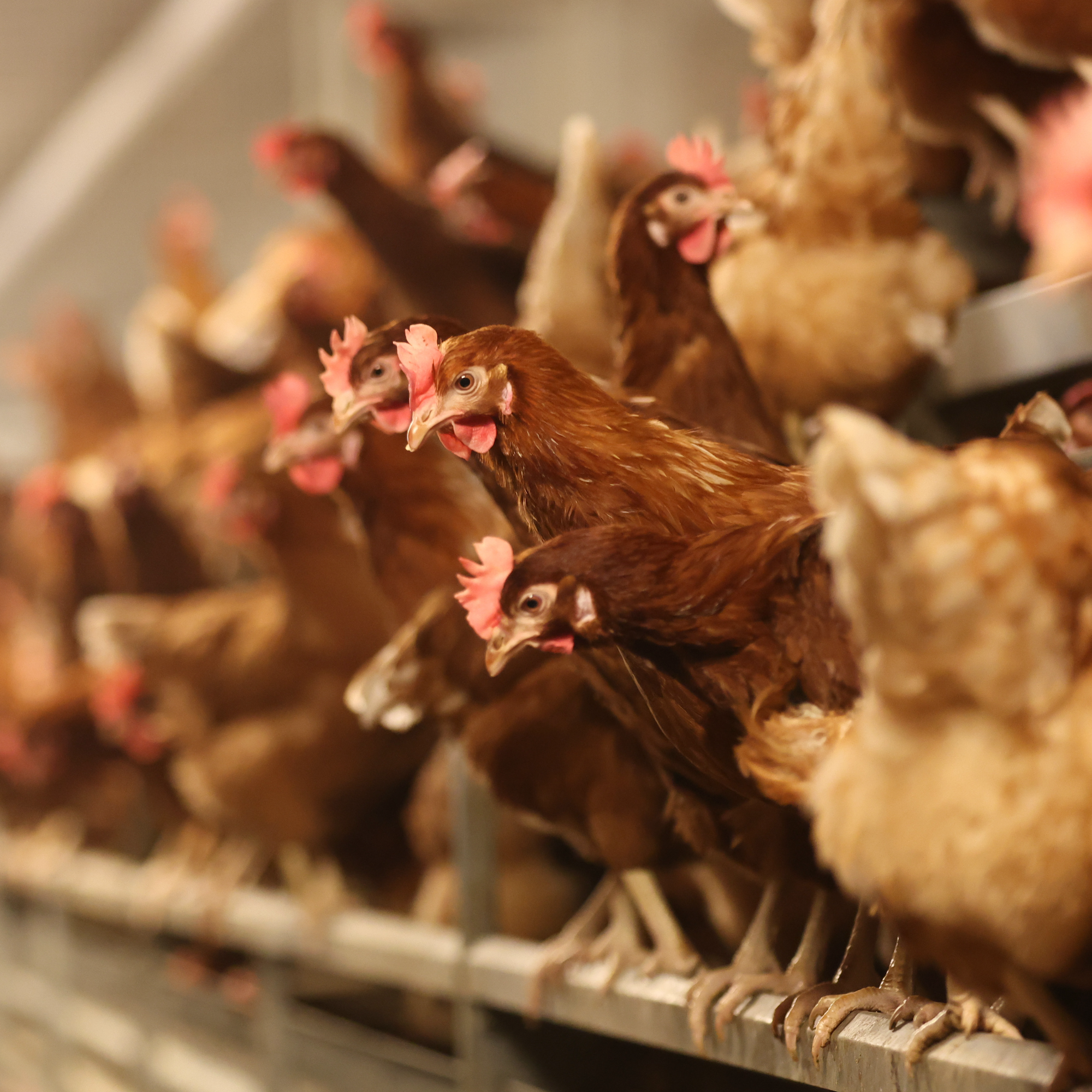
The Washington Post spoke with historians about Trump's reverence for McKinley and his tariffs, and they say Trump's retelling of that chapter of history is not a complete picture. One explained that it's not accurate to say tariffs were the main reason for McKinley's good economic fortune, because the US economy was growing pretty steadily before, during and after McKinley's time in office. One Federal Reserve estimate put growth at around 4% per year for decades before and after McKinley's term. There were other things going on during McKinley's presidency that fanned an already strong economy. Banks started loaning more money, unrestricted immigration meant that cheap labor was readily available, and technological advancements like the telephone also played a role. While McKinley did work to pass a new tariff law raising average taxes on manufactured goods to nearly 50% when he served in Congress, The Post reports that the policy was pretty unpopular. American businesses reaped huge profits, but consumers were upset about rising prices. Newspaper articles from the time blamed the tariffs for the cost of clothing and other items. It's one of the reasons, historians say Republicans lost midterm elections later the same year and the following presidential race. One big difference between McKinley and Trump, according to a historian and McKinley expert speaking to the Post, is is that Trump appears to be using tariffs as a stick to make demands or threats against other countries. McKinley used them more as a carrot to incentivize other countries to mutually reduce tariffs. It was a big part of McKinley's reciprocity approach to trade policy. In McKinley's second term, he gave a speech about the need for reciprocal trade agreements, saying the United States can't quote forever, sell everything and buy little or nothing. He also said the period of exclusiveness is past. But as the Post points out, we'll never know how his plans to reign in tariffs might have panned out, because the day after he gave his speech, he was shot by an assassin. McKinley died eight days later. Have you noticed the price of eggs is up again? That is, if you can find them. My grocery store was out of stock a few days ago. We're seeing this because of bird flu. In the past several weeks, across all 50 states, more than 13 million birds have been affected by it, according to the US Department of Agriculture. And for a poultry rancher, even one case of bird flu can have devastating consequences. Here's Jess Craig, a fellow at Vox and former infectious disease epidemiologist.
- [09:34]
Jess Craig
When bird flu is detected on a farm, they can be massive operations that produce millions of egg eggs per week. They have to be shut down, cleaned, decontaminated.
- [09:45]
Shemitah Basu
And to contain the spread of bird flu, any birds that have been exposed must be euthanized, which has been necessary for tens of millions of birds in recent years.
- [09:55]
Jess Craig
So it's really just that we're seeing a surge of cases and that is resulting in a shortage, and then we see that in the price tag of eggs.
- [10:03]
Shemitah Basu
According to Vox, a carton of eggs has nearly doubled in price from on average about $2.50 a year ago to more than $4 now. But the bird flu scare is going beyond poultry farms. It's now infected cows, which is rare, and even people. There are dozens of current cases in the United States where a human caught bird flu from interacting with an animal, according to the cdc. And last month, a person in Louisiana with underlying health conditions died of bird flu after being exposed to chickens and birds, the first human death attributed to bird flu in the United States. So how worried should you be about bird flu?
- [10:41]
Jess Craig
For the most part, the risk of bird flu to most people is very.
- [10:44]
Shemitah Basu
Low, craig told us. There are some basic things we can all do to be vigilant and protect ourselves.
- [10:50]
Jess Craig
We do know things like pasteurizing milk and cooking your eggs and meat does kill bird flu. The highest risk is not from consuming these products. It's more coming into contact with an infected bird.
- [11:03]
Shemitah Basu
And the good news is most of us do these things anyway. 99% of the country's milk supply comes from farms that pasteurize milk, for example. And Craig says the USDA does a pretty good job keeping tabs on poultry farms and taking quick action when there's a sign of possible bird flu. But the agency is up against some major challenges. Craig reports that a lot of farmers are skeptical of bird flu. They think it's a hoax. Some don't trust the government, so they might not report cases if they occur. And other farmers, she says, won't allow veterinarians on site to check for disease. Still, Craig told us she doesn't think that people should panic about this, though there are a few things that she'll be watching closely to see if the risk level changes, if any of the.
- [11:47]
Jess Craig
Agencies announce that human transmission has become possible, or if we start seeing infections in swine. That probably would be major turning points in this, in this outbreak. But I think for now, take your standard precautions when eating or consuming meat and other animal products and you should be okay.
- [12:14]
Shemitah Basu
Before we let you go, a few other stories we're following. Today. Israeli Prime Minister Benjamin Netanyahu will meet with President Trump, becoming the first foreign leader to do so since Trump returned to office. NPR reports that there's a lot at stake in this meeting, most immediately how to proceed on the second part of the ceasefire deal to end Israel's war with Hamas and release all remaining hostages. Another topic that the Trump White House wants to broach is Israel opening diplomatic ties with Saudi Arabia. A big obstacle to all of this are Netanyahu's allies in government at home in Israel, who want to see the war against Hamas continue and are threatening to bring down his government if he doesn't go on. In Spain, a trial is underway for Luis Rubiales, the former head of Spanish soccer who forcibly kissed a female player after the team won the 2023 Women's World Cup. Jenny Hermoso, the player in question, said in court on Monday that the kiss quote stained one of the happiest days of my life. Prosecutors are seeking a one year prison sentence for sexual assault. They're also pushing for an additional year and a half on coercion charges. They're claiming Rubiales and three former colleagues tried to pressure Hermoso into saying the kiss was consensual. Rubiales denies the allegations. Hermoso, who has faced death threats since speaking out, has since left Spain to play in Mexico. And finally, we are days away from the super bowl when the Kansas City Chiefs face the Philadelphia Eagles. And if the Chiefs bring it home, this would be their third championship win in a row. Commonly known as three peat. But if they want to use that specific term, they might have to pay big bucks to an NBA legend. Former player, coach and now minority owner of the Miami Heat, Pat Riley owns the trademark of the term three peat and several variations of it, meaning if anyone wants to make hats, shirts or other memorabilia, they'll have to pay up, USA Today reports. In the 90s, when the Chicago Bulls pulled off two separate three peats, Riley profited pretty handily off of both occasions. In 1998 alone, he received nearly $600,000 in royalty fees. You can find all these stories and more in the Apple News app. And if you're already listening in the News app right now, we've got a narrated article coming up next. Ahead of the Oscars, Vogue profiled best Actor nominee Adrien Brody, and he told the magazine none of his previous roles pushed him to the extremes as much as working on the Brutalist did. If you're listening in the podcast app, follow Apple News Narrated to find that story. And I'll be back with the news tomorrow.