Loading summary
Transcript147 lines
- [00:05]
Host
Good morning. It's Friday, July 11th.
- [00:08]
Shemitah Basu
I'm Shemitah Basu. This is Apple News today.
- [00:11]
Host
On today's show, Trump goes hot and cold on Putin, why ICE agents are wearing masks, and the dramatic upset that put the young American, Amanda Anisimova, in the Wimbledon final. But first to Texas and what's happening.
- [00:30]
Shemitah Basu
With the country's disaster relief efforts.
- [00:32]
Host
Today, President Trump is expected to visit.
- [00:35]
Shemitah Basu
The site of the deadly floods that barreled through the Hill country last week.
- [00:39]
Host
But so far, the leader of fema.
- [00:41]
Shemitah Basu
David Richardson, has been laying low. He's made no public appearances or statements since the disaster.
- [00:47]
Host
The federal response has largely been led.
- [00:49]
Shemitah Basu
By Department of Homeland Security Secretary Kristi Noem and and FEMA generally is facing.
- [00:54]
Host
Increased scrutiny over the role it played.
- [00:57]
Shemitah Basu
In the Hill Country's preparedness for a disaster of this size.
- [01:01]
Host
Nearly a decade ago, officials in Kerr.
- [01:04]
Shemitah Basu
County, which was hit hardest by last week's floods, started asking FEMA for money to fund a more robust flood warning system, including upgraded water level sensors.
- [01:14]
Host
It would have cost just under a million dollars.
- [01:16]
Shemitah Basu
But the office that manages Texas FEMA grants turned Kerr county down twice. The across the state, there was just more demand for federal funds than money available. And Kerr determined state level money wouldn't make a dent in what they needed. So the project was abandoned. What happened in Kerr county isn't unique.
- [01:36]
Host
Long before this disaster struck Texas, communities.
- [01:39]
Shemitah Basu
Nationwide have struggled to get federal funds to prepare for natural disasters.
- [01:43]
Host
In fact, in his first term, Trump.
- [01:45]
Shemitah Basu
Supported a bill that sought to fill that gap, launching a FEMA program in 2018 called Building Resilient Infrastructure and Communities.
- [01:54]
Host
BRIC for short, expanded under Biden. BRIC eventually set aside about $4.5 billion.
- [02:00]
Shemitah Basu
For local hazard mitigation projects.
- [02:02]
Host
And Zach Coleman, a climate and energy.
- [02:04]
Shemitah Basu
Reporter for Politico, told us that money made a real difference.
- [02:08]
Zach Coleman
There were processes that were working for some people. There were people who were getting disaster relief spending and emergency payments, and a lot of that got gummed up as the administration started to pull resources back.
- [02:22]
Host
Trump shut down the BRIC program earlier.
- [02:24]
Shemitah Basu
This year in April as part of his administration's broader efforts to slash federal spending.
- [02:29]
Host
He's also threatened to shut FEMA down.
- [02:31]
Shemitah Basu
Entirely and shift its responsibilities to the states.
- [02:35]
Zach Coleman
There are only so many states that could really take this on themselves, and it's maybe the ones that are more used to dealing with disasters, but counterintuitively, it also might make those the least likely to be able to handle this because they're the ones who absorb billions of dollars in damage and then if you think about smaller states that might get hit the disaster that they're not expecting, what do those states then do? How are they budgeted to even begin this kind of cleanup process, an emergency management process? How can these states make up the difference? And I think the really short answer is they can't.
- [03:08]
Shemitah Basu
When federal funding for local disaster mitigation.
- [03:11]
Host
Was slashed, a city in Maryland on.
- [03:13]
Shemitah Basu
The Chesapeake Bay lost $36 million in funding for flood protections. In Oklahoma, officials in Stillwater lost nearly $20 million to improve drainage systems.
- [03:23]
Host
And and in Scranton, Pennsylvania, officials lost.
- [03:26]
Shemitah Basu
Millions of dollars that were supposed to help demolish homes that were irreparably damaged by flash floods.
- [03:33]
Host
Instead, most of the BRIC funding to.
- [03:35]
Shemitah Basu
Help prevent disasters has now been allocated for FEMA to use for what comes after the recovery.
- [03:42]
Host
And experts in preparedness say the cuts to hazard mitigation will put local communities in a precarious position, especially as climate.
- [03:49]
Shemitah Basu
Change intensifies many of these natural disasters.
- [03:53]
Zach Coleman
This is not a good mix. This is not the trend you want to be heading down, where you have fewer federal resources, more disasters, and more people in the line of fire of those disasters.
- [04:04]
Shemitah Basu
If Trump does get rid of fema.
- [04:06]
Host
As he's promised to do when hurricane.
- [04:08]
Shemitah Basu
Season ends in November, Coleman says the effects of that decision will ripple across.
- [04:13]
Host
Federal and local government alike.
- [04:16]
Zach Coleman
There's any number of things that we're going to have to start to manage for in a broad, holistic way that FEMA has had a huge hand on in its decades of existence. And I wonder about the nation's ability to handle these broad systemic risks.
- [04:46]
Host
Let's turn now to Russia's war with.
- [04:48]
Shemitah Basu
Ukraine and the United States involvement. There's been a lot of movement in recent days.
- [04:53]
Host
Yesterday, Secretary of State Marco Rubio met.
- [04:55]
Shemitah Basu
With Russian Foreign Minister Sergey Lavrov.
- [04:58]
Host
Rubio said that the US And Russia.
- [05:00]
Shemitah Basu
Had exchanged new ideas for peace talks in Ukraine, but didn't elaborate further.
- [05:04]
Host
He did add that President Trump has.
- [05:07]
Shemitah Basu
Been disappointed and frustrated by what he has seen as a lack of flexibility on the part of Russia. That's putting it mildly, based on how Trump himself spoke about Putin during a recent Cabinet meeting.
- [05:19]
Matthew Luxmore
We get a lot of bull thrown at us by Putin for. You want to know the truth? He's very nice all the time, but it turns out to be meaningless.
- [05:28]
Host
The posture we're seeing from Trump now.
- [05:30]
Shemitah Basu
Is a long way away from his treatment of Ukrainian President Volodymyr Zelenskyy in the Oval Office back in February.
- [05:37]
Host
At the time, Trump refused to blame.
- [05:39]
Shemitah Basu
Putin for the war.
- [05:40]
Host
But more recently, Trump suggested Putin might.
- [05:43]
Shemitah Basu
Be, quote, tapping us along.
- [05:45]
Host
And after what looked like a brief.
- [05:46]
Shemitah Basu
Pause on US Munitions for Ukraine, Trump resumed them this week without explanation.
- [05:52]
Host
Matthew Luxmore is a foreign correspondent with.
- [05:54]
Shemitah Basu
The Wall Street Journal who's been reporting on the dynamic between Putin and Trump.
- [05:58]
Foreign Correspondent
It seems that Trump, who really wanted to strike a peace deal in Ukraine, is beginning to realize what I think a lot of people have realized for quite a while now, definitely Ukrainians included, which is that Putin is not interested in an end to this war that doesn't include Ukraine's capitulation or essentially Ukraine handing over everything that Russia is demanding.
- [06:20]
Host
In recent weeks, Russia has attempted to seize more territory and amped up aerial.
- [06:24]
Shemitah Basu
Attacks in Ukraine, even as a Putin.
- [06:27]
Host
Spokesperson told the BBC that they were.
- [06:28]
Shemitah Basu
Hopeful to get diplomatic talks back on track with the Trump administration. For a long time, the relationship between Putin and Trump has been of mutual admiration, with both men publicly praising the other. So Trump's open contempt for Putin's behavior lately is quite a turn.
- [06:45]
Matthew Luxmore
But.
- [06:45]
Host
But Luxmore told us that the reason.
- [06:47]
Shemitah Basu
The Kremlin isn't responding publicly to Trump in the same aggressive tone is because Trump has been known to change his mind.
- [06:54]
Mahmoud Khalil
Often.
- [06:55]
Foreign Correspondent
They've seen the way that Trump's align on Russia has changed, and I think they're waiting to see whether this is a kind of new, hardened US Policy that is critical of Russia and more supportive of Ukraine, or whether in the space of the next two weeks, Trump may once again come around to seeing Russia as the side that wants to strike some kind of peace deal, and Ukraine as a side that is not doing things conducive to peace.
- [07:21]
Host
Luxmore said there are at least two material things that Trump could do that would signal that this is a change.
- [07:26]
Shemitah Basu
That goes beyond just words. One is signing legislation imposing sanctions on Russia, something that Trump said he is considering.
- [07:34]
Foreign Correspondent
We don't exactly know the details of what those will include, but it could be things targeting Russia's energy sector, which could be quite debilitating and quite damaging for Russia's economy, which is very reliant on oil revenues and gas revenues.
- [07:48]
Host
The other would be the approval of.
- [07:49]
Shemitah Basu
A new missile system for Ukraine that the White House is also reportedly considering at the moment.
- [07:55]
Host
The war, meanwhile, goes on.
- [07:57]
Shemitah Basu
Russia has in recent days targeted Ukrainian cities with a barrage of drone strikes.
- [08:02]
Host
Among the worst, Ukraine's foreign minister said.
- [08:05]
Shemitah Basu
Since the invasion first began more than three years ago. To immigration and the ongoing tensions from immigration raids.
- [08:24]
Host
Clashes broke out between ICE officials and.
- [08:26]
Shemitah Basu
Protesters in California yesterday When masked agents arrived at farms in Ventura county, not far from la, agents reportedly deployed tear gas to deter the crowds and detained dozens of farm workers, According to local news outlet ktla.
- [08:41]
Host
The station posted one video, later shared.
- [08:44]
Shemitah Basu
By California governor Gavin Newsom, of people fleeing tear gas do not panic.
- [08:48]
Jenny Jarvi
Do not run. Do not run. Stay calm. They took your mom.
- [09:00]
Shemitah Basu
In the video, you can see the boy nodding to the reporter's question, clearly distressed. In recent weeks, immigration enforcement efforts like these have left cities on edge as armed federal agents sweep, detaining people they suspect of violating immigration laws.
- [09:17]
Host
Much of that effort has focused on Los Angeles, where federal officials say they.
- [09:21]
Shemitah Basu
Have arrested close to 2,800 people since raids started in June. And the tactics they've used have sparked widespread fear among residents, armed federal agents.
- [09:32]
Attorney General Pam Bondi
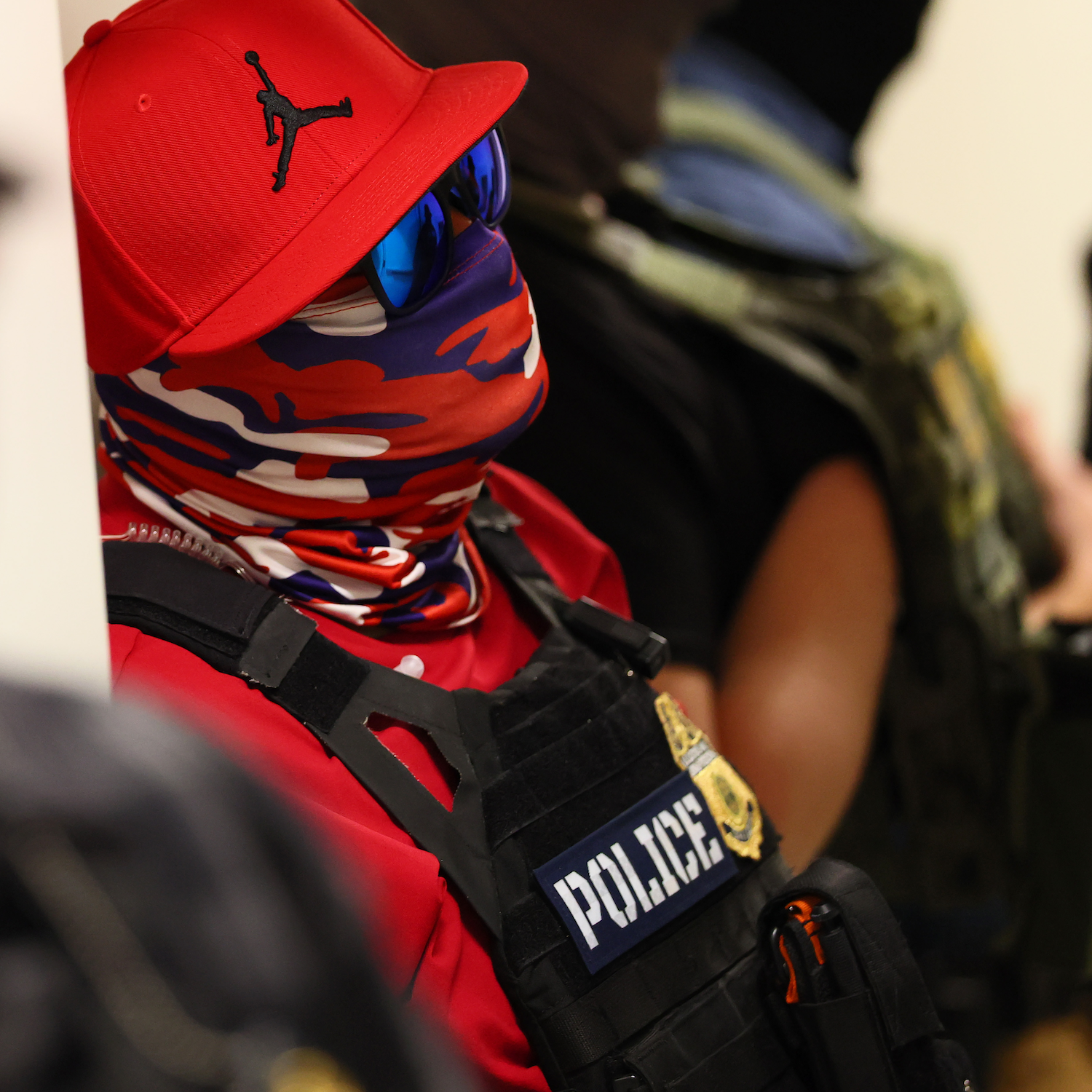
Jumping out of unmarked vans and snatching people off the streets.
- [09:36]
Host
That's Los Angeles Times reporter Jenny Jarvi.
- [09:39]
Attorney General Pam Bondi
What is disturbing to many people is that they're wearing neck gaiters, they're wearing balaclavas. In some cases they're wearing full military gear and helmets in a way that is sort of sowing fear and panic across communities. Many people think it's a public safety threat.
- [09:56]
Host
There is no federal policy that prohibits.
- [09:58]
Shemitah Basu
Federal agents from wearing masks that cover most of their face.
- [10:02]
Host
Attorney General Pam Bondi suggested at a.
- [10:04]
Shemitah Basu
Senate subcommittee hearing last week that she was unaware plain clothed agents have been wearing masks during arrests.
- [10:11]
Host
But she and other officials, including the.
- [10:13]
Shemitah Basu
Acting director of ice, have defended the tactic, saying it can help keep officers safe in the field.
- [10:19]
Attorney General Pam Bondi
They say that due to a combination of factors, a sort of very heightened time of political discord due to new facial recognition technology and an increased threat on doxing of social media, the job is just much more difficult and dangerous for agents in the field.
- [10:37]
Host
And the Department of Homeland Security says agents on enforcement operations have seen an.
- [10:42]
Shemitah Basu
Exponential increase in assaults so far in 2025 compared with the same time frame last year.
- [10:48]
Host
Critics, meanwhile, say that federal officers wearing.
- [10:52]
Shemitah Basu
Masks and plain clothes escalates tensions and creates an environment of intimidation.
- [10:57]
Host
One former ICE official told the Times.
- [10:59]
Shemitah Basu
It sets a dangerous precedent.
- [11:01]
Attorney General Pam Bondi
The concern for him is just that ordinary members of the public have no way to know if someone is a law enforce officer or an imposter. If somebody comes up to you with a mask and T shirt and no badge, he said, why would you think they're exercising a legitimate authority, you know, as opposed to being a violent criminal trying to do you harm?
- [11:21]
Host
Critics also argue federal agents aren't operating.
- [11:24]
Shemitah Basu
Under any greater threats than local police officers who are typically required to wear uniforms and often don't wear masks.
- [11:32]
Host
Mask policies vary by jurisdiction.
- [11:35]
Attorney General Pam Bondi
California state law doesn't mention masks, but it is more specific on sort of identification. You know, it requires uniformed officers to wear a badge, nameplate or other device which bears clearly on its face the identification number or name of the officer.
- [11:50]
Host
Lawmakers are now discussing adding more requirements at the state level.
- [11:54]
Shemitah Basu
California Democrats have introduced a bill that.
- [11:57]
Host
Would block any law enforcement officials working.
- [11:59]
Shemitah Basu
In the state from wearing masks, and.
- [12:01]
Host
There are similar efforts underway in Congress.
- [12:04]
Shemitah Basu
Democratic senators this week introduced a bill that would prevent immigration officers at all levels of government from wearing masks or concealing their identities. Democrats in the House are supporting a similar policy called no masks for ice.
- [12:27]
Host
Before we let you go, some other stories we're following.
- [12:31]
Shemitah Basu
Mahmoud Khalil, the Columbia University graduate detained by US immigration authorities for over 100 days, is suing the Trump administration for what he says is false imprisonment.
- [12:41]
Host
Khalil is seeking $20 million in damages.
- [12:44]
Shemitah Basu
And says he was maliciously prosecuted and falsely labeled an anti Semite.
- [12:50]
Mahmoud Khalil
This is something I will never forgive. It failed, but still, the harm is already there. So unless they feel that there's some sort of accountability for that, they would continue to go unchecked.
- [13:01]
Host
Khalil was arrested in March and spent.
- [13:04]
Shemitah Basu
Months detained while the administration attempted to.
- [13:06]
Host
Deport him, arguing that his activism was.
- [13:08]
Shemitah Basu
Against foreign policy interests. Courts eventually ordered his release as immigration proceedings continue. The Department of Homeland Security described his claim as absurd.
- [13:20]
Host
There was a major upset at Wimbledon.
- [13:23]
Shemitah Basu
Yesterday when Amanda Anisimova beat world number one and the heavy favorite Irina Sablanka to advance to the final on Saturday.
- [13:32]
Host
She is the first American to advance.
- [13:34]
Shemitah Basu
To a Wimbledon final since Serena Williams in 2019.
- [13:37]
Host
Anna Samova has been open about her.
- [13:39]
Shemitah Basu
Struggles with mental health in the past, the tragedy of losing her father at the age of 17, and her break from playing professionally.
- [13:47]
Host
She reflected on the moment on the.
- [13:48]
Shemitah Basu
Court after her win.
- [13:50]
Amanda Anisimova
To be honest, if you told me I would be in the final of Wimbledon, I would not believe you. At least not this soon. Because, I mean, it's been a year turnaround since, you know, coming back and to be in this spot, I mean.
- [14:02]
Host
It'S not easy to win the tournament.
- [14:05]
Shemitah Basu
She'll have to get through igaontech, who.
- [14:07]
Host
Herself was a previous number one player.
- [14:10]
Shemitah Basu
And has won five Grand Slams.
- [14:15]
Host
You can find all these stories and.
- [14:17]
Shemitah Basu
More in the Apple News app.
- [14:19]
Host
And if you're already listening in the news app right now, stick around for the latest episode of Apple News In Conversation this week, I talked to New.
- [14:26]
Shemitah Basu
Yorker staff writer Evan Osnos on the heels of Jeff Bezos extravagant Venice wedding, about the ultra wealthy in America and how the wealth gap is bigger than ever.
- [14:37]
Evan Osnos
Take the example of Elon Musk, the richest man in the world. He had about $10 billion 10 years ago. Today he has more than 400 billion. And in fact, this isn't just an extraordinary growth by modern standards. I spoke to archaeologists about it who study inequality all the way back to the Neolithic age, and as one of them said to me recently, the people who built the pyramids were living in a less unequal society.
- [15:05]
Host
If you're listening in the Podcasts app.
- [15:07]
Shemitah Basu
You can find that episode by searching for Apple News in conversation. Enjoy your weekend, and I'll be back with the news on Monday.