Loading summary
Transcript25 lines
- [00:05]
A
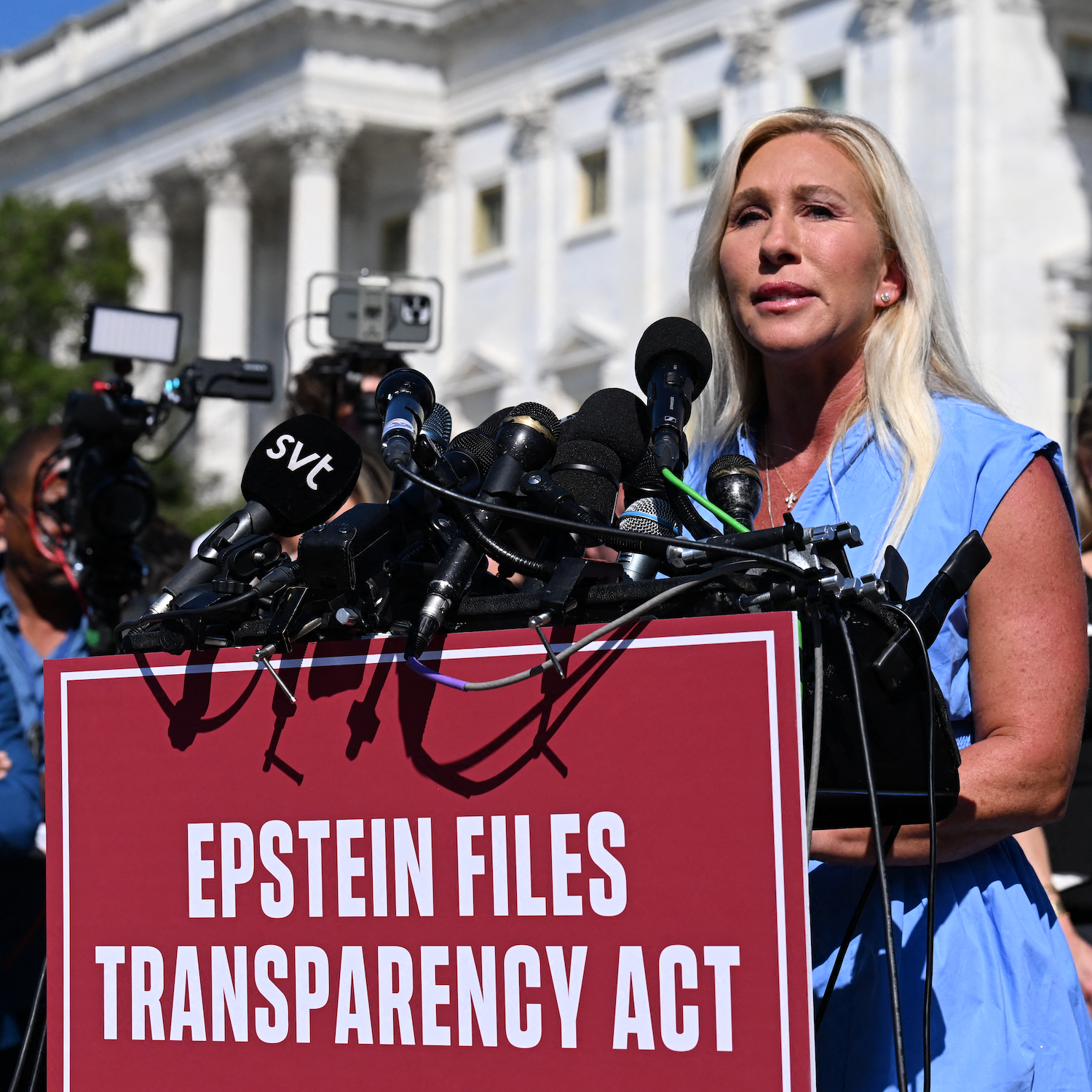
Good morning. It's Monday, November 17th. I'm Shemitah Basu. This is Apple News today. On today's show, why the American Pope is criticizing the American President. Silicon Valley's pitch for genetically engineered babies. And as we head into awards season, are judges actually watching the movies? But first, to a weekend of unexpected reversals. Late on Sunday evening, President Trump posted on social media that House Republicans should support a vote to release more files on Jeffrey Epstein. He said, quote, because we have nothing to hide. This is the first time he's shown a willingness to support the measure, one that he would ultimately have to sign. It's an indication that in the House, at least, momentum was growing from within his own party to back it. The issue has driven a wedge into the gop, with Trump clashing with some members of his party, most notably Georgia Representative Marjorie Taylor Greene. She's long been one of Trump's most loyal and outspoken backers. But her support for a vote to release the files appeared to strain their relationship to a breaking point. Over the weekend, Trump withdrew his endorsement of her and described her as, quote, wacky. Yesterday, Greene responded to his remarks about her on cnn.
- [01:30]
B
He called me a traitor. And that is. That is so extremely wrong. And those are the types of words that can radicalize people against me and put my life in danger.
- [01:42]
A
Greene said she would not apologize for her position on Epstein, but she did apologize for the way she conducted herself at times in office. CNN's Dana Bash raised offensive posts and remarks that Greene had made over the years, including personal insults, outright lies, and conspiracies. And she asked Greene if she was only speaking out Trump's rhetoric now because it was aimed at her.
- [02:05]
B
I think that's fair criticism, and I would like to say humbly, I'm sorry for taking part in the toxic politics. It's very bad for our country, and it's been something I've thought about a lot, especially since Charlie Kirk was assassinated, is that we. I'm only responsible for myself and my own words and actions, and. And I am going. I am committed, and I've been working on this a lot lately to put down the knives in politics.
- [02:38]
A
Greene's dramatic about turn has left many wondering what is motivating her current position. Will Sommer is a reporter at the Bulwark, a conservative publication founded by Trump critics and has covered the MAGA movement in depth. He told us that some of Trump's recent policies have placed him increasingly against Greene's priorities.
- [02:58]
C
We know he's siding with big tech companies. He's going against what I think a lot of young Republicans want on issues like H1B visas, which they see as bringing in foreigners to compete with them for jobs. She made a huge deal about the Obamacare subsidies expiring and how this was going to cost the average person thousands of dollars in health insurance premiums. I don't think it's an entirely altruistic thing she's up to, but I do think she has some legitimate grievances that I think will be shared by some other Trump supporters.
- [03:28]
A
Summer told us this shift for Greene was due to a mix of the ideological and the personal. The administration had reportedly advised her against running for governor or the Senate in Georgia because she couldn't win a battleground state. Greene has ruled out both, but denied it was because of Trump. Summer says her seat is relatively safe, but she'll almost certainly face a primary challenger now. And for now, Summer says Greene continues to wield some influence in MAGA commentator circles.
- [03:58]
C
A lot of them are not turning on her. They aren't saying, Trump gave you the burn notice. You know, it's over for you. They're saying, well, maybe we support her in this and, you know, maybe Trump should back down. So, I mean, she only has one vote in the House. Even, you know, the Republicans have a slim majority. She's only one member of Congress, but she has an enormous platform.
- [04:16]
A
Greene says she still ultimately supports the administration and is open to finding a way to move forward with the president. Foreign let's turn now to a look at how the American pope is influencing some Catholics on the policies of the American president. Last week, The Conference of U.S. catholic Bishops delivered a special message condemning indiscriminate mass deportation.
- [04:49]
D
We are saddened by the state of contemporary debate and the vilification of immigrants. We are concerned about the conditions in detention centers and the lack of access to pastoral care.
- [05:03]
A
Bishops backed the statement 216 to 5 in a vote. They didn't mention President Trump specifically in their message, and a White House spokesperson responded to it by saying Trump is carrying out a promise made to American voters. The last time this group delivered this kind of message was over a decade ago when they criticized the government's contraceptive mandate requiring health plans to cover a range of births control options at no cost to patients. Observers say the Conference of Bishops is following the lead of its new head. Earlier this month, Pope Leo was asked about the conditions of migrants held in a facility in Broadview, Illinois, near Chicago, where he's from.
- [05:44]
D
Jesus says very clearly, at the end of the world we're going to be asked, you know, how did you receive the foreigner? And did you receive him and welcome him or not? And I think that there's a deep reflection that needs to be made in terms of what's happening. Many people who have lived for years and years and years never causing problems have been deeply affected by what's going on right now.
- [06:08]
A
Those remarks surprised some because Leo has been considerably less outspoken compared to his predecessor, Pope Francis.
- [06:16]
E
We're seeing the leader of the Catholic Church, a church of 1.4 billion people around the world, speak specifically about the United States, and even more than that, speak specifically about, you know, immigration detention facilities, by ICE, by the Department of Homeland Security.
- [06:30]
A
Joshua McElwee is the Vatican correspondent for Reuters. He told us that after those comments, some bishops may now be feeling emboldened. El Paso Bishop Mark Seitz, who leads a diocese spanning counties that border Mexico, told McElwee about his recent work.
- [06:47]
E
He spoke about how he went to a facility in El Paso run by ICE where many migrants are being held and they were able to get access to give those migrants Holy Communion and the very emotional state of doing that, and migrants crying, as you know, they had been separated from families, not able to receive Communion, not able to have any contact with the outside world, but were able to receive this communion, able to have this moment of religious experience.
- [07:12]
A
But McElwee stressed that the political signals of the Catholic Church are rarely straightforward. Only recently, the bishops also elected a new conservative president in a close vote.
- [07:22]
E
He's Archbishop Paul Coakley from Oklahoma City. He's an advisor for a conservative Catholic think tank called the Napa Institute, which is very well funded and had been openly critical of Pope Francis for some of his initiatives over his 12 year Papacy. Just because he's associated with that one institute doesn't necessarily mean that's all he thinks about or all he's going to be doing. But it is interesting that in this moment they've elected someone who is clearly tied to a more conservative movement.
- [07:52]
A
McElwee said he'll be interested to see what Coakley's future looks like, but added that many Catholics are more focused on their local parishes than the leadership of this conference itself. And as for Pope Leo, not every intervention is political. Over the weekend, he hosted Hollywood stars like Cate Blanchett, Monica Bellucci and Spike Lee, urging them to continue their work as pilgrims of the imagination. Startups funded by powerful billionaires in Silicon Valley are pushing the boundaries of reproductive genetics. That's according to reporting from the Wall Street Journal's Emily Glaser, who told us that one company called Preventative is working on creating a child born from an embryo edited to prevent hereditary disease.
- [08:45]
F
Using this process in sperm, eggs or embryos is extremely controversial and has prompted calls by scientists for a global moratorium until a number of ethical and scientific questions get resolved.
- [08:59]
A
The company has high profile backers, including OpenAI CEO Sam Altman, his husband, and the chief executive of the crypto platform Coinbase. Right now, scientists in the US and elsewhere use gene editing technology to clip and insert DNA after A is born. But the practice is banned when it comes to editing embryos and creating babies from them. Preventative's CEO says regulatory constraints force the company to work outside the US and the company is focused on research that would prove embryo editing is safe before attempting to bring a baby to term. But many experts warn that the science is too unpredictable to be deemed safe and could normalize human experimentation by private companies without input from scientific oversight bodies. And some are concerned at the idea of editing for parental preferences, so called designer babies.
- [09:54]
F
There are a number of scientists, doctors and others in this field that are quite disturbed that this is going on and they feel that until there are resolutions and global regulations, safety considerations, ethical considerations, so it doesn't create two different types of societies with better humans and those that have less desirable traits, then it shouldn't be pursued.
- [10:19]
A
Preventative and other companies working to commercialize reproductive genetic technology say their goal is to produce babies free of genetic disease and resilient against illness. There's only been one known instance of children being born from edited embryos. In 2018, a Chinese scientist announced that he'd created three healthy children who were genetically altered as embryos to be immune to hiv. He was sentenced to prison in China for three years for the illegal practice of medicine. The idea of screening embryos for potentially desirable traits is already happening. Glaser told us about companies providing something called polygenic screenings. The process takes DNA from an embryo and analyzes it to provide insight into the kind of characteristics a child might have.
- [11:08]
F
So, for example, various tests might show an embryo projected to have an IQ of 130, or an embryo with a 1.5% chance of developing schizophrenia, or or an embryo that might be 14% more likely than its siblings to suffer from anxiety. And there are all of these different probability scores that are also available for things like adhd, bipolar disorder, diabetes, and even male pattern baldness.
- [11:37]
A
Some scientists warn that we still don't understand everything about the human genome and that any edits or changes, including unintended mistakes could end up being passed down to future generations. Before we let you go, a few other stories we're following. Federal immigration authorities made dozens of arrests in Charlotte, North Carolina over the weekend as residents reported raids near churches and apartment complexes. It's just the latest target of operations led by ICE Commander Gregory Bovino, who left Chicago at the end of last week after directing a string of immigration enforcement operations there. He posted on social media that more than 80 people had been arrested in Charlotte and claimed many had been wanted for serious crimes and claimed many had been wanted for serious crimes. Charlotte's Democratic Mayor Vi? Ls said the deployment had caused unnecessary fear and uncertainty in the community. An intense water crisis in Iran has officials there considering evacuating the capital city as some residents are returning home to Taps run running dry. Iran is suffering its worst drought in decades, and authorities have even begun using cloud seeding technology to induce rainfall. Iran's president said if it doesn't rain by the end of the month, Tehran, with a population of 10 million people, will need to be evacuated. Iran is in its sixth consecutive year of drought, and reservoirs that provide the capital with water are at just 5% capacity. And finally, it's Oscar season. And as studios release the films they hope will bring home a coveted award at next spring ceremony, the Academy is reminding voters of their duty as members. An email obtained by NBC News revealed the Academy of Motion Pictures Arts and Sciences is nudging its 10,000 plus voting members to actually watch this year's films if they want to vote. The effort is part of revised voting rules, and while many say it's a good try by Academy officials, making sure that voters actually watch the movies is pretty hard to police. The Academy admits that and reiterated this is all run on an honor system. You can find all these stories and more in the Apple News app. And if you're already listening in the News app right now, we've got a narrated article coming up next. Bloomberg Businessweek reports on dual murder plots that entangled Canada, the U.S. and India, which led to a major diplomatic dilemma. If you're listening in the podcast app, follow follow Apple News plus Narrated to find that story and I'll be back with the news tomorrow.