Loading summary
Transcript35 lines
- [00:05]
A
Good morning. It's Tuesday, August 19th. I'm Shemitah Basu. This is Apple News Today. On today's show, a partisan tit for tat over congressional maps, the growing problem of stalking in elite sports, and the transformative power of just sitting and spacing out foreign. But first, President Trump says he's working on arranging a meeting between Russian President Vladimir Putin, Ukrainian President Volodymyr Zelensky, and possibly himself for sometime in the next few weeks. It would be the next step toward establishing an agreement to end the war in Ukraine. After yesterday's meeting between Trump, Zelensky and a group of European leaders at the White House.
- [00:57]
B
Well, this really is unusual. And President Trump commented quite a few times how historic it is to have so many European leaders sitting in the White House.
- [01:11]
A
Michael Birnbaum is a White House correspondent for the Washington Post. He told us yesterday's meeting was extraordinary for a number of reasons. One was just how high level some of these leaders are, people like NATO Secretary General Mark Rutte, German Chancellor Friedrich Merz, and Finnish President Alexander Stube. But also just how quickly they seem to have cleared their calendars for this.
- [01:34]
B
I mean, these people dropped everything they were doing. And they came because, in part, they were so worried about what happened last time when Zelensky was here in Washington, that they wanted to give him some backup and they didn't want him to go into meetings with Trump completely alone.
- [01:53]
A
And while yesterday's summit was considerably more cordial than the last time Trump and Zelensky sat down together in the Oval Office, details on what they discussed or what will happen next are so far pretty scant.
- [02:06]
B
Trump didn't give them clarity about whether he would be willing to push for a ceasefire ahead of a broader peace deal. That's something that the Ukrainians and Europeans think is really important for the best and most sustainable deal to be reached. He talked in vague terms about security guarantees. That's really important for the Ukrainians, but we still don't have any details. And on a range of issues, he remains, it seems, sympathetic to Putin's point of view.
- [02:40]
A
Trump, before his meeting with Putin last week, supported a ceasefire, saying he wouldn't be happy unless that was agreed on. But he appeared to change his position after that meeting.
- [02:51]
B
That's surely something that stuck out to the Ukrainians because Putin continues to bombard Ukraine, is attacking Ukraine intensely just in these last few days. So it's not something that, to the Ukrainians, looks like a situation where Putin is ready for peace.
- [03:08]
A
In an unusual move during yesterday's meeting with Zelensky and European leaders. Trump at some point dipped out of the room to call Putin. That discussion, according to Russia's foreign minister, was, quote, frank and very constructive. Russian officials said in a statement the US And Russia agreed to appoint more senior negotiators for direct talks with Ukraine, though it did not say if Putin would take part. Ultimately, the leaders coming out of Monday's meeting were mostly upbeat and looking ahead to the next diplomatic steps. But Birnbaum told us his takeaway it still seems like Ukraine and Russia are far apart on critical sticking points. And Trump did not seem to change his mind on securing a ceasefire.
- [03:49]
B
First, President Trump is pushing for this joint meeting. President Putin out of Russia is demanding things from the Ukrainians that are seemingly very unacceptable from the Ukrainian perspective. It would make it very difficult for them to agree unless they got really robust backing from Europe and the United States. And meanwhile, the Kremlin is pressing its military advantage on Ukraine. So in the absence of progress on peace talks and in the absence of a ceasefire, I think what we do know is that a lot more Ukrainians are going to die. And, you know, this conflict is going to keep raging for the foreseeable future.
- [04:41]
A
Now to Texas, where many House Democrats returned to Austin yesterday after having left the state for two weeks to block a divisive Republican plan to redraw the state congressional map. This is how they were greeted at the Capitol building by demonstrators who were there to support them.
- [04:59]
C
Democracy looks like.
- [05:00]
A
This is what democracy looks like. Tell me what democracy Texas Republicans now have the quorum needed to move forward on voting on redistricting the state with the goal of securing five more seats in the US House ahead of the midterms, something President Trump has pushed for to retain control of Congress through the end of his term. But the Texas Tribune reports that state Democrats are still feeling victorious in this moment for drawing national attention to the redistricting plan. They say they plan to keep fighting the map in court ahead of the midterms. And they've picked up some allies in response to the battle in Texas. Democrats in California released a new proposed congressional map last week for their state, which would give California Democrats an advantage in five districts, potentially nullifying the gains for Republicans with the new Texas map.
- [05:51]
D
At the end of the day, this is naked partisanship.
- [05:53]
A
That's Melanie Mason, a senior politics reporter covering California for Politico, who spoke with us about the Democrats plan.
- [06:01]
D
They'll say we have to because this is in response to what President Trump has sort of set into motion but.
- [06:07]
A
In California, unlike Texas, it's the voters who ultimately have the power to decide whether a new congressional map can take effect. That's because California is one of just over half a dozen states that uses an independent commission to draw district lines. So to override that process, voters would need to approve the new map in a special election in November.
- [06:29]
D
That's why I think that the campaign that we're about to see is gonna be about President Trump. And in a Democratic state like California, how popular is President Trump?
- [06:38]
A
The California ballot measure would ask voters to approve a new map for the next three elections through 2030. Then after that, the state would go back to using the independent commission. And Governor Gavin Newsom has said the measure would include an out clause of sorts, basically that this new map would only take effect if Texas or another state definitely goes through with redrawing their lines before the midterms.
- [07:03]
D
I think part of that is to maybe communicate to Texas Republicans, like, there's still an off ramp here, Right? If you guys don't move ahead, then we'll lay down our arms, too.
- [07:12]
A
In a poll that Politico conducted with UC Berkeley, an overwhelming majority of California voters have indicated they are skeptical of this plan. Most said they approve of keeping the independent commission in charge of the map.
- [07:25]
D
That's something that the voters here approved twice on the ballot. And so I think Democrats know that if they look like they're jettisoning this panel entirely, that's going to be horribly unpopular in the state. So if they say, look, it's only temporary, and it's only if Republicans do this that they think that might be more palatable for voters.
- [07:44]
A
Before this measure potentially goes to voters, California lawmakers have to vote on the map first. That vote is scheduled for later this week. Let's turn now to a disturbing trend in sports and a quick warning to listeners. This segment describes a case of stalking.
- [08:10]
C
We were able to find, since 202052 cases of athlete stalkings.
- [08:16]
A
Carson Kessler, a reporter with the Athletic who's been investigating the rise of stalking in professional and collegiate sports, told us it's been difficult to pinpoint just how widespread the problem is.
- [08:28]
C
Victims don't always go to the police, or these cases aren't covered by media. Or maybe the individual who was being stalked never spoke about it publicly or privately. There's a lot of hesitation to go to law enforcement because these cases are historically very difficult to prosecute. So many just don't even want to go through the whole ordeal. So there's no way of really Knowing.
- [08:53]
A
How far this goes, experts told Kessler there are a few reasons why stalking in sports is getting worse.
- [09:00]
C
Social media in particular can lead fixated strangers to believe they're connected to celebrities in a way that they aren't. And so this poses a really interesting problem for athletes who are using social media to promote themselves, promote their sports, but also manage their safety.
- [09:18]
A
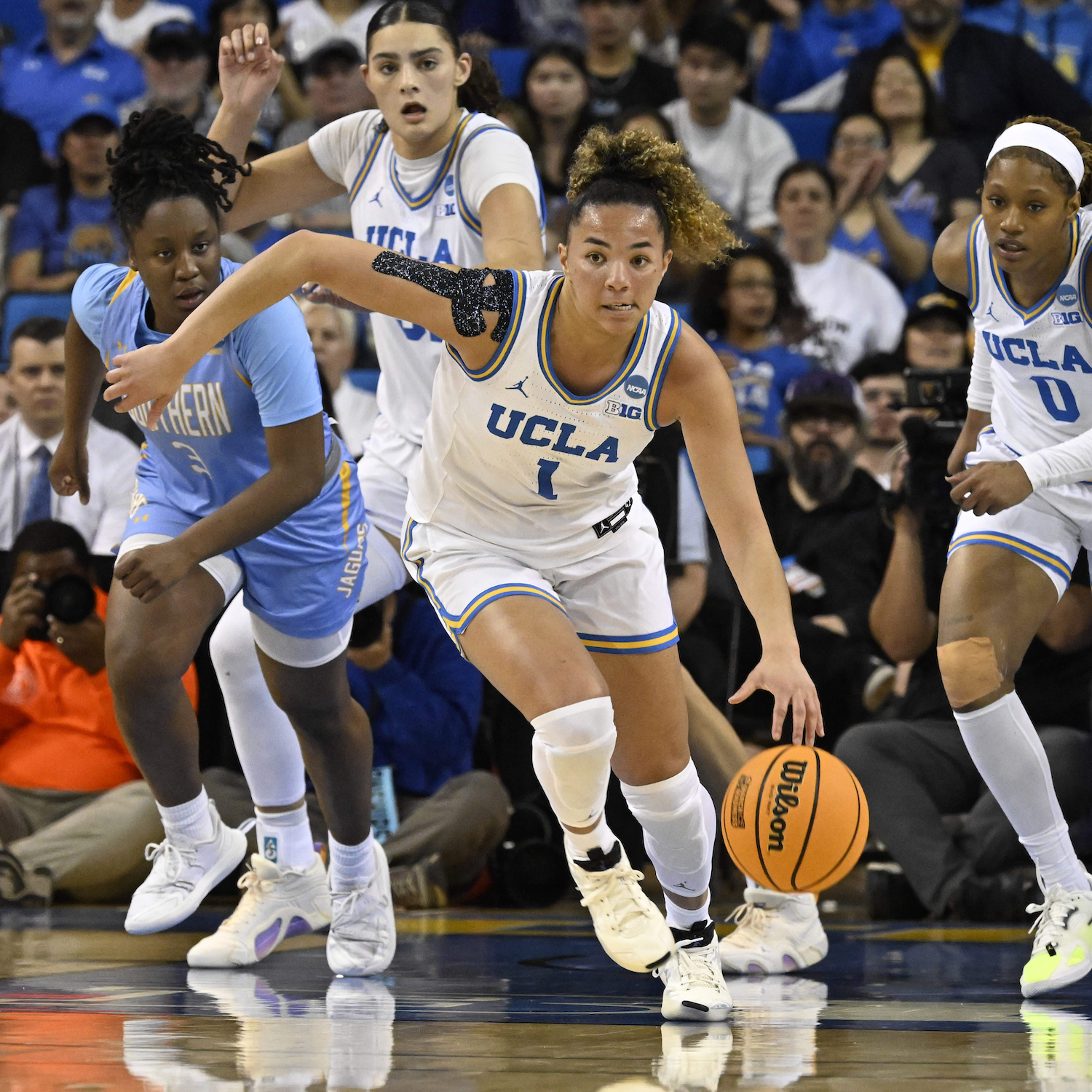
The athletic reports that women are stalked at much higher rates than men, but it's a problem for all athletes. WNBA superstars Caitlin Clark and Paige Beckers were recently victims. Gymnasts Simone Biles and Livy Dunne have dealt with stalkers. Same with tennis stars IGA Swiatek and Emma Raducanu. Kessler detailed one case involving Kiki Rice, who plays for UCLA's women's basketball team. In 2023, a stranger started showing up outside the gym where the team practices.
- [09:50]
C
In a few instances, he brought red and white roses as well as a letter that just talked about his relationship with her.
- [09:59]
A
The man showed up to games he rented and slept in a U Haul near campus. He sent dozens of unanswered messages to Rice on social media, and it got.
- [10:09]
C
To the point where Kiki told UCLA police that she was concerned for her safety as well as just uncomfortable not knowing when or where this individual may appear.
- [10:21]
A
UCLA banned him from games and facilities, and police granted her a restraining order. Her stalker has try to get the order dropped, and he denies any wrongdoing. Charges were filed against him for stalking, but they were eventually dismissed after he completed a mental health diversion program. Athletes say stalking not only impacts their mental health, but also how they perform in their sport. Some athletes, usually the pros, have the resources to hire private security, but many don't. They rely on the security provided by their league or university, which Kessler says puts amateurs and college athletes at a disadvantage.
- [11:00]
C
There's not much you can do besides raise security budgets, increase security checkpoints. This is a super vulnerable area when it comes to stalkers.
- [11:11]
A
But she says many leagues acknowledge stalking is a problem and they're trying to boost support for athletes and take steps to address it. Before we let you go, a few other stories we're following. Members of Congress will soon get their hands on some of the Epstein files, Politico reports. Republicans in the House expect the first tranche of documents by Friday. The House Oversight Committee subpoenaed the DOJ for release of the files after Democrats rallied enough Republicans to their side to force the hand of committee chair James Comer, a Republican from Kentucky. Politico says it's a major victory for Democrats who want to use the files to divide Trump's base. Republican leadership has tried to keep the files under wraps, going so far as to send lawmakers on summer recess early to avoid a floor vote on unsealing files related to Epstein. Epstein died by suicide in prison but is at the center of numerous conspiracy theories around his death and longtime connections to wealthy and powerful people, including President Trump. In June, when Secretary of Health and Human Services Robert F. Kennedy Jr. Fired all 17 members of the CDC's Vaccine Advisor Advisory Committee, he claimed the board was plagued by conflicts of interest. But it turns out almost the opposite was true, Reuters reports Conflict of interest rates among the committee were at their lowest since 2000. A study published in the Journal of the American Medical association says that between 2000 and 2004, the board's conflict of interest rate fell from 42.8% to 5%. The board exists to advise on what groups should take FDA approved vaccines and when they should be administer. A spokesperson for Kennedy said in a statement that the secretary is committed to eliminating perceived and real conflicts of interest. The study's authors said conflicts of interest are an important issue, but significant progress has been made and Kennedy is wrong to suggest it's still a substantial problem today. And finally, are you the type of person who just spaces out doing absolutely nothing from time to time? It turns out that's a skill and a competitive sport in South Korea. National Geographic reports the Space out competition judges competitors on their ability to remain calm and motionless for 90 minutes. The rules seem pretty simple. You just exist. No phone, no talking, no nodding off. The competition has been around since 2014, when it was lauded as a public art project meant to critique Burnout. One of the most recent winners spoke to Nat Geo and described it as transformative and super refreshing to be forced to sit still and space out. You can find all these stories and more in the Apple News app. And if you're already listening in the News app right now, we've got a narrated article coming up next from the New Yorker. In Mexico, just across the border from where California meets Arizona, over a thousand dentists have set up shop in a small town where they cater to Americans who can't afford dental care in the States. If you're listening in the podcast app, follow Apple News plus narrated to find that story and I'll be back with the news tomorrow.