Loading summary
Transcript35 lines
- [00:05]
A
Good morning. The congressional clock is ticking to get a deal on ICE reform. But are the sides simply too far apart? NBC goes inside the negotiations.
- [00:14]
B
There are already concerns that Congress is not going to reach a deal in time. And those concerns exist at the highest levels.
- [00:21]
A
Massive Russian strikes make an unusually brutal winter even harder for Ukrainians. Amid this week's peace talks, a Kyiv reporter for Politico tells us how she and others are coping and why a group of monks is walking From Texas to D.C. it's Thursday, February 5th. I'm Shemitah Basu. This is Apple News Today. Democrats spent yesterday explaining in greater depth what they're looking for in return for avoiding a shutdown, saying Senate Minority Leader Chuck Schumer laid out three stipulations.
- [01:02]
B
One, none of these roving patrols. You can't just stop anybody on the street. You can't just pick them up and not even tell them why they're picked up. Put them in some dark place. No access to a lawyer or a phone or anything else.
- [01:14]
A
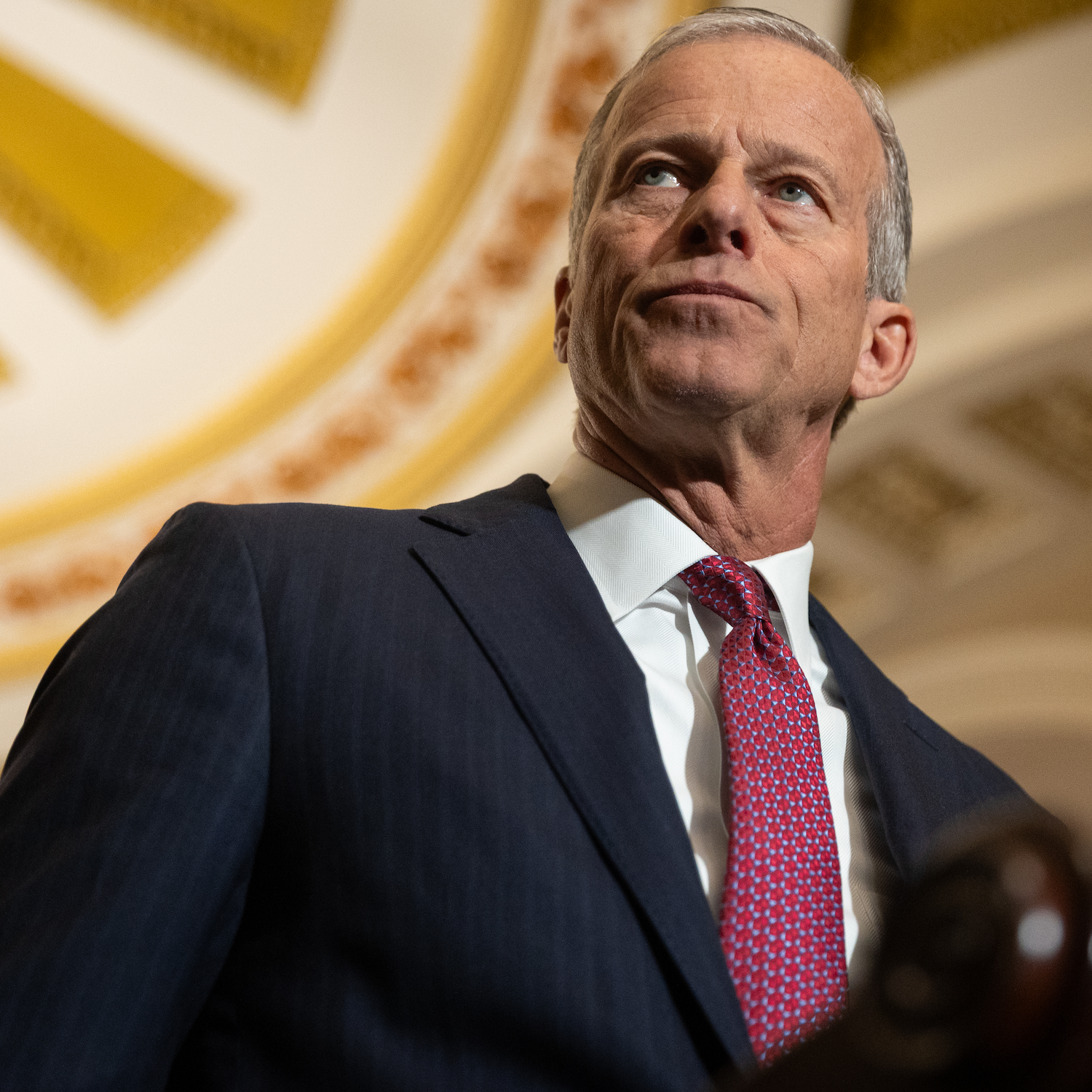
He also mentioned independent oversight of ICE by state and local governments and a ban on masks. DHS Secretary Kristi Noem has already authorized one of their demands, body cameras for agents. In a press conference earlier this week, Republican Senate Majority Leader John Thune laid out his party's parameters for negotiations.
- [01:35]
B
What I hope it doesn't devolve into is something that makes it harder, not easier, to deport and detain dangerous illegal aliens in this country. And I also hope that it focuses on protecting and ensuring that the law enforcement officers in this country are safe in their jobs.
- [01:55]
A
The breadth of Democrats demands and the short timeline before funding runs out has turned this into a real challenge.
- [02:02]
B
The idea of doing them in this condensed timeframe of less than two weeks, I mean, 10 days from when the bill was signed into law, is very questionable in and of itself.
- [02:10]
A
Sahil Kapoor is a senior national politics reporter at NBC News. It's not only a question of time, though. Republicans have real reservations about some of the conditions Democrats are pitching, including the ban on masks for ICE agents.
- [02:25]
B
So Republicans are concerned about that. They're not sold on requiring judicial warrants as well. The Trump administration doesn't want that. They prefer to have maximal power in House to carry out a mass deportation program they believe Trump was elected to carry out.
- [02:38]
A
And Republicans have demands of their own. Some members are calling for a crackdown on sanctuary cities in this legislation, which would pave the way toward penalizing local law enforcement who refused to turn over people believed to be in the country illegally to federal law enforcement, whereas Democrats.
- [02:56]
B
And a bunch of mayors and governors, especially in blue parts of the country, say that makes the community less safe. It creates a chilling effect between ordinary residents, citizens and their local police if they're, for instance, required to turn over someone who's been in their community who's not doing anything wrong if no deal.
- [03:13]
A
Is reached, Kapoor said that it's not totally clear if DHS would be funded immediately.
- [03:18]
B
It's an open question whether DHS would be funded at all or if Democrats would block a continuing resolution. And that would impact not just immigration enforcement, but it would also impact tsa, it would impact fema, a whole bunch of things under dhs.
- [03:36]
A
As Congress enters intense negotiations in Minnesota, Trump's border czar Tom Homan announced they would be reducing the presence in the state by 700 officers, while Democrats point out that still leaves 2300 on the ground. It has been the harshest Ukrainian winter for a decade, made worse by some of the biggest Russian attacks so far this year. As the temperature plunged to freezing this week, Russian military targeted energy infrastructure and residential buildings, knocking out power and putting people out on the streets. One European foreign minister has called it a war crime. After an informal week long ceasefire on attacks on energy infrastructure, Ukraine says Russian forces struck at power plants again on Tuesday, leaving more than 1,000 apartment buildings in Kyiv without heat. The attacks come as Ukraine, Russia and the US Met for peace talks yesterday, the first face to face meeting for months. Ukrainian President Volodymyr Zelensky, who recently declared a national energy emergency amid the strikes and the cold, has said he believes Russia's attacks are a strategy to force ordinary Ukrainians to accept an unfavorable deal.
- [05:02]
C
We think it's a goal for them to make our life impossible and to force us to move out our own country.
- [05:10]
A
Veronika Melkozyrova is a reporter with Politico Europe who spoke to us from a dark apartment in Kyiv.
- [05:18]
C
Most of the time we don't have electricity because Russian forces keep deliberately barraging our energy system, making our lives as civilians as miserable as they can.
- [05:30]
A
Mel Kozerova wrote a piece recently that describes the steps she and other Ukrainians are taking to survive the winter. She told us part of her routine these days includes walking up and down from her apartment on the 14th floor to retrieve liters of water and deliver them to her 80 year old grandmother.
- [05:48]
C
When there is no electricity in my apartment, the only way to keep my food and beverages okay is to store them on the balcony where it's like minus 15. So it's very hard to be there.
- [05:59]
A
Some Ukrainians have resorted to taking shelter in malls or emergency tents for access to electricity. Melkozyrova said how disheartening it was that Russia's war in Ukraine doesn't make headlines as it once did.
- [06:12]
C
The reaction has been disappointment, although we're constantly labeled ungrateful because the world has done so much for us. But unfortunately other countries got tired of this war, while we cannot afford to get tired because we're going to cease to exist.
- [06:29]
A
The talks this week are set to go on until tomorrow. President Trump's adviser, Steve Witkoff, has described them as productive, though Zelenskyy said the recent bombardment on energy infrastructure had forced them to shift position. The Milan Cortina Winter Olympics are underway. Here comes the yellow into the ridge as grazes it. It is going to be a steal of 4. Huge steal for Sweden. The Swedes got the first win of the 2026 games yesterday, beating South Korea in mixed doubles curling, a sport that's captured attention in recent Games. It's one of 16 sports, 116 medals and nearly 3,000 athletes expected on DIS over the coming weeks. A lot to organize for the International Olympic Committee. But one thing they can't control is maybe the most important thing of all the weather.
- [07:27]
D
As we are seeing the climate warm, the number of possible host locations that can host the Winter Olympics decreases.
- [07:36]
A
Janice Kai Chen is a reporter for the Washington Post and has been looking at how climate change is affecting the Games.
- [07:43]
D
By the middle of the century, there could be fewer than 20 countries with the right conditions to host the Games.
- [07:49]
A
A study commissioned by the IOC in 2024 concluded that if global emissions continue as is, there will be just 52 locations that are climate reliable by the 2050s and just 46 by the 1880s.
- [08:04]
D
The study defines climate reliability based on two parameters, and that is the probability that the location will be cold enough, and the second parameter is the probability of adequate snow.
- [08:17]
A
Depth concerns over snow have long been on the mind of ski officials. Just weeks ago, large portions of bare ground dotted the downhill course in Bormio, the site of several planned events, including men's alpine skiing. Usually, a solution to that is to make snow with machines. The Olympics have relied heavily on artificial snowmaking since it was first used in Lake Placid in 1980, and while it's useful, it can also present some problems when temperatures are too warm to make snow during the day. Ultimately, this year, as in many Olympics past, lots of the snow you'll see on TV will be artificially made.
- [08:54]
D
We actually found during a reporting that they're going to use up to 100% artificial snow in certain areas and the only place that they're going to use less snow is, I believe in the Cortina area where they're going to be using as low as 85%.
- [09:10]
A
Chen reports the Paralympic Games, under current climate projections, could suffer the most because they're held after the Olympic Games in March. Temperatures Temperatures get even warmer, presenting even more problems. Some solutions that have been floated include hosting the Paralympic Games a month earlier in January, or hosting them in a different city than the Olympics. Ultimately, though, researchers told Chen, what really needs to happen is we need to address the root cause of the issue, which is emissions. Olympic athletes are also getting on board with that messaging. B Kim, a 19 year old snowboarder competing for Team USA this year, is part of an organization called Protect Our Winters, a climate advocacy group for outdoor enthusiasts. She spoke in 2024 at the UN's International Day of Sport and Peace.
- [09:59]
C
I've gone around the world to Europe and New Zealand training and competing, and I've seen one common theme throughout. I've seen how the world is changing, the glaciers are melting that we're actually riding on. Our winters are starting later, the weather patterns are becoming more erratic and each year we wonder if there'll even be enough snow for us to compete and do what we love.
- [10:30]
A
And finally, a few other stories we're following. The Supreme Court has given the green light for California to use a new congressional map for this year's midterm election. The decision delivered a major victory for Democrats and could help the party gain up to five seats as Democrats and Republicans fight for control of a narrowly divided House. The redistricting effort, which was led by governor Gavin Newsom and approved by California voters last year, was a response to a new map drawn in Texas at President Trump's urging. Similarly, Texas map boosts the GOP's chances of winning up to five additional House seats in response to an emergency request by Republicans to block California's redistricting plan. The Supreme Court decision delivered a one sentence order concluding the lines were drawn on a partisan but ultimately legal basis and not a racial one, as Republicans had alleged. Mass layoffs have hit the Washington Post. About one third of the staff are reportedly losing their jobs, according to the ap. The paper's entire sports desk, its book section and several foreign bureaus are being eliminated, including the entire Middle east staff, citing financial hardships. The Post's executive editor, Matt Murray told employees the cuts were, quote, a strategic reset and were not a reflection of the work being produced. Amazon founder Jeff Bezos purchased the paper back in 2013 for $250 million, at a time when many newspapers were shuttering or getting bought by larger chains. But the paper's leadership has struggled to make the product consistently profitable. And finally, a group of Buddhist monks is in the final stretch of a 2,300mile peace walk that began in Fort Worth, Texas, and will soon end in Washington, D.C. the group of 19 monks started walking on October 26, and they recently arrived in Richmond, Virginia, as they make their way to the capital. Their mission, they say, is to raise awareness of inner peace and mindfulness across the US and the rest of the world. Here is the Venerable Bhikkhu Panyakara, speaking to a crowd gathered in Richmond earlier this week.
- [12:42]
B
We will continue our walk until the end, until we finish. And Washington, D.C. is not the final destination because we here need the world. Peace is it? And world peace is something that we need to walk for the rest of our life.
- [13:05]
A
The monks have gained widespread and positive attention as they've made their way from Texas through harsh cold conditions on the East Coast. Fast Company reports that across social media the group has amassed 5 million followers with their message of peace. They're set to arrive in Washington on Tuesday. You can find all these stories and more in the Apple News app. And if you're already listening in the News app right now, we've got a narrated article coming up next. Texas Monthly reports on Texas A and M University and how big firings, the clampdown on dissent and changing politics are reshaping the storied school. If you're listening in the podcast app, follow Apple News plus Narrated to find that story. And I'll be back with the news tomorrow.