Loading summary
Transcript29 lines
- [00:05]
A
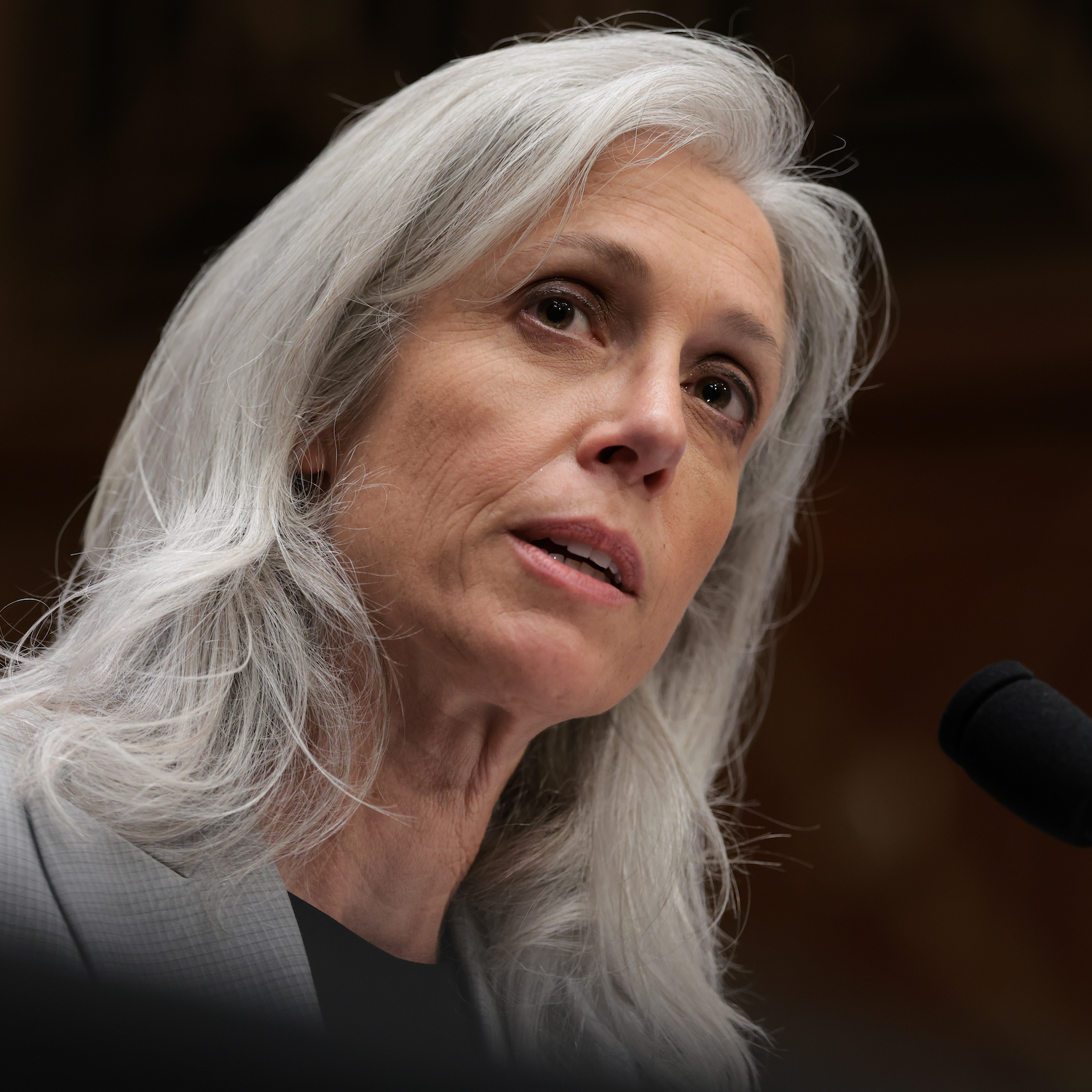
Good morning. It's Thursday, August 28th. I'm Shemitah Basu. This is Apple News today. On today's show, a fatal mass shooting at a Minneapolis church, how the good fire in the Grand Canyon went very bad, and signs of a diverse tropical paradise in Illinois. But first, the agency tasked with protecting the country's public health was plunged into confusion and crisis last night. The newly appointed director of the Centers for Disease Control and Prevention has been fired after reportedly refusing demands from Health Secretary Robert F. Kennedy, Jr. To quit or be fired. At the same time, several other senior CDC leaders quit in frustration over the political climate. This comes after months of uncertainty at the AGENC budget cuts and the termination of hundreds of employees. Dr. Susan Menarez had only been in the role for a few weeks when the Department of Health and Human Services announced her departure on social media yesterday and thanked her for her service. That same evening. Her lawyers denied that she had been fired and said that she would not resign. They said she had been targeted because she, quote, refused to rubber stamp unscientific, reckless directives and fire dedicated health experts. The statement also accused Kennedy of weaponizing public health for political gain. The White House then formally fired her, saying in a statement, quote, susan Manarez is not aligned with the President's agenda of making America healthy again. According to the Washington Post, Kennedy put Monarz under pressure to support rescinding certain approvals for Covid vaccines and questioned whether she was aligned with the administration's plans to change vaccine policy. The Post reports that she declined to commit without consulting advisors, prompting Kennedy's demand that she goes. Menarez then recruited the support of Republican Senator Bill Cassidy, who was a crucial vote in Kennedy's confirmation on the condition of protecting access to vaccines. That reportedly only further angered Kennedy. Menarez is a longtime civil servant and health scientist. In her confirmation hearing, she said that vaccines saved lives and advocated for public health interventions. But she sidestepped questions about Kennedy's decision in June to dismiss the independent panel of vaccine experts.
- [02:35]
B
Part of the secretary's vision in restoring public trust is making sure that the American people can be confident in the way that the evidence and science are driving decision making. The secretary made a decision that resetting the ACIP from the 17 previous members to a new cohort of members was going to be on the path of restoring that public trust.
- [03:01]
A
And she said she saw no link between vaccines and autism, a claim that Kennedy has made in the past despite years of studies that have not found evidence to support that. In a Cabinet meeting this week, Kennedy promised Trump imminent news that would reveal why autism rates have risen in the.
- [03:18]
C
US we will have announcements, as promised in September. We're finding interventions, certain interventions now that are clearly almost certainly causing autism, and we're going to be able to address those in September.
- [03:35]
A
In Manaras first week on the job as the agency's director, a shooter fired into CDC headquarters, leading the union representing CDC workers to condemn vaccine misinformation. Here's Monarz at the time addressing the work of public health officials to Atlanta. News 1st they're selfless.
- [03:53]
B
They don't expect to be on the news. They don't expect to get the headlines. They come in every single day to do their job and to make America healthier. And my job is to be their best ambassador.
- [04:06]
A
At least four other senior officials have now also quit. That includes the chief medical officer, Deborah Howery, who said ongoing changes prevent her from continuing her job. Dimitri Deskalakis, director of the national center for Immunization and Respiratory Diseases, similarly said the weaponizing of public health had caused him to quit. Meanwhile, yesterday the FDA announced the approval of updated Covid vaccines, but the agency has narrowed eligibility only to people 65 and older or people with risk factors for severe disease. Now to Minneapolis and the church school shooting that left at least two children ages just eight and 10 dead and 17 people injured. Of those injured, 14 were children and three were adults in their 80s. Dozens were seated in the Annunciation Catholic Church to attend Mass across from the Annunciation School when a shooter fired rounds of ammunition from three weapons through a stained glass window. Here's Minneapolis Mayor Jacob Fry speaking yesterday.
- [05:18]
C
These were Minneapolis families. These were American families. And the amount of pain that they are suffering right now is extraordinary. And don't just say this is about thoughts and prayers right now. These kids were literally praying. It was the first week of school. They were in a church.
- [05:35]
A
School principal Matt DeBoer spoke about the.
- [05:37]
C
Bravery of his colleagues within seconds of this situation beginning. Our teachers were heroes. Children were ducked down. Adults were protecting children. Older children were protecting younger children. And it could have been significantly worse without their heroic action.
- [05:55]
A
And stories emerged from the children themselves. Here's 10 year old Weston Housney speaking to CBS affiliate WCCO.
- [06:03]
D
I was like two seats away from the stained glass windows. They were like, the shots were like right next to me. The first one, I was like, what is that? I thought it was just something. Then when I heard it again, I just ran under the pew and then I covered my head. My friend Victor, like saved me, though cuz he laid on top of me but he got hit.
- [06:23]
A
Weston said he believed Victor was in the hospital and okay. He also said they knew what to do because they'd often practiced responding to shootings. The shooter has now been identified as 23 year old Robin Westman, who died by suicide at the scene. Westman had used a pistol, shotgun and rifle, all purchased legally and had no known criminal record. Westman posted what police described as a manifesto to YouTube. The video shows a collection of guns with hate filled messages scrawled across them, as well as a handwritten note that sketched out the church building. CNN reports that according to a yearbook photo, Wespin graduated from the school in 2017. Police say they're still investigating the motive and the FBI has described it as an act of domestic terrorism. The state of Minnesota's fatal gun violence is below the national average, but the city of Minneapolis has had particularly violent 24 hours. The Minneapolis Star Tribune reports that there were three separate shootings in the city unrelated to this that killed three people. Then, of course, Minnesota is where state House Speaker Melissa Hortman and her husband Mark were fatally shot in their home in June. Governor Tim Walls acknowledged the pain the state was going through.
- [07:39]
C
We'll stand with this community. We'll redouble ourselves to do the best we can to understand what we can do to prevent any parent from having to receive the calls they received today from any school dedicated to children having to respond to a situation that, as we said, is unthinkable. But that's all too common, not just in Minnesota, but across this country.
- [08:13]
A
According to CNN, yesterday marks the 286th mass shooting so far this year. Now to a fire that's been burning in the Grand Canyon and how it complicates the rationale behind letting so called good fires burn. On July 4, a lightning bolt struck the north rim of the Grand Canyon and sparked a small fire. At first, officials treated it like a good thing. Modern fire science says controlled fires can nourish the soil and keep dry brush in check. So they built containment lines to keep the fire away from people and historic buildings and then basically just let it burn.
- [08:59]
E
Then on July 11, an unpredicted serious windstorm comes up and just blows all the plans to hell.
- [09:08]
A
That's Jack Dolan, an investigative reporter with the Los Angeles Times. That fire, referred to as the Dragon Bravo fire, went from a small controlled burn to a megafire, becoming the largest in the United States this year. It's burned more than 145,000 acres and is 64% contained. According to KVOA Tuscan News.
- [09:29]
E
There was a mesa, like down in the canyon itself that was just like all the shrubbery and stuff on top of the flat mesa was burning. It looked like. I mean, it was crazy. It looked like a single birthday candle. If you've ever been to the Grand Canyon, it's just all these mesas sticking up. And one of them, it was on fire. And it's really dramatic, especially at sunset.
- [09:50]
A
Even as the fire gets brought under control, there are major questions about how and why this happened, whether it was a mistake, bad luck, or some combination of the two.
- [10:00]
E
Did they screw up the weather forecast? Did the people who saw that the fire was really building up quickly, did they ask for help, and did it not come in time?
- [10:11]
A
It'll take time for investigations to try to answer those questions. But in the meantime, experts and environmentalists fear that, that a massive fire like this taking place in one of the world's biggest tourist attractions will lead people to question the established science behind good fires.
- [10:27]
E
They're really worried that we'll end up throwing the baby out with the bathwater, essentially. It is not, you know, a welcome idea when it's happening in your backyard and these things create smoke. The smoke can drift to, like, elementary schools, assisted living, and it tests the patience of local officials and people living near these things.
- [10:47]
A
Dolan spoke to Len Nielsen, the staff chief in charge of prescribed burns and environmental protection for the California Forestry Department, who said he hopes investigators can pinpoint a specific failure, like a bad weather forecast, so that they can take concrete steps to prevent something like this from happening again. He believes controlled burns can play an important role in California's environment and says they go right the vast majority of the time. But also said, quote, it's always a roll of the dice. With wind being particularly hard to predict after this fire, some may use it as justification to say no to controlled burns.
- [11:24]
E
The question really becomes, what happens the next time, say, Cal Fire goes to some town in winemaking country and says, hey, we really think we should burn this hillside? Are they going to have to then answer a thousand questions about the Drachen Bravo fire in the Grand Canyon? Probably not a thousand, but probably a few, right? And, you know, the question is, like, how much harder is it going to.
- [11:49]
A
Be to do these things as it is? Dolan told us it's already been tough to get people on board. It took three years to get the necessary permits for a modest 50 acre prescribed fire in Mendocino county earlier this year because nearby vineyard owners worried the smoke would affect their grapes.
- [12:09]
E
Foreign.
- [12:16]
A
Before we let you go, a few other stories we're following. The Democratic National Committee's summer meeting in Minneapolis adjourned early yesterday as a result of the nearby church shooting. Over the course of several days, party leaders had gathered to discuss lagging fundraising and widespread unpopularity with voters, and to strategize about how to approach the midterms. One of the biggest clashes within the party was over resolutions having to do with Israel and Gaza, with the more liberal wing of the party wanting a forceful response to the suffering, and the more moderate pro Israel wing wary of alienating a longtime U.S. ally. In the end, neither resolution passed. David Weigel, political reporter at Semafor, was at the meeting, and he told us it ended with a shared sense of optimism for the midterms, as well as worry around what's still not sitting well right now with many voters.
- [13:08]
C
It's a sense that both the party needs to change and that also that it can't give up any ground. So nothing was settled. Nobody came out saying we figured out X or Y or Z. It was just a place where they had a lot of conflict and agreement to have conflict later down the line.
- [13:21]
A
In international news, the top US Diplomat in Denmark has been summoned for talks by the country after its national broadcaster reported that people with connections to President Trump were engaging in covert influence operations in Greenland. Trump has repeatedly expressed his desire to annex the Danish territory, which holds strategic and mineral value. The news network doctor claimed that one of the Americans was compiling lists of Greenland citizens for and against Trump's proposal, while the others were attempting to cultivate business people and politicians. The State Department said it did not control the actions of private citizens. And finally, researchers have uncovered an ancient tropical paradise underneath Illinois. The Weather Channel reports that after a re examination of fossils from the Maison Creek, a breakthrough was discovered showing that below what is modern day Coal City was a rich and diverse ecosystem that contained a unique collection of river fish and insects, as well as brackish waters with clams and an offshore environment rich in jellyfish. That might sound weird for Illinois, but researchers point out that the continent looked very different 300 million years ago. You can find all these stories and more in the Apple news app. And if you're already listening in the news app right now, we've got a narrated article coming up next. Glitter is usually only useful for things like arts and crafts, but what about solving a murder? Popular Mechanics has the story of how a forensic scientist In Ventura County, California used just 10 pieces of red glitter to help solve a heinous murder. If you're listening in the podcast app, follow Apple News plus Narrated to find that story. And I'll be back with the news tomorrow.