← Apple News Today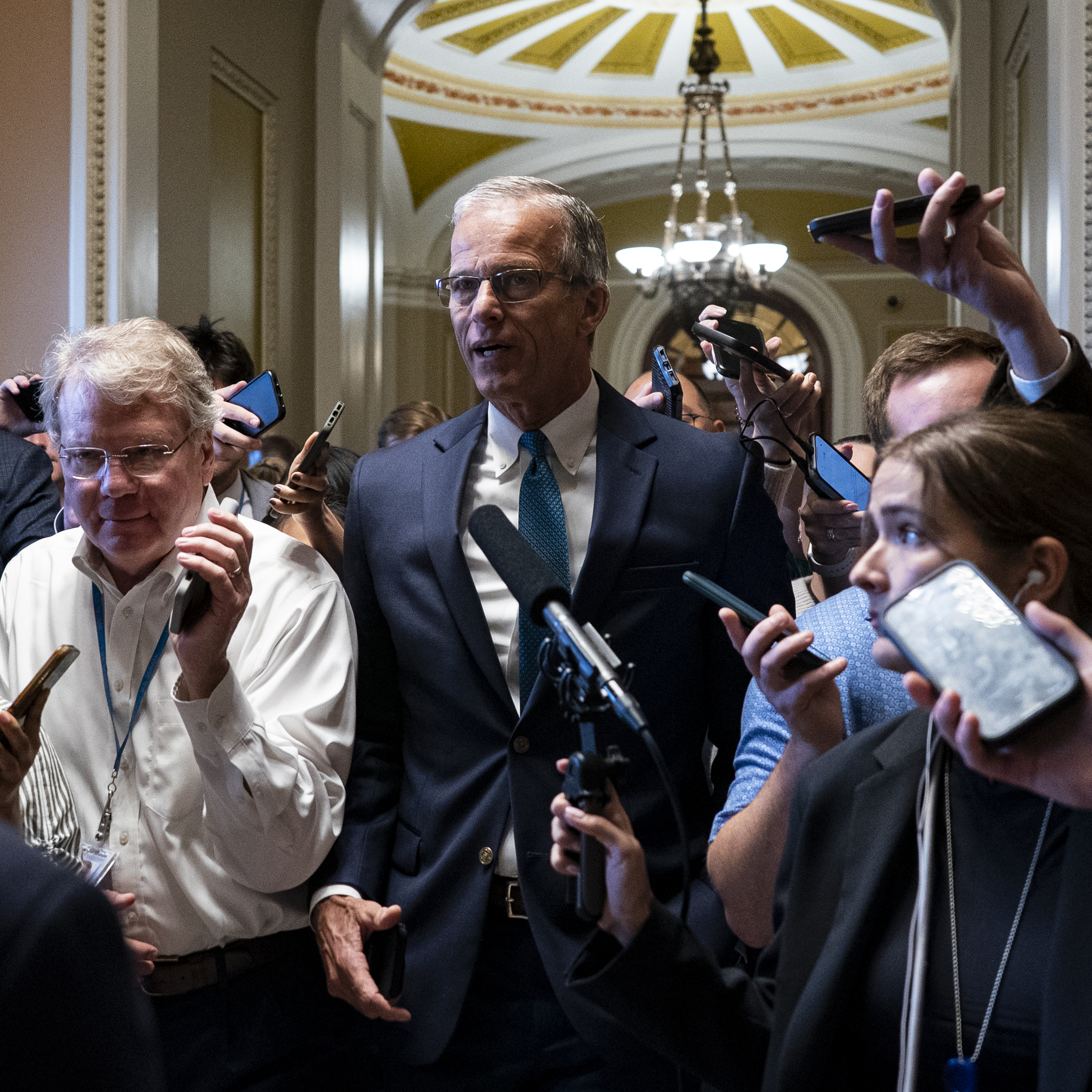
Loading summary
Transcript25 lines
- [00:00]
Shamita Basu
Hey, it's Shamita here. Did you know that it's been 20 years since Apple added podcasts to itunes? It was a huge move that helped take the emerging medium into the mainstream. To celebrate, Apple podcasts is featuring 20 podcasts from the past 20 years that have made a lasting impact on listeners and the whole industry. From cereal to this American Life to Las Culturistas, the list offers something for every listener. Go to Apple Podcasts to check out the list and revisit some of your favorite shows from the past 20 years. Good morning. It's Tuesday, July 1st. I'm Shemitah Basu. This is Apple News Today. On today's show, aid workers face difficult decisions in Sudan after US Funding cuts, the Biden era asylum app redesigned to speed up deportations, and the WNBA is set to welcome three new teams. But first, the Senate spent the bulk of Monday weighing a long list of potential amendments to the sprawling tax and spending package. Two Republicans have said that they would not vote for the legislation, and others have indicated that they might still be undecided, with critics coming from different factions of the party. Four Republican votes against it would be enough to kill the bill in the Senate. The White House, meanwhile, is still pushing for passage of the bill by Friday, which would also require it to go back to the House for another vote there. Even as the amendments fly in the big picture, finances of the bill have not changed much. A recent estimate from the Congressional budget office, the CBO, spelled it all out. This bill contains $5.1 trillion in tax cuts, paid for in part by spending cuts and by adding to the national debt. $1 trillion will come from Medicaid, for example, the biggest single cut, and around $500 billion from clean energy cuts. And then $3.3 trillion added to one financial maneuver that Republicans are making here is worth a closer look. The Wall Street Journal reports that they have claimed that any extensions of expiring tax cuts that are in the legislation should not count toward impact on the federal budget. Richard Rubin, tax policy reporter for the Journal, explained this to us.
- [02:23]
Richard Rubin
What Republicans are doing is basically saying, look, there's all these tax cuts that are expiring at the end of the year if we extend them even though they're scheduled to expire. That doesn't have a cost. That's like, we all know we're going to do it. It doesn't change anybody's taxes, really. So that shouldn't count as a cost against us in our bill.
- [02:43]
Shamita Basu
According to the cbo, when you frame it that way, it turns the Senate bill from a $3.3 trillion deficit increase into a $508 billion deficit decrease over the next decade. And critically, that means that it can pass through the process of budget reconciliation, which means that Republicans only need a simple major majority to pass it, as opposed to the support of 60 senators.
- [03:06]
Richard Rubin
That path of reconciliation, those simple majority bills come with strings attached. One of the big strings is if you're looking beyond the first 10 years, you can't increase budget deficits. And so Republicans are saying, well, yeah, like, because we're measuring against a world where the tax cuts are all permanent already anyway, then we're lowering deficits beyond the 10 years. Thus, we can make all these tax cuts permanent.
- [03:32]
Shamita Basu
Rubin told us that this method has not been used in this way before, not even when Republicans passed the initial Trump tax cuts in 2017. It was driven forward by Lindsey Graham, who defended it over the weekend as a power granted to him as Budget Committee chairman. We voted to make that the case. So we're not doing anything sneaky. We actually voted to give me the authority to do this, and it passed. But the change has drawn a lot of disapproval from Democrats. Senate Minority Leader Chuck Schumer characterized the GOP effort like this on Sunday.
- [04:06]
Katherine Harold
Republicans are doing something the Senate has never done before, deploying fake math accounting.
- [04:13]
Shamita Basu
Gimmicks to hide the true cost of the bill. This process could also open the door to Democrats trying similar accounting tricks in the future.
- [04:23]
Richard Rubin
Congress creates things with expiration dates all the time. So Democrats in 2021 created the child tax credit expansion for one year. Under this precedent, you could very well argue, say, well, okay, that in the end of 2021, that was current policy, and so extending it is free. Democrats could create Medicare for all for two years and count the cost as two years worth and then say it's free. So some people have called this a Pandora's box sort of situation.
- [04:47]
Shamita Basu
Currently, the national debt exceeds $36.2 trillion and in the next 30 years could top 250% of the country's annual economic output. Even without this current piece of legislation. Today marks a turning of the page at usaid, which has spent six decades as an independent federal agency. It's now officially been absorbed into the State Department. Agency staffers watched a recorded video farewell featuring former Presidents Barack Obama and George W. Bush. Obama told staffers their work has mattered for generations to come. And he issued a rare public criticism of President Trump, calling his dismantling of USAID a, quote, colossal mistake. The move to shrink USAID was one of Trump's first actions in office when he decided to freeze foreign aid spending. Trump and Elon Musk's Department of Government Efficiency cut the majority of the agency's staff and canceled almost all its awards, contracts and grants. Programs funded by USAID were the difference between life and death for many, particularly in Sudan, where more than two years of violent civil war has resulted in one of the largest humanitarian crises in the world. The United States has been the world's single biggest donor of humanitarian aid, contributing 44% of the UN's $1.8 billion relief fund. As political backlash grew over the initial USAID cuts, Secretary of State Marco Rubio issued a humanitarian waiver to some countries, including Sudan. In theory, that would allow for life saving work to continue, but in practice, aid workers report disarray. Many staffers had already been fired, payment systems canceled and teams on the ground shutting operations amid confusion. Katherine Harold is the Eastern Southern Africa Bureau chief for the Washington Post, who spoke to us about what she observed in Sudan. Harold said she had just finished an interview with a physician in a small village about the impact of USAID cuts as a funeral was taking place next door.
- [07:00]
Nick Miroff
They were having a funeral for this 3 year old boy who unfortunately had just died because he wasn't able to get some basic medication.
- [07:10]
Shamita Basu
The child's name was Omron. Doctors say his death was avoidable and that basic antibiotics would have likely cured his chest infection. Medicine was supposed to be delivered in February through the International Rescue Committee, but it stalled as a result of the stop Work order from Washington. Harold said Omron's mom tried to get him the medical attention he needed.
- [07:31]
Nick Miroff
She just had to go trudge from clinic to clinic carrying this feverish little boy who kept clinging to her and saying, mom, I'm so sick, I'm so sick. Please help me, help me get better. And she couldn't find the medicine for him anywhere.
- [07:44]
Shamita Basu
Sudan's civil war has devastated the nation's infrastructure. An attack on its water filtration plant and electrical grid meant the water pumps were knocked out. People are left to drink from polluted rivers or contaminated wells, which has led to the spread of cholera.
- [07:59]
Nick Miroff
Hospitals don't have the medicine that they need to treat people. You know, just imagine trying to take care of your kids and keep them alive in the middle of a desert and you don't know what's coming from day to day, whether there's any food or any water or anything like that.
- [08:11]
Shamita Basu
The UN's top relief coordinator in Sudan told the Post that the US Cuts to aid have forced them to make incredibly difficult decisions.
- [08:19]
Nick Miroff
Every day is a new and terrible choice, both for the aid workers that are having to cut these budgets and for the people also that are having to decide which child am I going to feed today?
- [08:41]
Shamita Basu
Let's turn now to how the Trump administration is repurposing a Biden era immigration app originally designed to process asylum claims. The Atlantic's Nick Miroff told us how the newly revamped app works.
- [08:54]
Katherine Harold
The CBP Home app is the technological piece of a broader psychological campaign that the administration is waging to intimidate people who are here without legal status or who have had their legal status taken away by the Trump administration.
- [09:12]
Shamita Basu
The app used to be called CBP1 and it allowed migrants to schedule an appointment at a designated port of entry. It was a way to speed up the administration process for asylum seekers trying to enter the U.S. now it's being used to encourage people already in the country without legal status to self deportation.
- [09:30]
Katherine Harold
Some listeners will perhaps already have seen ads that feature DHS Secretary Kristi Noem urging people to use the CBP Home app to leave the country now and really threatening them with harsh treatment if they don't accept the offer.
- [09:47]
Shamita Basu
The Department of Homeland Security has budgeted up to $200 million to run these ads in the US and overseas, and over 100,000 illegal aliens have been arrested. If you are here illegally, you're next. You will be fined nearly $1,000 a day, imprisoned and deported. You will never return. But if you register. Miroff told us about one taxpayer funded ad that features images of deportees at the notorious Zakat prison in El Salvador. That's where the administration sent hundreds of men originally from Venezuela earlier this year against court orders, including Kilmar Abrego Garcia. Most of those men had no criminal.
- [10:27]
Katherine Harold
Convictions in the U.S. it's really part of a broader kind of propaganda attempt by the administration to make deportation seem really harsh and scary and to entice people to take the government's offer to self deport using that app.
- [10:43]
Shamita Basu
In another video posted to her personal social media account, Noem threatened to send anyone who enters the country illegally to Sakat. And the White House's media campaign in recent months has also included posting mugshots of immigrants on the White House lawn and sharing videos on social media of migrants in shackles being shepherded onto deportation flights.
- [11:04]
Katherine Harold
And the more they can make the deportation process seem scary, intimidating and harsh, the more success they think they'll have with the CBP Home app and this self deportation plan.
- [11:16]
Shamita Basu
DHS is offering to pay $1,000 to people who elect to self deport through the app, in addition to subsidizing airfare and promising temporary protection from ICE enforcement. A senior administration official told the Atlantic that more than 7,000 people have signed up to leave of their own volition and more than 3,000 have confirmed departures in the app, with official public data difficult to come by. Before we let you go, a few other stories we're following an 82 year old woman has died following the injuries she sustained at last month's firebombing attack in Boulder, Colorado. Karen diamond had been part of a group marching for the release of the remaining Israeli hostages when a man threw Molotov cocktails into the crowd in drank a dozen people. Her death was the first fatality of the incident and it means that Mohammad Sabri Suleiman, the man accused of carrying out the attack, now faces first degree murder charges and could face the death penalty. Soliman had previously pled not guilty to 12 federal hate crime counts brought against him. The Colorado sun reports diamond is being remembered as an active volunteer in community service and a decades long board member of Hadassah, an international organization of Jewish women. Now to the extreme heat still sweeping the country and how it's wreaking havoc on America's roadways. Across several states, including Wisconsin, Missouri and Delaware, drivers are navigating streets that quite literally can't take the heat which is making them buckle. In at least one case in Missouri, a car was sent soaring through the air as it crossed a big bump. NPR looked at why this is happening, and it more or less comes down to how roads are made. Asphalt is a pretty flexible material. In extreme heat it gets softer, which can form depressions on the surface of the road. But concrete does the opposite. It expands when it heats up, and when it has nowhere to go, it's forced up, creating little mountains on our roadways. Transportation experts are well aware of what can happen with concrete, and in places that are prone to extreme heat, like Texas, they plan for it by installing joints in the road that give the concrete room to expand and contract with the temperature. But states that don't typically experience heat waves this intense or for this long have a tougher time because their roadways just weren't designed with this weather in mind. And climate change is only making it worse. And finally, to a historic change coming for the wnba. Three new teams, one in Cleveland, another in Detroit, and a third in Philadelphia, will join the league over the next five years, adding to previously announced expansions with Toronto and Portland. It'll be the first time Philly has its own WNBA team, but for Cleveland and Detroit, this is a comeback story. Both cities previously had teams that either folded or relocated. Cleveland will be the first of the group to make its WNBA debut in 2028, where the team will share a stadium with the Cavaliers. The and this expansion is just another thrilling milestone for the league at large, which is breaking records for ratings, attendance and more. You can find all these stories and more in the Apple News app. And if you're already listening in the News app right now, we've got a narrated article coming up next. Rolling Stone examines the psychology of the ultra wealthy and how having a bigger bank account can make you less compassionate, less generous and more lonely. If you're listening in the podcast app, follow Apple News plus Narrated to find that story. And I'll be back with the news tomorrow.