Loading summary
Transcript27 lines
- [00:05]
A
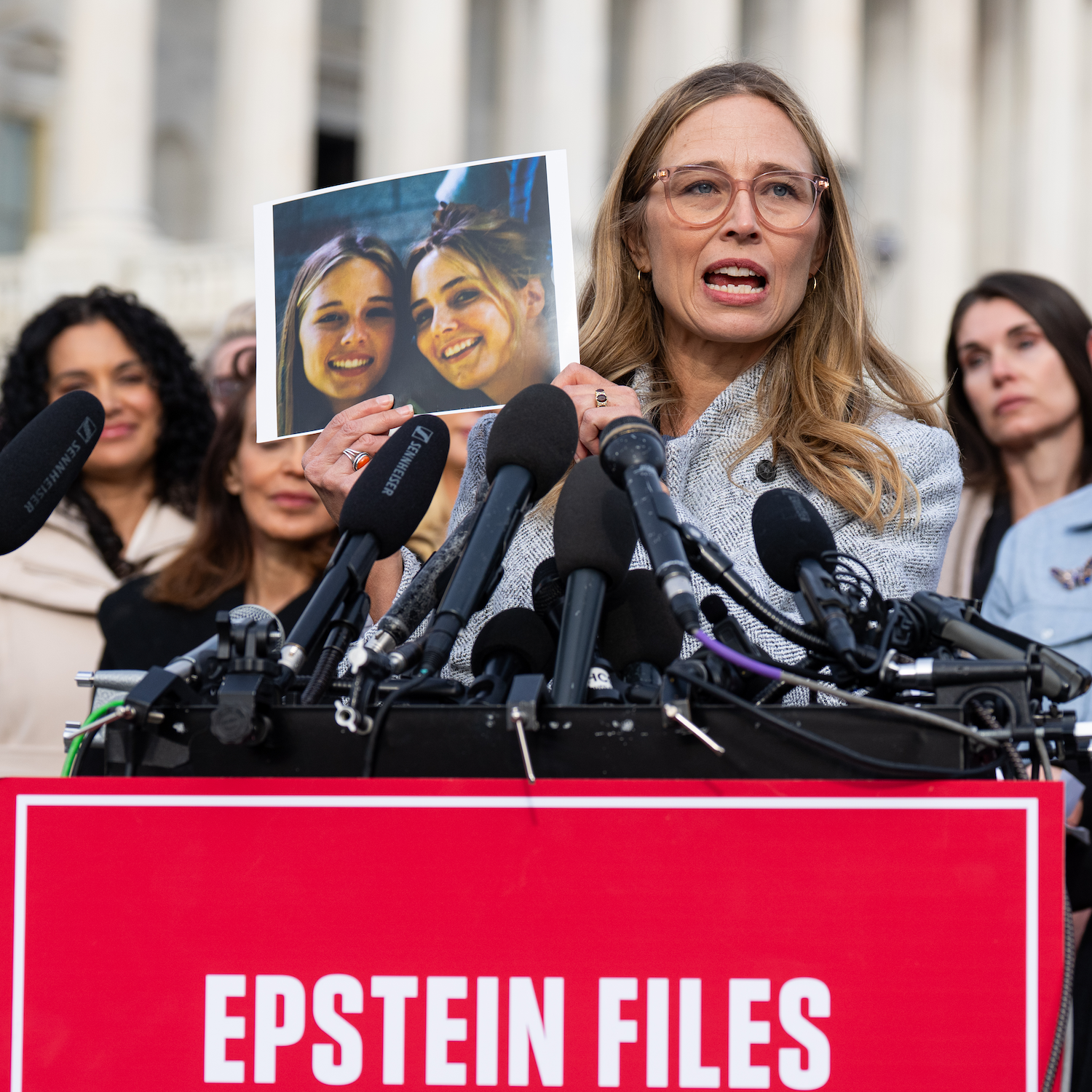
Good morning. It's Wednesday, November 19th. I'm Shemitah Basu. This is Apple News today. On today's show, the race to figure out a plan for health care subsidies, how Iran ran out of water, and raccoons are showing signs of domestication. But first, the bill to force the DOJ to release Epstein files breezed through the House and the Senate yesterday and now heads to President Trump's desk. This was the moment lawmakers in the House applauded abuse survivors and their families as they passed the bill, 427 to 1.
- [00:52]
B
The bill is passed, and without objection, the motion to reconsider is laid on the table.
- [01:01]
A
The single no vote was Republican Clay Higgins of Louisiana, who said he was concerned about, quote, innocent people being hurt with the release of the information. The vote was a major turnaround for the gop, which has for months largely resisted pressure to back the petition. But as momentum was building in the House, Trump's decision to back it all but cemented the result. Speaker Mike Johnson remained critical of the bill even as he voted for it and said the way it had been rushed through would prevent careful congressional scrutiny. That's why I'd been opposed to it all along. But having now forced the vote, none of us want to go on record and in any way be accused of not being for maximum transparency. He asked the Senate for changes that he said would offer more protections to victims. But in the end, senators fast tracked it through unanimous consent, meaning it'll pass unamended. The bill will compel the Justice Department to release all its files, ranging from travel documents to private correspondence, though there could be lots of redactions to protect victims. And the bill also allows for redactions of materials that would, quote, jeopardize an active federal investigation. Releasing the files doesn't require an act of Congress. And critics point out that Trump could have done so on his own. The White House says in response, they've released thousands of documents already, either proactively or in response to subpoenas. The President pledged to approve whatever comes to him.
- [02:28]
B
I'm for any. I don't. They can do whatever they want. We'll give them everything. Sure, I would let. Let the Senate look at it, let anybody look at it, but don't talk about it too much, because, honestly, I don't want to take it away from us. It's really a Democrat problem. The Democrats were Epstein's friends, all of them, and it's a hoax. The whole thing is a hoax.
- [02:53]
A
Democratic Representative Ro Khanna, co sponsor of the petition that got all this started, was asked on CNN before the vote why he thought the President changed his mind on supporting the bill.
- [03:04]
C
He can do math. I mean, Thomas Massie did a great job. We were working all weekend and had almost 100 Republicans who were going to vote for a bill in defiance of Donald Trump. And it's really a testament to their courage that despite the speaker keeping, shutting down Congress, they persisted and we're now going to have this successful vote.
- [03:24]
A
Yesterday's vote was the culmination of a years long campaign that at times seemed like a long shot. The disclosures along the way have already damaged the reputations of prominent figures on the left and right. And the political battle has been a major strain on both chambers and has even fractured Trump from some of his most loyal supporters. It's not clear whether the release of more documents will satisfy campaigners, raise more questions, or simply reaffirm much of what we already know. Lisa Phillips, who says she suffered years of abuse by Epstein, was among the women speaking at a press conference shortly before the vote and she explained what it meant for her.
- [04:04]
D
It's an honor to stand here again for something. America is finally united on the immediate release of the entire Epstein files. In a divided nation, this is one demand we all share. Last time I stood here, I made a promise to all survivors watching if those in power refused to release the truth, we would start uncovering it ourselves. For anyone who doubted that, that moment has already arrived.
- [04:33]
A
As soon as Trump signs the measure, the DOJ is expected to release their materials within 30 days. While Epstein dominates Congress in the short term, a longer term headache remains healthcare. Pretty soon millions of Americans will see their premiums jump as Covid era subsidies end. Democrats have been pushing to extend the subsidies. Republicans are now looking at new ways forward. Yesterday, President Trump dismissed any extension of the Affordable Care act subsidies in their current form, the ones that were at the center of the shutdown debate, as a waste of time. Instead, he wants the money diverted to the general public.
- [05:18]
E
There are several Republican lawmakers who are working to make that a reality. They're coming up with plans that would take subsidies, billions of dollars in ACA subsidies, and put them toward Americans health savings accounts, for instance.
- [05:30]
A
Dan diamond is a White House reporter for the Washington Post.
- [05:34]
E
These tax free accounts that you could use to say, pay for your eyeglasses, pay for parts of your checkup. But the challenge with those accounts is that they don't cover the intense hospital care that that many Americans end up needing. And in that case, you'd be essentially on your own, you'd have to pay out of pocket.
- [05:51]
A
The other challenge here is time. Subsidies will expire next month. Republicans can either back a version of the Democrats demand to simply extend in a vote that was promised in the Senate as part of the shutdown deal, or they can try and make something of Trump's plan. The nonpartisan Congressional Budget Office says more than 2 million people could end up with no insurance at all next year in the event of no extension or alternative health. Economists told diamond that an alternative plan like the one the president has offered would push healthy people to drop coverage and leave sick people behind to deal with skyrocketing premiums.
- [06:28]
E
One reason we have health insurance, this pooling of risk, is, you don't know, is it going to be a bad year for me this year, or am I going to need serious health care 10 years from now? So the idea that every American would just have some money to pay for their health insurance and in theory sure sounds okay, but in practice would leave many Americans bearing a lot more risk and a lot more spending if they have a health care emergency.
- [06:53]
A
Health care is one of those key pocketbook issues that can really sway an electorate, dimon told us. Surely some Republicans have that in mind as they're weighing the options in the next month.
- [07:04]
E
When Republicans voted in 2017 to repeal the Affordable Care act without much of a replacement, they were punished by voters the following year. It was a wave election for Democrats, so there are many Republican leaders who remember that, well, it was less than a decade ago. They don't want the party to go down that route again. And even people like the pollster to the president, Tony Fabrizio, have said, do not take these subsidies away. You will suffer in the midterm elections next year.
- [07:31]
A
ACA subsidies are politically popular. Around three quarters of Americans say Congress should extend the enhanced subsidies, according to a survey by the nonpartisan healthcare org KFF that includes half of Republicans polled. Still, some conservative lawmakers and experts say that the subsidies are an expensive artifact of the COVID 19 era, and that this is a moment for them to come up with an alternative to the Affordable Care Act. Iran is in the midst of a major crisis, not a military confrontation or political upheaval. The crisis is water. The country has endured its driest autumn in 50 years. Yesterday, some areas went from drought to floods as sudden rainfall fell on parched grounds that weren't able to quickly absorb all the water, causing flash flood conditions in places. But the crisis remains acute. Experts have said Iran is now water bankrupt. Here is Kaveh Madani, the former deputy head of Iran's Department of Environment, explaining this analogy to ABC News Australia.
- [08:42]
C
If you look at the situation of Iran, you see not only they have exhausted the surface water or the check, also their saving account. And for years they have spent more than what they could afford or what the nature was giving them, meaning that they exhausted or exploited all the non renewable water.
- [09:02]
A
While drought is the main culprit, other factors have also contributed, like overusage from agriculture. 90% of the country's water use goes to low yield agriculture to promote self sufficiency in Iran. There's also damage to infrastructure from Iran's 12 day war with Israel earlier this year and sanctions have prevented Iran from obtaining state of the art water technology. One Iran analyst, Ali Reza Nader, placed some of the blame on government inaction and poor planning while speaking on Germany's DW News.
- [09:34]
F
The government in Iran has had years and years to not only change its way, but prepare better for the crisis. It has really done nothing. It hasn't prepared the population, it hasn't given instructions to the people. It hasn't fixed Tehran's leaky pipes that are responsible for perhaps 35% of the problem. So the government in Iran is really to blame for a lot of this. And not just drought.
- [10:03]
A
Iran's crisis has led officials there to undertake desperate measures, most notably cloud seeding, an unproven technology that involves spraying clouds with chemicals in hopes of producing rain. Rainfall across Iran this year is down 85 below average. Meanwhile, Tehran, the capital, a city of 10 million people that's about as densely populated as New York City, is staring down the possibility of soon facing day zero. That's when a municipality can no longer supply drinking water to its residents. The country's president has argued that the water supply issue is just one of many that make the case for moving Iran's capital from Tehran to a city further south. And he said if rain doesn't fall in Tehran soon, they might have to consider the monumental work of evacuating the city. Before we let you go, a few other stories we're following. President Trump says he does not hold Saudi Arabia's Crown Prince Mohammed bin Salman responsible for the 2018 killing of journalist Jamal Khashoggi. In an exchange with a reporter in the Oval Office, Trump brushed aside a question about the late journalist who the CIA concluded was killed on bin Salman's orders.
- [11:24]
D
Your Royal Highness, the US Intelligence concluded that you orchestrated the brutal murder of a journalist. 911 families are furious that you are.
- [11:32]
A
Here in the Oval Office. Who are you with? Who are you with? Why should Americans trust you?
- [11:35]
B
Who are you with?
- [11:36]
A
The reporter was with ABC News, which Trump criticized, before going on to address the question this way.
- [11:42]
B
You're mentioning somebody that was extremely controversial. A lot of people didn't like that gentleman that you're talking about. Whether you like him or didn't like him, things happen. But he knew nothing about it and we can leave it at that. You don't have to embarrass our guests by asking a question like that.
- [11:58]
A
Ashokji was a critic of Saudi Arabia's government and disappeared in 2018 after entering the Saudi consulate in Istanbul. Saudi officials later admitted to killing him but maintained the crown prince wasn't involved. A panel of judges has blocked Texas's gerrymandered congressional map that was approved by state Republicans earlier this year. The map, which was redrawn to give the GOP up to five additional Republican seats in the U.S. house, was created at President Trump's request. The federal judges say the maps were an illegal race based gerrymander. The Texas Tribune reports this is a major blow to Republicans as it appears they may not have a legal path to implement the maps before the 2026 election, which was entire reason for the mid decade redrawing. Because voting rights cases don't follow the typical legal appeals process, the Supreme Court is Texas's only recourse. Texas Attorney General said he will appeal the decision. And finally, scientists say some raccoons have become so comfortable living alongside humans that they've begun to evolve early signs of domestication like shorter snouts, Scientific American reports. The study's authors say most people think about domestication the wrong way as something that humans initiate by capturing wild animals. But they say their research suggests it actually begins much sooner when animals start to become comfortable around humans and pass those non reactive traits to their offspring. The scientists note there is some additional research they would like to conduct with one of them saying they would like to see if our trash pandas in our backyard are really friendlier than those out on the countryside. You can find all these stories and more in the Apple News app. And if you're already listening in the News app right now, we've got a narrated article coming up next. Esquire spent several days at a privately owned ICE facility in Eloy, Arizona. What they discovered among detainees and families was a mix of resignation, willingness to fight, and most importantly, confusion over which bad option to choose. If you're listening in the podcast app, follow Apple News plus narrated to find that story, and I'll be back with the news tomorrow.