Loading summary
Transcript23 lines
- [00:05]
Shemitah Basu
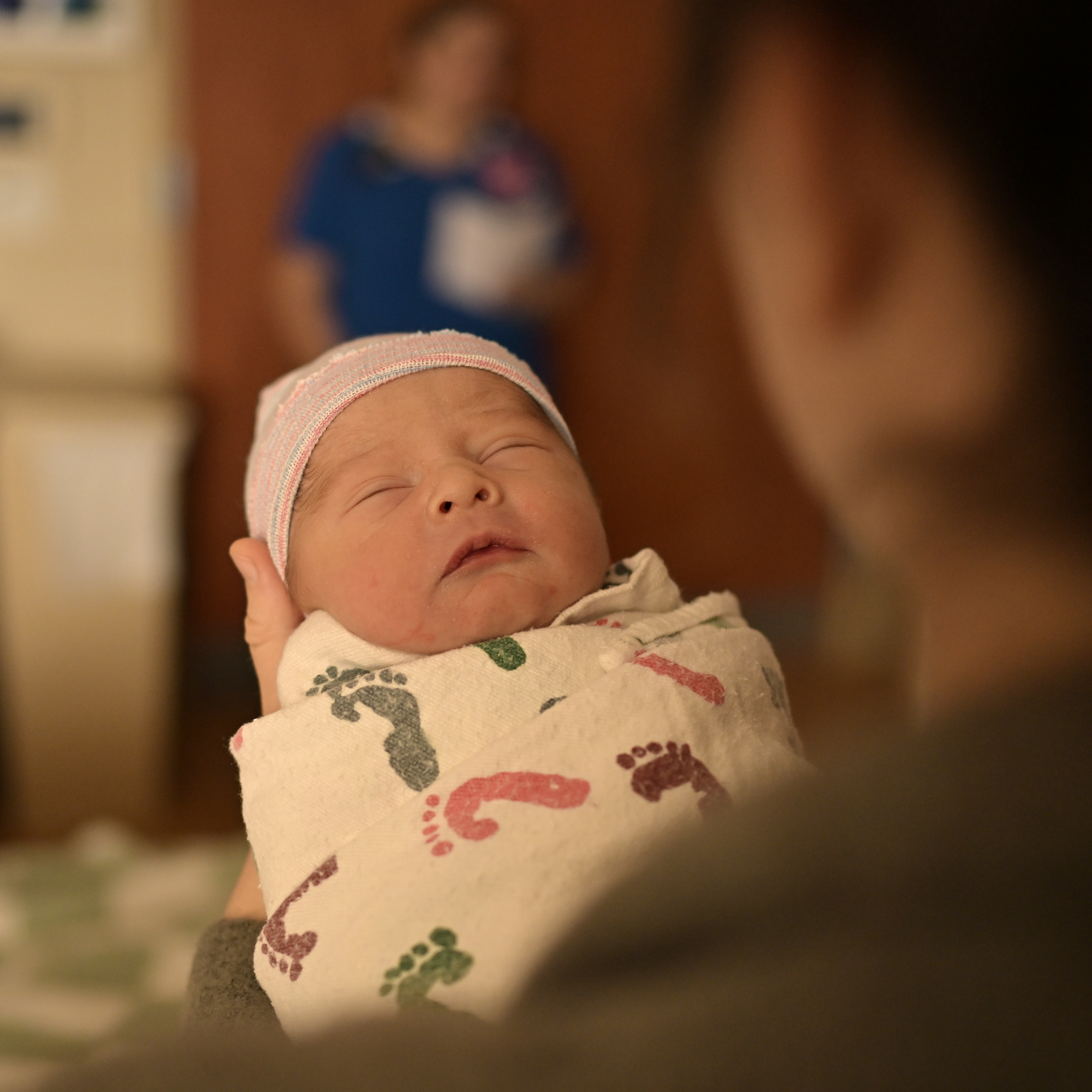
Good morning. It's Tuesday, June 3rd. I'm Shemitah Basu. This is Apple News Today. On today's show, what we've learned about Sean Combs halfway through his trial, the blunt extortion, threats against high profile crypto investors, and reparations planned in Tulsa, Oklahoma. But first, to an unlikely alliance in Congress that aims to lift a huge burden off of families in the United States by radically reducing the cost of having a child. If you have kids, then you know it's incredibly expensive. Starting from day one, a hospital birth can cost tens of thousands of dollars. And while people with insurance get some of that covered, the final price tag can still cost thousands. But not to mention, childcare in the US Is more expensive than any other developed country. A bill introduced by the Senate last month wouldn't solve for that last issue. But a group of bipartisan lawmakers want to make all costs related to childbirth, from prenatal care and ultrasounds to delivery and postpartum care, completely free, no co pays or deductibles involved, which would put private coverage on par with Medicaid, which already covers those costs.
- [01:27]
Rachel Cohen
It's a really unusual mix of people thus far supporting this bill.
- [01:32]
Shemitah Basu
Rachel Cohen covers policy for Vox.
- [01:35]
Rachel Cohen
But I think it really speaks to the fact that across the political spectrum, across the ideological spectrum, people recognize that the cost of giving birth in America is so just ridiculously high. And it's not like this across the world.
- [01:48]
Shemitah Basu
The bill is being sponsored by Republican Senators Cindy Hyde Smith from Mississippi and Josh Hawley from Missouri, as well as Democratic Senators Tim Kaine from Virginia and Kirsten Gillibrand from New York. Their bill delivers wins for both parties. It can be championed as a pro family policy that potentially reduces abortions, and it's a way to expand health care access. And Cohen reports that a companion version of the policy is expected to be introduced to the House in the next few weeks. The bill proposes having insurance companies and people insured by private plans cover the cost of childbirth through small increases in premiums for everyone. According to analysis by the libertarian think tank Niskanon, premiums could go up by approximately $30 a year.
- [02:33]
Rachel Cohen
Obviously, one upside from the politician's perspective is this means that there's no budgetary costs to Congress.
- [02:40]
Shemitah Basu
And that's a big plus considering the debates Republican lawmakers are having right now around how to cut federal spending in President Trump's spending and tax package. Something else Cohen says appears to be promising for this legislation moving forward. It's been endorsed by organizations on opposing ends. The reproductive health conversation like the American College of Obstetricians and Gynecologists and the American Medical association, plus anti abortion groups like Susan B. Anthony, Pro Life America, and Students for Life. One big catch, however, is that most people's private health insurance is tied to their employment, and that's never guaranteed.
- [03:20]
Rachel Cohen
Lots of people lose their jobs and so they lose their health insurance along with it. A lot of people lose their jobs when they're pregnant, even if it's illegal. There's a lot of discrimination against people who are pregnant. So I think everyone sees this as definitely better than the status quo. But there are tons of problems just associated with having all of these health benefits of all kinds tied to our jobs.
- [03:43]
Shemitah Basu
The White House has not weighed in on the proposal yet, but it has entertained a number of ideas in recent months aimed at raising birth rates, including baby bonuses. And Vice President Vance was a supporter of the ideas underpinning this bill back when he was a senator. His office was preparing bipartisan legislation on this issue last year before he was tapped to join Trump's campaign. Cohen reports that the upcoming reconciliation process will test whether Republicans ultimately choose to prioritize family policy or fiscal restraint. There are some fiscal conservatives who consider any insurance mandates as market interference. Now let's check in on the federal criminal trial of music mogul Sean Diddy Combs, which is in its fourth week and approaching the halfway point. And please be warned, this segment includes descriptions of violence, including sexual violence. Remember, government prosecutors have accused Combs of using his music empire to carry out a sex trafficking and racketeering operation, which he denies. His defense team, meanwhile, is arguing that Combs is just a bad tempered swinger who has committed acts of violence, not, not a criminal mastermind. So far, the jury has heard testimony from a number of Combs's former employees, several stars in the music industry, several sex workers, and most notably, Combs's ex girlfriend, the singer Cassie Ventura, who gave nearly 20 hours of testimony alleging violence and blackmail last year. Video footage of Combs physically attacking Ventura at a Hotel in 2016 was made public by CNN and she has been a key witness in this case. Here's Elizabeth Wagmeister, who was part of the CNN team that released that tape and has been reporting from the courtroom.
- [05:34]
Elizabeth Wagmeister
Make no mistake, she is the star witness of this case. This trial would not be happening without her.
- [05:42]
Shemitah Basu
Ventura testified to the jury that Combs forced her to orchestrate and participate in group sex events called freak offs that involved male sex workers, heavy drug use, and were often recorded on video she said they were painful and degrading. And she told the jury, quote, the freak offs became a job that she felt she couldn't say no to because she was afraid Combs would release the videos to the public. Wagmeister told us the jury has now heard from other corroborating witnesses, and the prosecution's strategy is becoming more clear.
- [06:15]
Elizabeth Wagmeister
They are testifying to threats. They are testifying to other people at the organization witnessing much of this behavior. So it's not just Cassie.
- [06:25]
Shemitah Basu
In the last few days, we've also heard from one of Combs former assistants, known only under the pseudonym of Mia, who has accused him of violence and rape. And in her cross examination, we saw how the defense is managing those allegations.
- [06:39]
Elizabeth Wagmeister
The common thread is they are asking why these people continued to stay in touch with Sean Combs. So we're hearing a lot of, if he was so terrible, and if he did all these horrible things and he terrorized you and he sexually assaulted you and he was physically violent, silent with you, why would you continue to be in touch with him years later with loving, happy, kind messages as a response?
- [07:04]
Shemitah Basu
The prosecution says this does not disprove the allegations the courtroom heard from trauma expert Dr. Don Hughes, who outlined how people can maintain attachments to people or present an alternative public facing reality despite suffering abuse from them. Remember, the challenge of this case is that it goes beyond simply proving assault or rape. It needs to prove racketeering and an organized conspiracy. And while it's too early to know if the jury members are convinced Wagmeister has witnessed the prosecution's case build slowly as more and more witnesses take to the stand.
- [07:39]
Elizabeth Wagmeister
As this case is developing, everything is building on Cassie. And you're hearing from former employees who say, I witnessed this. And so did every bodyguard who worked for Sean Combs, and so did his chief of staff, and nobody did anything. This picture, this world of Sean Combs, that was built on control, that was built on threats, and that was being witnessed by many members of his organization. So the racketeering claim is really coming into clearer picture as this case develops.
- [08:20]
Shemitah Basu
Let's turn now to a series of crimes that sound like they've been ripped from the pages of a Martin Scorsese script. But they are very real, and they're targeting crypto executives, crypto holders and their families. Cryptocurrencies have soared in value in recent months. Bitcoin alone was up 54% in the last year, and that's increasingly turned crypto investors into targets for criminals. Now, you might expect a more sophisticated digital form of targeting. But many of these attacks are alarmingly physical abductions, violent confrontations, all to extract a crypto ransom or wallet info. In a recent incident in New York City, two men were indicted after allegedly holding a man captive in a townhouse and torturing him for over two weeks, all to steal his Bitcoin password. Now, I should say many of these attacks have targeted high profile investors, not your everyday trader. And in some cases, the perpetrators have aimed to pull off multimillion dollar ransom schemes. Sam Scheckner, a reporter for the Wall Street Journal, told us one reason why these attacks are seemingly happening more often.
- [09:30]
Sam Scheckner
Oftentimes they keep their keys offline. They keep physical wallets, the sort of crypto equivalent of putting your money under your mattress, but with a little bit more security behind it. And so that basically means that if you want to steal that person's crypto, you have to do it in person.
- [09:47]
Shemitah Basu
That habit of carrying a physical key for a digital wallet is something that many in the crypto world consider to be one best safeguards against a different type of threat hacking. These in person incidents are basically the opposite end of the spectrum. In fact, they've earned the nickname wrench attacks because of how blunt and unsophisticated they are. Cybersecurity investigators told Schechner that recent hacks of cryptocurrency companies where names, emails and addresses were obtained might have made it easier for criminals to locate crypto investors to extort them.
- [10:23]
Sam Scheckner
I think for a long time people thought, well, the danger here is maybe some identity fraud at the highest end, which is pretty scary, or possibly just I'm going to get a lot of spam or something like that. If the personal information of big holders of crypto leaks, then that can, obviously we're learning now can have really dramatic real world consequences.
- [10:55]
Shemitah Basu
Before we let you go, a few other stories we're following. The suspect in the Colorado attack is facing a federal hate crime charge as well as state charges, including attempted murder in the first degree. Muhammad Sabri Soliman is alleged to have sent eight people to the hospital with burns and other injuries after using incendiary devices on a group of advocates who were marching on behalf of the Israeli hostages in Gaza. Department of justice officials say one of the people injured was a Holocaust survivor. The acting attorney general for Colorado told reporters that Soliman, quote, said he wanted them all to die. He had no regrets. Soliman was living in the US with an expired visa after entering the country in 2022 and applying for asylum. The FBI says he told investigators that he had been planning the attack for a year. On to weather Hurricane season is upon us, with meteorologists predicting it'll be an above average season that could bring 13 to 19 named storms. But in an exclusive report from Reuters, staff say the new head of the Federal Emergency Management Agency, David Richardson, told colleagues he had no idea the US Had a hurricane season, shocking many members of the disaster relief team. A spokesperson later said it was intended as a joke. This period will be a difficult one for the disaster relief agency, and it comes after losing around a quarter of its full time staff under the new administration. And finally to Tulsa, Oklahoma, where the city's first black mayor is to deliver $105 million in reparations to address the harms caused by the Tulsa race massacre of 1921. The money will go toward community redevelopment and does not involve direct payments to descendants or the two remaining survivors of the attack. The incident was one of the single bloodiest days against black Americans in the 20th century, in which a mob destroyed more than 1,000 homes and structures and an estimated 300 black residents were killed. Mayor Monroe Nichols made the announcement on Sunday where he asked the audience to picture a city that had never endured the massacre. Imagine what it would have meant for outcomes for our children, imagine what it would have meant for public safety, and.
- [13:13]
Elizabeth Wagmeister
Most importantly, imagine the trust and faith.
- [13:19]
Shemitah Basu
We would have built in each other over these last 104 years. You can find all these stories and more in the Apple News app. And if you're already listening in the News app right now, we've got a narrated article coming up next. Men's Health spent a day playing disc golf with Bill Nye the Science Guy where they talked about what else science. Also family and a genetic health condition that runs in his family called hereditary ataxia. If you're listening in the podcast app, follow Apple News plus narrated to find that story and I'll be back with the news tomorrow.