Loading summary
Transcript23 lines
- [00:05]
Shemitah Basu
Good morning. It's Tuesday, February 11th. I'm Shemitah Basu. This is Apple News today. On today's show, what happens when ICE shows up at church? A pretty compelling argument to quit the penny. And the DOJ moves to drop corruption charges against New York City Mayor Eric Adam. But first, President Trump is aggressively going after media companies in lawsuits and winning. In December, Disney, which owns ABC News, settled a defamation lawsuit brought by Trump over a false claim made on the air. It agreed to pay $15 million toward Trump's future presidential foundation. In late January, Meta settled a suit with Trump for $22 million and another $3 million in legal fees over suspending Trump' after the January 6 attack on the Capitol. Now President Trump is suing the owner of CBS News, Paramount Global, and he recently doubled down, literally doubling the damage claim from $10 billion to $20 billion.
- [01:16]
David Folkenflik
CBS is the avatar for Trump's multi front assault on the media and the.
- [01:24]
Shemitah Basu
News media in particular, NPR's media correspondent David Folkenflick told us. What's happening at CBS is the latest chapter in Trump's attempt, the power of the presidency, to strong arm the media. In this particular suit, Trump claims that CBS's 60 Minutes aired a deceptively edited interview with then Vice President Kamala Harris to boost her election chances. One example Trump's suit gives is a clip of Harris's answer to a question about Israel used on CBS's Face the Nation, which was different from the answer shown in a lengthier broadcast of the same interview on 60 Minutes.
- [02:00]
David Folkenflik
Trump's legal team argued that CBS had engaged in, quote, unlawful acts of election and voter interference through malicious, deceptive and substantial news distortion. What CBS said was, this is part and parcel of what journalistic choices involve all the time. What journalists like you are confronted with in compressing a longer interview to meet the time imperatives of the programming.
- [02:25]
Shemitah Basu
In December, CBS asked the judge to dismiss the case or move it to New York, where CBS is based and where the show in question was edited. The case was filed in a Texas court that's been friendly to conservative interests, folkenflick told us. Legal scholars and media experts say Trump's argument here is weak.
- [02:43]
David Folkenflik
This is frivolous and I've got to tell you, every legal expert I've spoken to on this say that this is essentially an abuse of the courts. There's no legal grounds that they can point to in precedent that would support this as voter interference. And in fact, of course, Trump won. Trump won in Texas, Trump won in the country. It doesn't feel as though somehow this.
- [03:04]
Shemitah Basu
Interview harmed him, CBS says. During the campaign, the network also invited Trump to sit down with 60 Minutes, but after agreeing to an interview, he backed out. Further complicating matters, the outcome of this lawsuit will inherently be political. There is a pending sale of CBS News's parent company Paramount Global to Skydance Media. The Paramount Skydance merger requires the approval of Trump appointed Federal Communications Commission chairman Brendan Carr. The LA Times says parties involved in the merger want to have the $8 billion deal wrapped by spring. It's been reported by the LA Times that the chairwoman of Paramount has instructed her team to settle the Trump suit. But that arrangement doesn't sit well with journalists at CBS who are calling for Paramount to defend their editorial freedom.
- [03:54]
David Folkenflik
This really is a moment where journalists are watching their corporate owners bend to power. I've talked to former and current executives at CBS and their rivals. I've spoken with legal scholars, I've spoken with corporate attorneys, and I've spoken with journalists. What is happening now, almost uniformly in the views, is that Trump is exerting pressure to intimidate the press from doing things that he will take issue with. He's also doing it to show that he can do it. They believe he wants to make sure they don't act as a check on his power and that they are aware that he's going to make it hard for them to do so or raise the pain threshold to them for doing so.
- [04:43]
Shemitah Basu
Vanity Fair reports that there are multiple other lawsuits against journalists or journalistic organizations pending. Trump has sued longtime reporter Bob Woodward and his publisher for Woodward's book about Trump. He has sued the Pulitzer Prize board for recognizing a story about Trump and he going after the Des Moines Register and its former pollster J. Ann Selzer, for publishing a poll ahead of the election suggesting Harris had an edge in Iowa. So far, there are no indications those parties plan to settle. On a recent Sunday in January, Kania Kalindres was at church with her husband and their three children when her husband got a phone call. He didn't answer it. Soon after, his ICE appointed ankle monitor went off. That worried him because he always charges it, so he stepped outside to figure out what was going on and to not disrupt the service. Little did he know immigration agents were there waiting to arrest him and bring him to a detention center to await deportation. Kania told WSBTV in Atlanta that her husband had never been in trouble with the law and that he was given the ankle monitor when he and the family sought asylum at the U s Mexico border two years ago after leaving, leaving their home country of Honduras, where she says they were threatened by gangs. She also said he was the only one in the family with a work permit, and she worries that she and her children will be threatened with deportation now, too. WSBTV reached out to ICE to confirm why he had an ankle monitor, but I said they couldn't provide a specific reason and they issue monitors on a case by case basis. This case and the threat of others like it has houses of worship worried. For centuries, churches, temples and mosques have functioned as sanctuaries, giving safe harbor to people who were enslaved, people during the Vietnam War who resisted the draft, and in modern times, people facing deportation. But in one of his first actions as president, Trump revoked a ban on immigration arrests in sensitive places, including schools, hospitals and churches. And the president has suggested without evidence that churches are harboring dangerous criminals.
- [06:59]
Andrea Castillo
What churches say is they have never sheltered criminals from deportation.
- [07:05]
Shemitah Basu
That's Andrea Castillo, a federal immigration reporter for the LA Times who's been speaking with faith leaders in California.
- [07:12]
Andrea Castillo
The folks that they have invited into sanctuary have been people who had no criminal history, who had longstanding roots in the United States, and who they felt deserved protection from deportation.
- [07:25]
Shemitah Basu
Here's how one religious leader put it to her.
- [07:28]
Andrea Castillo
He said, we have an executive order from God, not from politicians. And he went on to say that it would be a betrayal of what they consider the greatest commandment, which is to love your neighbor as yourself.
- [07:41]
Shemitah Basu
In the wake of Trump's order, places of worship have been preparing for the possibility of arrests by ICE agents by educating their congregants about their rights. In some cases, faith leaders have accompanied migrants for check ins with immigration officers, and many, Castillo says, are prepared to do more to protect their community.
- [08:00]
Andrea Castillo
What many religious leaders told me was that they suspect they might see a return to the sort of underground railroad type of tactic where they are bringing people in to live in churches or church affiliated buildings and not saying anything about it so that those folks can avoid arrest by immigration agents.
- [08:24]
Shemitah Basu
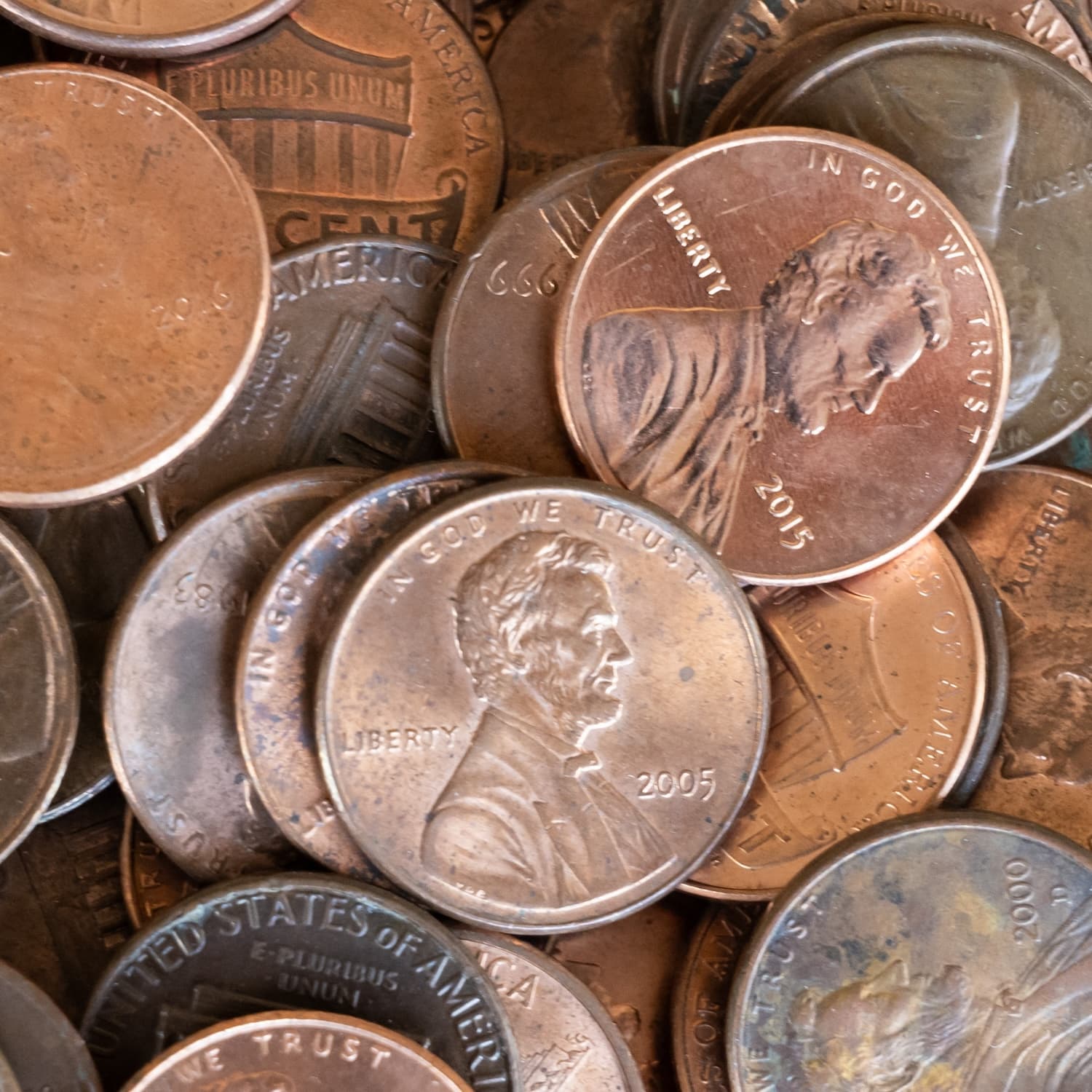
A number of places of worship have sued the Department of Homeland Security over Trump's order, calling ICE arrests at places of worship a violation of religious liberty. And one pastor told Castillo that he would physically get between his congregants and ICE agents if it came to that. Aside from making a wish, playing a game of heads or tails, maybe stabilizing a wobbly table, what are pennies really good for these days in a world where a lot of us don't use cash and definitely don't like to carry around change. Does making single sense make any sense, especially when the cost of producing those small coins is more than double their worth? That's the argument from President Trump, who is calling to get rid of the penny, and he is far from the first. In 2013, then President Obama an openness to dumping the penny.
- [09:23]
Jim Colby
One of the things that you see chronically in government is it's very hard to get rid of things that don't work so that we can then invest in the things that do. And the penny ends up being, I think, a good metaphor for some of the larger problems that we've got.
- [09:39]
Shemitah Basu
To all the penny haters, the math speaks for itself. It costs 3.69 cents to make a penny. In 2024, the Mint issued over 3 billion pennies. That means that we lost more than 85, making what many people think of as useless coins. And it's not like we've never banished a coin before. Back in 1857, Congress put a stop to the minting of half cent coins. But America has long been resistant to the idea of saying goodbye to the penny. In 1989, Congress considered a bill to eliminate pennies in cash transactions and round to the nearest nickel. It didn't pass. Congressman Jim Colby, a Republican from Arizona, made this his mission. He tried and tried to kill the penny. That a couple of things stood in his way, like special interest groups that support zinc mining, which, by the way, pennies are mostly made of zinc, not copper. Also the fact that the speaker of the House at the time was from Illinois, the home state of the president, whose face is on the penny. Here is Colby on NPR In 2020.
- [10:42]
Jim Colby
Illinois is the land of Lincoln. So Illinois was not too anxious about getting rid of the penny. So our bill never got much of a hearing at all.
- [10:53]
Shemitah Basu
Since then, the main opposition has come from the advocacy group Americans for Common Sense. Their pun, not mine, which argues that the government wouldn't save money if the penny were eliminated and that the US Mint would have to make more nickels, which is likely true. If Congress does decide to get on board with Trump's suggestion and eliminate the penny, we'll almost certainly need to produce more nickels. And we lose far more money making nickels than we do making pennies. Nickels last year cost 13 cents each to make. Before we let you go, a few other stories we're following. A federal judge on Monday found the Trump administration hasn't followed his order to unfreeze federal spending and directed the White House to release billions of dollars. The Trump administration quickly appealed the ruling. This is the first time a judge is saying the White House is disobeying a court order. The ruling comes after several top Trump administration officials have openly questioned the judiciary's authority to check the president's power. Judges have also blocked, at least temporarily, Trump's effort to end birthright citizenship, Elon Musk's access to Treasury Department records, and a mass resignation plan for federal workers. In what is being called the most serious threat to date of the Gaza ceasefire deal, Hamas said Monday it would delay the next scheduled release of hostages set for Saturday, accusing Israel of violating the terms of the agreement. A Hamas spokesperson said Israel was preventing some displaced Palestinians from returning to northern Gaza and have been targeting them with gunfire and shelling. Hamas also says Israeli forces aren't allowing relief supplies to enter as agreed. President Trump weighed in and issued an ultimatum to Hamas on Monday after signing unrelated executive orders in the Oval Office.
- [12:52]
Jim Colby
I would say cancel it and all bets are off and let hell break out. I'm speaking for myself. Israel can override it, but from Myself Saturday at 12:00 and if they're not, if they're not here, all hell is going to break out.
- [13:09]
Shemitah Basu
Israel's defense minister called the move by Hamas a violation of the deal and ordered the military to be prepared for any situation situation. And finally, the Department of Justice on Monday ordered prosecutors in Manhattan to drop federal corruption charges against New York City Mayor Eric Adams, saying the case was impeding Adams ability to cooperate with Trump's immigration crackdown. Adams in recent months has appeared to be cozying up to Trump. He visited him at Mar a Lago and attended the inauguration. He also said he wouldn't publicly criticize him. Adams was charged last year with soliciting illegal foreign campaign donations and accepting $100,000 in bribes in the form of luxury travel and hotel stays from wealthy Turkish officials for nearly a decade in exchange for favors. Adams has maintained that he's innocent. The charges will have to be reviewed when a New Trump appointed U.S. attorney in New York is confirmed. The charges would be dropped without prejudice, meaning they could be refiled at a later date. You can find all these stories and more in the Apple News app. And if you're already listening in the News app right now, we've got a narrated article coming up next. Blood is one of the most valuable substances in the world, and as the New Yorker explains, scientists are getting closer to figuring out how to artificially replicate it. If you're listening in the podcast app, follow Apple News narrated to find that story and I'll be back with the news tomorrow.