Loading summary
Transcript21 lines
- [00:05]
Shemitah Basu
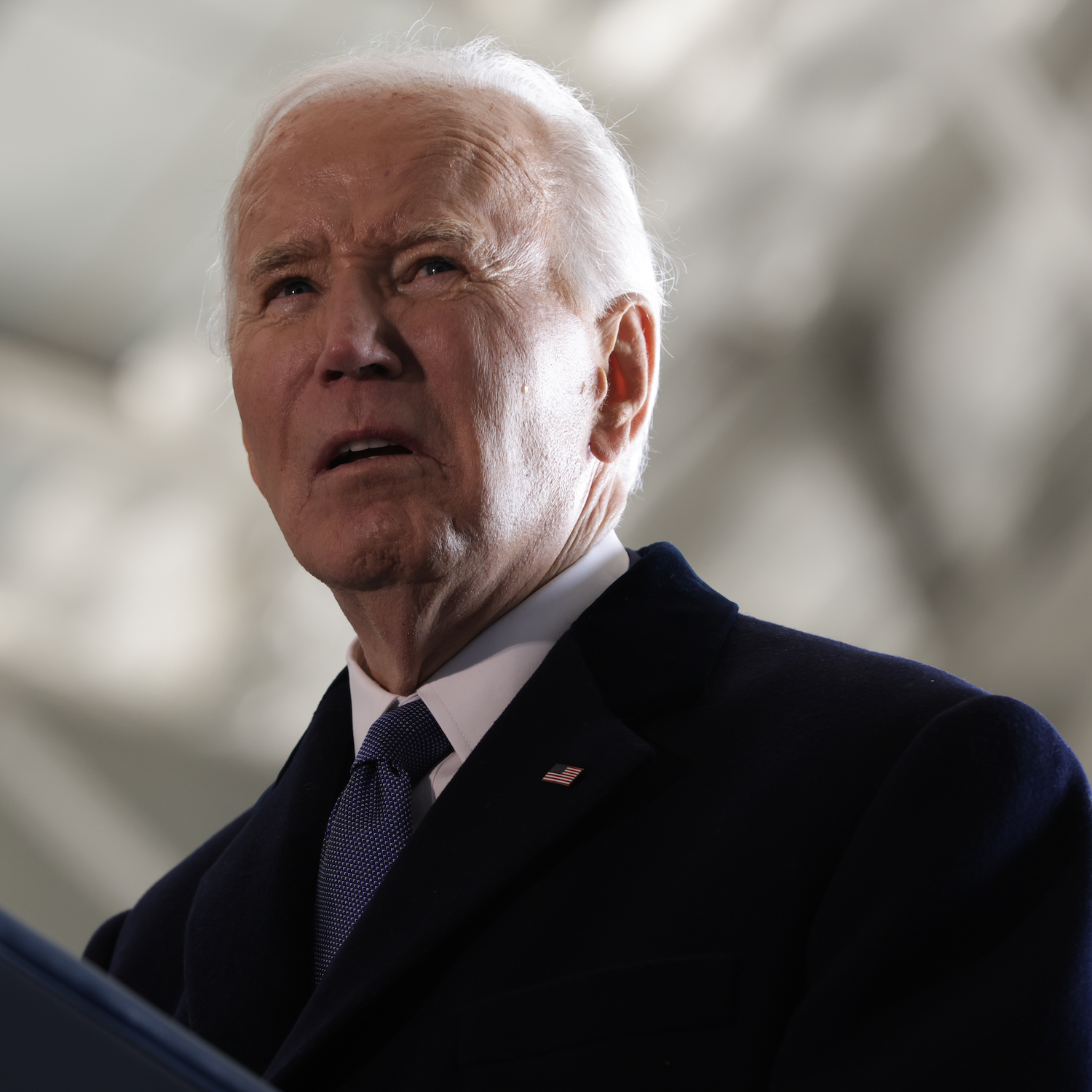
Good morning. It's Monday, May 19th. I'm Shemitah Basu. This is Apple News today. On today's show, Israel agrees to resume basic aid to Gaza as it presses forward with its ground offensive, why Americans aren't taking American manufacturing jobs. And investigators are trying to understand how a big sailship crashed into the Brooklyn Bridge. But first to the news that former President Joe Biden has been diagnosed with prostate cancer. His office released a statement yesterday which said that this was an aggressive form of the disease, but added that it appears to be hormone sensitive, which allows for effective management, and that his family is reviewing treatment options. Offering some details on his diagnosis, his office said he was seen last week for a new finding of a prostate nodule and diagnosed with prostate cancer with metastasis to the bone. President Donald Trump said he was, quote, saddened by the news and wished him a fast and successful recovery. Kamala Harris, Biden's former vp, said that, quote, joe is a fighter and I know he will face this challenge with the same strength, resilience and optimism that have always defined his life and leadership. CNN's medical analyst Dr. Jonathan Reiner doesn't have special insight into Biden's health, but he went on the network to offer some context on the announcement.
- [01:32]
Dr. Jonathan Reiner
The bad news is that his Gleason score, which is how the pathologists grade the aggressiveness of the tumor by looking at it under the microscope, was quite high. So a very aggressive form. The second adverse diagnostic information that we've received is the fact that it's now already metastatic to bone, so it's no longer contained in the prostate. You know, prostate cancer is often treated initially with removing the prostate, but that's not an issue here because the cells have already spread into other parts of the body and we're told that it spread to the bone.
- [02:04]
Shemitah Basu
He also said there could be possible treatment options for someone in Biden's position. From cutting edge immune therapy to more traditional chemotherapy, Biden's health was already a major subject in the news. New reporting suggests the former president's health was deteriorating while in office. There's no indication his diagnosis is linked to those claims. His last publicly released physical was in February of 2024, where his longtime doctor declared him fit to serve. Biden has a long and personal history with cancer. His son Beau died of brain cancer, which helped spur him to make cancer research a personal priority for him in office. President Obama put him in charge of a moonshot initiative as vice president in 2016 and in 2022 as president, Biden announced major new funding to tackle the disease in his State of the Union address.
- [02:57]
Joe Biden
This is personal to mean to Jill and to Kamala and so many of you. So many of you have lost someone you love. Husband, wife, son, daughter, mom, dad. Cancer is the number two cause of death in America, second only to heart disease. Last month, I announced the plan to supercharge the cancer moonshot that President Obama asked me to lead six years ago. Our goal is to cut cancer death rates by at least 50% over the next 25 years. I think we can do better than that.
- [03:27]
Shemitah Basu
Responding to Biden's health news, former President Obama said yesterday that nobody has done more to find breakthrough treatments for cancer in all its forms than Joe. And I'm certain he will fight this challenge with his trademark resolve and grace. Now to Gaza and the desperate scenes unfolding as Israel launches an extensive new ground offensive while at the same time agreeing to resume the entry of some aid. That's the sound of a charity kitchen in northern Gaza as Palestinians rush to secure food. Before yesterday's announcement on Sunday, the Israeli Cabinet agreed to allow, quote, a basic amount of food for the population to ensure that a hunger crisis does not develop. Supplies are running low and starvation has gripped the population. No food and no water was allowed to enter Gaza for 78 days. And the UN relief chief recently surprised many with the strength of his criticism toward Israel, describing events as a 21st century atrocity. This comes as Israel has begun extensive ground operations throughout Gaza, starting with airstrikes over the weekend, which the Gaza Health Ministry say killed over 100 people. According to CBS, talks between Israel and Hamas in Doha are ongoing. As the war continues, Israel's military is having a harder time finding fighters willing to participate. Attendance rates of reservists are plummeting, and more and more soldiers are simply refusing to fight. Ruth Margalit with the New Yorker told us about one of those reservists, Iran Tamir. He initially reported to fight after the October 7, 2023 attack by Hamas.
- [05:24]
Ruth Margalit
He was in the United States, heard about the attacks, gone on a plane and, you know, less than 24 hours later reported to his former base. And this was very widespread. There was a sense in Israel that this was really a war of no choice back then. But since then, things have started to change, not only for Iran, but really for many people.
- [05:45]
Shemitah Basu
In recent weeks, Israel has called up tens of thousands of reservists, including Tamir, to help expand its offensive in Gaza. But Tamir decided he wouldn't return. He published an open letter calling Israel's rhetoric around the war deceptive, specifically Prime Minister Benjamin Netanyahu's stated goal of returning the Israeli hostages and destroying Hamas.
- [06:07]
Ruth Margalit
And, you know, many other reservists believe that that's no longer the case, that the war goals are being blurred and that actually sort of giving up on this idea of a negotiated ceasefire in order to occupy Gaza militarily and impose military rule there. And for some government ministers, really, the end goal is to see Jewish settlements in Gaza.
- [06:30]
Shemitah Basu
Margalit spoke to other members of Israel's military, including a commander who told her he doesn't know why he's fighting anymore.
- [06:38]
Ruth Margalit
He doesn't believe in the war. He doesn't believe in what the country is doing. He said that he's very ashamed of the government and ashamed even of his country of where it's heading. And I've heard that over and over again.
- [07:03]
Shemitah Basu
Now to the domestic manufacturing industry, which is facing a confusing problem.
- [07:09]
Greg Rosalski
It seems kind of paradoxical that both political parties have been doing a lot to bring back manufacturing jobs. And if you look at the industry, there's actually a lot of open manufacturing jobs right now.
- [07:20]
Shemitah Basu
That's NPR's Greg Rosalski with Planet Money. He set out to try to answer the question, with all the talk of boosting domestic manufacturing, why aren't Americans filling the manufacturing jobs we already have? As of March, there are nearly half a million open manufacturing jobs, according to government data, and probably more coming. The current and previous administrations have taken steps to boost manufacturing in the United States, whether it be Biden's Chips and Science act and Inflation Reduction act or Trump's tariffs. Some estimates predict that Biden's policies alone could add millions of more jobs over the next decade or so. But Rososki told us the industry is struggling to find workers.
- [08:03]
Greg Rosalski
Last year, the Manufacturing Institute, it's a nonprofit aimed at developing America's manufacturing workforce, and Deloitte, a consultancy firm. They surveyed more than 200 manufacturing companies, and more than 65% of the firms said recruiting and retaining workers was their number one business challenge.
- [08:20]
Shemitah Basu
So what's driving this? The president of the Manufacturing Institute told Rosolski she believes the industry has a major PR problem, that people today have an outdated idea of what these jobs look like.
- [08:33]
Greg Rosalski
When people think of manufacturing, they picture like a Charles Dickens novel or something like that. They're dirty, they're dangerous or monotonous. But she says that's a misperception. You know, she says that modern manufacturing is clean, it's high tech, it involves problem solving.
- [08:49]
Shemitah Basu
Another reason, these roles have been tough to fill. Many require higher levels of education. Manufacturing used to be a strong career option for people with a high school diploma, but roughly half of the open roles today require a college degree as the technology in plants has gotten more sophisticated. And finally, there's the issue of pay. Manufacturers have raised pay in recent years, and offering more would likely incentivize more people to consider the jobs. But Rosalski says that raises another perplexing question for the industry.
- [09:21]
Greg Rosalski
One of the big reasons why manufacturers left America in the first place is because wages are higher here than overseas. So this sort of wage issue begs the question whether manufacturers, particularly in labor intensive types of manufacturing, can be profitable and globally competitive in the United States.
- [09:40]
Shemitah Basu
In other words, if American manufacturers can figure out a way to be more productive than foreign competitors by producing more in less time, they might be able to pay the higher wages needed to attract and retain American workers. But as Rosalski points out, that's a pretty unlikely scenario. In recent years, US Manufacturing has been seeing an alarming slowdown in productivity growth. Before we let you go, a few other stories we're following. We are learning more about the bombing of a Palm Springs fertility clinic, which the FBI is investigating as an act of intentional terrorism. The suspect is believed to have died in the blast and was a 25 year old 29 Palms resident. The FBI described him as holding nihilistic ideations, while the LA Times quotes law enforcement sources describing him as an antinatalist who believed procreation was unethical. No one else died in the blast, although it caused extensive damage. The center is Coachella Valley's first and only full service fertility center and IVF lab. Kentucky is grappling with the devastating impacts of a tornado which has left at least 19 people dead, a figure that the governor, Andy Beshear, warned may rise. Beshear has declared a state of emergency after the tornado ripped through the state, leaving tens of thousands of people without power. Over the weekend, he called for support.
- [11:14]
Andy Beshear
The parable of the Good Samaritan says everybody's our neighbor and so we need the whole world right now to be really good neighbors to this region. We're going to need a lot of help, we're going to need a lot of funding, we're going to need a lot of cooperation, but we will not abandon the people that have been impacted.
- [11:29]
Shemitah Basu
There were also deaths reported in Missouri and Virginia as the storm swept through the Midwest. And finally, two people have died and at least 22 were injured after a Mexican Navy sailing ship crashed into the Brooklyn Bridge. Some people are still in critical condition. The ship was on a goodwill tour and headed for Iceland. It had never intended to travel under the Brooklyn Bridge, but for reasons that are still unclear, it veered off course. On Saturday night, its masts collided with the bridge, though the vessel stayed upright. Videos circulating on social media show crew members hanging from the sails. The two people who died were crew members, with one being identified as a 20 year old cadet named America Yamilet Sanchez. The Mexican Navy cited mechanical issues and an investigation is underway. You can find all these stories and more in the Apple News app. And if you're already listening in the News app right now, we've got a narrated article coming up next from Women's Health magazine. For new moms experiencing postpartum depression, it can be hard to find relief. Usually it's treated with medication or psychotherapy or some combination of of both. But these days, more moms are turning to a different option, psychedelic mushrooms. If you're listening in the podcast app, follow Apple News plus Narrated to find that story and I'll be back with the news tomorrow.