Loading summary
Transcript25 lines
- [00:05]
Shemitah Basu
Good morning. It's Tuesday, December 17th. I'm Shemitah Basu. This is Apple News Today. On today's show, why so many Americans distrust food policy experts rethinking what we feed livestock to reduce global warming. And TikTok makes one last pitch to avoid being banned in the U.S. but first, another community in America is living through the nightmare of a school shooting in Madison, Wisconsin. Yesterday, a 15 year old girl shot and killed a fellow student and teacher and wounded six others at Abundant Life Christian School, a private K12 school with around 400 students. The shooter, identified by police as Natalie Ruppnow, who went by Samantha, was pronounced dead from an apparent self inflicted gunshot. Police said. As of last night they had not identified a motive. Officials say a teacher and three students were treated for non life threatening injuries. As of yesterday evening, two students were in critical condition with life threatening injuries. The shooting happened inside a classroom with students from mixed grades. Here's Madison Police Department Chief Sean Barnes at a press conference last night detailing the moment police were alerted to the incident.
- [01:26]
Sean Barnes
At 10:57am a second grade student called 911 to report a shooting had occurred at school. Don't let that soak in for a minute. A second grade student called 911.
- [01:43]
Shemitah Basu
Police say they're talking with the parents of the shooter who are cooperating. They also search the family's home. Barnes said they don't know how the suspected shooter got the handgun found at the scene.
- [01:54]
Sean Barnes
How does any 15 year old get a hold of a gun or anyone for that matter? You know, you get into the philosophical question about guns and gun safety, something that we all should be talking to our loved ones about. That's something that will be a part of this investigation.
- [02:14]
Shemitah Basu
Barnes says they will eventually question students who witnessed the shooting when they're ready.
- [02:19]
Sean Barnes
That will give us an idea of not only what unfolded but it could answer the question to motivation because again the students who unfortunately had to witness this, but that's not something that we want to rush. We're not going to interrogate students.
- [02:35]
Shemitah Basu
Barbara Weirs, director of elementary and school relations at Abundant Life, was teaching at the time of the incident. She said school officials received updated training for shooter situations this year and she commended students for how they reacted. The students handled themselves magnificently. They were clearly scared when they realized.
- [02:55]
Sean Barnes
When we practice we always say this.
- [02:57]
Shemitah Basu
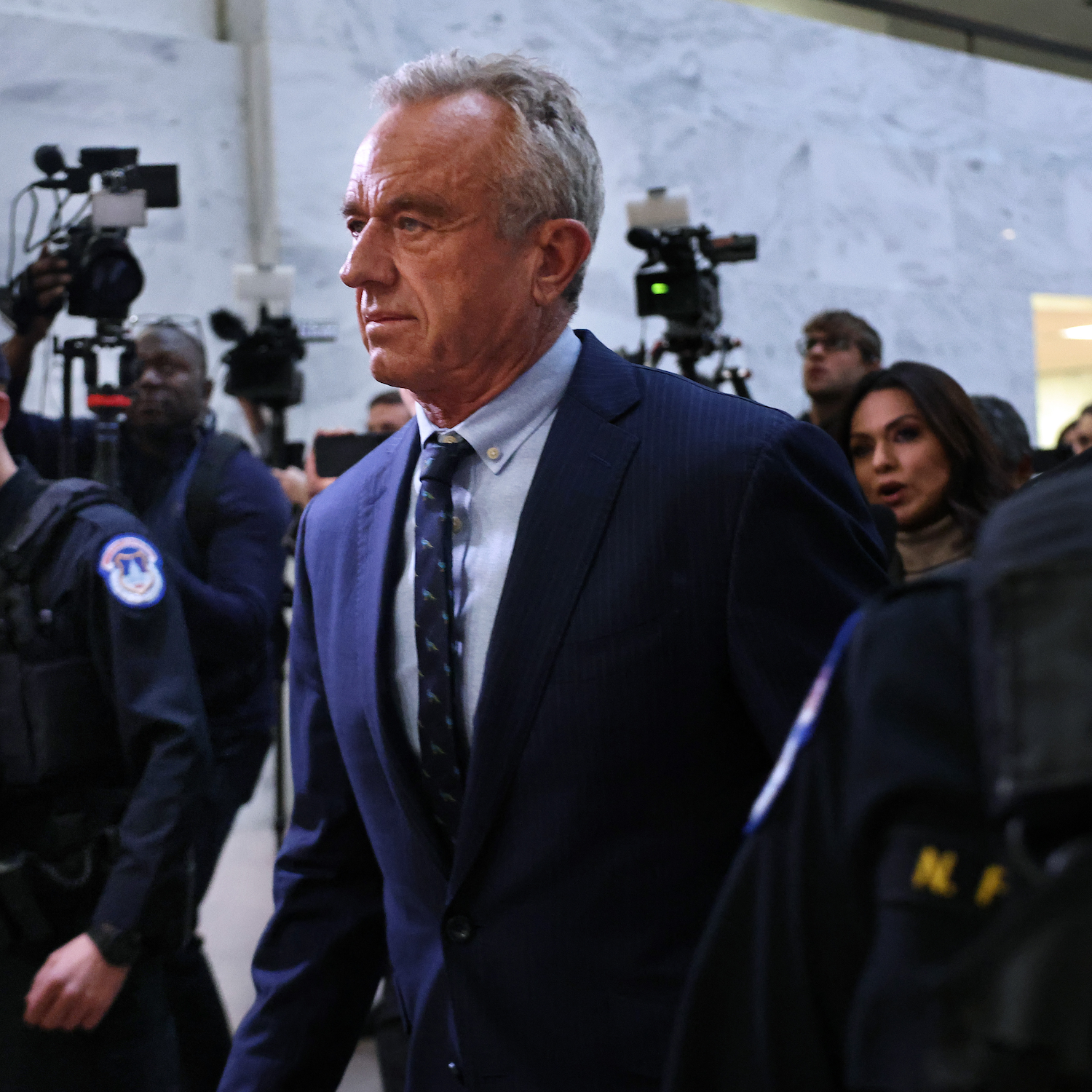
Is a drill, it is just a drill. When they heard lockdown, lockdown and nothing else, they knew it was real. But they handled themselves brilliantly. Wisconsin is a state that permits both open carry and concealed carry. And like most other states, Wisconsin has a preemption law that means local municipalities cannot have gun regulations that are more restrictive than the state at large. The fact that the shooter was female is rare. According to a 2023 report from the Violence Prevention Project, 98% of mass shootings were committed by men and boys. With yesterday's shooting, that brings the total up to at least 83 school shootings in this calendar year, according to CNN, the most school shootings in a single year since CNN began keeping track in 2008. This is a fast moving story and you can follow along for updates on the Apple News app. It's no secret Americans on the whole don't trust where their food policy is coming from. Public confidence in the government's ability to protect the food supply is at an all time low, according to a recent Gallup poll. That might be why Robert F. Kennedy Jr's pledge to make America healthy again is resonating with so many people, even if they don't agree with all of his ideas. RFK Jr. Of course, is Trump's pick to lead the Department of Health and Human Services, and he's on Capitol Hill this week meeting with senators trying to shore up support for his confirmation hearing in January. Jesse Newman, a food reporter at the Wall Street Journal, told us why so many people are losing confidence in the institutions that set food policy.
- [04:47]
Jesse Newman
Consumers want to be sure that what they're putting in their bodies is, you know, is good for themselves and their children. And there's a sort of an increasing sense that, you know, food companies in fact are putting profit above public health.
- [05:00]
Shemitah Basu
Kennedy has been a longtime, outspoken critic of our food system. And when he was campaigning for president, he tapped into this growing sense of.
- [05:08]
Jesse Newman
Distrust around food, especially packaged food, and, you know, how nutritious it is and whether it's actually hurting us. And in fact, you know, it sort of has amplified concerns among U.S. consumers that federal regulators like those at FDA and USDA really aren't doing enough to protect consumers.
- [05:27]
Shemitah Basu
Kennedy has talked a lot about the dangers of ultra processed foods, which many health experts have blamed for rising rates of obesity and chronic disease in the U.S. he says if he's confirmed to lead HHS, he'll remove Ultra processed foods from school lunches. He can't go it alone, though. That would require coordination with the fda.
- [05:47]
Jesse Newman
He's also talked about snap, which is the Supplemental Nutrition Assistance Program, AKA food stamps. And he has, you know, talked about how he thinks that SNAP beneficiaries really shouldn't be using their food stamps to buy things like soda or processed food.
- [06:05]
Shemitah Basu
Another area Kennedy could leave a big the Federal Dietary Guidelines for Americans, a cornerstone of federal nutrition policy. A panel of experts working on the latest recommendations announced last week. They will not tell Americans to consume less ultra processed food, which has gotten a lot of criticism. Kennedy has said the members of this panel should be prohibited from making money from food or drug companies.
- [06:31]
Jesse Newman
He's concerned with conflicts of interest in how these dietary guidelines are drafted, and.
- [06:37]
Shemitah Basu
There'S evidence to support that. In the past, researchers have connected experts on these panels to prominent food companies and lobbying groups. But some of Kennedy's other ideas about what we eat and drink may involve more bureaucratic red tapes, since they fall under the purview of other federal agencies. His proposal to limit fluoride in drinking water, for example, would be up to the epa, not hhs. And if he wants to crack down on cooking with seed oil or using pesticides in farming, he'll need to work with Trump's nominee for Department of Agriculture. And before any of that, as we mentioned before, he'll need these meetings this week to go well, so he'll be confirmed by the Senate. What do burps and farts have to do with climate change? Well, it turns out, quite a bit if they're coming from farm animals. While we often think about carbon dioxide when we talk about global warming, there's another gas that's maybe even more critical to the problem.
- [07:43]
Benji Jones
Actually, molecule for molecule, methane is more potent than carbon dioxide is when it comes to its impact on warming.
- [07:52]
Shemitah Basu
That's Benji Jones, an environmental correspondent for Vox. He tells us the bulk of global methane emissions come from human activities, and the largest single source among them is agriculture. That is the burps and farts of farmed animals. Now, one big way to reduce those emissions would be if people cut down on how much meat they eat. But in a world where people are consuming lots of animal products, scientists are working on another way of tackling the problem. Jones recently traveled to Colombia, the country, not the university, where researchers are trying to figure out what they can feed cattle to produce less methane.
- [08:28]
Benji Jones
So certain kinds of forage, like different kinds of grasses or legumes, are thought to be associated with lower methane production. So, like, literally, they're burping less, or their burps cont contain less methane. And so they're trying to figure out, okay, which grasses or which types of forage will actually lead to this reduction.
- [08:47]
Shemitah Basu
In order to test this, they put sheep into metal chambers that look a lot like walk in refrigerators. The chambers are hooked up to high tech machines that measure gas emissions. And then the researchers feed the sheep lots of different kinds of plants to see if they can reduce that methane output. Jones explained that the food comes from a massive seed bank.
- [09:07]
Benji Jones
I mean, it has like 67,000 samples and they're stored in like these freezing rooms in vacuum sealed aluminum bags. And I got to go into one of them. It was like negative 10 degrees, it was freezing. And so I literally only stayed in for like two minutes. But you can just see thousands of these seeds in these library, like shelves. And this room alone is just essential not only for this project, but for, like, research all around the world.
- [09:35]
Shemitah Basu
Lab testing is still underway, but scientists told Jones some of the early results look promising. And they say one big advantage of doing this type of research is that the solution could be fairly low tech, which would make it scalable in low income countries.
- [09:50]
Benji Jones
This would just be changing the kind of forage that they use, or favoring one forage over the other. They wouldn't have to buy a potentially expensive supplement that would maybe be out of their price range or increase the cost of meat. This is a pretty simple solution and it's also really elegant in a way. It's literally just saying, oh, yeah, we have control over what we feed our animals. Let's find food that just produces less of a problem. It just feels like pretty low hanging fruit in terms of trying to fix some of the climate crisis.
- [10:31]
Shemitah Basu
Before we let you go, a few other stories being featured in the Apple News app. A judge in New York has ruled President elect Donald Trump's 34 felony convictions for falsifying records related to a sex scandal will stand for now. Trump argued that the recent Supreme Court ruling granting broad immunity to presidents was cause to throw his convictions out. The judge yesterday sided with prosecutors who argued Trump's crimes predated his presidency, according to the New York Times. Even if he loses in New York, Trump could ultimately take the matter to the Supreme Court, which, as we saw with the presidential immunity ruling, might rule in his favor. TikTok is making a last gasp effort to avoid being banned in the United States. The company asked the Supreme Court yesterday to temporarily halt a law passed by Congress earlier this year that will force Chinese parent company ByteDance to divest or be banned. Because TikTok is a Chinese company, the DOJ says it's a risk to national security. And that's because, according to Reuters, the company has access to huge amounts of data on Americans and has the ability to manipulate the content Americans view on the app. ByteDance and TikTok want the law halted while they appeal a lower court ruling. And finally, Italian officials are cracking down on so called pasta grannies, some who have allegedly tried to pull a fast one on tourists in the port city of Bari. Skilled pasta making women line the streets churning out countless pounds of orecchiette little ears in Italian. They've become a tourist attraction in recent years, but some of those grannies are accused of trying to pass off factory made pasta as their own. The Telegraph reports authorities are introducing new hygiene regulations, telling pasta grannies that they can't work al fresco chatting to each other in the streets. They have to move inside to a clean kitchen, which many of the grannies aren't happy about. But perhaps most importantly, they're introducing a stamp of approval, much like other regional specialties like wine and cheese, to make sure people are getting the real deal. You can find all these stories and more in the Apple News app. And if you're already listening in the News app right now, we've got a narrated article coming up next from the Los Angeles Times. In 2019, the public came to learn about a big higher ed scandal. Parents were colluding with coaches and college administrators to get their kids into elite schools. The Times spoke with a former college administrator who served prison time and says she got played as a scapegoat. If you're listening in the podcast app, follow Apple News plus narrated to find that story and I'll be back with the news tomorrow.