Loading summary
Transcript25 lines
- [00:05]
Shemitah Basu
Good morning. It's Thursday, February 6th. I'm Shemitah Basu. This is Apple News Today. On today's show, what it would mean for the United States to have a sovereign wealth fund, the Kendrick Lamar Drake beef that might be headed for the Super Bowl. And do you know what? Riz is Congrats. You're already behind on the next wave of slang. But first, the White House is walking back comments made by President Trump suggesting the United States should take full control of Gaza, possibly through military force. Here's White House Press Secretary Caroline Levitt on Wednesday, the president has not committed to putting boots on the ground in Gaza. He has also said that the United States is not going to pay for the rebuilding of Gaza. His administration is going to work with our partners in the region to reconstruct, construct this region. When pressed by reporters, Levitt stopped short of explaining how the president would clear Gaza without military force. In Trump's initial comments on Tuesday, when he was hosting Israeli Prime Minister Benjamin Netanyahu at the White House, he said he would transform Gaza into the, quote, riviera of the Middle east, that Palestinians should leave Gaza and neighboring Egypt and Jordan should take them in. The White House also tried to clarify that statement, saying yesterday that any displacement of Palestinians from the Gaza Strip would be temporary. This attempt to soften some of Trump's suggestions came after a wave of global outrage. A spokesman for UN Secretary General Antonio Guterres called Trump's plan to displace Gazans, quote, tantamount to ethnic cleansing. Saudi Arabia flatly rejected Trump's initial proposal, saying it would not normalize relations with Israel without the creation of a Palestinian state. Egypt and Jordan, the countries Trump suggested should absorb displaced Gazans, also condemned Trump's remarks and said there can be no attempt to displace Palestinians from their homeland. Reporters on the ground in Gaza say the idea of leaving, even temporarily, has gotten mixed reactions from Palestinians. One man told npr, because Gaza has been destroyed so thoroughly by Israeli airstrikes, he doesn't see a future there and would be open to moving to a country that embraces and protects him. But another Palestinian told reporters with Reuters, he'll never leave.
- [02:32]
August Brown
How can a Palestinian who holds the Palestinian nationality and whose answer ancestors died on this soil go to Egypt, Jordan or any other country? This is rejected and it will not pass on the Palestinian people because it is bigger than this Here in the.
- [02:48]
Shemitah Basu
US the idea of taking control of Gaza and investing American dollars in development projects to rebuild was also met with mixed reviews. Democrats, by and large, denounced it. Republicans were a bit more across the board. Senator Marsha Blackburn said the plan would create economic prosperity. Congresswoman Nancy mace said the U.S. should, quote, turn Gaza into Mar a Lago. And House Speaker Mike Johnson reaffirmed his commitment to stand by Israel, but urged Americans to wait for more details about Trump's plan before jumping to conclusions. Other Republicans, though, were more immediately critical. Senator Rand Paul said on X I thought we voted for America first. Meanwhile, the Wall Street Journal's Dov Lieber, who lives in Israel, said Trump's proposals, in particular the expulsion of Palestinians from Gaz, are being celebrated by some Israelis.
- [03:41]
Dov Lieber
There is certainly a lot of elation among some parts of Israeli society. They see this as a major blessing. This is an idea that has been floated in the Israeli right for many years, especially the far right, including during this war. But it has always seemed somewhat out of the bounds of mainstream thought within Israel.
- [04:01]
Shemitah Basu
Trump's comments come as many Israelis have grown wary of proposed resolutions to this conflict, whether it be a two state solution or something else.
- [04:10]
Dov Lieber
So many people have been looking for something new, some kind of new creative solution. And there are those who will argue that at least, at the very least, President Trump is thinking outside of the box, that of course we're seeing many also in this region in the Middle east don't think it's out of the box thinking they think it's potentially ethnic cleansing and war crimes that President Trump is speaking about. We still don't quite understand the details, but at the end of the day, this is quite unprecedented, a proposal by President Trump.
- [04:39]
Shemitah Basu
There are also real concerns that Trump's proposal, even a softened version of it, could jeopardize the already fragile ceasefire deal in place between Israel and Hamas and potentially the return of the remaining hostages. Trump's comments came as negotiations are underway for phase two of the ceasefire deal and days before the next planned swap of hostages for Palestinian detainees. Now to a major financial proposal from the president you might have missed with all the news this week. On Monday, Trump signed an executive order calling on the treasury and Commerce Departments to look into creating a sovereign wealth fund for the United States, essentially creating an investment fund that would be owned by the government. And one of the first things Trump suggested he would do with this fund is put in a bid to buy TikTok. Sovereign wealth funds are typically found in oil rich countries that run budget or trade surpluses. Those countries then direct those surplus funds toward investments with the goal of generating more money for future generations. According to Axios, Norway, China, Abu Dhabi and Singapore have the largest Sovereign wealth funds in the world. Trump first floated the idea of creating one of these funds for the United States on the campaign trail.
- [06:01]
Alexis Christophorus
Why don't we have a wealth fund? Other countries have wealth funds. We have nothing. We have nothing.
- [06:07]
Shemitah Basu
And he said he would use it to make major investments in our country's future.
- [06:11]
Alexis Christophorus
We will build extraordinary national development projects and everything from highways to airports and to transportation infrastructure. All of the future, we'll be able to invest in state of the art manufacturing hubs, advanced defense capabilities, cutting edge medical research, and help save billions of dollars in preventing disease.
- [06:33]
Shemitah Basu
The Biden White House had been looking into creating such a fund, and a lot of Democrats and Republicans like the idea, too. There has been pushback, usually from more conservative economists who say, instead of putting American money into a sovereign wealth fund, why not use that money instead to lower taxes? Now, for Trump to make this idea a reality, he would need congressional approval. Congress controls the federal government's budget, which means they would need to approve the creation of a vehicle that would circumvent some of their power. But secondly, and maybe most importantly, the United States typically does not run a surplus budget. In fact, the US has only run a surplus budget five times in the past 50 years, according to data from the Treasury Department. So the big question is, where would the money come from?
- [07:20]
Alexis Christophorus
So he has said in the past that his tariffs and, quote, other intelligent things would help to put money into this fund.
- [07:27]
Shemitah Basu
That's correspondent Alexis Christophorus speaking on ABC News.
- [07:31]
Alexis Christophorus
And look, while it could be an admirable thing to want to put money aside for future generations, this can also become very political very quickly. There are concerns that there wouldn't be enough transparency and that there would be a lot of conflict of interest because these investments would be run at the end of the day by our government.
- [07:48]
Shemitah Basu
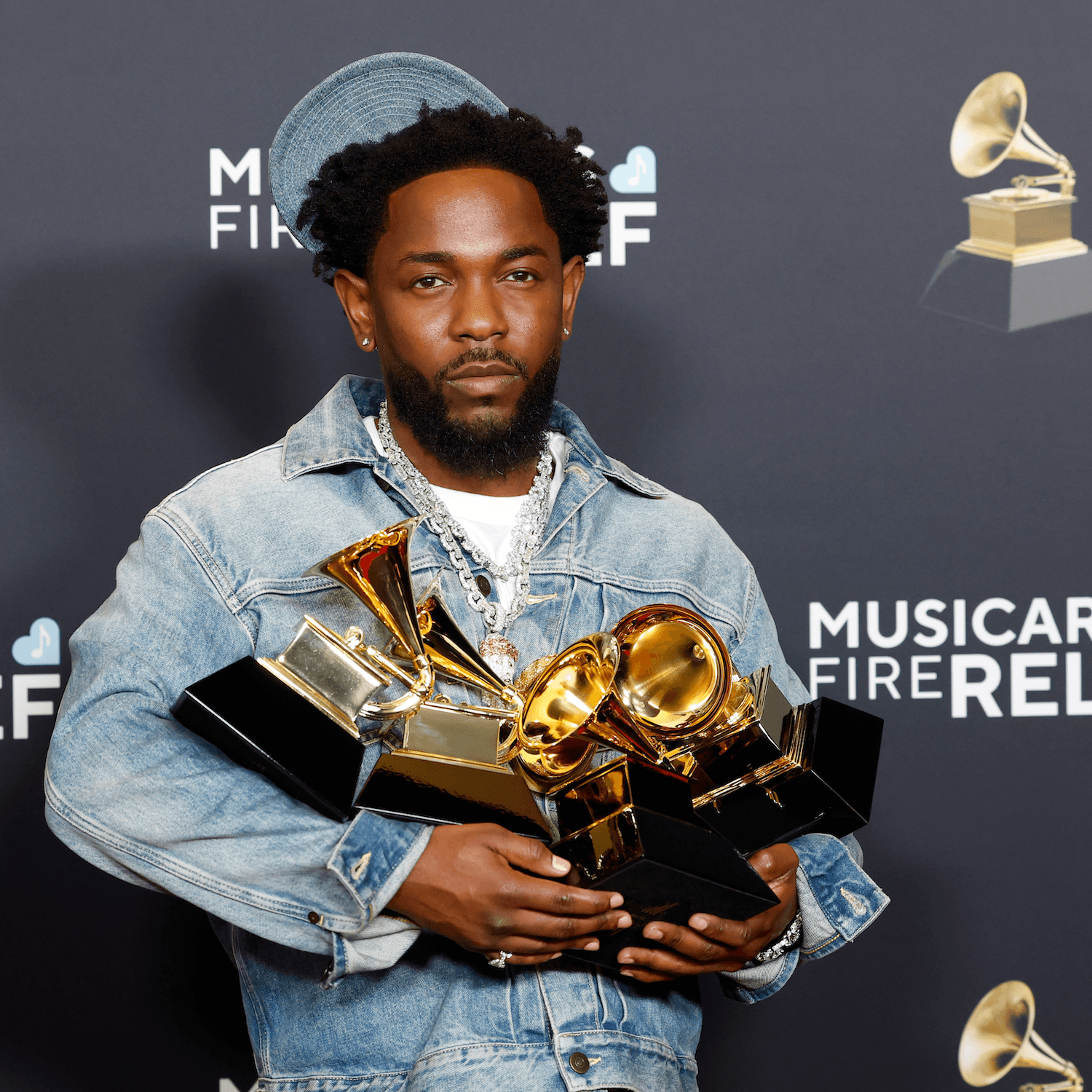
Which would put Trump and other politicians in a unique position of influencing whether the United States government invests in their businesses. Not to mention, creating a sovereign wealth fund would require the federal government to take on more debt, a prospect that many Americans and lawmakers may find hard to stomach. Still, a well run sovereign wealth fund can make a big difference in the economic vitality of a country. In Norway, for example, ABC News reports that their sovereign oil fund is so successful that it's holding the equivalent of more than $100,000 per person. By contrast, the scale of our national debt is so large that it equates to roughly $50,000 owed by each American. The super bowl is just days away. And although the big game is the main event, a Lot of attention will be paid to the halftime show when Kendrick Lamar takes the stage. He's expected to perform Not Like Us, a massive hit that he released last summer that just earned him multiple Grammys. It was also one of the final salvos in a rap beef between Lamar and fellow rapper Drake.
- [09:03]
August Brown
One of the most scathing diss tracks, maybe in all of music history.
- [09:07]
Shemitah Basu
August Brown is a music industry reporter at the Los Angeles Times.
- [09:11]
August Brown
The most infamous line, obviously, is in the song where he, you know, calls Drake certified lover boy, certified pedophile, certified lover boy, certified pedophile. That was the one that really stood out to most people, and that was the. The neutron bomb that came with that song.
- [09:25]
Shemitah Basu
And because of that accusation, which Drake fully denies, he's sued Universal Music Group, which isn't just Kendrick Lamar's label, but Drake's own lab as well. He claims that because UMG knew the accusations in the song were false, they defamed him by promoting it. UMG says they simply supported Lamar's creative expression and did nothing wrong. Also, it's a diss track, and legal experts say it would be hard to prove that the average person is taking it at face value. Also, it's important to note that Kendrick Lamar is not named in the suit and that Drake has also put out diss tracks about Lamar and accused him of some pretty terrible stuff. So back to what happens on Sunday if Kendrick Lamar performs Not Like Us during the biggest television event in the US Is that considered defamation? And if so, who gets implicated?
- [10:17]
August Brown
It may possibly rope in the NFL and the broadcaster. If they play the song, he could reasonably say by, you know, additionally promoting the song. Through letting Kendrick play, there would be a route for him to name them in the suit as well, but, you know, he's already kind of flailing.
- [10:33]
Shemitah Basu
The NFL's lawyers might caution against it, even if the legal risk is low. Then again, cbs, which just hosted the Grammys, played snippets of the song twice during the live broadcast with some of the world's biggest artists bopping along to it. And maybe that's the bigger point. Brown says the song is such a hit, there's nothing Drake can really do at this point to put the genie back in the bottle.
- [10:55]
August Brown
Yeah, I mean. I mean, the song just won the most prestigious awards you can possibly win at the Grammys. Now, there's probably a limit to how much a Drake can even try to police this song's popularity. And. And it should be noted that it also, every time he tries, it just makes him look worse. In the public eye. But in terms of his kind of core rap fan base and kind of wide pop audience, you know when you think of him, this is now the number one thing you think of, like how badly Kendrick buried him.
- [11:30]
Shemitah Basu
Before we let you go, a few other stories were following following today. In 2020, the far right group the Proud Boys vandalized a historic black church in Washington, D.C. now the church has been awarded control of the group's name. That means that proceeds from the merchandise sales and membership dues for the Proud Boys will go to the very church the group vandalized. This unusual order came from a D.C. superior Court after the Proud Boys were initially told to pay millions of dollars for vandalizing the church, but never did. The Washington Post spoke to the church's pastor, who called the decision karmic and the result of unbroken, joyful resistance. In tech news, some employees at Google are expressing their dislike of a policy shift in the company's AI ethical guidelines. Google erased language in those guidelines that promised it wouldn't use its AI tech for weapons, surveillance or technologies that are likely to cause harm, Business Insider reports. The move prompted employees to share their dislike of the changes in internal message boards through memes, with one post asking, are we the baddies? Google has not directly addressed the change in language, but two high level executives wrote in a blog post that because of the increasing complexity of the geopolitical landscape, it's important for companies and government to work together on matters of national security. And finally, if you have teens or preteens in your life, you'll have to help the rest of us understand what these words mean.
- [13:01]
Dov Lieber
Big back oi oi oi Skibidi sigma unk skibidi sigma baddie Skibidi Ohio Riz on Skib pose for me pose 28.
- [13:12]
Shemitah Basu
Who'S this diva808 that's a middle school teacher named Philip Lindsay on TikTok, who's been chronicling some of the words that have popped up in his classroom lately. He's featured in a Wall Street Journal story about modern slang and how parents are trying to keep up with it. A linguistics professor told the journal that it's not like there are more slang words than there used to be, but rather that social media is exposing people to more and allowing them to communicate them faster. And it appears that there is a shorter lifespan for some of these words and phrases, which means that by the time you learn some like Riz referencing charisma, they might already be on their way out among the young people in your life. You can find all these stories and more in the Apple news app. And if you're already listening in the news app right now, we've got a narrated article coming up next. The New Yorker takes a deep dive into the U. S. Military's recruiting crisis, working against a population that's not just unenthusiastic but incapable. If you're listening in the podcast app, follow Apple News plus narrated to find that story. And I'll be back with news tomorrow.