Loading summary
Transcript27 lines
- [00:05]
Shamita Basu
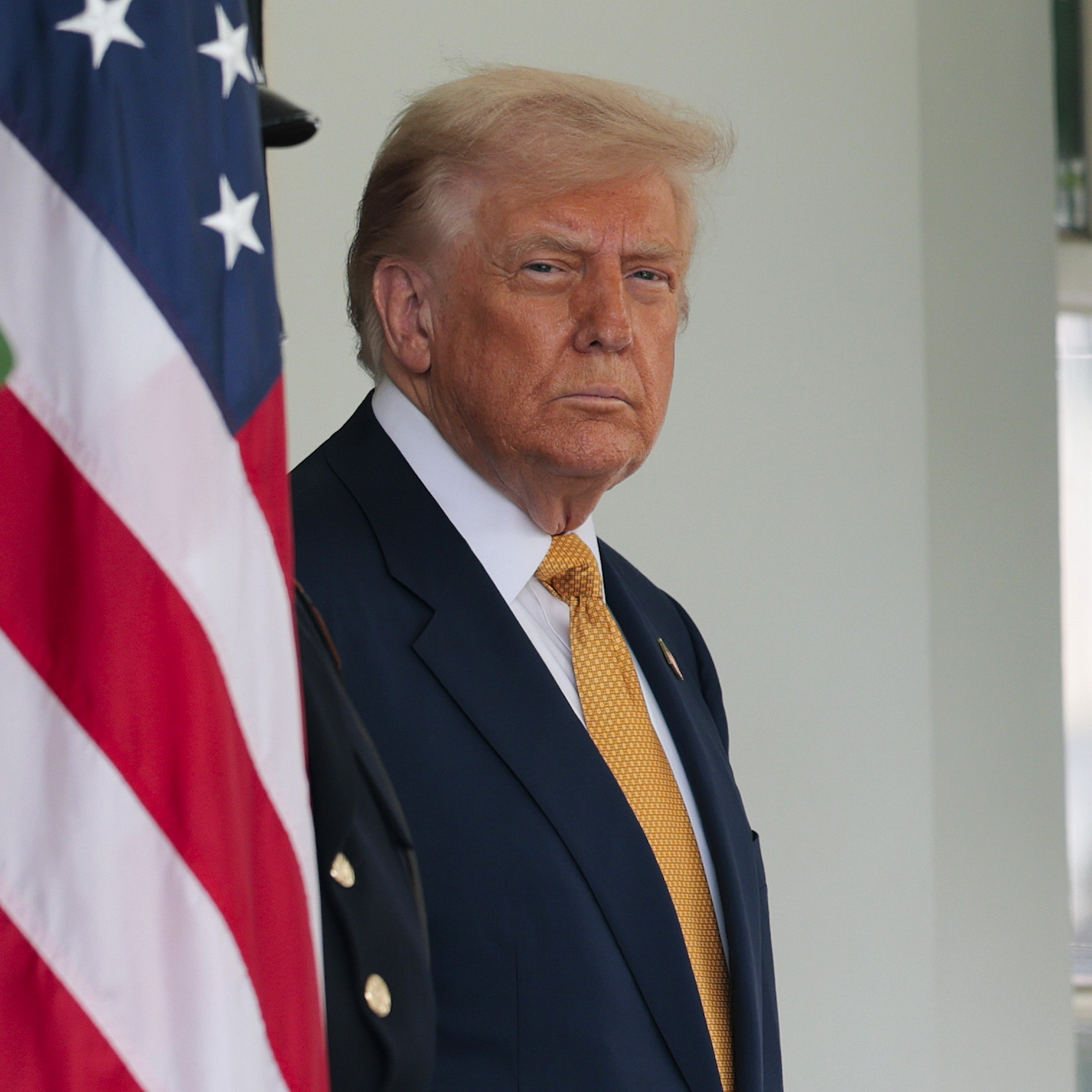
Good morning. It's Monday, July 21st. I'm Shamita Basu. This is Apple News Today. On today's show, how federal cuts to Medicaid and SNAP are impacting states budgets, what to expect if you're expecting a $1,000 baby bonus, and why the Amish don't really have allergies. But first, now that we are six months into President Trump's second term in office, let's take stock of how Americans are feeling about his administration overall and about two major pillars of his agenda, immigration and the economy. Starting with the big picture. According to the New York Times, which tracks polls by dozens of organizations to compile an average approval rating, the the majority of Americans are unhappy with Trump's second term. 53% disapprove on average, compared to 44% who approve. His approval rating is lower than his three most recent predecessors, Biden, Obama, and Bush. Overall, his average rating has declined since Inauguration Day. Now, that is not uncommon. Biden, Obama, and Bush all saw similar trends. But the Times points out Trump's approval rating appears to be dropping slightly faster than theirs.
- [01:25]
Philip Bump
The lens through which we should view these approval rating numbers is basically that over the past 15 years, essentially since 2010, the second year of Barack Obama's presidency, approval ratings for presidents have been sharply polarized bipartisanship.
- [01:38]
Shamita Basu
That's Philip Bump, who recently wrote about where support stands for Trump today for the Washington Post.
- [01:43]
Philip Bump
People who are members of the president's own party love him. People who are not members of the president's own party dislike him. And independence swing back and forth and make up the difference between him being slightly higher and him being slightly lower.
- [01:54]
Shamita Basu
Bump, in his reporting, specifically took a closer look at how support for Trump has evolved over the last decade. It's been about 10 years since he emerged as the leading Republican candidate in the 2016 election, and bump found his core base has remained relatively steady over that time.
- [02:10]
Philip Bump
We have not seen anything where Donald Trump takes a distinct hit over the long term. When the Republicans fared poorly in the 2022 midterms, he was looked at with, you know, kind of one eyebrow raised. The same thing after January 6th, and.
- [02:23]
Shamita Basu
Everyone came back around on issues like immigration. However, recent polling suggests the president is losing ground with Americans writ large. A new CNN poll found that a majority of people, 55%, think Trump is going too far with his mass deportation campaign. That's a 10 point jump since February. 57% said they oppose his plans to build new detention facilities, and 53% oppose increasing the budget for ICE Trump's tax and spending bill carves out billions of dollars for both ICE and new facilities Margaret Taleffe, a senior contributor at Axios who leads Newsroom Polling, spoke about this with cnn.
- [03:01]
Ashley Ebling
These numbers are moving in the wrong direction for the president. It's clear that the average American thinks that his immigration policies are going too far. He's underwater now. The main points of controversy are around these tough enforcement actions, around otherwise law abiding residents.
- [03:20]
Shamita Basu
Trump's economic policy over the last six months introduced a lot of chaos to the markets, especially his on again, off again tariffs. The value of the US dollar has slumped more than 10% this year. That's the worst decline the US has seen over the first six months of any given year since 1973. His tax and spending bill will add trillions of dollars to the national debt, and polling indicates voters are nervous about that. CNN's poll found 51% believe the bill will hurt the economy, compared to 29% who think it'll Some economic indicators, like the unemployment and inflation rates have held relatively steady since Trump took office, though the inflation rate climbed to its highest level in five months in June. And as is the case with immigration, Trump's approval rating on the economy overall is largely split along party lines, according to Gallup. On average, nearly 6 out of 10Americans said they do feel like things are getting worse. Bump told us from Trump's perspective because he's not able to run for re election, that the fact is he doesn't need broad support for his policies.
- [04:26]
Philip Bump
The political peril he faces is if Republicans, the core Republicans who are in Congress, if they start feeling as though it is okay to go sideways on him so far, they clearly don't feel that way. So the question is, will he be able to maintain this grip that he's had on the core base of Republican primary voters that he's had for years now.
- [04:53]
Shamita Basu
It's been more than two years, weeks since President Trump signed his sprawling tax and spending bill and constituents, states and stakeholders are still making sense of what the changes mean for them at the state level. USA Today reports that many officials are concerned about the steep cuts to Medicaid and snap. While the changes to the programs, including the addition of work requirements for many Medicaid recipients, won't fully take effect until after next year's midterms. So after November of 2026, states often budget a year or even two years into the future, meaning that right now they are faced with having to decide what else might get trimmed back in order to accommodate these changes, you move.
- [05:33]
Sarah Weier
One chess piece and the whole game changes on the board and that's what states are worried about.
- [05:39]
Shamita Basu
That's Sarah Weier, senior national political correspondent for USA Today.
- [05:44]
Sarah Weier
A lot of the work's being done at the like treasurer or state auditor level and then that's what legislatures are waiting for, is to get an idea of how it's going to affect revenue so that they can decide how much money they have.
- [05:57]
Shamita Basu
SNAP is currently completely funded by the federal government, but the new legislation imposes requirements for that funding to continue and otherwise shifts some costs to states. Medicaid is a state and federal partnership in terms of funding, and a recent analysis from kff, a nonpartisan organization focused on health policy, found that about 30% of Medicaid enrollees lived in homes experiencing food insecurity in 2022, meaning that these cuts could have double the impact on their lives. Weiher told us that the estimated new state costs for Medicaid and SNAP are expected to be in the tens of millions or even hundreds of millions of dollars. And unlike the federal government, most states are required to balance their budgets.
- [06:43]
Sarah Weier
At a certain point they're going to have to cut other programs in order to fill these holes. There's really no way around it for many of these states and every lawmaker and state official I've spoken to has acknowledged that. Nevada state treasurer said there's just not enough dirt to fill the hole.
- [07:00]
Shamita Basu
Connecticut's treasurer expressed concern about the impact on funding a state pension program. New Mexico's treasurer said the cuts exceed the budget they have for their state children. Youth and Families Department and a Minnesota official told Wire they think their state and others will have to raise taxes. Weiher told us that pushing more responsibility to states could create an uneven playing field.
- [07:24]
Sarah Weier
Some states have rainy day funds that they might be able to invest and fund some of these programs like Medicaid and SNAP for a longer period of time. As they take on more of this responsibility. Some states are already talking about maybe having to withdraw from SNAP entirely because they're not going to have the money to fill these gaps.
- [07:47]
Shamita Basu
Foreign let's turn to another element of the tax and spending bill. New government funded $1,000 savings accounts for babies born between 2025 and 2028 and what parents should know about how they work. This is an idea that economic experts and lawmakers on both sides of the aisle have supported in recent decades to give kids a jump start on savings. The spending bill carved out $15 billion to fund these so called Trump accounts. They're available to all newborns with Social Security numbers. And parents can either sign up at a bank or other qualifying institution or wait for the government to automatically create an account when they file taxes.
- [08:31]
Ashley Ebling
They're really like baby iras. So they're almost like an individual retirement account for a child.
- [08:36]
Shamita Basu
That's Wall Street Journal reporter Ashley Ebling, who spoke with financial experts about the pros and cons that parents should know. Once your child's account is created, you can contribute up to $5,000 a year and that limit will adjust with inflation. Your employer can contribute, too, up to $2,500 annually without adding to your taxable income. For the most part, your child can't touch the account until they turn 18. And compared to other investment accounts for kids, a Trump account holder has more flexibility for how they can use the money. They can go toward college or buying a first home or starting a small business and anything they want, really. Financial experts have praised that element. But they also point out if your primary goal is to use this account to save for your child's college education, there are some better alternative investment options out there. For one, ebling explained, a 529 account. It grows tax free and offers tax free withdrawals for eligible expenses, whereas Trump accounts come with more tax complications.
- [09:37]
Ashley Ebling
The different types of contributions are treated differently for tax purposes when you take the money out. So when they take the money out, they might be surprised to see that there's federal tax and possibly state tax withholding on it, depending where they live.
- [09:50]
Shamita Basu
Financial experts say 529 accounts also have more investment options compared to Trump accounts.
- [09:56]
Ashley Ebling
They have to be invested in low cost mutual funds or exchange traded funds that are made up mostly of US Equities.
- [10:03]
Shamita Basu
In other words, investments in specific industries or sectors are not allowed. Now. To be clear, experts largely agree there's no harm in letting the government's $1,000 contribution to the Trump account come PAC and grow over your child's lifetime. Many American families don't have the means to set up something like that for their kids at such a young age on their own. The top tip from one financial pro Ebling spoke to was treat this account as a nest egg for your child's retirement and convert it to a Roth IRA when they turn 18. That way it can continue to grow for decades to come without any tax penalties. Before we let you go, a few other stories we're following. In Gaza, NPR reports that nearly 100 people were killed by Israeli military fire as they sought food aid on Sunday. That's according to local health authorities and hospital morgue officials. It marks one of the deadliest days in recent months for Palestinians seeking aid. The Israeli military told NPR it was examining the incident, though it contested the numbers being reported. Separately, Pope Leo XIV called for an end to the barbarity of the war yesterday after an Israeli strike hit the only Catholic church in Gaza, killing three people last week. To sports over the weekend, the WNBA's best players took the court in Indianapolis for the All Star Game wearing a clear message on their shirts, pay us what you owe us. The athletic reports that the message comes as the players union and the league are negotiating their next collective bargaining agreement. The current one is set to expire on October 31st. The WNBA is experiencing huge growth in viewership, attendance and merchandise, and the players are arguing that their salaries should reflect that. Nafisa Collier, who won the game's MVP trophy, explained their message in a press conference after the game.
- [12:04]
Nafisa Collier
There is no league without the players and you know, the past, present, the ones coming up. They're the ones that have put in the blood, sweat and tears for the new money that's coming in. And so we feel like we are owed a piece of that pie that we helped to create.
- [12:20]
Shamita Basu
And finally, for many people, it seems almost impossible to avoid allergies, whether that means getting a scratchy throat from pollen or tearing up around dogs and cats. But one group of people appears bafflingly immune the Amish. In fact, a study suggested that one Amish community living in northern Indiana may be one of the least allergic populations tested in the developed world. Researchers at the University of Chicago told the Washington Post they're trying to figure out why a theory called the hygiene hypothesis suggests that when young kids are exposed to microbes like those found on a farm, it helps them develop a stronger immune system to fight allergies. One researcher told the Post they don't think they can give every family a cow to help allergies, but there might be other identifiable things that the Amish are doing that can help unlock a greater understanding of what makes them so unique to hopefully develop treatments to prevent allergies for young children. You can find all these stories and more in the Apple News app. And if you're already listening in the News app right now, we've got a narrated article coming up next. The Hollywood Reporter examines how scammers are increasingly using elaborate methods to like AI generated voice memos of famous actors to cheat people out of money. If you're listening in the podcast app, follow Apple News plus narrated to find that story, and I'll be back with the news tomorrow.