Loading summary
Transcript23 lines
- [00:05]
Shemitah Basu
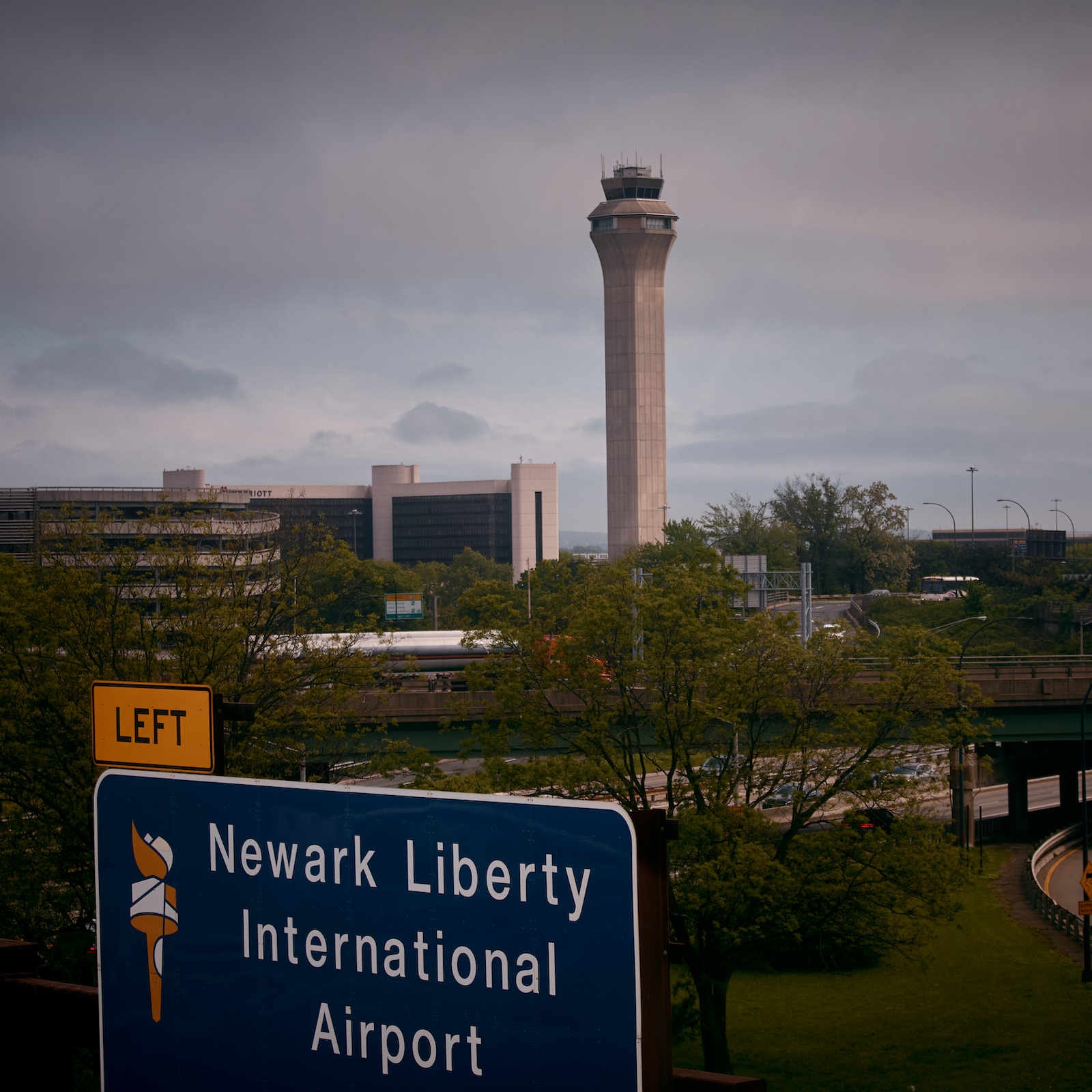
Good morning. It's Wednesday, May 7th. I'm Shemitah Basu. This is Apple News Today. On today's show, escalating tensions between India and Pakistan. The conclave to choose a new pope begins today. And a mostly cordial meeting between Canada's new prime minister and President Trump. But first, to last week's communications meltdown at Newark Airport that put air traffic controllers completely in the dark and set off a chain reaction that's still resulting in canceled and delayed flights. Yesterday, audio from air traffic control was released, offering us a window into the incident.
- [00:52]
Air Traffic Controller
No, you do not have a Bravo clearance. We lost our radar and it's not working correctly. Radar service terminates. Change approved. If you want a Bravo clearance, you can just call the towers and get closer. Okay, I'll wait for that frequency from you. Okay. Okay. No, just walk me as far. Look up the tower frequencies. We don't have a radar, so I don't know where you are.
- [01:10]
Shemitah Basu
We called up Andrew Tangle, who covers aviation safety and regulation for the Wall Street Journal, to tell us what was happening there.
- [01:18]
Andrew Tangle
They lost their radios and their radars for about 90 seconds, and they couldn't communicate with pilots. And that was a very scary situation for the controllers. They are managing busy, complex airspace, and they keep airplanes safely separated. They tell them where to go, where to point the nose, how fast to go, all of that, and keep them out of harm's way. And they do that with the tools that went dead.
- [01:53]
Shemitah Basu
This blackout meant controllers couldn't see where each plane was and their backup systems didn't work.
- [02:00]
Andrew Tangle
There are planes taking off, landing, going hundreds of miles per hour. They're all in sequence. They need to know where not to fly. They need to know not to go in a certain direction, to not have a conflict with another aircraft and crash into it. And when the basic tools that air traffic controllers use don't work, it's very scary for them. But it raises, obviously, safety issues for the traveling public.
- [02:29]
Shemitah Basu
Ultimately, there were no crashes. Thousands of flights have been delayed or canceled since, and dozens more were diverted to other airports. Tangle says the whole experience was traumatizing for the controllers. Their union has said that many have since taken trauma leave. As for the cause, the Transportation Secretary, Sean Duffy, has blamed, quote, antiquated technology. He says he'll propose a plan to modernize the air traffic system later this week that will cost tens of billions, billions of dollars. What happened at Newark, along with other recent aviation disasters like the fatal collision near Reagan National Airport in January, have put longstanding problems in the industry into sharp focus Air traffic control alone has been facing issues for years due to inadequate funding, dated systems and staffing shortages. A report from the Government Accountability Office last year found that close to three quarters of air traffic systems were obsolete or potentially too hard to fix OR MAIN the FAA says it's understaffed by about 3,000 fully certified controllers nationwide, so.
- [03:36]
Andrew Tangle
That results in controllers needing to work six day weeks, ten hour days. There are reports of fatigue, stress and so forth. I mean, controllers are known to like overtime, but some say that after a while they'd rather have a better life work balance.
- [03:56]
Shemitah Basu
Duffy has rolled out new incentives aimed at increasing the number of certified controllers. In February, he announced a 30% pay increase for students at the Air Traffic Academy. More recently, he announced the FAA will give $5,000 to all graduates of that academy. And he announced annual bonuses for air traffic controllers who are eligible for retirement but choose to stay on the job. So far, controllers have been exempt from federal workforce cuts. As for what's going on at Newark Airport, Senate Minority Leader Chuck Schumer has now called for an investigation and it remains unclear how long it'll take for flights to resume their regular schedules. Now let's turn to some major military developments in Southeast Asia as the world is watching nervously after India sent a series of strikes into Pakistan and Pakistani administered Kashmir. Pakistan responded, according to an army spokesman, by shooting down Indian jet fighters. The strikes follow a recent militant attack in a part of Indian administered Kashmir in April which killed 26 people, primarily Indian tourists. India has accused Pakistan of having links to last month's attack which Pakistan has denied. A video shared by Reuters appeared to capture the moment bombs descended near the Pakistani administered city of Muzaffarabad. According to Pakistani officials, multiple civilians, including children, have died. We are now in the midst of a standoff between two nuclear powers engaged in some of the most dangerous fighting in years. But so far there's a lot of disagreement between them on what's taken place. Pakistan described India's attack as an act of war and said it will not go unpunished. An armed forces spokesperson claimed they had specifically targeted places of worship in a BBC interview. But India says it struck sites of, quote, terrorist infrastructure and insisted its actions were measured, responsible and designed to be non escalatory. Yesterday, President Trump was asked about the strikes shortly after they happened.
- [06:14]
President Trump
It's a shame we just heard about it just as we were walking in the doors of the Oval. Just heard about it. I guess people knew something was going to happen based on a little bit of the past They've been fighting for a long time. You know, they've been fighting for many, many decades and centuries actually if you really think about it. No, I just hope it ends very quickly.
- [06:37]
Shemitah Basu
The Washington Post reports over the last week the United States has been urging de escalation between the two countries. A spokesperson for the UN Secretary General expressed concern saying, quote, the world cannot afford a military confrontation between India and Pakistan. This is not the first time the two countries have come dangerously close to escalation over Kashmir, a divided area that both make a claim to. There have been attacks as recently as 2016 and 2019, but they targeted security forces based in the region. Pakistan has consistently denied any involvement and in recent years at least tensions have been brought under control before escalating to all out war. For more on this quickly moving story, you can find the latest in the Apple News app. Conclave, the process to select a new pope begins today. It's a centuries old Catholic tradition where cardinal electors from around the world come to the Vatican, take an oath of secrecy, lock the doors of the Sistine Chapel and stay there until they select a new pontiff. In fact, the word conclave, which comes from the Latin with key, literally refers to being locked in. Bill Chappell, a correspondent for npr, told us about the voting process.
- [08:03]
Bill Chappell
The ballots themselves will be secret. It's recommended for cardinals to use a handwriting style that's not necessarily highly identifiable to their own.
- [08:12]
Shemitah Basu
And the commitment to secrecy extends beyond the cardinals. Workers at the chapel are instructed to sweep the room for bugs to make sure nothing gets recorded and leaked to the press. Selecting a new pope will require a two thirds majority vote from the 135 eligible electors, all of whom are men.
- [08:32]
Bill Chappell
If there's no clear winner from that, with the two thirds majority, those ballots will be added to a pile that would then be burned to signal to people outside of the Sistine Chapel with black smoke that there's no new pope and the process will still have to continue.
- [08:46]
Shemitah Basu
The process can go on for days. When a pope is eventually selected, white smoke is the signal and the largest bell at St. Peter's Basilica will ring. The new pontiff is then asked two questions.
- [08:59]
Bill Chappell
The first is do you accept your election as pope? And the second is what will you be known as? Like, what will your name be?
- [09:06]
Shemitah Basu
Then the cardinal deacon of the church emerges from the central balcony of St. Peter's to announce Habemus papam, which is Latin for we have a Pope. This conclave is unique in its makeup. While most of the electors hail from Europe, Chappell reports. This actually will be the least European conclave ever. At least 70 countries will be represented, and 17% of the electors are from Asia.
- [09:33]
Bill Chappell
Francis famously was the first pope from South America. He installed cardinals in countries where there had been no cardinal before. You know, places like Mongolia, Rwanda, Haiti and Laos. His goal, I think, was to make the church reflect more of its global population. There are more than a billion Catholics around the world.
- [09:54]
Shemitah Basu
There are a number of lists floating around naming cardinals who might possibly be the next pope. But observers point out Pope Francis was an obscure pick. It's better to wait and see the outcome. Before we let you go, a few other stories we're following. The Supreme Court will allow the Trump administration to implement its ban on transgender people serving in the military, while legal challenges will continue to play out in practice. Yesterday's decision from the court allows the armed forces to discharge current transgender members and to reject prospective recruits. The ban had previously been blocked by lower courts. An estimated 4,200 service members are transgender, representing about 0.2% of the military. Canada's newly elected Prime Minister, Mark Carney met with President Trump yesterday for the first time since his victory. Trump, who has leveled heavy tariffs against Canada and even threatened to make it the 51st US state, was much more cordial in this conversation as he said he just wanted to be Canada's friend and praised Carney for his victory. However, Carney did assert again to Trump that his country would never become part.
- [11:14]
Mark Carney
Of the US as you know from real estate, there are some places that are never for sale.
- [11:20]
President Trump
That's true.
- [11:20]
Mark Carney
We're sitting in one right now. You know, Buckingham palace, you visited as well. That's true. And having met with the owners of Canada over the course of the campaign last several months, it's not for sale, won't be for sale ever. But the opportunity is in the partnership and what we can build together.
- [11:41]
Shemitah Basu
And finally, one more update on real id, which we talked about on yesterday's show. Yesterday, Homeland Security Secretary Christy Noem said that travelers who have not already gotten their ID will still be able to fly for now with additional security checks. She also said that over 80% of travelers have identification that is compliant with the new federal requirements. The TSA said that if you travel today and don't have a real id, just be prepared to show up a bit earlier to the airport. You can find all these stories and more in the Apple News app. And if you're already listening in the news app right now, we've got a narrated article coming up next, Elle examines a group of women, often referred to as trad wives or traditional wives, that are privately meeting to discuss how trapped some of them feel by the traditional gender roles in their marriage and how they're ready to break out. If you're listening in the podcast app, follow Apple News plus Narrated to find that story. And I'll be back with the news tomorrow.