Loading summary
Transcript31 lines
- [00:05]
A
Good morning. It's Tuesday, December 9th. I'm Shemitah Basu. This is Apple News today. On today's show, how Russia is making sure it never runs out of soldiers, the latest twist in the deal to buy Warner Brothers, and why this year just keeps getting worse for the Louvre museum.
- [00:34]
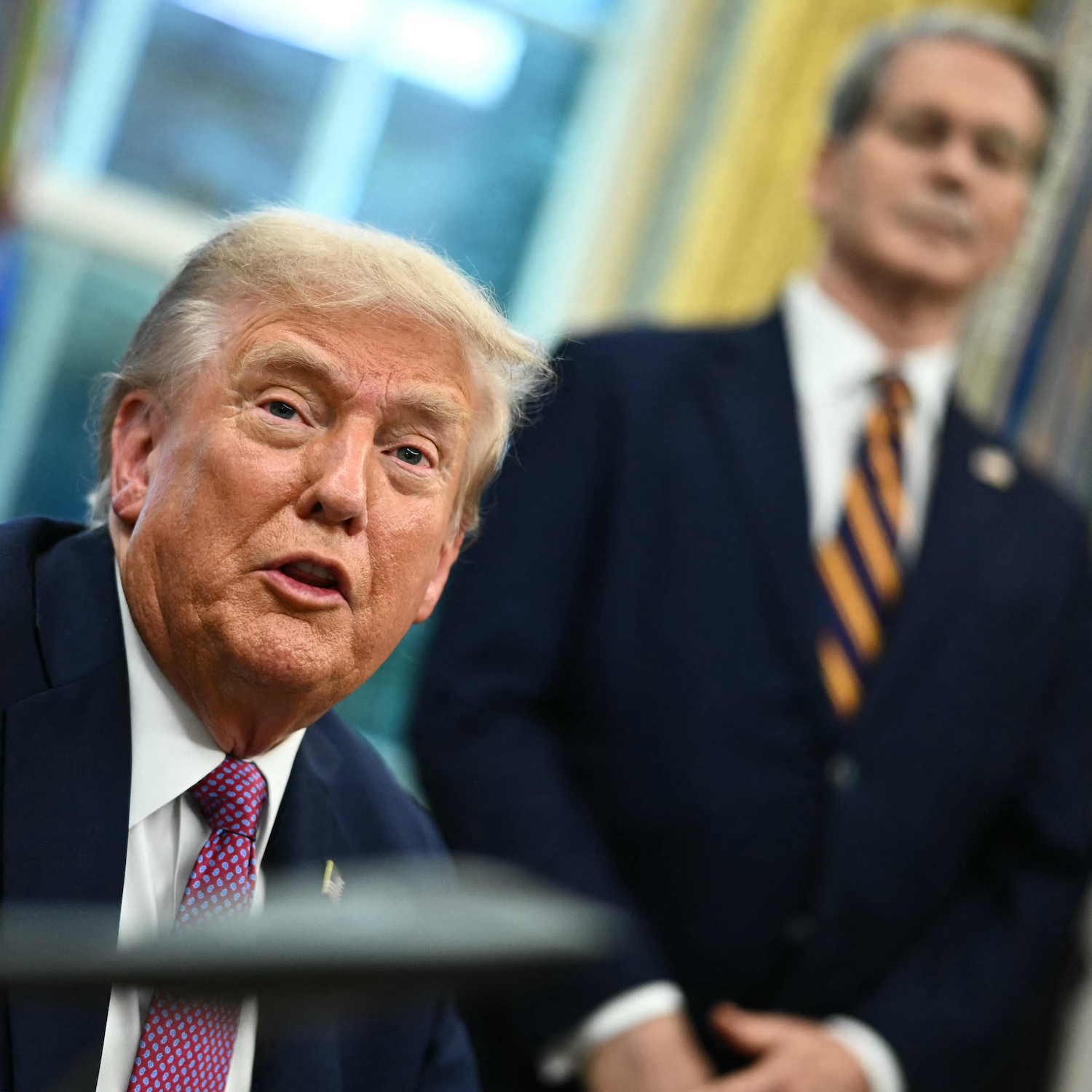
But first, President Trump is set to visit Pennsylvania, a key swing state, today to deliver a speech focused on pricing and affordability. Sounds like campaign era deja vu, right? While on the trail last year, Trump spent a lot of time in states like Pennsylvania hammering the Biden administration for failing to address inflation. The high cost of living was a top concern for many Americans. That's still true today. Now, as that economic unease has pers noted, it's Trump who has had to make the case that he's hearing those concerns and acting on them. Since taking office, the Trump administration has largely focused on tariffs, which most economists agree generally raise consumer prices, immigration, foreign policy, and other issues. In a Cabinet meeting last week, while defending the actions that his administration has taken so far, Trump referred to the use of the term affordability by Democrats as a con job.
- [01:29]
B
You know, there's this fake narrative that the Democrats talk about affordability. They just say the word. It doesn't mean anything to anybody. Just say it. Affordability. I inherited the worst inflation in history. There was no affordability. Nobody could afford anything.
- [01:44]
A
Trump has largely blamed the prior administration for the current economic conditions. But behind closed doors, some are advising the president to take a different approach. Josh Dawsey is a political investigative reporter at the Wall Street Journal who told us what he's been hearing.
- [01:59]
C
So what they're trying to do is to get the president to have more empathetic messaging to say, look, we're doing everything we can on the economy. We're stabilizing the economy, but we understand this is still too high, and here's what we're doing to work on it. And we get you, we see you, we feel you.
- [02:18]
A
The administration has taken some actions to ease cost of living concerns, including rolling back some tariffs on grocery goods like Brazilian coffee and beef, a plan to cut the price of weight loss drugs, and rolling back fuel efficiency rules to make cars more affordable. Just yesterday, the White House unveiled a plan to provide billions in aid to farmers impacted by tariff policy. But recent polls suggest some voters think more can be done. A recent Washington Post poll found that 62% of Americans disapproved of Trump's economic performance so far. And another poll commissioned by Politico found that many people who voted for Trump say that affordability remains their top concern and that Trump isn't doing enough to address it.
- [03:03]
C
I did an interview a few months ago with Georgia governor Brian Kemp, who was saying people will give the president some leeway sometime, but they're not gonna be forgiving forever and ever and ever. So the risk you run is if you head into midterms where you're unpopular on other fronts and a lot of folks do not think you're handling the.
- [03:22]
A
Economy well, dozy said. The White House says they're preparing to have Trump focus on his domestic and economic agenda in campaign stops early next year. When midterm elections pose a challenge for.
- [03:34]
C
Republic you have an uphill battle for them already. If you have an economy that's not humming on all cylinders and a president who doesn't seem to be focused on it and most Americans think that it's getting worse, I think it would be a very, very difficult political environment.
- [03:58]
A
The talks to end the war in Ukraine are intensifying but not showing signs of an imminent peace deal. This week, Trump said he was disappointed that Ukrainian President Volodymyr Zelensky had not embraced his peace plan, which proposes ceding large parts of Ukraine's eastern region to Russia.
- [04:16]
B
Russia is, I believe, fine with it, but I'm not sure that Zelensky is fine with it. His people love it, but he hasn't read it.
- [04:25]
A
Zelensky got a warmer reception in London yesterday as he met the so called coalition of the willing, the leaders of Germany, France and the UK they gave a united message, suggesting it was a critical moment to support Ukraine. As the war drags on, some commentators say Zelensky faces the choice of a bad deal now or a worse deal later. As Russian forces continue to inch forward in the east. One of Ukraine's major problems is one of manpower. Last month, Kyiv's Mayor Vitaly Klitschko said that the Russians attacked like a computer game. They just keep coming, he told reporters. And they don't care about fallen soldiers. Politico has been looking into how Russia has sustained such a relentless stream of soldiers. Initially, the country attempted to mobilize reservists, but that resulted in public outrage and hundreds of thousands of people leaving the country to avoid fighting. Around the same time, the state also allowed prisoners to agree to be sent to the battlefield in exchange for promises of clemency and pay. The success of that arrangement convinced the Kremlin to pursue incentives over coercion, so.
- [05:36]
D
The incentives go beyond cash, with pledges of debt relief, for example, or free childcare for soldiers families and guaranteed university places for their children.
- [05:48]
A
Ekaterina Bodegina spoke to us about her reporting for Politico. In a place where average monthly wages are below $1,000, a signing bonus of up to $50,000 is life changing. But Degina told us about a 44 year old father of three who signed up for the military because he felt like he was out of options.
- [06:08]
D
He slipped into the army after financial collapse. You know, he had been working like two jobs and he also had a criminal case built up against him. So that was like the last resort for him. At least that's how he sees it.
- [06:24]
A
He saw the ads on Telegram and signed a contract entitling him to more than two and a half thousand dollars in monthly pay and a matching sign on Bon. His job was to keep his unit's drones operational. And while his role meant he experienced shelling and being targeted by Ukrainian drones, he told Politico that he would make the same decision if given a second chance.
- [06:45]
D
So this kind of money really did change his life and his family's life.
- [06:49]
A
Politico reports that Russia's labor defense market is being closely studied by Western nations that have been stunned by the Army's continued growth. Security officials in Germany say Russia is poised to hit its target of 1.5 million troops next year, leaving European observers concerned.
- [07:07]
D
This rapid military buildup has really rattled European policymakers who increasingly see it as a preparation for military action beyond Ukraine.
- [07:18]
A
In Europe, for example, Russia's strategy poses a challenge for Ukrainian soldiers who find themselves outnumbered.
- [07:25]
D
There are some parts of the front line where for five Russian soldiers, there is just one Ukrainian soldier. There are multiple Ukrainian soldiers who are deserting, leaving their military past. And that, of course, does impact the situation on the battlefield.
- [07:51]
A
Let's turn now to the latest in the bid to acquire Warner Brothers. The corporate tug of war to control some of Hollywood's greatest movies is starting to feel like a thriller in its own right. Netflix looked in prime position to take control over Warner Brothers after announcing an $83 billion acquisition deal. But Paramount has jumped in with its own hostile bid, going around the execs and appealing directly to shareholders. With a potentially more enticing deal topping $100 billion, Paramount CEO David Ellison told CNBC they would finish what they started.
- [08:26]
E
Our offer is $30 a share, all cash, $41 billion in equity. That's backstopped by the Ellison family and Redbird, $54 billion in debt. With commitments from Citi, bank of America and Apollo, we have faster regulatory certainty to close. And our deal is pro consumer, it's pro creative talent, it's pro competition.
- [08:49]
A
That claim of a smoother journey to the finish line is a key sweetener in Paramount's offer. Because they're a much smaller player in the streaming market, they'll argue the deal is less likely to get buried in antit review. And there's the question of President Trump. He counts Ellison's father, Larry Ellison, a personal friend, but he's also praised Netflix CEO Ted Sarandos. On Sunday, he sounded fairly non committal while speaking to reporters.
- [09:15]
B
Well, that's got to go through a process and we'll see what happens. It's a Netflix a great company. They've done a phenomenal job. Ted is a fantastic man. I have a lot of respect for him, but it's a, it's a lot of market share. So we'll have to see what happens.
- [09:30]
A
Further complicating that process is the fact that Affinity Partners, the private equity firm run by Trump's son in law, Jared Kushner, is also part of Ellison's bid, which some experts say amounts to a conflict of interest. NPR's media correspondent David Folkenflick told the network that because of Trump's close ties to the Ellisons, he'll be heavily involved in whether the deal gains approval and could put his thumb on the scales.
- [09:55]
E
They have really struck and forged an alliance with President Trump. Trump said just in the last two days that he will be involved in whether or not federal regulators approve Netflix plan. That's by the way, not supposed to be how this stuff works, but it is how things work in the Trump era. And so you know, Trump has made clear that that's going to be a factor as well.
- [10:12]
A
The deal is being closely watched by the news industry too, as Warner Brothers owns cnn. Unlike Netflix, Paramount's bid includes taking the news channel under its control. According to semafor. News staff were hopeful of a deal that avoided the Ellison family and Paramount, which has endured intense pressure from Trump over coverage on its subsidiary cbs. But the prize at the end of the day is Warner Bros. Vast library of movies, TV shows and other intellectual property. There was a reminder of just how valuable that material is yesterday when the Golden Globes nominees were announced. Warner Bros. Secured 16 nominations across film and TV, including strong recognition for Sinners, One Battle after Another and the White Lotus.
- [11:08]
Before we let you go, a few other stories we're following. There's been more fallout for former personal lawyers for President Trump, who landed top jobs in the Justice Department yesterday Alina Habba resigned from her position as the acting top federal prosecutor in New Jersey after an appeals court determined that she'd been unlawfully serving in that she will remain at the DOJ as a senior advisor. Haba, along with three other US Attorneys have all been found to be serving unlawfully in roles across the country. It stems from legal maneuvers the DOJ made to appoint attorneys on an interim basis, then attempt to keep them in the role beyond the 120 day limit for acting positions and sidestep congressional approval. In Washington, lawmakers are looking at another way to force more transparency from Defense Secretary Pete Hegseth as they examine strikes on alleged drug boats in the Caribbean. Politico reports that there is an interesting stipulation tucked into the drafted version of the annual defense spending bill. It requires Hegseth to release unedited videos of the strikes or risk losing a quarter of his travel budget. The bill is a must pass piece of legislation before the end of the year, so it's meant to serve as a leverage point over the Pentagon.
- [12:25]
And finally for the Louvre in Paris. When it rains, it pours. Or in this case, it leaks. The beleaguered museum had hundreds of rare books in its Egyptian antiquities library damaged due to a water leak. Some of the items included periodicals and archaeological reviews dating back to the late 19th century, officials say. A few weeks ago, a valve, which had been closed and marked for replacement was opened by mistake, leading to the leak. The works are currently being dried out and an investigation is underway. The news comes just weeks after thieves made off with priceless jewels in a brazen daytime heist that made global headlines. Meanwhile, the museum's woes aren't over quite yet. A planned strike by Louvre workers, the second this year, is set for next week. Workers say they're walking off the job to protest difficult working conditions and weaknesses in the world's most famous museum's security apparatus.
- [13:22]
You can find all these stories and more in the Apple News app. And if you're already listening in the news app right now, we've got a narrated article coming up next. Fortune reports on what the CEO of Door Dash learned after an afternoon as a dasher and how he salvaged the company, which was once on the brink of dying. If you're listening in the podcast app, follow Apple News plus narrated to find that story. And I'll be back with the news tomorrow.