Loading summary
Transcript15 lines
- [00:05]
Gideon Resnick
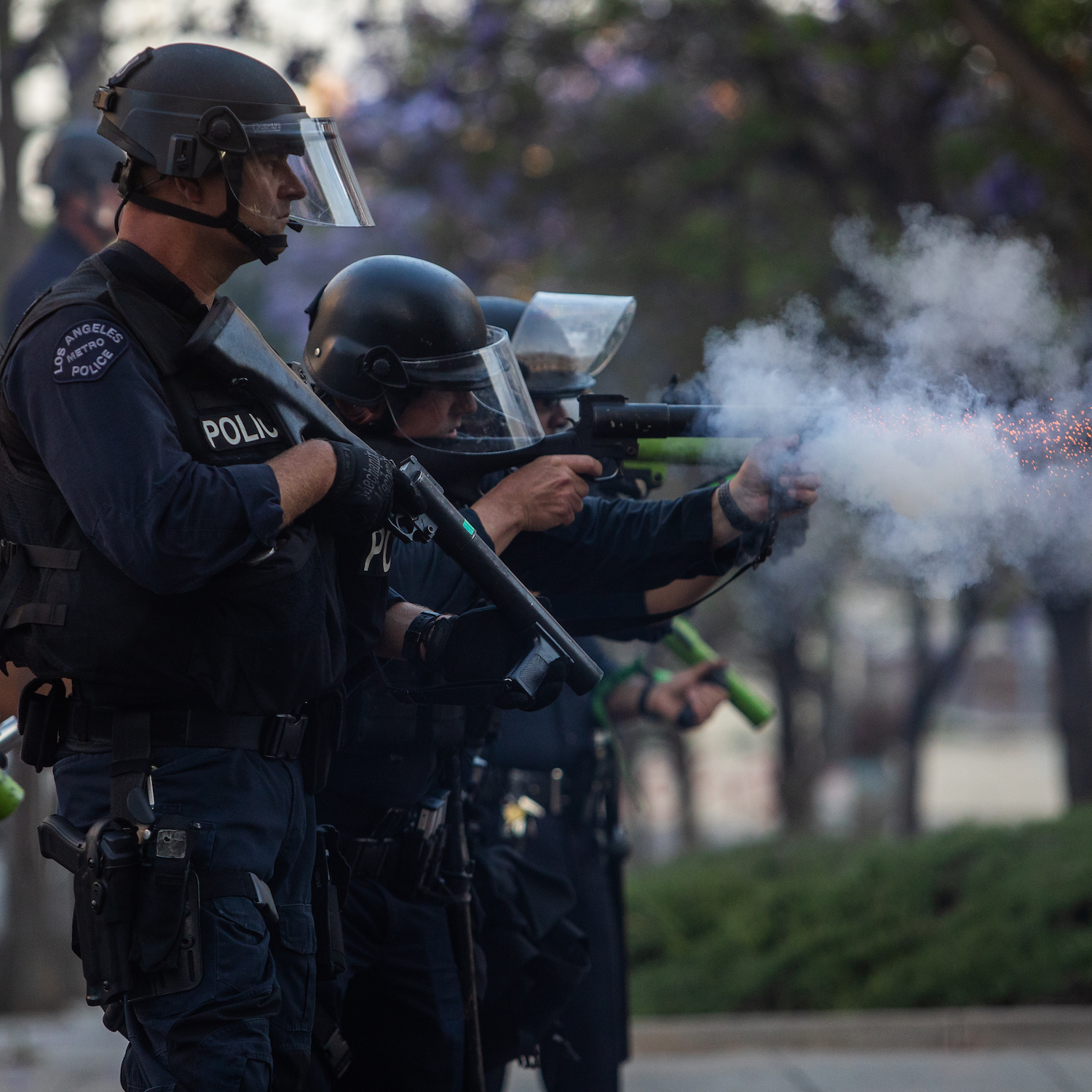
Good morning. It's Thursday, June 12th. I'm Gideon Resnick in for Shamita Basu. This is Apple News today. On today's show, the rare minerals at the heart of a trade truce between China and the US Why some states have more gun deaths than others, and the importance of K pop and giant trash balloons in diplomacy with North Korea. But first, the protest movement against federal immigration raids is spreading. There were some isolated demonstrations again in LA yesterday in small parts of the downtown area and across Orange County. And more demonstrations have popped up in cities like New York, Chicago, Seattle, Dallas and Atlanta as they've spread. Defense Secretary Pete Hegseth told senators at a hearing yesterday in Washington that the government is considering deploying troops to more cities. And to do so, he said they'd use the very same order issued earlier this week. That one authorized sending thousands of National Guard troops to la. Hegseth's comments came in response to a question from Hawaii Senator Brian Schatz, a Democrat, who wanted the Defense Secretary to explain why that order did not specify where exactly the government could choose to deploy troops and what types of troops it could send. I'm just trying to figure out, did you just potentially mobilize every Guard everywhere and every service member everywhere? Part of it is getting ahead of a problem so that if in other places, if there are other riots in places where law enforcement officers are threatened, we would have the capability to surge National Guard there if necessary. Right now, members of the National Guard and Marines deployed to LA are authorized to protect federal property and personnel. They can participate in law enforcement if Trump invokes the Insurrection act, which he has said he's considering. But for now, these troops can only detain people, they cannot make arrests, and they're supposed to hand people over to local law enforcement immediately. Today we're going to take a closer look at how local police in LA have responded to the protests so far and the tactics that they've been using to disperse protesters. Police have used what are often described as non lethal munitions, but a lot of news outlets like Reuters now describe them as less lethal because many of these weapons have led to serious injuries and in some past cases, death. In a high profile incident captured on live tv, a police officer appeared to fire towards an Australian journalist with a projectile. The LAPD moving in on horseback, firing rubber bullets at protesters, moving them on through the heart of la. You just shot the. She wasn't seriously hurt, but one British photojournalist had emergency surgery when he felt a plastic bullet hit his thigh. Reuters has been examining the weapons that LA police have used based on eyewitness accounts and what the LAPD itself has shared in past protests, rubber bullets with metal casings have been used and they can cause long term serious damage or fatalities depending on where a person is hit. These bullets have been linked to blindness, traumatic brain injuries, organ injuries and broken bones. The LAPD told Reuters that they have not used those kinds of bullets in these protests, but instead operate with foam rounds, a kind of sponge projectile that is like a hard Nerf ball, as well as beanbag rounds that contain rubber and some lead. Police have been spotted striking people with batons as well as using tear gas and pepper spray, two other common deterrents. These chemical irritants can cause temporary blindness and make it difficult for people to breathe. Long term effects are less common, but they can include asthma, wheezing, loss of vision and even nerve or brain damage. It's been difficult for journalists to tally the total number of injuries caused by police in the LA protest so far, but according to research from the University of Illinois Chicago cited in Wired, police force of all types results in 75,000 non fatal injuries requiring hospital treatment and 600 to 1100 deaths every year. Now to Trade where after several days of negotiations, the US And China agreed to a truce of sorts.
- [04:24]
Ling Ling Wei
Now the two biggest economies are back on track in terms of upholding an initial trade agreement both sides forged in Geneva in May.
- [04:34]
Gideon Resnick
Ling Ling Wei, the chief China correspondent for the Wall Street Journal, has been following these talks. When they met in Geneva, the countries agreed to lower tariff rates for a temporary period. But since then the US And China have accused each other of violating parts of the deal, and they each implemented punitive measures. This latest agreement, which Trump announced on social media, rolls back some of those penalties and effectively returns to the terms that were agreed to in May. So not all the barriers brought up since February have come down and the framework still does need to be formally approved by President Trump and Chinese President Xi Jinping. But some initial details of the plan have been shared. The tariff rates will not change. Trump says that tariffs on imports from China will be 55%, and China agreed to a 10% tariff on U.S. imports. But Trump says that he is dropping his plan to revoke visas for Chinese.
- [05:23]
Ling Ling Wei
Students, and the United States has agreed to remove some recent restrictions on the sale of things like jet engines and other raw materials to China. And the Chinese have agreed to resume exports of rare earth and some other critical of minerals to American automakers and other manufacturers.
- [05:47]
Gideon Resnick
Rare earth minerals were a major sticking point in these negotiations, they are a group of 17 metallic elements which show up in products that we use every day. Cars, computers, smartphones, magnets, LED lights, MRI machines, and a whole lot more. Until the 1980s, the US dominated the rare earth industry. But these days, China owns about 70% of the world's supply. In fact, it owns the entire global supply of samarium. That's a rare earth metal used by the US Military to manufacture missiles, fighter jets, certain types of bombs and other military gear.
- [06:20]
Ling Ling Wei
So in this case, China is holding some big leverage over the United States.
- [06:26]
Gideon Resnick
In recent weeks, while negotiations were stalled, the US Auto industry has been frantic to find alternate sources of rare earth minerals, with some factories threatening to shut down. But China agreed to only ease restrictions on rare earth export licenses for six months. That gives Beijing an upper hand if trade tensions escalate again.
- [06:44]
Ling Ling Wei
It's conceivable if the US does something that the Chinese side perceives as provocative, they might suspend the sale of rare earths again. So it's agreement for now, but how long it will last is anyone's guess.
- [07:00]
Gideon Resnick
If the United States wants to change this power balance, it will need to ramp up domestic rare earth production. An expert on these minerals told the New York Times it would take five years for the US to break its dependence on China. But he says the domestic industry is making significant progress. Nevertheless, supply chain executives told CNBC the damage from the various trade frictions won't be easily reversed, with job losses and higher consumer prices still likely. Now to some new research that's been tracking the impact of state level gun laws on fatalities, especially among kids and teens, where it has been the number one cause of death in the U.S. the results suggest the numbers have been diverging between states and that local laws could hold the key for understanding why. It all goes back to a 2010 Supreme Court ruling. That ruling said the Second Amendment doesn't just apply at the federal level, it applies to state and local governments, too. The ruling gave states the power to regulate firearms independently of the federal government, so long as their laws complied with the Second Amendment. And NPR health correspondent Ritu Chatterjee told us that state policies started to change quickly.
- [08:18]
Ritu Chatterjee
Many states went on to make it easier for people to own and carry firearms, whereas other states, like California, ended up passing regulations that essentially made it harder to own and carry a firearm. You know, putting in restrictions like background checks and things like that.
- [08:40]
Gideon Resnick
The rate of pediatric mortalities started to change quickly state to state as well. The research published by the American Medical association measured that change by organizing states into three categories based on their firearm laws. After the court's ruling, the most permissive states had the loosest regulations, where it's easier for residents to get a firearm quickly and to carry it openly. Then there's a middle group, the permissive states. And finally, the least permissive states places with strict gun regulations like waiting periods and background checks. Researchers measured over a period from 2011 to 2023 and compared the overall deaths to the decade prior. States that made it easier to carry guns, about 30 total, saw the biggest rise in gun related deaths in kids and teens.
- [09:24]
Ritu Chatterjee
That was almost in excess of 6,000 deaths than they would have seen had these laws not changed to become easier than what they were before.
- [09:35]
Gideon Resnick
In the second group, the permissive states, there was also an increase in deaths, putting the total number of preventable deaths in these two groups of states at over 7,000 or 500 deaths a year.
- [09:46]
Ritu Chatterjee
Whereas in the least permissive groups. So in the states with the strictest gun regulations, they did not see a rise in pediatric mortalities.
- [09:57]
Gideon Resnick
In fact, in four California, Maryland, New York and Rhode island, they dropped significantly. And these states, as Dr. Maya has, an emergency physician at the University of Colorado School of Medicine, explained to Chatterjee, could provide a window into how to lower the number of kids and teens killed by guns in states nationwide. This doesn't mean we should change all our laws at once, but it says perhaps if we could look at these laws and see which ones are effective, then we could start moving towards safety. Before we let you go, a few other stories we're following. Yesterday, a jury in New York convicted Harvey Weinstein of sex crimes for a second time. This case is a retrial of his 2020 New York conviction, which a state appeals court overturned last year on procedural grounds. The disgraced Hollywood producer was accused of sexually assaulting three women, including an aspiring actor, a TV producer and a 19 year old model. So far, the jury has reached decisions on two of those three charges. Weinstein was found guilty of one count of criminal sexual act in the first degree and not guilty of another count for the same charge. Today the jury will reportedly reconvene to decide on the third charge. Weinstein has pleaded not guilty to the charges. In Washington, the Trump administration decided to rehire more staffers who had been previously let go as part of an effort by DOGE to downsize the federal government. The Centers for Disease Control and Prevention are set to bring back more than 450 staffers that were let go in a previous reorganization effort. STAT reports that those staffers worked at a number of key divisions within the cdc. That includes ones that work to keep cruise lines safe, to track and prevent HIV, and to prevent childhood lead poisoning. The move comes amid other recent efforts from the federal government to bring back workers who had been previously let go. Additionally, Health and Human Services Secretary Robert F. Kennedy Jr. Named eight new members to a CDC vaccine committee after firing the prior group earlier this week. The new members, NBC notes, include vaccine skeptics and others who have been critical of pandemic lockdowns and finally, a detente of sorts between north and South Korea. The latter's new president has switched off high powered loudspeakers that have been broadcasting news and propaganda and even K pop music into the neighbor's country. It could mark an end to the recent tit for tat confrontation between the two nations that's come to resemble a kind of diplomatic trolling. Before being impeached, the former South Korean president had given a free pass for activists to launch large balloons into the north that criticized Kim Jong Un. In response to that, North Korea began sending their own balloons loaded with cigarette butts and other trash. And as the south turned up the loudspeakers, the north responded with eerie noises so unpleasant that nearby southern residents began installing sound insulation. A spokesperson for South Korea's president said that he hoped the K pop withdrawal would restore trust and help build peace on the Korean Peninsula. You can find all these stories and more in the Apple News app. And if you're already listening to the news app right now, we have a narrated article that is coming up next. Bloomberg businessweek goes inside a hack at the SEC by a notorious gang of Ukrainian cybercriminals, how the regulator downplayed the breach and how their system could still be vulnerable today. If you're listening in the podcast app, follow Apple News plus narrative to find that story and I'll be back with the news tomorrow.