Loading summary
Transcript41 lines
- [00:05]
Cecilia Lay
Good morning. Trump and Netanyahu pledge an end to strikes on energy infrastructure. The Washington Post explains the drastic measures being explored to calm a spiraling crisis.
- [00:16]
Evan Halper
Oil prices are going up higher and higher and this is becoming a real problem for the economy and it's a political problem.
- [00:22]
Cecilia Lay
The LA Times explains how California is reckoning with a shocking investigation into the late civil rights icon Cesar Chavez. And who is banks Reuters claims to know and tells us how they found out.
- [00:35]
Blake Morrison
It was that beginning curiosity and a tantalizing clue we got at that moment that started us down this path.
- [00:42]
Cecilia Lay
It's Friday, March 20th. I'm Cecilia Lay and this is Apple News. Today, After the biggest day of strikes on energy assets since the war began, President Trump spent yesterday trying to reassure markets that the tit for tat would not escalate further. Israeli Prime Minister Benjamin Netanyahu said he would halt further attacks on a major Iranian gas field at Trump's request. In a press conference yesterday, he claimed Iran's ability to enrich uranium had been destroyed. Following Trump's complaint over recent Israeli strikes, he presented a united front with an optimistic prediction for the conflict.
- [01:23]
Scott Besant
I also see this war ending a lot faster than people think. I think you have to in war, you have to grit your teeth. And I hope that in time people will see the wisdom and the courage of President Trump's decision and his leadership and the fact that we're working together.
- [01:39]
Cecilia Lay
Stocks and oil prices have been see sawing after mixed signals over the past couple of days. But the pledge of restraint likely reflected recognition that provoking Iran further risked serious disruption of global energy supplies. Concerns appeared high enough that Treasury Secretary Scott Besant revealed the administration was considering a major change in policy.
- [02:01]
Scott Besant
In the coming days, we may unsanction the Iranian oil. That's on the water. It's about 140 million barrels. So depending on how you count it, that's 10 days to two weeks of supply that the Iranians had been pushing out. That would have all gone to China. In essence, we will be using the Iranian barrels against the Iranians to keep the price down for the next 10 or 14 days as we continue this campaign.
- [02:30]
Cecilia Lay
If that happened, the treasury would follow a similar move to temporarily lift sanctioned Russian oil that was already in tankers. Evan Halper is a business reporter with the Washington Post who explained the administration's reasoning.
- [02:43]
Evan Halper
So one of the things they're trying to do is find every tool they have, they don't have that many to bring more oil into the marketplace. And they've done everything they can up to now, and it's not really bringing the price of oil down.
- [02:56]
Cecilia Lay
But Halper notes that this strategy is not without risk.
- [02:59]
Evan Halper
What Iran is trying to do here is create all kinds of economic chaos. And so if that's a big part of their war strategy and they're able to ease some of that economic chaos, even if it means money going into Iran, maybe it's worth it. But on the flip side, you have a lot of lawmakers, you've got analysts, you've got people in Europe who are questioning, why are we allowing the flow of this oil, the money that comes from the flow of this oil, to go back to these regimes.
- [03:25]
Cecilia Lay
European leaders expressed concerns about the cost of energy at a summit yesterday. They are more vulnerable than the US to higher energy costs and asked for a moratorium on strikes aimed at energy facilities.
- [03:37]
Evan Halper
The reality is that this war keeps escalating, and it's gone from just the strait being closed and being a problem to now we're seeing all kinds of attacks from Iran on infrastructure in Gulf states, energy infrastructure. And they're basically going after the plumbing of the energy supply. And if that starts to go down, it can take a very long time to repair some of these facilities. And you're talking about price shocks that are not going to be just temporary.
- [04:01]
Cecilia Lay
At the White House, Trump repeated that these current conditions wouldn't last forever.
- [04:06]
Dolores Huerta
So I wanted to put out that fire. And I said, you know, if I do that, oil prices will go up, the economy will go down a little bit. I thought it would be worse. Much worse, actually. I thought there was a chance it could be much worse. It's not bad, and it's going to be over with pretty soon.
- [04:22]
Cecilia Lay
CNN has a daily tracker of US gas prices and currently puts the national average at $3.88 per g, up $0.78 from this time last year. Trump confirmed he was seeking $200 billion in new Pentagon funding for the war. He was a revered icon of the farm labor movement, a national hero for the Latino community. And he left a legacy that inspired a bust in President Biden's Oval Office, but now a New York Times investigation alleging that the late Cesar Chavez sexually abused women and young girls in the 60s and 70s has left his admirers in shock, especially in California, the base of Chavez's movement with the United Farm Workers. Yesterday, Governor Gavin Newsom said he was still processing the report.
- [05:17]
Gavin Newsom
I think there's three dozen schools in the state are named after Cesar Chavez. So we're just going to have to reflect on all of that and reflect on a farm workers movement and a labor movement that was much bigger than one man and celebrate that. And so this is a world we're living in. We're for justice, we're for the truth, we're for transparency. We want to have the backs of our victims. But it's a sensitive, sensitive moment.
- [05:44]
Cecilia Lay
The LA Times reports that the reaction in the state has been swift. Dozens of schools, cities, parks and libraries are pushing to rapidly strip Chavez's name from their buildings and streets. And yesterday, California lawmakers said they reached a deal to rename the upcoming Cesar Chavez Day to Farm Workers Day.
- [06:03]
Gustavo Arellano
I have seen very little pushback against this move to strike Cesar's name from all these different places.
- [06:10]
Cecilia Lay
Gustavo Arellano is a columnist for the LA Times who frequently writes about Latino culture and communities.
- [06:16]
Gustavo Arellano
I think that speaks to a new generation of activists, but also leaders that know you cannot defend the indefensible. I don't think we would have had the same reaction 20 years ago.
- [06:27]
Cecilia Lay
The New York Times spoke to more than 60 people reporting that Chavez, who died in 1993, sexually abused two underage girls who were the daughters of United Farm Workers organizers in the 1970s. Reporters also spoke to 95 year old Dolores Huerta, who co founded the UFW with Chavez. Huerta is a legend in her own right, a feminist icon who created the famous rallying cry Si se puede.
- [06:52]
Dolores Huerta
There will be strikes all over the state and throughout the country because Delano has shown what can be done and the workers know that they are no longer alone.
- [07:02]
Cecilia Lay
That was Huerta giving a speech in 1966. She told the New York Times that she rose to a leadership position in a movement dominated by sexist machismo culture. In her interview, Huerta described being manipulated and forced into sex with Chavez. She said those encounters resulted in two children whom she arranged to be cared for by others. This was the first time she revealed these details of her life and she
- [07:28]
Gustavo Arellano
said she hid it all because she did not want to be seen as trying to throw a leader of a movement that was just starting under the bus. So it was a sacrifice of the most painful kind. She sacrificed her own mental health, her own everything on behalf of this man. I cannot even imagine holding this pain for decades. She is now about to turn 96. She is in the winter of her life, still as active as ever. And to see that sort of courage be maintained. And she never once gave any hint of it. She was always and is still always seen as just this super strong icon
- [08:10]
Cecilia Lay
in its investigation The Times reports they could not independently verify Huerta's claims, since she hadn't told anyone about them until very recently. In her statement about the Times story, Huerta said she was sickened to learn that Chavez also hurt young girls and that, quote, cesar's actions do not reflect the values of our community and our movement. Arellano notes that there are a lot of questions that will still need to be answered. In particular, who might have known or whether anyone suppressed allegations. In the meantime, those who have long celebrated Chavez as a hero are now confronting a much more complicated legacy.
- [08:47]
Gustavo Arellano
The victories that they were able to attain were real. They were able to create legislation in California that benefited all farm workers, not just the farm workers unionized by the United Farm Workers. And the leader of the UFW in those was Cesar Chavez. So the good that he did cannot be wiped away, should be acknowledged. But now we need to. While we tell those stories, we also need to tell the totality of the man. Because now especially you cannot remove, you cannot separate the two. It's impossible. Now,
- [09:33]
Cecilia Lay
It's a one word name that the world has come to know. Over the past 25 years, renowned street
- [09:38]
Evan Halper
artist Banksy has unveiled nine new animal themed murals. Well, in the case of the famously anonymous Banksy, you pretty much have no choice.
- [09:46]
Cecilia Lay
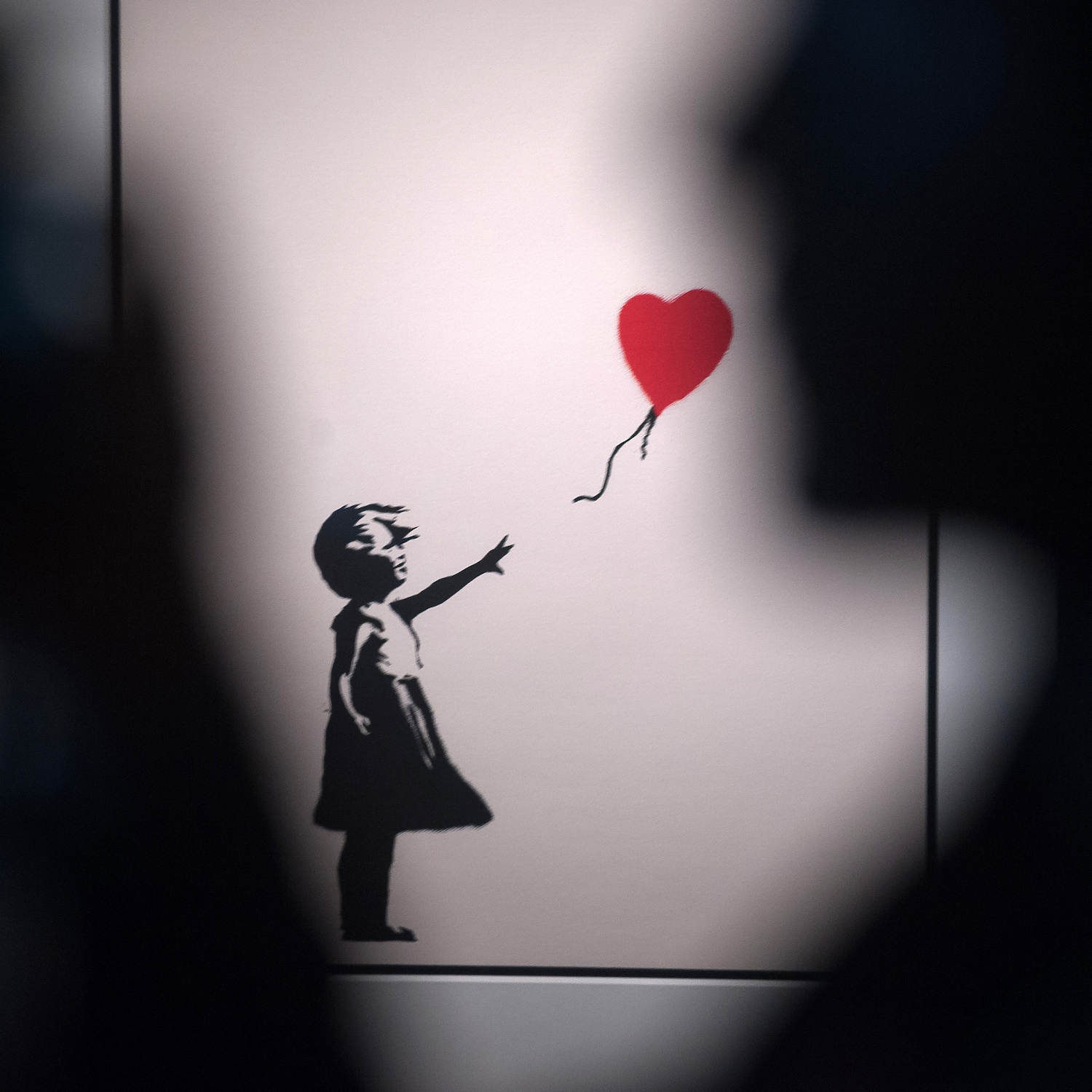
Now let's tell you a little bit about Banksy. After months, you can likely picture his work in your mind. A girl reaching out for a heart shaped balloon, or a masked man launching a bouquet of flowers like it was a Molotov cocktail. His art is famous, his name is legendary, but his identity, it's been shrouded in mystery. That is, until now. A new report from Reuters claims to reveal the man behind the spray can. Blake Morrison, an investigative journalist, told me about the journey he and his colleagues took to uncover the real Banksy.
- [10:18]
Blake Morrison
One of our journalists who worked on this, Simon Gardner, was in Ukraine in November of 2022, and Banksy had just been there. And Simon, who's a big Banksy fan, got cur and went there and he created a photo lineup of people who'd been rumored to be Banksy on his cell phone and started showing it around to some villagers who had met or seen the artist at work.
- [10:44]
Cecilia Lay
What followed was a series of shoe leather reporting exercises, showing photographs to people checking with immigration officials about who had entered Ukraine and interviewing someone who had made coffee for two men suspected of being Banksy. Ultimately, though, it was old New York police reports and court documents from 2000 that persuaded the reporters they had enough evidence to publish. Banksy's longtime lawyer told Reuters that his client did not accept that many of the details in Reuters inquiry were correct, though he didn't elaborate beyond that. So not exactly a denial. All the while, Morrison and his colleagues wrestled with a deeper question. Was it right to strip one of the world's most celebrated artists of the very thing that defines him? I asked Morrison why uncovering Banksy was a worthy quest.
- [11:32]
Blake Morrison
One of the things that we talked about as we were going through this was that we were going to cover him like we cover anyone else, whether we like or dislike his work. And frankly, we all like his work quite a bit. We felt it was important that there were issues of power and access and accountability. And we also thought it was sort of curious that somebody who has been so anti establishment his entire career is now really embraced by the establishment.
- [12:01]
Cecilia Lay
Morrison notes that Banksy's work has generated tens of millions of dollars in sales over the years, and that his notoriety as an anonymous and celebrated artist offered a certain level of impunity that's not afforded to other artists using graffiti as their primary means.
- [12:16]
Blake Morrison
Some people don't think that's a good thing. I'm not judging one way or the other, but that certainly happened in September in London when he painted a mural on the Royal Courts of Justice Building. And other street artists there said, look, if it weren't Banksy, we would have been prosecuted.
- [12:33]
Cecilia Lay
Even as his anonymity fueled big sales in the past, the Wall Street Journal reports that a number of art collectors are already expecting to shell out more money knowing who Banksy is now. They say they're more comfortable buying pieces from someone who isn't a mystery. Morrison acknowledges that there are a lot of people who aren't happy with him and his colleagues for revealing Banksy's true identity. But he says people shouldn't forget just how powerful Banksy really is.
- [13:01]
Blake Morrison
I think people who are fans of Banksy are really underestimating him. And the idea that our story was going to have some profound effect on his ability to be creative and to do the next incredible thing strikes me as selling him short. And if you asked me, I'd bet on Banksy.
- [13:23]
Cecilia Lay
You can read the full Reuters investigation in the Apple News app. And for those who don't want this decades long mystery revealed, Morrison had this to say.
- [13:32]
Blake Morrison
My advice is simple. Don't read the story.
- [13:44]
Cecilia Lay
And finally, a few other stories were following. For 21 seasons, the reality show and cultural phenomenon the Bachelorette has captivated millions of viewers. But yesterday, fans learned they won't be getting the show's 22nd season. ABC is canceling it days before this Sunday's premiere over an open domestic assault investigation against this season's star, Taylor Frankie Paul. On Thursday, TMZ published a video of Paul kicking her ex partner and throwing chairs at him as her young daughter sat close by. Paul is known for being a social influencer and the star of another popular reality show, the Secret Lives of Mormon Wives, which also documented her turbulent relationship with that same ex. She was an unconventional choice for the Bachelorette. It was the first time that ABC cast a female lead who was not part of a previous season of the franchise. A spokesperson for Paul told the Hollywood Reporter she's preparing to share her own story. ABC will fill the Bachelorette timed slot this Sunday with an encore of American Idol, and the Federal Arts Commission has voted to approve a commemorative gold coin featuring President Trump's face to mark the nation's 250th anniversary. The panel, handpicked by the president, approved a 24 karat coin that features an image of Trump standing with fists on his desk and an eagle on the other side. Members on the bipartisan Citizens Coinage Advisory Committee opposed the design, telling the Washington Post it went against, quote, the traditions that drive what we put on our coinage. The plans could still face some legal questions, though. The New York Times cites an 1866 law stating that only a deceased individual may appear on United States currency, and the Post notes that only former President Calvin Coolidge ever tried something similar in 1926 that generated controversy at that time, and most of the coins were later melted. You can find all these stories and more in the Apple News app. And if you're already listening in the News app right now, stick around for the latest episode of Apple News in conversation. Twenty years ago this week, Twitter was created and to take stock of the past two decades of the platform, guest host Sam Sanders sits down with tech reporters Ryan Mack and Kate Conger, who wrote a book about Elon Musk's takeover of Twitter. It's a change from Twitter being a place where you go to learn what's going on to X being a place where you go to learn what's not going on. You know you're entering this experience where you don't know if anything you're looking at is real. If you're listening in the podcast app, you can follow Apple News and Conversation to find that episode. Enjoy the weekend and I'll be back with the news on Monday.