Loading summary
Transcript23 lines
- [00:05]
Shemitah Basu
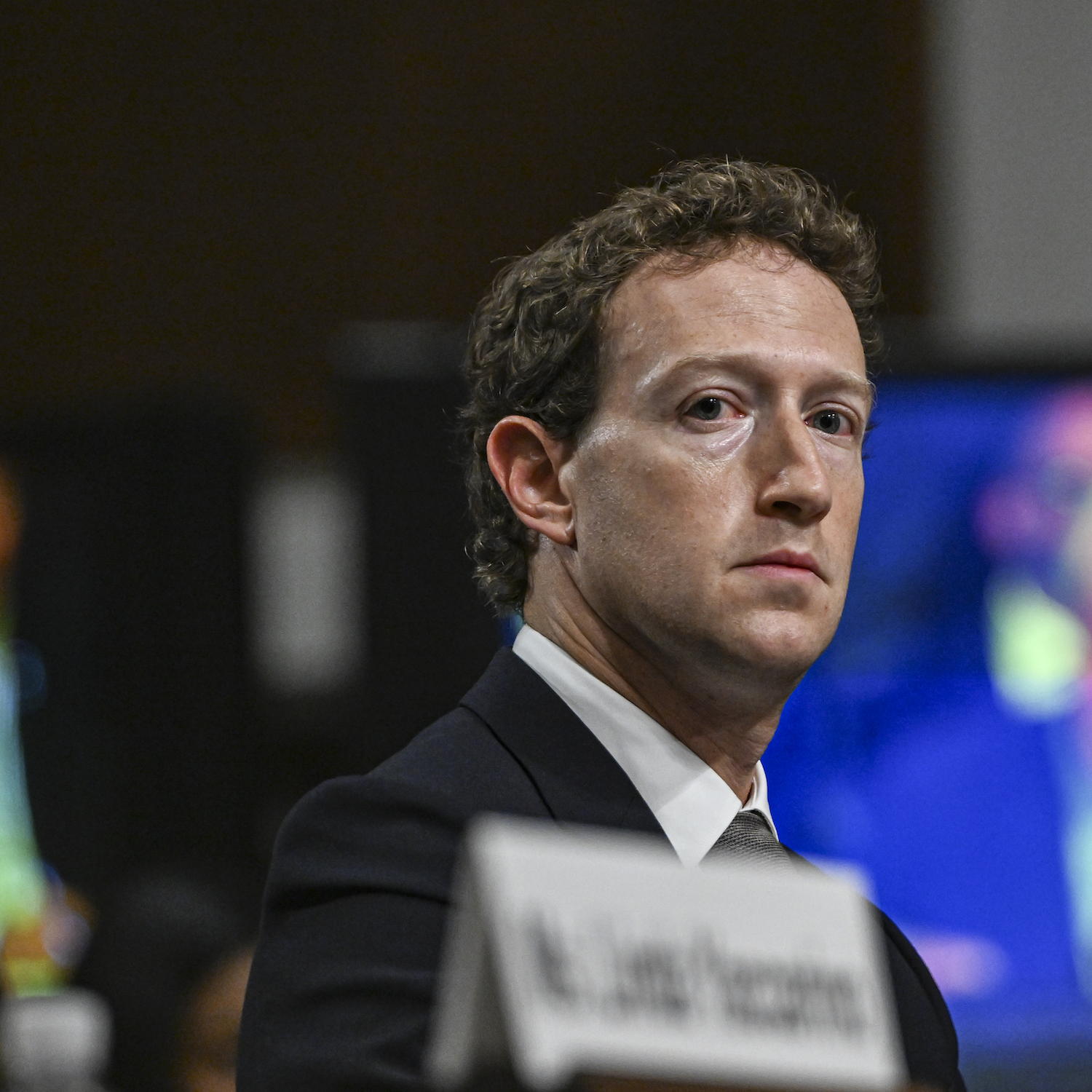
Good morning. It's Monday, April 14th. I'm Shemitah Basu. This is Apple News today. On today's show, why the Social Security Administration is declaring some people dead falsely and on purpose. Higher ed institutions are doing disaster budgeting and those tariff exemptions for smartphones and other electronics will be short lived. But first, social media giant Meta, formerly known as Facebook, is in court starting today in a massive antitrust trial that could change the entire social media landscape. The Federal Trade Commission alleges the company violated antitrust laws when it acquired Instagram in 2012 and the messaging service WhatsApp in 2014. Lauren Feiner is a senior policy writer for the Verge, and she told us the government is arguing Meta with those acquisitions essentially became a monopoly.
- [01:03]
Lauren Feiner
Meta ended up growing its dominance and cutting off what could have been really formidable competitors to its dominance, and that it did that in order to retain this power in the market so that no one else could really come up against it.
- [01:19]
Shemitah Basu
The FTC cites a 2012 email in its argument where Meta founder and CEO Mark Zuckerberg names startups like Instagram as potentially disruptive to its business. Meta says the company always competes fairly and is facing punishment for its success in growing those apps into major players in the social media world. Finer says the crux of the FTC's argument is that Meta monopolizes personal social networking services, a definition that will matter a lot in this case the way.
- [01:50]
Lauren Feiner
The FTC views it. They basically say, look, there are this very tiny group of social networking apps that are really use just to connect with other people, to connect with friends and family. You use them differently than an app like YouTube or TikTok, where maybe you're primarily scrolling through and passively watching content and you're also using it differently than like a LinkedIn where you're really trying to use it to find a job or make career connections. This is really about personal social networking.
- [02:21]
Shemitah Basu
Meta sees the space differently.
- [02:24]
Lauren Feiner
They say, you know, we really compete in this really vast and varied social media landscape. That includes TikTok, that includes YouTube, that includes all of these other social media apps that really look a lot alike.
- [02:39]
Shemitah Basu
It's important to point out that the acquisitions in question were vetted and cleared by the FTC more than a decade ago. The government, however, now says Meta may not have been forthcoming during that process. As all of this is going on, Zuckerberg has sought to curry favor with President Trump. Meta settled a previous lawsuit over the banning of Trump's accounts, and Zuckerberg reportedly made trips to mar a Lago and the White House to personally lobby Trump to direct the FTC to drop this antitrust case. Feiner says it's yet to be seen whether or not that investment will pay off for Zuckerberg and other tech CEOs who have lobbied Trump. Feiner says a recent decision against Google also matters here. A judge ruled that Google illegally monopolized the online search market, which could open the door for other important to go against big tech companies.
- [03:31]
Lauren Feiner
It was really impactful to see a judge reach that conclusion after all of this rethinking about how antitrust laws should be enforced in the digital age.
- [03:40]
Shemitah Basu
If Meta loses this case, the government could force it to spin off Instagram and WhatsApp into separate companies. They currently generate billions of dollars for Meta. For consumers, Feiner told us it could mean potentially better social media platforms in the future.
- [03:56]
Lauren Feiner
The government would say that if they won, this could potentially open up the market for social media apps. And, you know, maybe if there's things you don't like about social media, maybe there'll be room for a new competitor to come in with a new idea that challenges certain features of social media that maybe wouldn't be able to get off the ground the way the market is right now. You know, Meta would obviously dispute that theoretical version of the future, but I think that's really what this whole case is about.
- [04:27]
Shemitah Basu
The trial is expected to last several weeks. Big name current and former Meta executives like Zuckerberg and Sheryl Sandberg are expected to take the stand. Let's turn now to several big changes at the Social Security Administration. Wired reports that the agency plans to move all public communications to Elon Musk's social media platform X. That's raising questions and concerns considering many US Residents, particularly seniors, who rely on this information to better understand their benefits, do not have accounts on the X platform. The agency called this claim false on X, but Wired says they stand by their reporting. Also at the Social Security Agency, the Washington Post is reporting a new Trump administration tactic targeting mostly Latino immigrants is cutting people off from benefits by purposely and falsely labeling them dead. At the request of Homeland Security Secretary Kristi Noem, the Social Security Administration entered the names and legally obtained Social Security numbers of more than 6,000 immigrants who entered the country during the Biden administration into a database that the agency uses to track and cancel benefits for dead people. That effectively canceled their Social Security numbers, meaning they could soon no longer have the ability to work legally in the United States, open bank accounts and credit cards, secure housing and more.
- [06:00]
Lisa Rine
You really do need a Social Security number to function in this country, and so their economic livelihoods could eventually be cut off.
- [06:08]
Shemitah Basu
That's Lisa Rine, a federal government reporter for the Washington Post. She spoke with us about the White House's motivations for this move.
- [06:15]
Lisa Rine
They've said that these people are illegally getting benefits and are not here in the country legally, and they want them to leave.
- [06:22]
Shemitah Basu
A White House official told the Post that the people whose Social Security numbers were canceled had ties to terrorist activity or had criminal records, though Ryan told us they didn't provide evidence to support those claims. They also said nearly 1,000 of these people were receiving benefits through Medicaid, 41 were collecting unemployment, and 22 had student loans. Ryan told us the administration's move here is trying to push people to leave the country by cutting off their access to critical financial services.
- [06:52]
Lisa Rine
The government knows that these people are alive. It isn't. This is not an error. But the government is willfully putting their names in a database where they know they should not be. So that's a violation of the Privacy act, according to many experts we spoke with. So that seems to be the biggest illegality about this.
- [07:10]
Shemitah Basu
This represents a stunning turn in data privacy at the Social Security Administration, where under previous administrations, personal information had been closely guarded. It's just the latest example of the extraordinary measures Elon Musk and his DOGE team have employed to access and share personal data that had historically been off limits to immigration authorities. It comes on the heels of another unusual agreement that we talked about on this show, where the IRS recently agreed to share information with the Department of Homeland Security for undocumented immigrants. In recent weeks, President President Trump has tried to exert more influence on institutes of higher education by withholding financial support schools have relied on for decades. The Trump administration paused over $400 million in federal funding to Columbia University. It announced plans to pause an additional $790 million to Northwestern and more than $1 billion to Cornell. And it's threatened to cut $9 billion in contracts and grants at Harvard. This money helps schools do things like keep the lights on at labs, pay salaries to educators and researchers, and fund research projects. Without it, much of that work comes to a halt. At Northwestern, for example, researchers with Federal grants received 100 stop work orders in recent days, which will impact studies related to Parkinson's disease, nanotechnology, and foreign military training. Over at the University of Missouri, Bloomberg reporter Elizabeth Rambert spoke to a researcher named Carrie Clark, who recently lost funding for a project that she spent a decade on that took up about a quarter of her work developing machines to make harvesting processes for farmers in Africa more efficient. Rembert told us about her work.
- [09:04]
Elizabeth Rambert
Farmers, who are largely women, would have to physically beat the soybean plants with sticks in order for the plants to release the soybeans. And that would take them a week, I think, she said, to go through an acre, which is about the size of a football field. So she developed a threshing machine is what they call it, which helps them mechanize the harvesting process. And now they're able to get through that same field size in just four hours.
- [09:32]
Shemitah Basu
Clark says losing her research funding, which came from usaid, felt like losing a child. And Rembert told us the impact of these kinds of funding cuts could hit.
- [09:42]
Elizabeth Rambert
Far beyond college campuses, cutting funding to the institutes that provide that funding to schools, or proposing new caps on funding. That really imperils a lot of the economy in states where the university systems are a really big part of the jobs or the economies rely on those institutions.
- [10:06]
Shemitah Basu
And there are other ways higher ed institutions are being impacted by the administration through efforts to dismantle the Department of Education, plans to raise endowment taxes, threats to cut funding for schools that support transgender athletes or diversity initiatives, and at schools where students and academics have been outspoken against the war in Gaza, this.
- [10:26]
Elizabeth Rambert
Expert that I talked to for this article kind of called it like using a bazooka to swat down mosquitoes.
- [10:32]
Shemitah Basu
Behind the scenes, colleges and universities are scrambling to figure out what they would do if a large chunk of their budget suddenly gets cut, an expert in higher ed told Rembert administrators are likely working on two versions of their budgets right now, one that assumes the status quo stays, and another that's a disaster budget that accounts for losing government support. Before we let you go, a few other stories we're following. First to the latest on tariffs after the Trump administration said electronics like smartphones and computers would be exempt from steep tariffs on China. Commerce Secretary Howard Lutnick now says that move will be temporary and that President Trump in about a month or two will impose a special focus type of tariff on those items. Trump posted on social media that he is looking at the whole electronics supply chain. He says the administration plans to target semiconductors and pharmaceuticals. Next, Some significant developments in Gaza over the weekend. Israel says it has completely encircled the city of Rafah on the border with Egypt and established a security zone separating it and the city of Khan Younis. Israeli Prime Minister Benjamin Netanyahu previously said Israel would create the corridor to put pressure on Hamas to release the remaining hostages being held. The government in Rafah called the zone illegitimate and condemned the move. Meanwhile, an Israeli strike destroyed part of a hospital in northern Gaza early yesterday, effectively incapacitating the last fully functioning hospital in Gaza City. As Israel's military operation continues to expand and intensify, police in Pennsylvania say an arsonist set fire to the governor's mansion, causing no injuries but a significant amount of damage. Governor Josh Shapiro was at the time and posted on social media that he woke at 2am to the sound of banging on his door from state troopers. State Police arrested a 38 year old man in connection with the fire. Hours before the incident, Shapiro, who is Jewish, had posted a photo of his family's Passover Seder at the governor's residence. When asked if the fire is being investigated as a hate crime, state police told the Philadelphia Inquirer, quote, all avenues will be explored. You can find all these stories and more in the Apple News app. And if you're already listening in the News app, right now, we've got a narrated article coming up next. There are just shy of 150 working payphones left in Los Angeles and thanks to a pair of artists. One way that you can use them is to record a farewell message, to say goodbye to a loved one, or a thank you, or just to turn a new page. It's called the Goodbye Line, and the LA Times sat down with the creators of this project to learn more about their mission to make goodbyes less lonely. If you're listening in the podcast app, follow Apple News plus Narrated to find that story and I'll be back with the news tomorrow.