Loading summary
Transcript23 lines
- [00:05]
Shemitah Basu
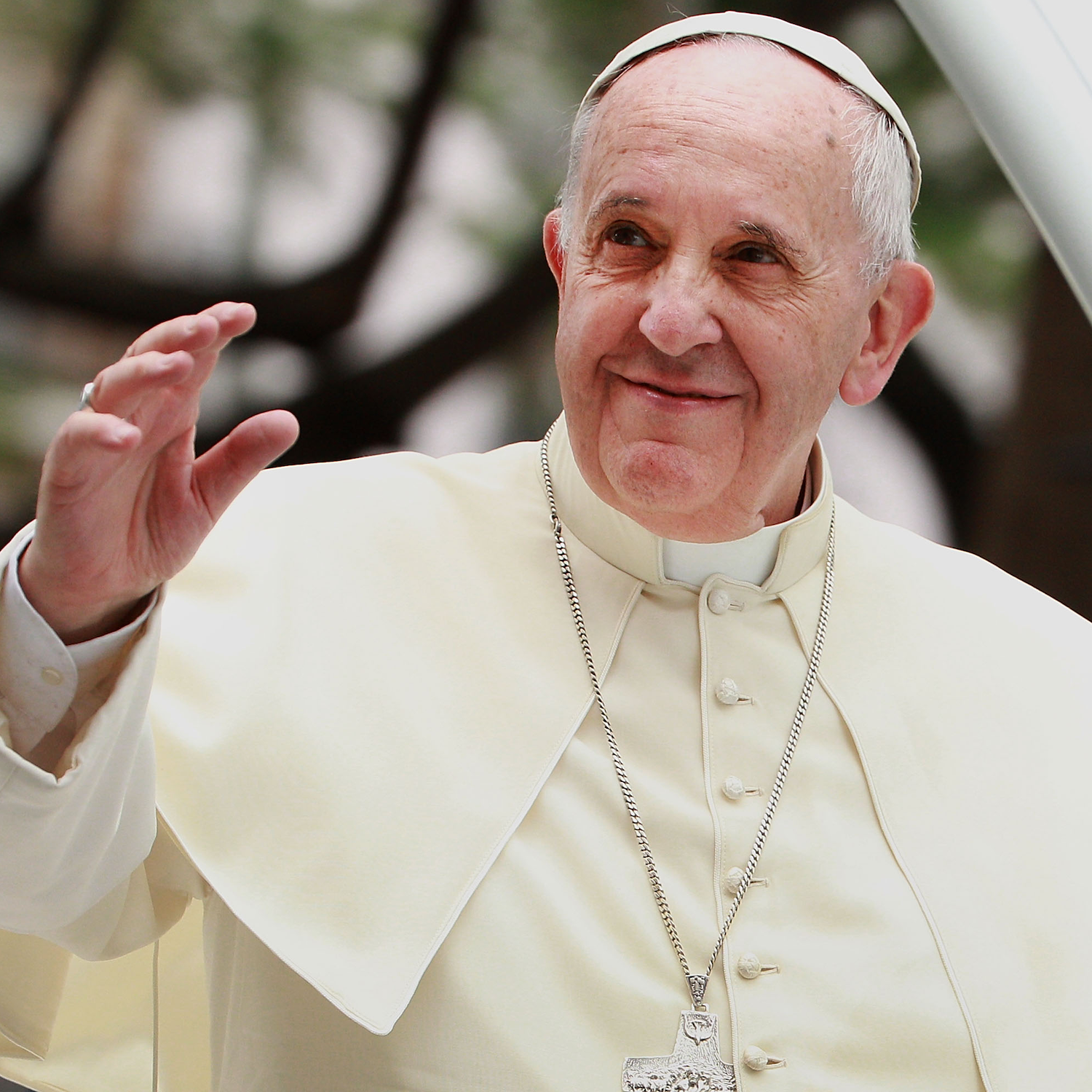
Good morning. It's Monday, April 21st. I'm Shemitah Basu. This is Apple News today. On today's show, how Defense Secretary Pete Hegseth sent war plans in a second signal chat. The Supreme Court issues a rare overnight ruling on deportations. And the world's oldest marathon, the Boston Marathon, is today. But first, Pope Francis has died. His death was announced early this morning by the Vatican. He was 88 years old. Francis, born Jorge Mario Bergoglio in Argentina, had been discharged from a hospital just last month where he was diagnosed with double pneumonia. He died after the holiest weekend in the year for Catholics. Just a day earlier, Pope Francis oversaw Easter Mass services and blessed thousands of worshipers in St. Peter's Squ. Francis had many firsts to his name, including being the first pope from the Americas, the first Jesuit pontiff, and the first non European to lead the Catholic Church in close to 1000 years. He was elected in 2013 and was seen as a fresh voice attempting to modernize the papacy. He said the Vatican needed to evolve from its strict orthodoxy on abortion, birth control and homosexuality and embrace being more merciful. Joshua McElwee is the Vatican correspondent for Reuters and spoke to us about Francis legacy.
- [01:34]
Joshua McElwee
He had a style that was very gregarious, very outgoing, and was really known for wanting to open up the church to the modern world. Many people might remember that his first act as the pope was to ask the people in Rome on his election in 2013 to pray for him and to bless him. He's also the Pope known for opening up the church to being more welcoming to LGBTQ members, famously asking, who am I to judge? When asked about a priest who was.
- [02:00]
Shemitah Basu
Gay, Francis was often referred to as the people's pope. But his openness to modifying the church's teachings made him a controversial figure to many.
- [02:09]
Joshua McElwee
Pope Francis faced some pushback from cardinals who thought perhaps he was going too fast or perhaps had a more progressive view of the church. A few years ago, he allowed for priests to, on a case by case basis, offer blessings to people in same sex unions. Obviously, the Catholic Church has a teaching that marriage is between a man and a woman, so that was controversial for some people. Francis tried to emphasize that it was about blessing the individual person and not necessarily the same sex union.
- [02:36]
Shemitah Basu
Two of the issues Francis was most outspoken about were climate change and the plight of immigrants.
- [02:42]
Joshua McElwee
He acknowledged that climate change was real. He said the science was real. And he expressed concern about a world that was, in his words, becoming one of filth and ruin. He asked for the world's leaders to do more to stop climate change.
- [02:56]
Shemitah Basu
He even took on President Trump, one.
- [02:59]
Joshua McElwee
Of the last acts of his papacy. He wrote a letter to the US Bishops, kind of rebuking some of President Trump's rhetoric and saying that migrants are not necessarily criminals. They are people who are seeking a better life and the church has an obligation to help them and to not get drawn into political debates, but to be helpful to people who are in need.
- [03:17]
Shemitah Basu
In that letter, the pope specifically called out Vice President J.D. vance, who is a Catholic, for defending Trump's deportation plans on theological grounds. Yesterday, on Easter Sunday, the two met with Pope Francis, presenting the vice president with three big chocolate Easter eggs for Vance's three kids, as well as a Vatican tie and rosaries. Vance told the pope he prays for him every day. The Pope was also outspoken about the war in Gaza and has called for an investigation to determine if Israel's attacks constitute genocide. And he has said he remains in near daily contact with a parish in the Gaza Strip. These positions and his general approach to the papacy earned him many admirers. McElwee told us, For a large part.
- [04:01]
Joshua McElwee
Of the Catholic population, I think people found Francis to be open. He also was someone who had a reputation for being humble. He had decided not to live in the apartment that the Pope normally lives in at the Vatican, which is part of a Renaissance palace, it's called the Apostolic Palace. He instead decided to live in a hotel at the Vatican, keeping just a couple of rooms, living a very simple life. And for many people in their lives, he might be seen as a figure who, you know, they see every day or see every few days and might be thought of as a grandfather or an uncle. And watching him pass away has been a difficult process.
- [04:37]
Shemitah Basu
The College of Cardinals will soon convene a papal conclave to elect Francis successor. Let's turn now to new reporting which found that Defense Secretary Pete Hegseth shared sensitive military information using the Signal app in a second chat. Here's CNN's senior White House reporter Kevin Liptak speaking on the network last night.
- [05:05]
Kevin Liptak
It appears that the information that Hegseth shared in this second Signal group is very similar to information that he shared in that first Signal group that we learned about about a month ago.
- [05:15]
Shemitah Basu
That includes flight schedules for fighter jets attacking Houthi rebels. These were the same attack plans shared over Signal with other high level cabinet leaders and mistakenly journalist Jeffrey Goldberg. This chat, however, did not include any other cabinet officials.
- [05:32]
Kevin Liptak
The big difference here is who was included in each of these two groups. This new Group that Hegseth formed that we are learning about this evening included individuals including his wife, his brother, and his personal attorney, people for whom it's not clear why they would need this information about these pending attack plans in Yemen.
- [05:54]
Shemitah Basu
Hagseth's brother and lawyer both have jobs at the Pentagon, but it's not clear either have security clearance for this level of military information. Hegseth's wife, a former Fox News producer who's accompanied him on travels overseas, has been criticized for attending sensitive meetings with foreign leaders. A Defense Department spokesperson denied that Hegseth shared any classified information. And a White House press person downplayed the significance of the second group chat. The first signal group chat we learned about was created by National Security Advisor Mike Waltz. This second group chat, again reportedly created by Hegseth, was formed before his confirmation and continued after his confirmation. The New York Times reports it was created at first for routine administration and scheduling.
- [06:41]
Kevin Liptak
Here's Liptak again, all raising questions sort of about the competence of Pete Hegseth as he commands the Pentagon and the Department of Defense. This massive workforce and massive responsibility at a moment of global tensions, and it sort of punctuates a period of chaos at the Pentagon that is causing concerns even among some of Hegseth's allies.
- [07:05]
Shemitah Basu
The chaos he's referring to has to do with a few recent high up firings in Hegseth's office. Former top Pentagon spokesperson John Elliott wrote in an op ed piece for Politico that the last month at the Defense Department has been a, quote, full blown meltdown, saying leaks and dysfunction have now become a major distraction for President. Elliott himself resigned last week and he criticized Hegseth for firing three officials for reportedly leaking sensitive information, a move that left the Defense Secretary's already dwindling leadership team short staffed. Those three officials recently said they don't know what exactly they were being investigated for or if there was a real leak investigation to begin with. Former Pentagon deputy press secretary Sabrina Singh went on MSNBC saying the firing of those officials is unus.
- [07:58]
Sabrina Singh
Nothing about this is normal. You don't see an immediate purge of your senior leadership that you have not only elected to be around you, but appointed yourself as a Secretary of Defense. What's ironic here is that the Secretary of Defense, the person who leads our men and women in uniform and our civilians, also put unauthorized classified information into a commercial texting app. And yet there have been no consequences for him. He has not been held responsible. So, you know, of course, different circumstances for different people. But nothing about this is normal.
- [08:30]
Shemitah Basu
Meanwhile, in another case involving the alleged improper disclosure of sensitive government information, the Washington Post reports officials under President Trump and President Biden inadvertently shared sensitive documents, including potentially classified White House floor plans. The information was sent via a Google Drive link to all employees of the General Services Administration, which provides administrative and tech support for the federal government and employs more than 11,000 people. This revelation spurred a cybersecurity incident report and investigation last week and was found to have continued over at least four years spanning administrations. The White House did not immediately respond to the Post's request for comment. On Sunday, one security expert told the Post the breach indicates, quote, a general need to strengthen safety training measures for government workers who must live and work in a digital age. Now to a major and rare ruling this weekend on President Trump's deportation and imprisonment policy for people the administration claims are Venezuelan gang members. Early Saturday morning, the Supreme Court ruled the Trump administration cannot deport a group of migrants being held in Texas under the Alien enemies Act, an 18th century law that Trump invoked to remove certain immigrants without due process. It was a 7:2 ruling, with Justices Samuel Alito and Clarence Thomas dissenting and Alito saying the rushed overnight ruling was neither necessary or appropriate. It comes less than two weeks after the Supreme Court said the administration does have the authority to invoke this law to speed up deportations, at least for now. In this case, the Trump administration attempted to load dozens of men from an immigration detention center in Anson, Texas, onto planes presumably to be sent to Elsa Salvador's harshest prison. The ACLU sued, and lawyers for the migrants say they were given paperwork to sign in English indicating that they were members of the Venezuelan gang Trender Aragua. Some do not speak English, and according to the federal judge who heard their case, the paperwork didn't include an option for the men to indicate they wanted to go to court and challenge their removal. That would violate the spirit of a ruling from the Supreme Court earlier this month that said immigration detainees should be given reasonable time to appeal their deportation. A key hurdle for the ACLU and other attorneys representing the migrants is that they're having to file requests for emergency orders in courts all over the country within different jurisdictions. And according to the aclu, in this case, the administration moved migrants from one jurisdiction where a judge had banned deportations to a different one where it wasn't banned, msnbc legal affairs correspondent Joyce Vance explained. This is why the Supreme Court is being forced to take on so many last minute requests.
- [11:34]
Joyce Vance
In a way, the Supreme Court's chickens are coming home to Roost here they're having to deal with these midnight petitions because instead of a nationwide ban on these deportations while they decide the extent of the Alien Enemies act and whether the government can use it for these deportations, they're now having to do it in all 94 federal districts.
- [11:55]
Shemitah Basu
In the meantime, there may be even more rulings in different places.
- [11:59]
Joyce Vance
Ultimately, the Supreme Court will have to decide the Alien Enemies act issue for once and for all. But until then, going to see a variety of different procedural motions in different circuits, in different district courts, and it's something of a mess while people's lives and futures are at stake.
- [12:16]
Shemitah Basu
As all of this was going on, busloads of what were reported to be migrants, mostly or all from Venezuela, were seen headed toward an airport in North Texas before being abruptly turned around. In response to the Supreme Court ruling, White House press secretary Caroline Levitt posted on X Quote that the administration is confident it will prevail. Before we let you go, a few other stories we're following. Google is back in court today for the final phase of a major antitrust suit. The Justice Department has been making the case for years that Google is acting like a monopoly, and if the DOJ ultimately prevails, it could force Google to break up its businesses. Just last week, a judge ruled Google illegally monopolized some online advertising technology markets. Google has already said it plans to appeal, saying in a statement they disagree with the judge's decision and that publishers choose Google over its rivals because it has superior ad tech tools. Last week's decision marked the second time in a year a judge ruled that Google operates as an illegal monopoly. In international news over the weekend, the Israeli military said that it had reviewed an incident last month during which Israel Israeli forces killed 15 emergency responders in Gaza. Their review found several professional failures, and the military says a commander would be dismissed as a result. The incident took place on March 23 when 15 paramedics and other rescue workers were killed in three separate shootings in Rafah, which is in south Gaza. Their bodies were buried in a shallow grave and discovered a week later by officials from the UN and the Palestine Red Crescent. Cell phone footage recovered from the phone of one of the killed men showed he and his colleagues wearing uniforms that clearly identified them as rescue workers and their vehicles with emergency lights on. The president of the Palestine Red Crescent Society said there are a lot of contradictions in Israel's account and called the killings a war crime. And finally today is the Boston Marathon. And Boston public radio station WGBH has the story of Bob hall, who became the first wheelchair competitor in the RA 50 years ago. Hall was told by the race's organizers that his marathon would only be recognized if he could complete it in under three hours. He beat that by two minutes. And this was 50 years ago, so he was using a far less fast or efficient wheelchair than the ones made today. Since his race, nearly 1900 other wheelchair athletes have competed in marathons, including five time Boston winner and eight time Paralympic gold medalist Tatiana McFadden. She told the Washington Post that she and so many wheelchair racers credit their success to hall, who paved the way. You can find all these stories and more in the Apple News app. And if you're already listening in the News app right now, we've got a narrated article coming up next. The New Yorker investigates why dozens of people in recent years starved to death while detained in county jails across the United States. If you're listening in the podcast app, follow Apple News plus Narrated to find that story. And I'll be back with the news tomorrow.