Loading summary
Transcript27 lines
- [00:05]
A
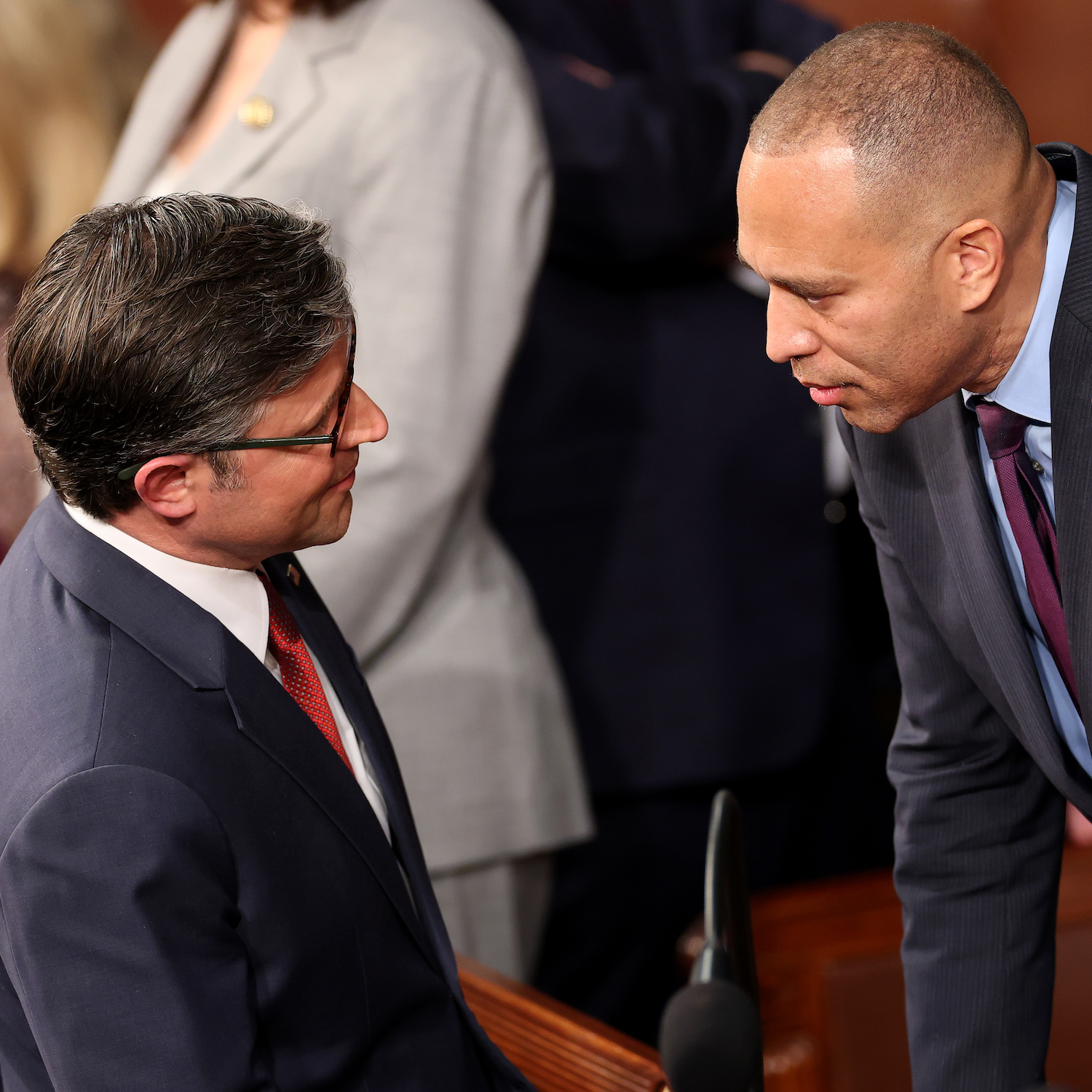
Good morning. It's Wednesday, November 12th. I'm Shemitah Basu. This is Apple News Today. On today's show, why the US Is skipping the climate event of the year. Trump sends the world's largest military aircraft carrier to the Caribbean and how 2025 became a bad year for measles. But first, as soon as today, the House looks set to approve a deal that would finally reopen the government. It would fund much of the government through the end of January and provide some funding for other agencies through the end of next September. The record breaking shutdown has brought real hardship for millions of Americans as both parties waited for the other to blink. The agreement does not include anything on health care subsidies, the key issue that most Democrats were holding out for right now, the COVID era. Subsidies for those on Affordable Care act plans are set to expire at the end of the year and it's not clear what happens after that. Yesterday, Minority Leader Hakeem Jeffries told CNN it wasn't over. This fight continues and over the last several weeks we have successfully elevated this health care issue such that the American people are demanding action. Senate Majority Leader John Thune promised a vote on a health care bill of Democrats choosing by mid December, but the odds are stacked against it. And Meredith Lee Hill, senior Congress reporter for Politico, told us there's little time left to make an impact for people bearing the brunt of increased costs.
- [01:43]
B
It's obviously only a few weeks with the Thanksgiving holiday in there for lawmakers to hash out what is going to be some really intense and complicated health care plans and try to figure out either a bipartisan way forward or Republicans will have to figure out their own plans.
- [02:04]
A
People enrolled in health insurance plans on the ACA marketplace are seeing skyrocketing premiums for the coming year, and many are now faced with a choice of whether to re enroll or go without health insurance. Extending the subsidies would cost roughly $23 billion next year, according to the Congressional Budget Office, and many Republicans are reluctant to sign onto that. So far, House Speaker Mike Johnson has not promised a vote on the subsidies extension and many House fiscal hawks reject it on cost rounds. Some Republicans, like Senator Bill Cassidy, have talked about a different approach to allocating that same spending.
- [02:41]
B
They effectively want to swap out those subsidies for something else. And what they've been talking about a lot is either creating new health savings accounts or similarly flexible spending accounts, which would effectively be taking money that otherwise would have been spent on health insurers for these subsidies and giving it directly to people.
- [03:04]
A
President Trump has endorsed this idea, so much so that he suggested putting his own name on it in a Fox News interview on Monday.
- [03:12]
C
Everybody's going to be happy. They're going to feel like entrepreneurs are actually able to go out and negotiate their own health insurance and they can use it only for that reason. That's only for that purpose. And if we did that, that would be so exciting. Call it Trumpcare, call it whatever you want to call it.
- [03:29]
A
But Lee Hill said even some of his loyal supporters are skeptical of that plan.
- [03:35]
B
They're quite skeptical that that would be enough basically for the reforms that they're seeking, and also that that would actually be able to be cobbled together in time and be an effective replacement for the current system. If these subsidies aren't extended or would really hurt a lot of Trump voters, a lot of people in deep red districts who rely on Obamacare at this point.
- [04:00]
A
The Congressional Budget Office estimates that 2 million Americans will lose health insurance altogether next year if subsidies expire. Thousands of delegates have descended on the city of Belem, Brazil, at the mouth of the Amazon river as this year's Global climate gathering, COP30, gets underway. Some 33 years ago, President George H.W. bush was in the same country celebrating a treaty that would make these COP gatherings, short for Conference of the Parties, a yearly tradition.
- [04:39]
C
Let's face it, there has been some criticism of the United States, but I must tell you, we come to Rio proud of what we have accomplished and committed to extending the record on American leadership on the environment.
- [04:52]
A
Today's Republican president has positioned the party in a very different place. And this year, for the first time, there will be no official U.S. presence. President Trump has been openly dismissive of the very science behind climate change. He said as much during a speech at the UN General assembly earlier this year.
- [05:09]
C
It's the greatest con job ever perpetrated on the world, in my opinion. Climate change, no matter what happens, you're involved in that. No more global warming, no more global cooling. All of these predictions made by the United nations and many others, often for bad reasons, were wrong.
- [05:30]
A
Back in 2017, he withdrew the United States from the Paris Agreement, and this term he's been more aggressive in lobbying other countries to abandon environmental initiatives that the White House says risk limiting the American economy. Elizabeth Kohlbert, staff writer at the New Yorker and author of Life on a Little Known Planet, spoke to us about the consequences of the US's retreat from its role here.
- [05:54]
D
The US is the biggest emitter. On a historical basis, it's the second biggest emitter on sort of an annual basis right behind China. And when you have the world's biggest economy and one of its biggest emitters just throwing up its hands, it's really hard to keep the momentum going. And I think you're really going to see that at this cop that other countries are going to say, if the US isn't going to do anything, why should we?
- [06:21]
A
While there's been no US Federal representation at the conference this week, Democratic governors from New Mexico and California have been in attendance to talk about limiting emissions in their states. In the 10 years since the Paris agreement was signed, which sought to keep global temperature increase at 1.5 degrees Celsius above pre industrial levels, the planet has warmed so much that the goal appears out of reach.
- [06:46]
D
And the problem that we're facing, and the thing that I think is really important for people to understand about climate change is as long as we are continuing to add carbon dioxide to the atmosphere, this problem is going to get worse. The climate is going to continue to warm and it's going to get more and more unstable and we're going to get more and more of these big weather related disasters.
- [07:08]
A
Still, a new UN analysis this week found that global emissions should fall by about 12% by 2035 compared to 2019 levels. That's an improvement on previous projections. But short of the Paris goal. Countries at this year's conference will also likely be looking for financial support to help reach climate adaptation and mitigation goals.
- [07:30]
D
They are coming to this COP expecting the world to live up to many commitments that it has made in past cops to help finance things like transition to cleaner energy, adaptation to the climate change that is no longer avoidable. And that's going to be a big fight. But once again, without the U.S. in the room, without the U.S. sort of cooperating, I think it's going to be very difficult to reach agreements on a lot of those issues.
- [08:08]
A
Let's turn now to a disease that made a big comeback in 2020. Measles. The WHO's Pan American Health Organization this week stripped Canada of its measles elimination status. The group determined a large outbreak that began there in October of 2024 is still ongoing more than a year later, meaning it meets the threshold for losing the elimination designation. So far, more than 5,000 people in Canada have been infected in the outbreak that started at a wedding in the province of New Brunswick. This is significant because now that Canada has lost its status as measles free, it means the entirety of the Americas have lost it as well.
- [08:48]
E
Canada had been declared measles free in 1998 and had maintained that status for 27 years.
- [08:59]
A
Helen Branswell is the infectious diseases correspondent for STAT.
- [09:03]
E
Many of these infections were occurring within communities of religious people who don't like to interact a lot with the outside world. It's not so much that they're anti vax per se, they keep to themselves.
- [09:17]
A
The outbreak in Canada is somewhat similar to the one in West Texas, which broke out in a Mennonite community. That one lasted from January to August and infected more than 700 people, resulting in the deaths of two unvaccinated school aged children. So far this year, the US has been dealing with a significant uptick in measles cases with close to 1700 infections across at least 40 states as of last week.
- [09:43]
E
That's a very high number. The last time the United States has had that many measles cases in a year was in 1992. So yes, it's been a big measles year in the United States.
- [09:55]
A
Declining childhood vaccination rates in the US And Canada, coupled with vaccine fatigue post Covid are just some of the reasons measles cases have risen. As of the last full school year, just 92.5% of U.S. school kids had received the MMR vaccine, well below the 95% required to provide prevent transmission of measles. Health and Human Services Secretary Robert F. Kennedy Jr. Has said the MMR vaccine is the most effective way to prevent the disease, but on other occasions he's questioned its safety and has ordered his department to explore new treatment options. Branswell says that while the US has only seen three deaths so far, this should all be a big wake up call.
- [10:40]
E
That's the same number it recorded in the 24 years previous to this. In total, measles deaths in the modern era in a country like the United States or in Canada should be extremely rare. They shouldn't exist. The United States has recorded three. Canada has had two. Mexico, which is having a very bad outbreak, has had 25. In this day and age, you wouldn't expect that to happen. But there are going to be more of these if the pattern that has been unfolding continues.
- [11:27]
A
Before we let you go, a few other stories we're following. The world's most advanced aircraft carrier arrived near the Caribbean Tuesday as part of President Trump's efforts targeting suspected drug boats in the region, escalating his military buildup in the area to new heights. Reuters reports that the USS Gerald Ford holds more than 5,000 sailors, making it an enormous resource for its stated aims of disrupting drug trafficking. Meanwhile, the Venezuelan army says it's preparing a campaign to sow chaos in the event that US Forces make a move against Venezuelan President Nicolas Maduro. The man responsible for what many consider the worst trade in NBA history is out of a job. Nico Harrison was dismissed as general manager of the Dallas Mavericks Monday. If you remember, in February, Harrison traded Slovenian superstar Luka Doncic from Dallas to the Los Angeles Lakers. Doncic, a perennial All Star and by many accounts a leading MVP candidate this year, is thriving in Los Angeles while the Mavs sit near the bottom of the Western Conference. Chants of Fire Nico. Were consistently heard at home games by angry fans during the team's 38 start. For some perspective, the Wall Street Journal not Doncic trade was seen as a mistake, akin to the Red Sox trading Babe Ruth to the Yankees in 1920. And sports fans know how that turned out. And one of public television's late icons is pitching in to support the industry. Welcome back. I'm certainly glad to see you today. You ready to do a fantastic little painting with me? Super. Tell you what, let's start out have them run. All the free paintings by beloved PBS artist Bob Ross were auctioned off Tuesday for more than $500,000. The pieces were once featured on Ross's show. The joy of painting cuts by the Trump administration have left the public media landscape reeling and forced the closure of the Corporation for Public Broadcasting, ross's estate said in a statement. The sales of these paintings will ensure the painter's legacy continues to support the very medium that brought joy and creativity into American homes for decades. Proceeds are going to American public television and to PBS stations across the country. You can find all these stories and more in the Apple News app. And if you're already listening in the news app right now, we've got a narrated article coming up next. The Los Angeles Times reports on the intense fight over a gold mine in Mexico worth billions of dollars and the effort to keep it out of the hands of major cartels. If you're listening in the podcast app, follow Apple News Narrated to find that story and on Be back with the news tomorrow.