Loading summary
Transcript6 lines
- [00:01]
A
Hey everyone, we're bringing you something special this week. In place of our usual daily news show, we've chosen one of the narrated articles that listeners really love this year, and we made it free for everyone to hear. We picked things that are fun to listen to, things that might bring a sense of joy and wonder to your new year, and we really hope you enjoy them. Apple News subscribers get narrated articles like this one every day of the week. A News plus subscription also includes access to 500 plus publications, more than 100,000 recipes, premium local news, exclusive daily puzzles, and a lot more. And it also makes a great gift. You can start a free trial now by going to apple.com news and remember, you'll always find the top stories of the day anytime in Apple News.
- [00:46]
B
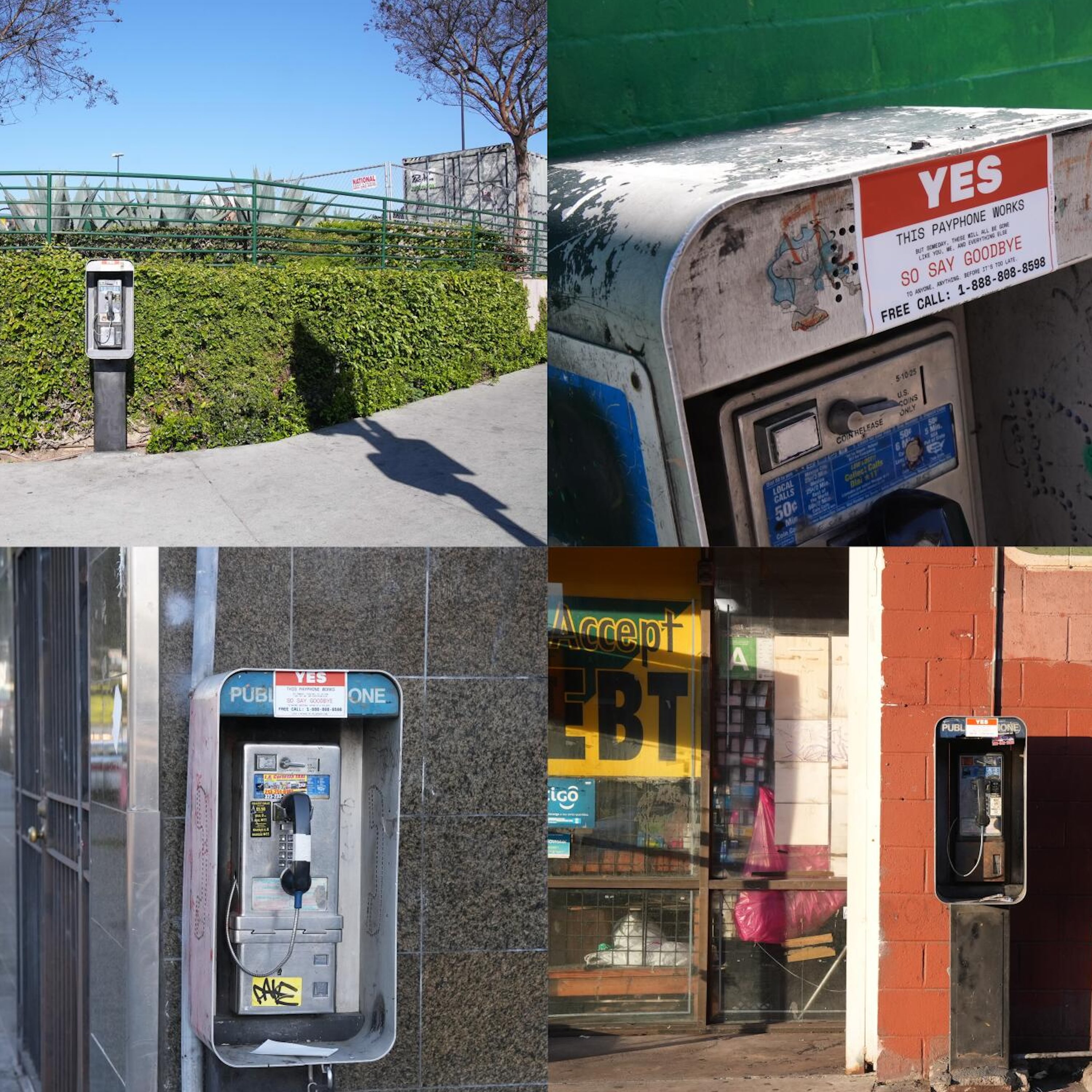
These payphones let you say goodbye to someone before it's too late. An art project called the Goodbye Line prompts passersby to make a collect call and say goodbye to a loved one, a pet, or maybe a part of themselves. People are dialing. Written by Todd Martens for the Los Angeles Times. Narrated by Scott Turner Schofield for Apple News plus subscribers. Alexis Wood received a notification on her phone. It was an anonymous call from a payphone. She listened and was momentarily paralyzed. And then she couldn't stop crying. The call wasn't completely unexpected. Days earlier, Wood and her partner, Adam Trunnell, had gone prowling for working Los Angeles payphones, placing stickers on them that invited passersby to make a free call to a recorded line to say goodbye. What surprised her was the message. The voice on the other end of the line sounded like a young man who confessed that he thought the toll free 888 number would allow him to call his mother. Once he realized it wouldn't, he pivoted and followed the recorded prompt to say goodbye, to remember to pay respects, to turn the page to a loved one or part of yourself.
- [02:15]
C
I thought this was a free call from my mother, but never mind. Anyway, I'd like to apologize to my family and I hope that you all make it to heaven. I'm sorry I didn't make it. I love you. Bye.
- [02:26]
B
Wood listened to it again on repeat. I started to cry, wood says, sitting with Trunnell in a downtown coffee shop. I didn't realize this was going to have that effect on me, that this was a very real, authentic moment for someone alternately rebellious and nostalgic. The Goodbye Line is a relatively new art project found on payphones throughout the yes, this payphone works. The stickers read in blocky text against a red and white backdrop. The instructions continue with the line, someday these will be gone, like you, me and everyone else. Prior to inviting readers to leave a message before it's too late. People are calling. Goodbye is such a part of life, says Trunnell, a documentary filmmaker who started the experiment with Wood last year. It's all us coming and going, coming and going. We all share that, and it makes it less lonely, less scary. Not that it makes it easier. Calls do range in tone At a payphone in Hollywood, someone says goodbye to their best friend at downtown's Pershing Square, two women say goodbye to payphones, lamenting the loss of anonymous calls. A woman reaching out from Altadena's Chaney Trail sings a song urging people to say goodbye to anyone, anything. Cause you never know when it's your time, and it's not the same without you, says someone from West Hollywood's Plummer park in an ode to a lost pal. The anonymous messages are edited and posted on social media for all to hear and share. Those who wish to keep their messages private are instructed to say so on the call. They are snapshots of grief and our desire to connect, but also audio logs of loneliness. In Los Angeles, payphones or the neighborhoods they're in rather have personalities, and while messages have spanned the spectrum from light to heavy, they're almost all rooted in a desire to tap into a broader community. We learned that loss and grief is a process, and mourning isn't something that's purely private, trunnell says. It's deeply communal. When you see the likes, the comments and the shares, even if you're not the one leaving the message, you hear yourself in the goodbye. Payphones are rapidly disappearing. Though there were more than 27,000 statewide a decade ago, the California Public Utilities Commission reported that as of March, there are 2,525 active units in California, with 484 in Los Angeles County. In Los Angeles proper, only 149 remain. There are reportedly more outposts of Starbucks in the city than working public payphones, as the goodbye line is now more than a year old and finding a broader audience, calls have started to stream in from cell phones. Trunnell and Wood encourage its spread, of course, but it's the payphone calls that hold a special place in their hearts. I'm not trying to draw any science around it, but it does seem like people who go to payphones are more in the moment, says Trunnell, noting that the cell phone calls tend to be a bit longer and a little more considered. You use a payphone in a different way than you use a cell phone. It's not in your pocket, it's not connected to a camera. You go and do this goodbye in a place that's different from where you do most of your business. You hear a dial tone. That's the sound of waiting. Then you leave a message, as if you just dug a hole into the ground. As long as the stickers have been active, the couple, who have been romantically partnered for about four years, have received a few each week from payphones. Every payphone number is saved in the cell phones of Wood and Trunnell with various emojis. One payphone is next to a laundromat, so we have bubbles and soap bar, wood says. You see it pop up and you know what messages are going to come through, and those messages are heavier, trunnell says. He notes that in neighborhoods such as Hollywood, Westlake and Skid Row, callers tend to get a little deeper into their In May of last year, a call came in from a payphone at the Hollywood corner of Yucca Avenue and Wilcox Street. It was a goodbye that had not been able to be said. Goodbye, Donnie, you were my love from 2017 to a few years ago, but you died last year and I didn't know for a long time. It made me very sad. Trunnell, 46, stresses that the goodbye line wasn't rooted in any personal sense of grief or loss. He and Wood, 37, who has a career in tech, have long flirted with collaborative creative projects, some serious, some silly, such as potentially designing tiny hats for snakes. Yet being involved with a project that is so intimately voyeuristic into the lives of strangers, sometimes at their most emotional, can take its toll. A recent call caused serious reflection. For Trunnell, it was a goodbye to a mother who died when the caller was a teen mom.
- [08:19]
C
I didn't get the chance to say anything to you the morning you passed. The night before, we actually argued about grades. I was in middle school and. You were upset about my grades and you thought that I might kind of squander my education, things like that. But I think you'd be pretty proud. You could see where I'm at now. It's not the best in the world, but I did something with my life. So I love you and I miss you. And this has been a long overdue goodbye. I hope you're doing well.
- [09:13]
B
Maybe it was the suddenness of it, trunnell says. You kind of just walk into this and realize how all this feels, it just sort of happens. The reward is unexpected connections and reminders of your own humanity. I'm worried about my folks dying, but I don't think how it's going to change me. This just feels like a very human project. It takes you out of whatever BS is going on. Not all the calls, of course, are so deep. The Chaney Trail payphone, which has been offline since the Eaton fire in early January, long had a Persona of its own, says Wood, one that was often a little more light hearted, perhaps expected for a phone on a hiking trail. The calls have tended to lean more toward thoughts of self actualization than tales of grief, such as a caller saying goodbye to his former heavier self. You get surprised sometimes, but Chaney Trail, for instance, is people saying goodbye to my past and hello to my future, wood says. And then, of course, there are the clearly drunk dials, such as two middle of the night rings from a payphone near a Pasadena police station. This girl left two messages, trunnell says. You could tell she had been out. She might have had a couple downtown artist S.C. miro, whose own public art often unexpectedly appears on sidewalks and buildings throughout the city, has championed the goodbye line on her social media channels. You walk around every day and you don't really think about what's going through people's minds, miro says. This is such a reminder that everyone walking by is going through something and going through things similar to what you're going through. She tends to think of each call as a mini short story. Most art, when you're looking at it, you're looking at the beginning, middle and end. It's all right, there's but with this project, you don't know where it's going to go or how, for instance, it may affect a life. Britney Khalifa discovered the goodbye line a little more than a year ago when she walked by a payphone at the corner of Fifth and Wall streets on Skid Row. Today, Khalifa has an apartment and is rebuilding her life, but the once unhoused resident was in a particularly dark place when she called the 888 number. Hooked on cocaine powder, Khalifa said. I came to LA to look for a different part of life. I came to LA to be a great photographer. Her goodbye was to her old self, a person that was once innocent, pure, young. But it wasn't meant to be a permanent goodbye. Hopefully I'll see that person again, she said, noting she was looking for a better life but didn't see a path. Addiction and sex work to pay for that addiction were fueling her direction. Reflecting on that message now, Khalifa stops short of saying her message on the goodbye line was a wake up call. But she hears someone who was just starting to learn how to ask for help. I felt like at that time I was looking for an ear, a listener, khalifa says. Not that many people know what it's like to be hooked on a drug. It's its own world. At that time, I was deep into addiction. I was trying to find a way out, but I didn't know how. I called it a hamster wheel. When you first do cocaine, you get stuck on it. The hamster wheel keeps turning. In order to hop off, you have to be at that low. When I left that message, I was looking for that low. It was such a personal call, Trunnell says, that he reached out to Khalifa to confirm she was comfortable sharing it. Typically, it's impossible to touch base with someone who calls from a payphone. But on the message she left her Instagram handle, and Trunnell hoped to link to it to show people her photography work. She seems really cool and has good work, trunnell says. And we have the opportunity to say, how you doing? What's up? Just to touch base and say thanks. You were kind of going through it at that time. But this wasn't a project to make contact. But when you get a call, there's a humanity that attaches you to it. Somebody is offering you something with an amount of trust. And Khalifa says it was appreciated. A Florida transplant. She felt alone and unable to ask her family for a hand in the physical and emotional state she was in. I'm the oddball out in the family, she says. I'm the only one who has been hooked on a drug. So I felt like, why not? So I called and did was spur of the moment. I told my peace and I felt better sharing that. Not many people get that side of me. My therapist, maybe. Trunnell and Wood are still learning what responsibility they have to the callers. They both have day jobs, and editing and posting the messages take work, especially because Trunnell is running them through a vintage oscilloscope that he found on Craigslist. For $50. He wants the Instagram posts to have a ghostly, nostalgic feel. And some messages will never be posted. One late night, for example, a frightening call came in from a cell phone, one in which someone seemed to be saying goodbye to their own life. You need to text him, trunnell recalls thinking at the time. It sounded like a kid, and it was a super brief message and you don't know if it's serious or not. This is something that might come up. So what do we do? I texted to check in, but you don't expect the goodbye line to call you back. I just said, did you leave a message? I'm leaving the door open. He never heard back. Trunnell and Wood say they spend some of their weekends driving around LA looking for working payphones to place stickers on. It's harder than one might think, and over the last 13 or so months they found only 20 active phones out of the supposed 149 around the city. But they're making more stickers and have even incorporated the project into their vacations, leaving one on a phone in Santa Fe, New Mexico. Although they have not received a call from it or know if the sticker is still there yet. After securing well over 100 calls, they know the goodbye line is filling a void. Initially I wanted to hear people's voices, trunnell says, noting that perhaps the project was a reaction to our social media driven age as much as it was a throwback to, say, communal phone lines of yore. I wanted a place where we would get to hear people saying things. We just didn't have that. There was no big epic idea. It's filled in around us in a weird way. It was like forums online, but we can do that with voices. Curiously, the goodbye line has avoided posting calls that involve romantic drama. While there are no rules as to what the two may consider fit for sharing on social media, Trunnell says that messages aimed at exes and former lovers can feel trivial to him. You realize they're mad at somebody or saying goodbye to someone who is still around, trunnell says. And you're kind of like, go repair that relationship. It reveals, perhaps, an underlying thesis of the goodbye line. Its existence is a reminder of life's impermanence. As much as it encourages us to say goodbye, it's also a nudge to never stop picking up the phone to say hello. That was these payphones let you say goodbye to someone before it's too late. Written by Todd Martens for the Los Angeles Times Produced by Apple News.