Loading summary
Transcript23 lines
- [00:05]
A
Good morning. It's Friday, August 22nd. I'm Shemitah Basu. This is Apple News Today. On today's show, how the world forgot Sudan's ongoing civil war, why many big oil and gas corporations want to keep federal greenhouse regulations in place, and how artificial light is messing with city birds. But first to the Middle east, where the Israeli government has defied international criticism and moved forward with two contentious plans this week in Gaza and the occupied West Bank. Let's start in Gaza, which according to the UN is now roughly 90% under Israeli control or off limits to Palestinians. After months of warning, Gaza City is now officially under famine, according to a global hunger monitoring. In recent days, Israel has been intensely bombing the outskirts of the city in preparation for what it describes as the next phase of its war. The Israeli military is planning a major offensive to take over Gaza City, which Israel claims is a Hamas stronghold. There are roughly 1 million Palestinians living in and around Gaza City. That's about half of Gaza's population. Hundreds of people have started to flee in recent days, and those who stay will be forced to move south through militarized zones in the coming weeks. Oren Lieberman, CNN's Jerusalem bureau chief, told us about the impact this is expected to have.
- [01:36]
B
The UN has just warned that this operation will lead to more death and destruction in Gaza because you have to move so many people, many of whom are suffering from malnutrition, starvation or other diseases or illnesses or frankly, injuries.
- [01:49]
A
Meanwhile, in the occupied West Bank, Israel approved a plan known as the E1 settlement plan, to build a new settlement of around 3,400 houses. Settlements in the west bank are illegal under international law, and Israel had put this plan on hold for over two decades, in large part due to pressure from the United States and other countries. Until now.
- [02:11]
B
Part of the reason this is moving forward now is the first Trump administration overturned decades of U.S. policy and said settlements are not de facto illegal under international law. And that is all the green light Israel needs. But there's also the timing here. Next month, a number of states are expected to and have said they will recognize the state of Palestine. And this, the finance minister made clear, is to some extent in revenge for that.
- [02:37]
A
The far right Israeli finance minister approved this plan and in talking about it, he said he wants to bury the possibility of a Palestinian state with this settlement.
- [02:46]
B
He blatantly said he views this as the erasure of the Palestinian state.
- [02:51]
A
If built, the settlement would split the west bank in two.
- [02:54]
B
It separates the north of the occupied west bank from the south and Then it cuts off East Jerusalem, the future capital of a Palestinian state in the eyes of the international community and the un, from what would be the rest of the country. And that's why E1 was on ice for so long. But in the current environment, Israel's government feels it can do that.
- [03:14]
A
The Palestinian Authority, which governs the parts of the west bank not under Israeli control, has condemned the plan. And Lieberman says Israel's plans for both the west bank and Gaza City have been widely criticized by the international community. The decision to take over Gaza City is especially unpopular within Israel. Some of the largest anti government protests since the war started took place in recent days.
- [03:37]
B
The hostage tramis have been almost united in their anger. The Israeli military chief of staff even warned the operation could put the hostages at risk. And repeated polls have shown that a majority, and in some cases an overwhelming majority of the countries, support a deal to release the hostages and end the war.
- [03:57]
A
Netanyahu is calling on tens of thousands of Israeli reservists to carry out the planned takeover of Gaza City, further angering the country's exhausted and demoralized military. While the world's attention is on Gaza and Ukraine, one war that's received relatively little international attention is reaching a critical point. The civil war in Sudan. Since the fighting broke out in 2023, Sudanese civilians have borne the brunt of the destruction and violence. The UN has reported that over 12 million people have been displaced, more than Gaza and Ukraine combined. And there are widespread reports of sexual violence. This week, the Wall Street Journal reported that the famine, which has been officially confirmed in six locations in the country, is on track to spread to nearly three times its scope if the conflict continues. Several other countries have financial and other interests tied up in this war, which makes the road to peace difficult to navigate.
- [05:02]
C
What's happened in Sudan is the breakdown of the state, the breakdown of a kind of social order. But that vacuum hasn't been filled by people trying to create a solution or people trying to make peace. It's been filled by other parties, other countries in the region trying to take advantage of the situation.
- [05:22]
A
That's Anne Applebaum, a staff writer for the Atlantic and my guest this week on Apple News. In conversation earlier this year, she traveled to the front lines of the war in Sudan. Her report, featuring photography from Lindsay Addario, is called the most nihilistic conflict on Earth. Applebaum told me that she realized when talking to people there just how forgotten they feel.
- [05:44]
C
There's nobody who's stepping in to mediate, nobody who's trying to say, wait, let's stop, let's try and fix this. Nobody who's got the clout to pull the sides apart, certainly not the UN not the US which is barely there, not Europeans. And then there really aren't others who are interested in doing that.
- [06:01]
A
Since Trump's inauguration eight months ago, there's been no official US Envoy appointed to Sudan. Massad Boulos, Tiffany, Trump's father in law, is the current US Senior adviser to Africa. He met with the head of the Sudanese armed forces in Zurich last week. But a bigger meeting on the conflict among the U.S. egypt, Saudi Arabia and the UAE was reportedly postponed as the powers couldn't agree on their joint statement. And there's been no sign of restoring foreign aid from the USAID funding that was frozen in January. The US until then had been the biggest provider of international aid to Sudan. Applebaum told me that people on the ground are feeling the effects of these cuts. She told me about a pediatrician she met at a hospital outside the capital of Khartoum who was treating severely malnourished babies and mothers.
- [06:49]
C
And he had heard that the US Was cutting aid and he wanted to tell me that he still had in his warehouse access to these very special high calorie nutrition supplements that are made especially for malnourished children. There's one called Plumpy Nut, and he was explaining to me, he said, you know, we still have it and we're very careful with it and we don't waste it, we just use it. You know, we use it only for these children. I had this moment of really horrible shame, you know, that somebody like that should be explaining to me that he doesn't waste food for malnourished children when there are malnourished children in a room 100 yards away from us.
- [07:30]
A
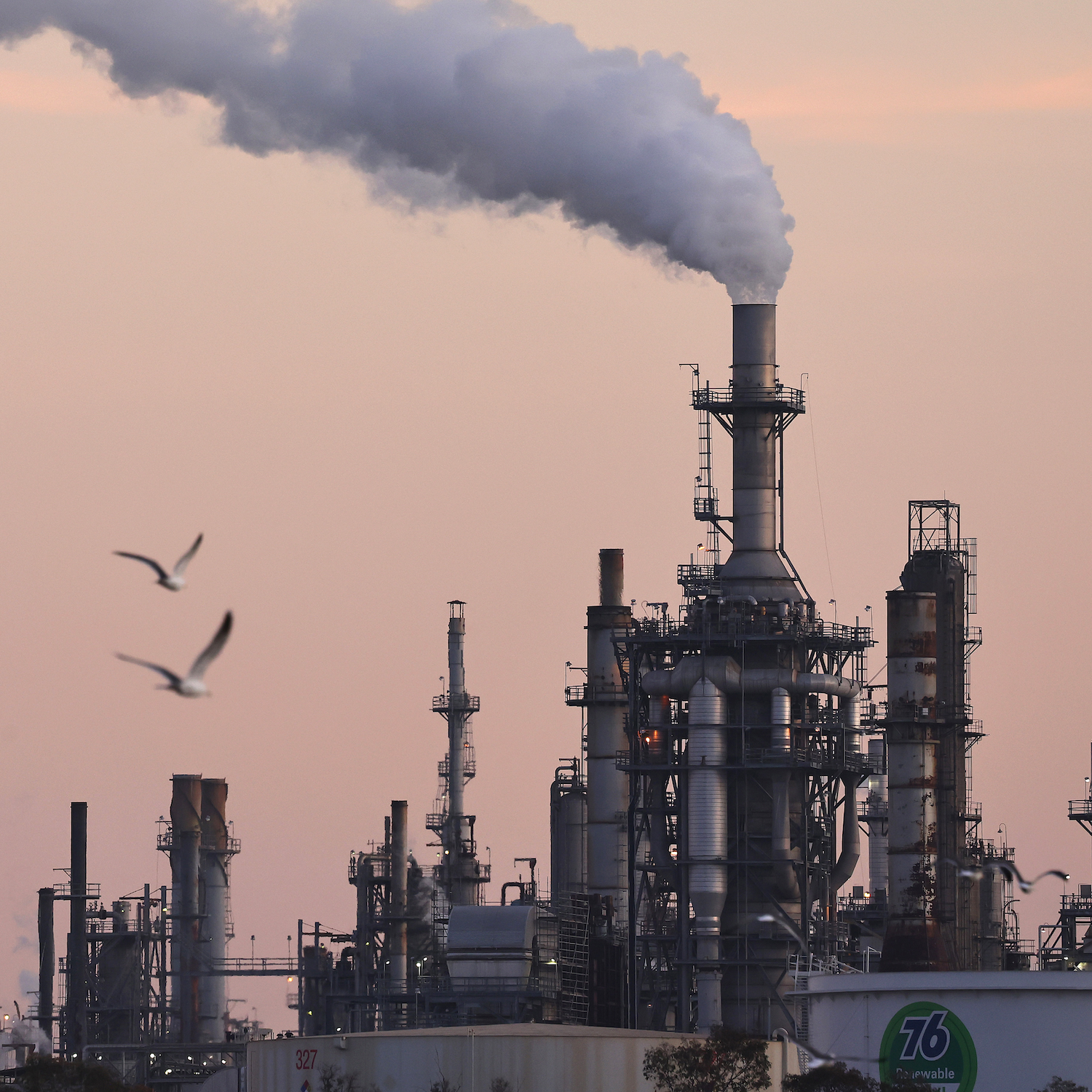
To hear more about Applebaum's reporting in Sudan, check out this week's episode of Apple News and Conversation. If you're listening in the Apple News app, we've queued it up to play for you next. Let's turn now to the environment and how a recent EPA proposal is impacting businesses. You might remember the EPA announced a plan earlier this summer to eliminate its own authority to regulate greenhouse gas emissions. And while that might seem favorable for companies that have been accused of breaking environmental law, NPR reports that a lot of businesses actually don't want to see the EPA's authority go away because it could create legal problems. We spoke with climate correspondent Michael Copley about this, and he explained, although companies often complain federal rules are too strict, many of them still prefer having the EPA set standards because it helps to shield them from lawsuits at the local.
- [08:28]
D
Level, especially fossil fuel companies from states and municipalities that have been impacted by climate change. And one of the defenses that industry has made in those cases successfully in some instances, is to say it is the federal government that ultimately has the authority to deal with climate pollution, not state courts.
- [08:48]
A
That's what happened in a case in South Carolina where the city of Charleston sued local oil and gas companies saying fossil fuel emissions are making flooding worse.
- [08:57]
D
And a judge recently threw the case out, in part, he said, because it is the federal government, the epa, not the state court where the suit was filed, that has the authority to deal with greenhouse gas emissions.
- [09:10]
A
Beyond the risk of legal action, Copley reports that some companies support EPA regulations because they make business more simple.
- [09:18]
D
What companies want is predictability and consistency. They don't want to have to meet different regulations in every state that they operate. And so having sort of a national standard is good for businesses.
- [09:29]
A
The American Petroleum Institute, a trade group for oil and gas companies, told NPR that it continues to support a federal role in regulating greenhouse gas emissions. Same with the Business Council for Sustainable Energy, whose members include major electricity producers and a trade group for the natural gas industry, and the Edison Electric Institute, which represents investor owned electricity companies. Jeff Holmstead, an environmental lawyer and former EPA official under George W. Bush, told NPR the fact that the EPA is moving ahead with its plan to deregulate despite serious concerns from big corporations points to a growing divide between the business and ideological wings of the Republican Party. There's plenty of people out there who want to bring lawsuits, and it seems like this would just invite a lot more litigation, no matter what the EPA decides to do. The Supreme Court previously found that greenhouse gas emissions are covered by federal law. Challenging that precedent would involve sending the issue back to the highest court to reconsider. Before we let you go, a few other stories were following the battle over congressional redistricting nationwide took two big steps forward. First, in California, the Legislature passed a bill yesterday calling for a special election in November asking voters to suspend the use of maps drawn by an independent commission and enact a new map that could give Democrats five additional seats in the U.S. house of Representatives. Governor Gavin Newsom came up with the plan to counter a Republican bill in Texas to adopt new maps and likely give Republicans an additional five seats in Congress. That map was created after President Trump asked Texas lawmakers to help him secure his razor thin majority in the House in next year's midterms. Texas's maps passed the State House Wednesday night and made it through a Senate committee yesterday. It will now go to the full state Senate for likely passage today. A Russian drone strike hit a US factory in western Ukraine yesterday, injuring at least 15 people, according to NPR. The attack caps off a tumultuous week in the war. After a week of diplomatic summits and talk of a possible meeting between Ukrainian President Volodymyr Zelenskyy and Russian President Vladimir Putin, the two sides are still miles apart. And despite expectations from the White House and President Trump, a deal for peace appears to be nowhere in sight. And finally, if your sleep schedule is thrown off by a pesky street light, you have something in common with birds. A new study shows that urban birds stay up significantly later than rural birds thanks to artificial light. Researchers analyzed audio recordings and found birds in cities sung for about an hour more in the evening than birds in darker areas. The findings highlight just how impactful light pollution can be. The Guardian reports light pollution affects 23% of Earth's surface and is getting worse. According to the study, larger eyed birds like the American robin, European goldfinch and northern mockingbird all extended their days more than average. It's not yet known what impact this will have, but one scientist said artificial light might have some positive ones, like extending foraging and mating and increasing the survival rates of fledglings. You can find all these stories and more in the Apple News app. And if you're already listening in the News app right now, stick around for the rest of my conversation with Anne Applebaum about the civil war in Sudan. If you're listening in the podcast app, follow Apple News in conversation to find that episode. Enjoy the weekend and I'll be back with the news on Monday.